Headline Sports podcast with Jerry Feitelberg: Fauci says sports is just simply not ready to come back yet; Staley had stellar career; plus more

San Francisco 49ers tackle Joe Staley who announced his retirement over the weekend has been receiving warm mentions from teammates, fans, and even in the press (Detroit Free Press file photo)

Headline Sports with Jerry F:

#1 Dr. Anthony Fauci said he would love for sports to come back but as a health physician and scientist he said the country is not ready for that yet.

#2 Jerry offensive tackle Joe Staley had a stellar career with the San Francisco 49ers before announcing his retirement over the weekend. Staley had a career, two Super Bowl appearances, six pro bowls and 181 games.

#3 A’s and Giants fans are lining up to receive their refunds and season tickets holders are getting their money back as well. The Giants plan to start their refunding plan on Wednesday and the A’s have partially started refunding money to A’s fans. The A’s did not bill their fans for April.

#4 In the Michael Jordan documentary “Last Dance” 1992 Olympics Dream Team architect Rod Thorn was asked if he had anything to do with keeping Isiah Thomas off the team at Jordan’s request. Thorn replied he never spoke to Jordan about Thomas while selecting the team. Thomas said he thought he should have made the Dream Team and he said he was not part of it and quote “that hurt me”

#5 It’s very realistic that baseball will be played in front of empty stadiums under a baseball plan that has three divisions and if games are held in neutral site locations in Arizona. The plan is still under study from MLB and the MLB union.

Join Jerry for Headline Sports each Thursday at http://www.sportsradioservice.com

50 Years Ago: The Seattle Pilots’ last-minute flight to Milwaukee

Seattle Pilots are the subject of Daniel Dullum’s five part book about the 1970 new franchise team that played only one season before moving to Milwaukee (image from sportslogo.com)

By Daniel Dullum

(Author’s note: This is the first of a five-part series detailing an unusual Major League Baseball franchise shift — In 1970, the Seattle Pilots arrived at spring training in Tempe, Arizona, and left at the end of March as the Milwaukee Brewers.)

On the morning of October 15, 1968, Rich Rollins was taking care of routine errands near his home in the Twin Cities suburb of Richfield, Minnesota. When Rollins drove his Pontiac station wagon into a neighborhood car wash, he was employed as a third baseman for the Minnesota Twins. At some point between the wax and rinse cycles, Rollins heard a radio report explaining that he’d become something called a Seattle Pilot.

The American League was holding its expansion draft that morning, and Rollins was the 26th player taken overall, right after the Kansas City Royals selected pitcher Wally Bunker from Baltimore and just ahead of the Pilots’ next choice, a little-known Cleveland farmhand named Lou Piniella.

For Rollins, it was a long and dispiriting descent from 1962, when he was the starting American League third baseman — and top vote getter — for both of that season’s All-Star Games while chasing the AL batting crown in 1962 and 1963.

“When I found out I got drafted, I was shocked — this was a major change in my life,” said Rollins, who was signed out of Kent State University by the old Washington Senators and moved with the club to Minneapolis-St. Paul in 1961.

“But that Monday, I was due to check in to University Hospital. Dr. [Harvey] O’Phelan [Twins team physician] was going to perform a knee operation. This had been set for about a month and a half. I have to report to the hospital Monday morning because my knee was really in bad shape.

“Right away, I come back home and put a call in to the Twins. I said, ‘What about me being scheduled for surgery? I just got drafted by Seattle.’ They said, ‘Rich, there’s not going to be an operation Monday.’”

Thinking back to the timing of the scheduled surgery, Rollins theorized, “It was borderline fraud is what it was. [The Twins] had to know. … “Despite not having the knee surgery, Rollins reported to the Pilots’ inaugural spring training in March 1969 at Tempe, Arizona, and made the squad. Less than two months into professional baseball’s centennial season, that decision caught up with the veteran infielder.

“My knee was swollen and everything else, so I went out there with a bad knee,” Rollins said. “And I said at that time, I probably owe it to [Seattle] to try and play on it, which I did for about a month and a half. I was playing in a whole lot of pain. Not that it mattered, but I had a hard time with it.

“We played a game in Boston one night and I ran to first base and hurt it again. I went back to my room, and the knee just swelled up like a balloon. At 3 o’clock in the morning, I’d been moaning a lot, I couldn’t sleep.

Don Mincher [a former Twins teammate] was my roommate and he was the player rep. He calls up the traveling secretary [Gabe Paul Jr.] and tells him, ‘Rich is laying in bed here, his knee is like a balloon, you better get him back to Seattle real quick.’ That’s the way he put it. ‘Get him on the first plane out of here.’ “And that trip was really bad. They set me up with an orthopedic guy; then I had a major knee operation. And that didn’t sit very well out there; they wanted me to keep playing. But I told them, ‘It’s not getting better. Simple as that.’ But it got to the point where I had to think about myself. My career was over and I needed the operation.”

As dismal as Rollins’ situation was, he still viewed his arrival in Seattle as “a fresh start,” but noted, “Anybody who knows anything about that situation out there in 1969 knows that it was a complete, chaotic disaster. There were 53 guys on the team during that year and it was just a fiasco the entire season.”

Rollins soon would discover the Pilots’ maiden voyage of 1969 was merely a dress rehearsal for the bizarre adventure awaiting the club when it convened for spring training in 1970. The Pilots’ strange final journey concluded with the culmination of one man’s mission to right a perceived wrong.

Allan H. (Bud) Selig grew up in Milwaukee, Wisconsin, monitored the construction of County Stadium as a teenager, rooted for the minor league Milwaukee Brewers, and began attending Braves games as soon as the National League team relocated from Boston in 1953.

After graduating from the University of Wisconsin in 1956 and serving a two-year hitch in the U.S. Army, he returned home to run Selig Ford, his father’s automobile dealership. By 1963, Selig also was the largest public investor in the Braves franchise.

Rumors began to surface as early as 1962 about the Braves leaving Milwaukee. When the rumors morphed into reality, Selig organized Teams Inc., a group that unsuccessfully filed antitrust suits against the Braves and the National League in an attempt to prevent the Braves from relocating.

The Braves’ Chicago-based ownership group, led by William Bartholomay, prevailed and moved the club to Atlanta in 1966, primarily for a substantial increase in local television revenue.

Because the initial legal action only ordered the Braves to fulfill its lease at County Stadium, their relocation to Dixie was postponed by a year, forcing the club to play a lame-duck 1965 season in Milwaukee. As a result, fan support was so poor — the announced attendance was often below 2,000 — that on June 9, 1965, Bartholomay’s group offered Milwaukee County $400,000 and Teams Inc. an additional $100,000 for permission to break the lease early and move the Braves to Atlanta during the All-Star break in July.

Seven days later, the Milwaukee County Board of Supervisors voted unanimously to reject the offer that would have okayed baseball’s first mid-season franchise shift.
The Braves wound up drawing 550,000 fans in 1965 — a drastic change from the 1950s, when they won back-to-back National League championships in 1957 and 1958 (winning the ’57 World Series) and tied the Los Angeles Dodgers for the 1959 NL pennant. From 1954 through 1957, the popular ball club drew more than two million fans a year, and more than 1.9 million in 1958.

When the Braves departed at the end of the 1965 season, Selig divested his stock in the club. It was during the antitrust hearings that Selig first met Bowie Kuhn, the National League’s defense attorney who later replaced William D. Eckert as commissioner of baseball in 1968. It wasn’t long before he and Selig’s paths would cross again.

After Kuhn passed away on March 15, 2007, Selig recalled that initial encounter. “It was the first time I was ever in a courtroom. It was 1965; I was 31 years old. Bowie was a big, imposing figure and had me on the stand — he was cross-examining me. “But we became friends, and once we got the team [the Brewers], Bowie really had a soft spot for Milwaukee. He came there a lot. I always felt that Bowie felt badly about what happened [with the Braves], and that was his way of atoning.”

The reality of the Braves’ departure from Milwaukee didn’t hit Selig until he sat in his car at a service station and listened to their 1966 season opener against Pittsburgh on KDKA, the Pirates’ 50,000-watt powerhouse flagship station at that time.

“I tuned in to Bob Prince out of Pittsburgh and he opened by saying ‘Greetings from Atlanta’s Fulton County Stadium. We’re a long ways from Milwaukee, Wisconsin,’” Selig remembered. “I had tears in my eyes. I remember a guy came over and asked if I was all right. It was very heartbreaking.”

For the next two years, Milwaukee County Stadium sat empty, except when the Green Bay Packers annually played two of its National Football League home games away from Lambeau Field. “There was many a day I sat there, staring out at the field,” Selig said.

When the subject of granting Milwaukee an expansion team came up, Commissioner Ford C. Frick was publicly noncommittal. Curiously, on October 26, 1965, C. Hayden Jamison, executive director of the Wisconsin Investment Board, testified in a deposition hearing that he met Frick on September 2, 1965, to determine if the board could purchase the Braves from its present ownership group.

Under oath, Jamison testified, “Ford [Frick] said he could assure me that the Braves would be in Atlanta in 1966. He said that Milwaukee would have obtained a franchise, if it had not been for the antitrust suits and if the Milwaukee official [reportedly Eugene Grobschmidt, chairman of the Milwaukee Board of Supervisors] would just shut up. He also said to me, ‘If you repeat this, I’ll deny it.’”

But on December 14, 1965, Frick admitted as much during his testimony in the State of Wisconsin’s antitrust suit against the Braves and the National League, “In my opinion, it is impossible for the major leagues to expand to Milwaukee before 1968.” He also denied there was a conspiracy to abandon or boycott Milwaukee as a major league baseball site.

Then, in reference to a rejected request for a new Milwaukee National League franchise to begin play in 1966, Frick said, “I know of no plan or understanding to operate major league ball in Milwaukee in 1966.” In spite of such comments, Selig didn’t give up. But when his Milwaukee Brewers Inc. group visited major league meetings, the door was either not opened or slammed in their faces.

Undaunted, Milwaukee Brewers Inc. approached the Chicago White Sox with a proposal to play nine “home-away-from-home” games at County Stadium in 1968, calling for the White Sox to play one game against each of the other American League clubs. The White Sox, whose attendance at aging Comiskey Park had been dwindling in recent years, were receptive to the notion and accepted the offer from Selig’s group on October 30, 1967.

The idea wasn’t unprecedented. It was the first time an American League team scheduled regular season home games away from its primary city since 1905, when the Detroit Tigers hosted two games at Neil Park in Columbus, Ohio. Later, the National League’s Brooklyn Dodgers played seven games in 1956 and eight in 1957 at Roosevelt Stadium in Jersey City, New Jersey.

Ken Sanders, a young relief pitcher with the Oakland Athletics in 1968, remembered making the detour to Milwaukee. “We used to eat at Ray Jackson’s restaurant, which is out of business now. It was close to the stadium and he used to have steaks and ribs after the game in the clubhouse. So it wasn’t too bad of a bus ride to go up there and play that one game a year for each team.”

The arrangement with Selig’s group went over so well that the White Sox agreed to play another 11 games in Milwaukee (because of expansion) in 1969. In fact, the games played in Milwaukee accounted for nearly one-third of the White Sox’s total home attendance in 1968 and 1969.

On April 24, 1968, the Variety Club in Milwaukee honored Selig for his work with Milwaukee Brewers Inc. and their efforts to land a National League expansion team. In accepting a plaque from the club, Selig said, “I wouldn’t want anyone to think this has been a one-man effort. I feel some embarrassment, lest anyone should have the mistaken idea that I have been doing this all alone.

“It has been an up-and-down experience, frustrating in some cases, and fraught with disappointments. You ask, yourself, ‘Why did I keep going?’ But you know what kind of a community Milwaukee is, and you say to yourself, ‘If that isn’t worth working for, what is?’”

Among the dignitaries on the dais was Circuit Judge Elmer Roller, who ruled in favor of the State of Wisconsin in the antitrust suit against the Braves but later was overruled by the Wisconsin Supreme Court. Judge Roller said of Selig, “We had an unfortunate event here in November 1964, and this man was among the handful of people who attempted to do something about it.

“Bud Selig and his group have demonstrated with two major league games at County Stadium the great interest of Milwaukee in major league baseball. They have effectively refuted the myth that Milwaukee is baseball’s problem child.”

At the banquet, former Braves shortstop Johnny Logan recited a poem he composed to honor Selig. It read, in part:
“We’re paying tribute to Bud Selig, a really great Joe;
Who’s putting Milwaukee baseball in high gear from low;
He’s fighting to join the major leagues with the Brewers;
Some guys are talkers, Bud is one of the doers.”

Late in the 1967 season, Al Hirshberg of the Boston Traveler reported rumors that the Chicago White Sox would be sold and moved to Milwaukee “within the next two or three years.” Arthur Allyn Jr., the White Sox owner, not only denied the rumors, but accused Hirshberg — a respected sports journalist — of “irresponsible journalism” and charged him with spreading “a pack of lies.”

However, as time passed, the rumors reported by Hirshberg proved to have substance as Selig had, in fact, worked to strike a deal to purchase the White Sox for a reported $13.7 million in September 1969 and move the club to Milwaukee. But Allyn Jr. backed out at the eleventh hour and sold his share of the team to his brother, John Allyn, who previously was a silent partner.

The Milwaukee group officially withdrew their offer after they canvassed American League owners and discovered the majority would vote against allowing the White Sox (and, more importantly, the American League) to vacate Chicago. AL President Joe Cronin also was opposed to the deal, and advised Selig’s group to “cease and desist” its pursuit of existing franchises.

“When that deal went up in smoke, my heart sank,” Selig told the Milwaukee Journal-Sentinel in 2000. “I knew we were coming to the end, that I couldn’t hold this group together much longer.”

NEXT: Part 2

Headline Sports podcast with Barbara Mason: Jordan has no love loss for Isiah Thomas; Vegas Raiders busy in draft; plus more

The Chicago Bulls Michael Jordan on defense against the Detroit Pistons Isiah Thomas. Jordan said he has a 30 year old grudge against Thomas and the Pistons for things that happened in the 1991 NBA Finals in the Jordan documentary “Last Dance” (photo from bleacherreport.com)

On Headline Sports with Barbara:

#1 The 1991 Detroit Pistons are a sore subject and it was brought up to Michael Jordan in the documentary “Last Dance” Jordan says he still hates I the Pistons, they swept the Pistons in the NBA Eastern Conference Finals in four games and they didn’t shake hands after that series, Jordan says he hates Isiah Thomas and the Pistons to this day.

#2 Barbara talk about the Las Vegas Raiders number 19 draft pick  Ohio State cornerback Damon Arnette. Arnette had 27 passes defensed (five interceptions; 22 pass break-ups) and 140 career tackles with Ohio State.

#3 Barbara talk about the New Orleans Saints quarterback Taysom Hill, he thrown no passes but yet he signed a deal with the Saints for $21 million a two year deal with $16 million in guaranteed money. Hill was the Saints third string quarterback behind Drew Brees and Teddy Bridgewater last season.

#4 Lots of down time for MLB and for Oakland A’s broadcaster Ray Fosse it’s no different. Fosse said on Monday the A’s should be having day off in Cleveland as he was interviewed on NBC Sports. For many broadcasters and MLB personnel it’s been a long lay off and it’s a question as to whether baseball will return this year or not?

#5 San Francisco Giants manager Gabe Kapler made it clear to quell all the talk about Yasiel Puig coming to San Francisco that Puig will not be joining the team. Kapler said that the very fact that the story was not covered about Puig coming to San Francisco says it all. There just a few reports talking about Puig coming to the Giants.

Barbara Mason does Headline Sports at http://www.sportsradioservice.com Tuesday nights

That’s Amaury’s News and Commentary podcast: Kapler says Puig most likely will not join Giants

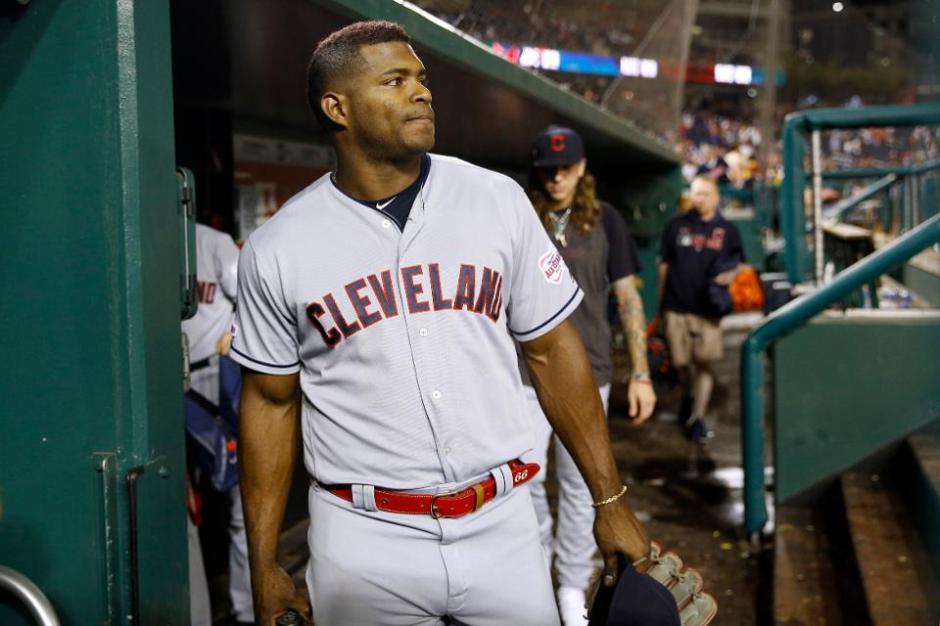
Former Cleveland outfielder Yasiel Puig leans against the dugout last season is negotiating with the San Francisco Giants in a deal that is reported to be close to getting done. (AP photo)

On That’s Amaury’s podcast:

#1 Giants manager Gabe Kapler said that a deal acquiring Yasiel Puig is not even close but sources said that Puig was for awhile on the Giants radar. How much would have a Yasiel Puig acquisition would have meant to the Giants.

#2 Yasiel had a reputation when he played with Los Angeles, Cincinnati and Cleveland and there were players who reportedly didn’t like him. He’s been shipped around since LA how would have fit in at the Giants?

#3 There is no doubt Puig is a talent with Cleveland he hit .267, 148 hits, 24 homers and 84 RBIs he can definitely provide power in the Giants offense.

#4  Would Puig have been the  same or somewhat kind of personality that former Giant Barry Bonds was in the clubhouse and field to the game?

#5 Some of the things that were said about Puig by some of his former teammates that he could be controversial and self fish could those issues be distractions if he had joined the Giants?

Amaury Pi Gonzalez is the Oakland A’s Spanish radio talent on KIQI 1010 and does News and Commentary each week at http://www.sportsradioservice.com


That’s Amaury’s News and Commentary: Baseball in Cuba could start before US

Cuban baseball will be back April 30th after the Coronavirus shutdown well before Major League Baseball will consider coming back (AP file photo)

Baseball in Cuba could start before US

That’s Amaury News and Commentary

By Amaury Pi-González

According to the Havana Times. All official sports events have been canceled in Cuba until April 30th at least, in response to the global Coronavirus pandemic. That includes baseball,the one sport that people have been playing almost as long as the United States. The population of the largest island in the Caribbean is approximately 11.5 million and as of today Cuba’s total of 1,389 Covid-19 cases and 58 dead.

It would be easy to start baseball in Cuba,because everything is controlled by their government. There are no complications like here in the US with MLB the MLB Players Union,the 50 different States/politics open or not open for business and of course a much smaller country..

Here is easily explained:

1-Owners of teams. None. The Cuban communist government owns baseball and all other sports.

2-Players. Baseball players get paid by the government and the stars make around equivalent of $2,000 per year.

3-Fans/Games. Cubans pay subsidized prices of just a few centavos

4-Media. Private ownership of broadcast media(radio,TV,print is prohibited)and the government owns all mainstream media outlets *(below)

5-Largest most famous Stadium: Estadio Latinoamericano, Havana, 55,000 capacity,build in 1946.

*Cubans were allowed to have cell phones in 2010,however the Internet is very limited and strongly censored.

That’s Amaury’s News and Commentary podcast: Roberto Clemente #21 should be retired

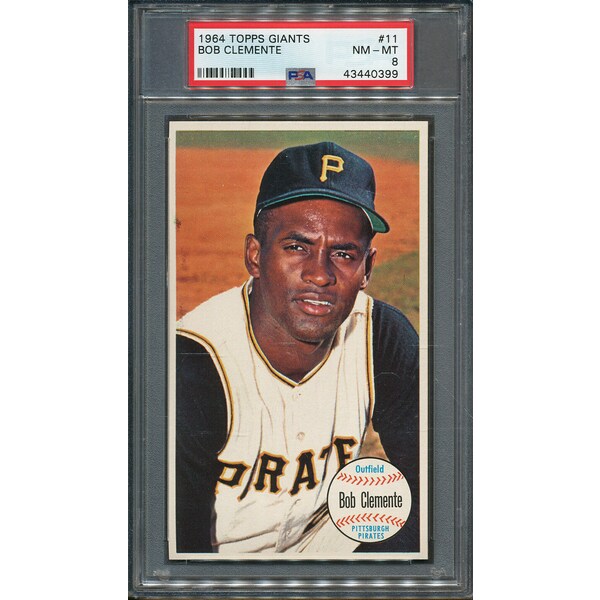
Roberto Clemente in his 1964 Topps Giants Card photo with the Pittsburgh Pirates (sportsmemorabila.com file photo)

Roberto Clemente #21 should be retired

That’s Amaury News and Commentary

By Amaury Pi-González

Although he was not the first Hispanic to play major league baseball, Roberto Clemente remains the most famous among all born in Latin America to play in the best baseball league in the world, and definitely the most historic figure.

There is only one number that was retired by all teams, and that was Jackie Robinson’s #42 in 1997. In Pittsburgh, were he played for his whole 18 year Hall of Fame career, there is a bronze statue of him at PNC Park and even the six street bridges, which is now the Roberto Clemente Bridge. Now, there are many statues of players, but how many do you know have a bridge with his name?

Just like Robinson, Clemente played under a lot of discrimination. Clemente also met racism in many forms, unlike Jackie Robinson, because, Clemente (from Puerto Rico) aside from the color of his skin, also had to fight his language and culture.

Many believed Clemente suffered more than Jackie Robinson. Because of his language barrier, Clemente was misquoted frequently, something he detested. Towards the end of his career, in the early 1970’s, as I was at Candlestick Park writing for El Mundo News, a Post Group publication Clemente’s Pirates team was facing the Giants and after he struck out, I heard somebody inside that press box shout “send him back in a banana boat!.”

Clemente was involved in charity. He chartered a plane from San Juan, Puerto Rico, filled with help for the suffering people of Managua, Nicaragua. It was a 6.3 magnitude earthquake that killed thousands. Clemente’s DC-3 airplane crashed north of San Juan on December 31, 1972. His very last hit was his 3,000 hit during his final at bat on September 30, 1972.

To the credit of Major League Baseball since 1973, one year after his disappearance, the Roberto Clemente Award (once the Commissioners Award) is given to the player in every team that exemplifies sportsmanship, community involvement and contributions to his team. And at the end one player among all 30 nominated wins the award.

Roberto Clemente was a quiet man. A professional baseball player with innate talent, a proud man, respectful of everybody regardless of race or nationality and most of all, he loved the game of baseball. The field was his canvas, and he could do anything on a baseball field. He died helping people in another country, not his own. In today’s narcissistic society, more men like Roberto are needed; these are the role models our youth need.

Many players born in Puerto Rico, like Candido (Candy) Maldonado, Rubén Sierra have told me they only wanted to wear “el número 21″for Roberto. But he is not only a national hero in Puerto Rico; his name is known internationally, especially in Latin America where more and more players are coming from to play in the United States.

The Hispanic Heritage Baseball Museum and Hall of Fame, since it was founded in 1998 has exhibited in numerous events across the country, All Star Games, Fan Fest and Museums and community events. There is no one player more popular than Roberto Clemente. During one of our exhibits at the San Francisco Main Library, we saw a man that was kneeling and praying in front of the Clemente exhibit. I asked him about that and he told me “I am Puerto Rican and he is like a God to us. His body was never recovered, but we know he is here with us”.

With the ever increasing demographics in the US which all point that in a few decades half of the US population could be Latino, not to mention the players coming from Latin America, baseball would be wise to retire number 21.

Eventually baseball will retire Roberto Clemente’s famous “número 21”. But why not now?

Amaury Pi Gonzalez is the vice president of the Major League Baseball Hispanic Heritage Museum and does News and Commentary each week at http://www.sportsradioservice.com

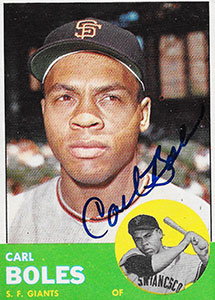
He was a Giant? Carl Boles and the Case of the Mistaken Identity

He Was A Giant?

Carl Boles and the Case of the Mistaken Identity

By Tony The Tiger Hayes

What could possibly be better than having Willie Mays on your team? Well, having two Willie Mays’ on your team of course!

The 1962 Giants weren’t lucky enough to have an actual clone of the “Say Hey Kid” on the roster. But in 27-year-old Boles, the squad had a player many people believed was Willie Mays.

Not the “next” Willie Mays mind you. But Willie Mays himself.

Like Mays, Boles was a brown eyed, handsome man. The OF was of comparable height and similar muscular build as Mays.

Typically, fans and media joyously flocked to the rookie with pen and paper ready. But some turned away puzzled.

“I’m signing more autographs than the veterans. The only thing is, after I sign my name they get mad at me,” Boles said in 1962. “Even newspaper reporters come up to me and start to interview me. They’ll say ‘Say Willie, about that hit…’ And when I say ‘I’m not Willie, some of THEM get mad.”

Why Was He a Giant?

Mays’ doppelgänger was promoted to San Francisco from the farm system in mid-1962 and remained with the club the final two months of the season.

The Giants were impressed with Boles rounded tool set.

“I don’t know how he’s going to hit up here,” said farm director Carl Hubbell, the former Giants Hall of Fame lefty. “But he’s not going to make many mistakes in the outfield and he’s a excellent base runner.”

Boles was on the Giants active roster as they clinched their first ever West Coast Pennant in Los Angeles.

In a bizarre scene, when the club returned home, still dizzy from their champagne celebration, they were met by a frenzied mob that spilled out on to the SFO tarmac.

As they tried to motor away, team bus was surrounded by a mob of frenzied Giants fans chanting “We Want Willie! We Want Willie!”

Unbeknownst to the throng – who how began rocking the coach back and forth – Mays had slipped into a taxi and was on his way home.

Of course there had to be a wise acre in the traveling party and OF Bob Nieman sarcastically crowed : “Let’s throw ‘em Boles and get the hell outta here!”

Before & After

The native Arkansan was signed by the Giants in 1954, but his career was interrupted by a military commitment with the Navy. By the time Boles got out of bell bottoms in 1959, he was an expert at knot tying, but a number of other Giants prospects had past him up in the pipe line.

Still, Boles clawed his way to Candlestick Park in ‘62, after batting .337, 18, 74 in 89 games at Double-AA El Paso.

“He’s fast and has a fine arm… He’s a fine OF prospect,” said Giants manager Alvin Dark.

Boles did all he was asked of in a reserve role, pinch hitting and running and spelling Felipe Alou in LF.

Unfortunately Boles would not return to the big leagues after ‘62.

A broken leg the following spring halted Boles momentum and he missed most of the 1963 season.

In 1965, it appeared Boles was retiring from playing when he took a position in the Giants scouting department.

He Never Got His Own Bobblehead. But…

Boles played in a total of 19 games with the Giants in ‘62, batting a satisfying.375 (9-for-24). Four of his hits came as a pinch hitter.

In a rare start, the Giants were trailing 2-1 in the 4th inning at Milwaukee when Boles drilled a game -tying RBI single off Bob Hendley. Later that frame, Boles scored the go ahead run on a Jose Pagan triple. SF hung on to win 6-4 (8/18/62).

Boles did not leave the dugout in the World Series vs. the Yankees that fall.

He did however score a game tying run as a pinch runner in the 7th inning of Game 2 in the special playoff series at LA. The Dodgers would eventually win the contest 8-7 (10/2/62).

Giant Footprint

Just when it appeared Boles’ baseball playing days were over he returned to the field… in Japan.

From 1966-71 Boles played with the Osaka Kintetsu Buffaloes and Nishitetsu Lions of the Japan Pacific League.

It was overseas that fans realized that not only did Boles resemble Willie Mays off the field, but on the field as well.

In his six seasons playing in the “Land of the Rising Sun,” Boles would slug 117 home runs.

When the Giants toured Japan for a series of exhibition games in 1970, one of few Americans to greet them was… Carl Boles.

Headline Sports podcast with Charlie O: Michael Jordan was offered a chance to play with the Oakland A’s in 1994; plus more headlines

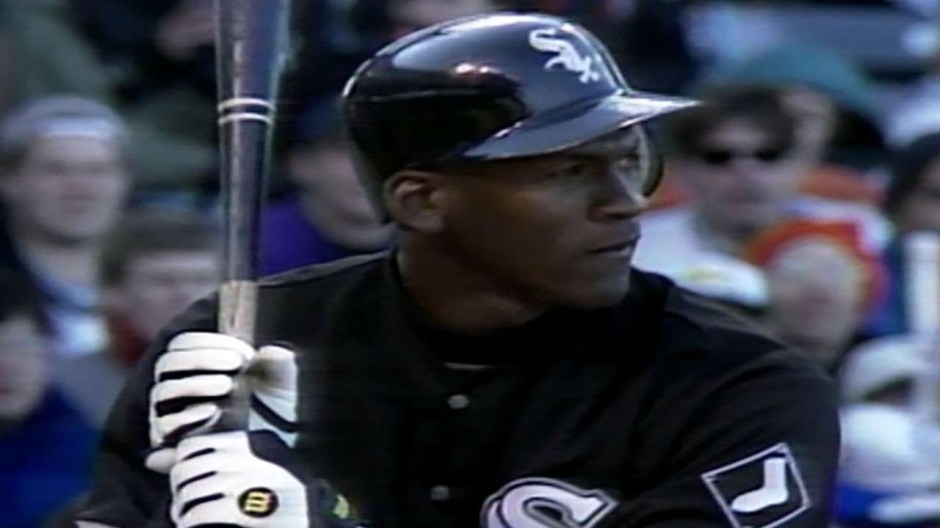
Former Chicago White Sox Michael Jordan taking an at bat against the Chicago Cubs at Wrigley before swinging for an RBI double in 1994 (cbssports.com file still)

On Headline Sports with Charlie O:

#1 The Michael Jordan documentary “Last Dance” has been the talk of the sports town. With it’s well received viewership on ESPN at 6.1 million viewers some of the topics have been interesting and extraordinary.

#2 The one story that stands out is when Jordan had retired from the NBA to play baseball in 1994 Jordan got an offer from then former Oakland A’s general manager Sandy Alderson who asked Jordan’s agent at the time if he would be interested in joining the A’s on their Major League roster. Jordan in double A for the Birmingham Barons declined saying he was loyal to White Sox owner Jerry Reinsdorf and didn’t want to upset the big leaguers who worked hard to get to the show by skipping grades to get to the A’s.

#3 Charlie how crucial is it for the state and the Sacramento community to have the state paying the Sacramento Kings $500,00 a month to rent Arco arena as a field hospital for incoming Coronavirus patients.

#4 Charlie could you fill us in on the MLB video game tournament that will be televised live and will there be a lot of ribbing and joshing amongst the players during a tournament like this?

# 5 Former Los Angeles Dodger play by play announcer Vin Scully certainly hasn’t lost his sense of humor after taking a tumble at home saying he’s done with head first slides.

#6 Charlie can you tell us about the Boston Red Sox losing a draft pick for sign stealing and that the penalty was far less than the penalties the Houston Astros got.

Join Charlie for Headline Sports every other Friday at http://www.sportsradioservice.com


That’s Amaury’s News and Commentary podcast: A look back on the best ever team in Bay Area baseball history

Oakland A’s left fielder Joe Rudi makes an ice cream cone catch in the webbing of his glove for a spectacular defensive play in the 1972 World Series (file photo from pinterest.com)

On Amaury’s podcast:

#1 Amaury you were very fortunate to see some of the best teams in your broadcast career in Bay Area baseball the Oakland A’s teams from 1972-74 rivaled even some of the great Yankee teams of the 1950s as the A’s had won three World Series Championships in a row.

#2 The A’s had a pitching staff that were made up of a number of 20 game winners through their World Championship years on the 1972 team they had just one 20 game winner Jim Catfish Hunter who was 21-7, followed by Ken Holzman 19-11, John Blue Moon Odam 15-6, Vida Blue 6-10, and a great reliever Rollie Fingers 11-9.

#3 Those World Series teams had some serious hitting too for that 1972 team that got it going Reggie Jackson who had a great hitting season but was injured for the World Series, Joe Rudi, Sal Bando, and Mike Epstein.

#4 Who could forget some great highlights of the 1972 World Series with the ice cream cone catch against the wall by A’s left fielder Joe Rudi and striking out Reds catcher Johnny Bench during an intentional walk.

#5 One of the other great moments in the A’s World Series was in 1973 when Willie Mays returned to the Bay Area after being traded from the San Francisco Giants to the New York Mets the previous year and was introduced in game one in front of the A’s fans in Oakland to a standing ovation.

Join Amaury for Sportstalk each Tuesday at http://www.sportsradioservice.com


Headline Sports podcast with Morris Phillips: US prepared to re-open but at what cost and risk?

Friday fiasco takes protesting against social distancing, sheltering in, and demands to end the shutdown to new levels here protesters in front of the Governor’s residence in St.Paul with protesters standing shoulder to shoulder (AP photo)

Morris on Headline Sports podcast:

#1 On the face of it re-opening sounds like there might some normalcy returning and with it sports could not be too far behind

#2 Some places have already opened up the beaches, Santa Cruz was named as one of them but how risky, how certain is it that it is safe. You’ve done some work in Santa Cruz and go there frequently what will re-opening Santa Cruz and the Beach be like?

#3 Texas, Indiana, New Hampshire, Nevada, Maryland, Utah, and Wisconsin protested in from of their state capitals on Saturday. During those protests they did not social distance and were shoulder to shoulder, they were demanding to open up now. If they get what they want and it backfires then what?

#4 Pro and College teams plan to open their parks and arenas with no fans but at what risk to the players and working personnel all it takes is one person that could get sick?

#5 Some places have unofficially reopened in the US while 60% polled said that social distancing should continue and it’s too risky to open now. Will baseball take all the pre cautions despite all the protesting and push to get it to open up as soon as possible?

Join Morris Phillips for Headline Sports each Monday at http://www.sportsradioservice.com