That’s Amaury’s News and Commentary podcast: MLB Players and owners negotiating on opening season; NBA considering opening season Christmas Day; plus more

logo image from mlb.com file

On That’s Amaury’s podcast:

#1 MLB players agent Scott Boras says that what the owners are proposing a 50-50 revenue and the players are not interested in that offer plus testing, safety, social distancing and how that will work has been a factor in Tuesday’s negotiations.

#2 Players are guaranteed safeguards social distancing, masking, disinfecting, and protections in prevention of Covid 19 virus.

#3 The NBA is now considering opening up their regular season on Christmas Day. After having the NBA season suspended in March the league wants to open up on Christmas.

#4 The idea of opening the season on Christmas had also been suggested but some don’t think it’s a good idea and would like to keep opening month in October.

#5 One of the ideas of the NBA wanting to open on Christmas Day is because there is much less competition with the NFL at that time of the year as the NFL season is winding down towards post season.

Amaury Pi Gonzalez is the Spanish play by play announcer for the Oakland A’s heard on the A’s Spanish flagship station 1010 KIQI San Francisco and Amaury does News and Commentary each week at http://www.sportsradioservice.com

That’s Amaury’s News and Commentary: MLB Season Would the Players say Fair or Foul?

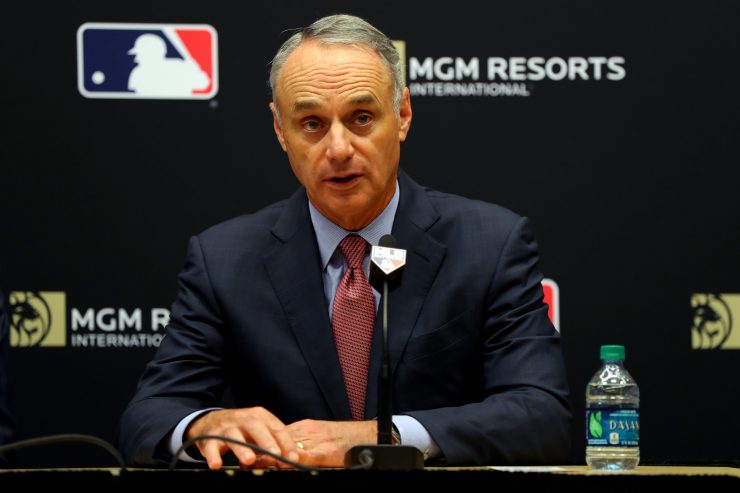
amNY.com file photo: MLB Commissioner and the owners will present their proposal to start the 2020 regular season by July 1st on Tuesday

MLB Season: Would the Players say Fair or Foul?

That’s Amaury News and Commentary

Amaury Pi-González

This entire plan is contingent on MLB getting the green light from local, state and federal officials. The sport can secure testing for the players, medical personnel. The owners approved the plan, but now it is the MLBPA (players union) that have to approve it, and there are obstacles in baseball and outside baseball.

MLB and the Owners are proposing:

-A season of 82 games that would begin during the July 4th weekend. Teams only face geographical division rivals.

-Teams would only face division rivals and the same geographic division in the other league to keep games regional.

-Inter-league match-ups limited to AL East vs. NL East, AL Central vs. NL Central and AL West vs. NL West.

-Teams would prefer to play at their regular ballparks at home, but if medical and government approvals can’t be obtained then they will play at Spring Training Stadiums. Here in California (five major league clubs) the Governor said recently, no sports with fans until there is a vaccine.

-Postseason: Expanded from 10 to 14 games and doubling wild cards in each league to four. The DH will be expanded to be used by both leagues.

-The All Star Game at Dodger Stadium in Los Angeles on July 14, as of today is called off.

-The owners propose that players will receive a percentage of their 2020 salaries based on the revenues that MLB receives during the regular season and postseason. This is probably the biggest obstacle for the players.

Those, and the health concerns, figure to be the main point of contention between MLB and the MLBPA. The players already agreed to prorated salaries back in March and do not want to take further pay cuts. The owners claim they are losing 40% of the revenues, by playing in empty stadiums, no tickets sold, no luxury boxes revenue, no concessions no parking. The players said there is no:”revenue exit” for them as they solely depend on their salary.

At the End: All of this stuff depends on the Covid-19, situations in each State. In the US (unlike other countries) there is no “one size fit all” all 50 States made their own decisions. And that, as we know, is very fluid at this time, nevertheless MLB made this proposal, probably in a last ditch effort to rescue the 2020 season. If it happens it would look like the 1981 and 1994 seasons.

It takes two to tango.

Stay well.

Amaury Pi Gonzalez is the Oakland A’s play by play talent heard during the regular season on KIQI 1010 San Francisco and does News and Commentary each week at http://www.sportsradioservice.com

Headline Sports with Morris Phillips podcast: MLB owners on conference call today with players to open season July 1st

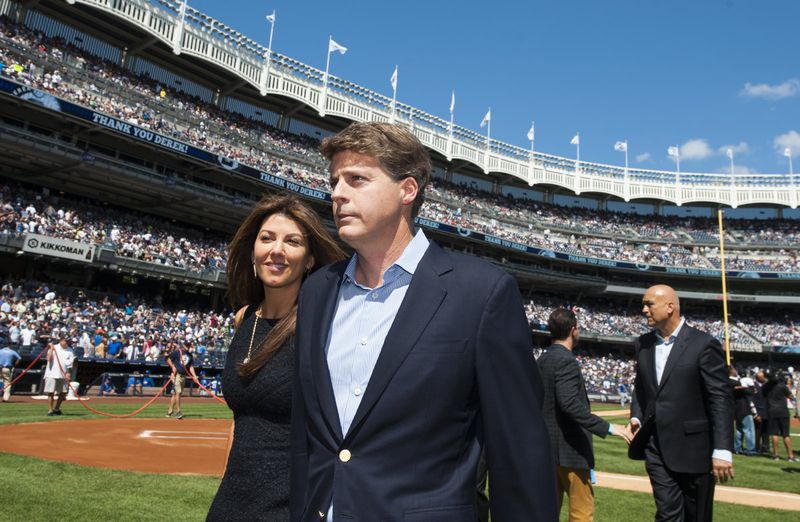
New York Yankees owner Hal Steinbrenner and MLB owners will be on a conference call with player representatives to go forward in starting the MLB season on July 1st (New York Daily News file photo)

On Headline Sports with Morris Phillips podcast:

#1 MLB is holding a conference call today regarding opening the regular season on July 1st. The discussion will include where they’ll play, the schedule will be done, social distancing and mandatory mask wearing.

#2 MLBPA executive and St Louis Cardinals pitcher Andrew Miller said that there will be no agreement until MLB can guarantee the safety for it’s players, coaches, umpires and family.

#3 Morris until there is some guarantee for the safety of the players and MLB personnel which also includes the news media covering the events there might not be a baseball season.

#4 Also the players want their a guaranteed salary before they get back on the field. In the event one or more persons are positive during the season and they have to suspend play again the players want a guarantee that they will be paid for the season.

#5 Baseball is proposing playing in regional home parks of the NL East and AL East and AL West and NL West for 80 games with no fans.

Join Morris each Monday for Headline Sports at http://www.sportsradioservice.com

Headline Sports podcast with Jeremiah Salmonson: Baseball wants to come back by July 1st; Cal Gov says find a vaccine first; plus more

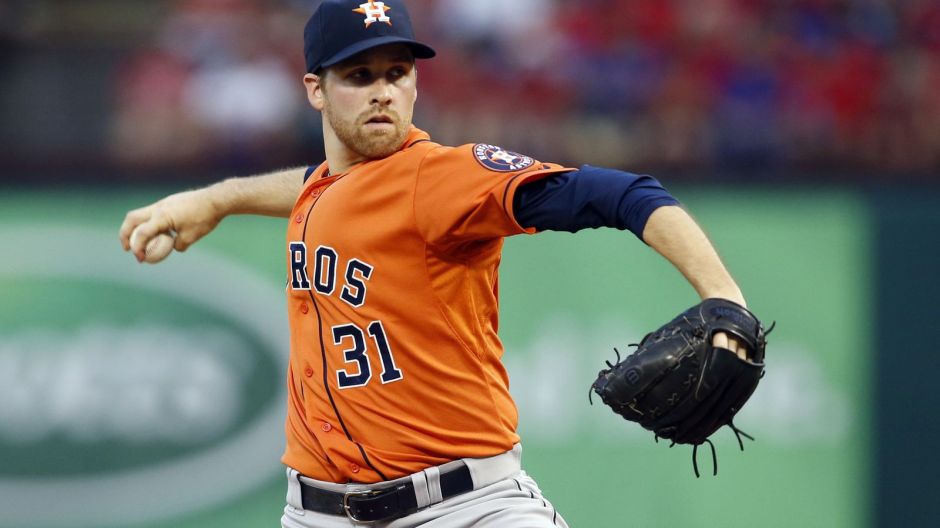
Former Houston Astro and now Boston Red Sox pitcher Collin McHugh said as a father and family man it’s risky to return to the game when there is no guarantee that there will be someone at the park or hotel that is asymptomatic or someone could get Covid-19 by someone who is a carrier in remarking about baseball’s possible return on July 1st (royalsreview.com file photo)

On Headlines podcast with Jeremiah:

#1 Jeremiah there has been talk that baseball could return July 1st meaning the players have to get ready by June and start the regular season in July. Critics of the idea include Dr. Anthony Fauci who said it’s too early and the spread of Covid-19 hasn’t flattened in many parts of the country.

#2 To open baseball it could start up you have all the excitement of it coming back but at what cost what if one person is a carrier then baseball would have to start from square one again.

#3 The idea of baseball coming back has excited the fans but it might turn out the closest fans will see baseball again is watching the Korean Baseball Organization which has been telecast live overnights on ESPN as America leads the world in Corona cases.

#4 Also the players might have their reservations about returning in July anyway the Boston Red Sox’ pitcher Collin McHugh shares his feelings saying that coming back with players or personnel having pre existing conditions and underlying conditions brings too much of a risk.

#5 California Governor Gavin Newsom said on Thursday that sports may not be able to return in California until a vaccine is found. With that said things could very well be on hold for awhile.

Join Jeremiah for the Headlines Conversation every other Saturday at http://www.sportsradioservice.com

50 Years Ago Pilots Land in Milwaukee Part 4 of 5 By Daniel Dullum

JSOnline.com file photo: The Milwaukee Brewers who moved into County Stadium in Milwaukee in 1970 from Seattle at the last moment is a five part series “50 Years Ago Pilots Land in Milwaukee”

50 Years Ago: Pilots Land in Milwaukee Part 4

By Daniel Dullum

(Author’s note: This is the fourth of a five-part series detailing an unusual Major League Baseball franchise shift — In 1970, the Seattle Pilots arrived at spring training in Tempe, Arizona, and left at the end of March as the Milwaukee Brewers.

At the conclusion of Part 3, Bud Selig’s Milwaukee Brewers Inc. group was awarded the Seattle Pilots in bankruptcy court on March 31, 1970. The Brewers had six days to get ready for the 1970 home opener at County Stadium. Meanwhile, the City of Seattle and the State of Washington would proceed with their $82 million antitrust suit, which already was filed and waiting for Judge Volinn’s decision.)

However, Judge Volinn pointed out that the only alternative was forcing the American League to operate the team on deficit financing to more than $3 million over the ensuing three years. He explained, “It’s obvious that the club cannot pay its debts and may well be insolvent. With the baseball season only a week away, the Pilots were in an emergency situation.

“The unique character of a major league baseball team has been considered, and its importance to the community has been considered. But it’s obvious the debtors [Pilots] are incapable of carrying on. That is beyond question.”

A prominent defender of Volinn’s decision was C.C. Johnson Spink, editor and publisher of The Sporting News. In his April 18, 1970, editorial, Spink quoted an anonymous American League source: “The Sorianos tried all over the city to find local people who would invest in the club. Part of the American League’s agreement with Daley was that control would be in Seattle. Daley himself met with people all over the Pacific Northwest — the biggest people — and couldn’t interest any of them.

“The Pilots had no cooperation from anyone, not even the newspapers. They had no cooperation from the Chamber of Commerce, the city or the county. The city did not finish the park on schedule and it was never put into the condition that the city promised.”

Spink wrote, “We believe that Seattle and Washington state officials should be red-faced about the club’s failure and should put the blame where it belongs, instead of attempting to make the American League the fall guy through a multi-million-dollar antitrust suit.”

— – On the appropriate date of April 1, 1970 — April Fool’s Day — the name “Milwaukee Brewers” appeared on an active American League standings board for the first time since September 28, 1901. Ironically, the original Milwaukee Brewers had lasted only one season and also filed for bankruptcy. They were dropped from the American League on December 3, 1901, and replaced by the St. Louis Browns.

Manager Dave Bristol expressed relief at the announcement of the verdict, saying, “I’m glad they finally reached a decision. The players should be relieved. It’ll be much easier to get the total concentration of the players now. … I’m happy for the players’ sake. My job is managing wherever the team goes.”

Pitcher Gene Brabender, who led the Pilots with 13 wins in 1969, looked forward to playing closer to his home in Sturgeon Bay, Wisconsin, 110 miles from Milwaukee. He told The Associated Press, “I regret things couldn’t have worked out better for the people of the Northwest. They were great fans last season through thick and thin. But playing in Milwaukee will be closer to home, and my wife and family will like that.”

Upon learning of Volinn’s decision, truck drivers who were hauling the team’s equipment could now leave Provo, Utah, where they waited in limbo along I-80, and move along to Milwaukee. And with less than a week to go before Opening Day, the Pilots/Brewers players now had to make creative decisions to secure living quarters for the upcoming season.

Catcher Phil Roof recalled, “We’d already sent our wives out on the road, headed to Interstate 90, which is straight north [from Phoenix] and it’s an east-west link between the West Coast and the Midwest. We told them to call in after each day — it was going to be at least a two-day ride to get to Interstate 90 — and on the second day out, we found out that we were headed to Milwaukee. We told them to hit I-90 east, and that’s where we started.

“It was unsettling because at the time, I had a wife and three kids and we were expecting the fourth one. There were other wives in the same boat, and it was more unsettling for them than it was for us, because we didn’t know where to put them, and once we got to Milwaukee, we finally had to rent apartments in Waukesha, which is 22 miles from the ballpark. That was the only thing available that would give us short-term leases, and we managed to survive there. I stayed there for almost two years.

“Those things are a part of baseball. It’s part of travel, part of being involved with a trade — I got traded three times in the course of a season once — and you just get kind of used to it.”

Or, in the case of new homeowner Mike Hegan, it was a matter of coming to grips with an unfortunate housing decision. “We bought a house in Seattle in January of 1970 and we never lived in it!  We went to spring training and never came back,” Hegan said. “The problem with that was, it was during the first major layoff in Boeing history — they laid off about 40,000 people — so it took me about two-and-a-half years to sell my house that I never lived in!

“That was a personal problem, obviously, but there were other guys who were making plans for apartments and different places to live, people getting ready to drive cars and ship belongings to Seattle, and ended up going to Milwaukee instead.”

This is what happened to pitcher Bob Bolin, among others.

“[I’m] going to spring training with the Pilots, an expansion team, and I’m excited about it because I played in Tacoma in the minor leagues,” Bolin said. “Then, three or four days before the season opened, I shipped my car to Seattle and they turned around and Milwaukee bought the team. We got our car about a month later when somebody found it on some rails somewhere in Chicago.

“In baseball, you’re always flexible. It wasn’t that unsettling for the team, because you’re out there playing a game. It was a little troubling the first couple of weeks to get settled, trying to find a place and getting the family situated.” The City of Milwaukee tried to help the players feel welcome in a variety of ways, mostly superficial.

When the Brewers deplaned in Milwaukee, they walked on a red carpet into the airport terminal before participating in a downtown motorcade. A downtown hotel offered three days’ free lodging after the team left spring training in Tempe, and the Milwaukee Association of Commerce honored the team with a luncheon, selling 650 tickets at $5 apiece. But players like Rich Rollins needed more than a parade and a complimentary rubber chicken lunch.

When it came to being inconvenienced in this last-minute upheaval, Rollins was the uncontested grand champion. “I remember [the move] well. It was a Sunday afternoon game we played in Tempe, and we didn’t know until after the game where we were going,” Rollins said. “My wife was in Seattle. We’d moved lock, stock and barrel from Minneapolis to Seattle. We had a duplex out there and were looking forward to going back to Seattle. “We didn’t know [where we were going] until we were in the parking lot. I’ll never forget the day. A big bus was there, and we’re either heading to Seattle or Milwaukee. It ended up at the Pfister Hotel in Milwaukee.

“That whole situation cost me a whole lot of money. I’d moved three-fourths of our furniture from Minneapolis, and now I had to move out of Seattle lock, stock and barrel. We had five kids — including a real young daughter who was born in Seattle [on April 16], she was only a month or so old — it wasn’t a good situation.”

Rollins felt the ballclub did “absolutely nothing” to help the players. “Fergie (Tom Ferguson), the traveling secretary, tried to help a whole lot of people. He was a class guy. But there wasn’t a whole lot he could have done. He expressed his concern, but it was costing me a lot of money. “My furniture was being sent by moving van to Cleveland, but was supposed to be held up until we decided where to go with it. The driver was on the turnpike wondering where to go,” Rollins said.

“I wasn’t about to settle in Milwaukee. I had my family out in Seattle; my original home was in Cleveland, so we finally decided to move to Cleveland after this thing was over with, and my family had to move in at my mother’s house.” And, when Rollins didn’t think the situation could get much worse … “I had all of our furniture — sofas, the television, chairs, tables, everything — in storage and it was all stolen out of the warehouse. I got 20 percent of the furniture’s value in a settlement, but the whole thing was a nightmare. It eventually cost me around $6,000 to make that move.”

Then, adding the coup de grâce, Rollins was released by the Brewers on May 13, 1970. “I wasn’t there very long, about a month and a half, and I was released. My wife was still in Seattle. I went home to Cleveland,” Rollins said. “The thing I remember: I’d never been released before. I got called into [Dave] Bristol’s office and he said, ‘We’re going to let you go.’ And that was it. I watched one of the games from the right field stands with the clubhouse guy.

“I got back to the hotel after the game and I get this phone call from [Brewers executive] Frank Lane. He had a reputation [as a wheeler-dealer], but he was the only guy who called me. He said if I wanted to keep playing, he’d find me a spot. It was impressive that he would do that.

“So, I went back to Cleveland. I was there for three or four days when the Indians called me. Alvin Dark was the manager there, Hank Peters was the general manager, and they said, ‘We want to sign you for the rest of the year.’ That was really nice. It really helped me, moving back to Cleveland because I’d been away from there for a whole long time and I really didn’t know that many people there. I’d kind of lost contact.” Mike Hegan philosophically observed, “It’s a problem in that it’s the unknown factor — you don’t know. I think for a lot of us, it wasn’t a huge problem, except for somebody like me who had the house.

“The other part of that equation is that this was an expansion team, so a lot of guys were used to traveling. I had played in four minor league cities in five years while I was up and down with the Yankees, so you never really established roots and were in one place for any length of time. So it was like going to spring training with a minor league team, and ‘Was I going to Buffalo, or was I going to Erie?’

It was probably a little more complicated than that, but I don’t think there were a lot of people who had real feelings about going to Seattle or going to Milwaukee. “What made it psychologically easier was that you were still in the major leagues. It would be much different if you were sent to a minor league team. Those are problems that everybody faces in life — moving around and doing certain things — it was something that got in the way a little bit, but you learned to live with it and handle it.”

As local newspaper headlines proclaimed “Baseball to Return Here” (Milwaukee Sentinel) and “We’re Big League Again” (Milwaukee Journal), the Brewers had less than one week to put together a ticket office, hire an office staff, find batboys, and get County Stadium ready.

The team didn’t have time to order new uniforms, so the Pilots logo and front jersey number were removed and “Brewers” was stitched over it. The pilot’s stripes on the sleeves were too difficult to remove quickly, so they remained on both the home and road jerseys for 1970.

The team’s color scheme of royal blue and gold — the one used in Seattle — was adopted by default, even though Selig preferred navy blue and red that was used by the old minor league Brewers. As Selig explained to The Sporting News correspondent Terry Bledsoe, “The ‘S’ on the cap comes off and an ‘M’ goes on. The ‘Pilots’ on the uniform comes off and ‘Brewers’ goes on.

The letters and the embroidery stay the same [except for the ‘scrambled eggs’ on the cap bill]. The uniforms are fine.” In addition, the Brewers issued Pilots media guides and yearbooks, new schedules and tickets were hastily printed, and broadcasting deals were pulled together quickly with radio station WEMP (1250 AM) and WTMJ-TV (Channel 4).

Former Braves play-by-play announcer Merle Harmon asked for and received a release from his contract with the Minnesota Twins to return to Milwaukee and call the Brewers games. The grounds crew at County Stadium was under the gun as well, with only six days to get the partially snow-covered field ready for the home opener. They came through, and earned rave reviews. “The grounds crew got an award,” Bobby Bolin said. ”In fact, that was the highlight of the Brewers for 1970 — they had the best grounds crew in the league!” Mike Hegan added, “You know what? The field at County Stadium was better than the field in Seattle the first day that we were there! It didn’t make any difference!” Phil Roof observed, “The field (in Milwaukee) was in pretty good shape because the White Sox played some regular season games there and they kept the field maintained.

It was nice of the city fathers of Milwaukee to do that because they wanted a major league franchise back. By keeping the stadium in tip-top shape, it was easy for the owners to vote Milwaukee in.” While Pacific Northwest Sports Inc. was busy liquidating Seattle Pilots merchandise (which would become highly sought-after memorabilia), William Daley, the Pilots’ former principal owner, quietly invested $1 million in the Brewers, but had no management control. And fans in Milwaukee stood in up to six inches of wet snow, waiting to purchase either single-game or season tickets for Brewers baseball.

Over 2,000 season tickets were sold on April 2 alone, at prices ranging from $150 to $375. “I think the fans here have missed baseball,” Selig told the local media. “I sense an excitement about the team that probably is better than mass hysteria.” Selig wasn’t too far off the mark. Despite the cool spring weather in Wisconsin, 37,237 fans showed up on Opening Day at County Stadium to see the Brewers pick up where the old Pilots left off, with a 12–0 loss to the California Angels.

NEXT: Part 5 — Epilogue 1

That’s Amaury’s News and Commentary podcast: Until a Vaccine is available

Korean Organization Baseball players with masks prepare to play in front of an empty stadium (mercurynews.com file photo)

Until a Vaccine is Available

That’s Amaury News and Commentary

Amaury Pi-González

In the next few days Major League Baseball will present,what might be the final proposal to the players union in order to start the 2020 baseball season by early July..The South Korean Professional League.started playing last week and Athletics third-base coach Matt Williams is managing the KIA Tigers. Dan Straily,once a pitcher for the Oakland Athletics is now pitching for the Lotte Giants. A total of ten (10) teams make the South Korean Professional Baseball League. Umpires there are playing with Masks.And no fans.

There is a reason why MLB is the #1 baseball league in the world, not only the best talent in baseball all over the world, plays there, but we also have a total of 30 teams. And of those 30 teams, the State of California (the most populous with close to 40 million residents) also has the most teams, five (5) of those 30; Angels, Athletics, Dodgers, Giants and Padres.

According to the Mercury News, California Governor Gavin Newsom says restarting sports is ‘difficult to image’until a vaccine is available. The state is just beginning Phase Two, of four phases with Phase Four the reopening of sporting events with fans. The state won’t move into the final phase of Newsom’s plan, which includes the reopening of sporting events to fans, until immunity to COVID-19 has increased and a vaccine is widely available.

Wonder about when a Covid-19 vaccine will happen? Nobody and everybody is an expert,depends what you see, hear or read. Oxford has said they might have it by summer’s end or early fall.

The experts virologists have many models and they have been all-over-the-place with their projections, not every time they have been right. The Media is all over the place,”experts” coming out of the woods, some very optimistic, others say this pandemic will go for the next two(2) years. But remember, scientist do not work for ratings, the media does, so they can generate revenues, so they can go on the air. So for me.all regular networks, cable, talk shows. Late night shows, it is just entertainment, because they are as opinionated as ever and in this case as ignorant as ever. So, who knows?

Mr.Walter G. Gibson created a fictional character The Shadow, one of the most famous of the pulp heroes of the 1930’s and 1940’s and he used to say “Only the Shadow knows”.

Adiós and Stay Well.

Amaury Pi Gonzalez is the vice president of the Major League Baseball Hispanic Heritage Museum and does News and Commentary each week at http://www.sportsradioservice.com

That’s Amaury’s News and Commentary: Behind the Mask–The Three Best Catchers

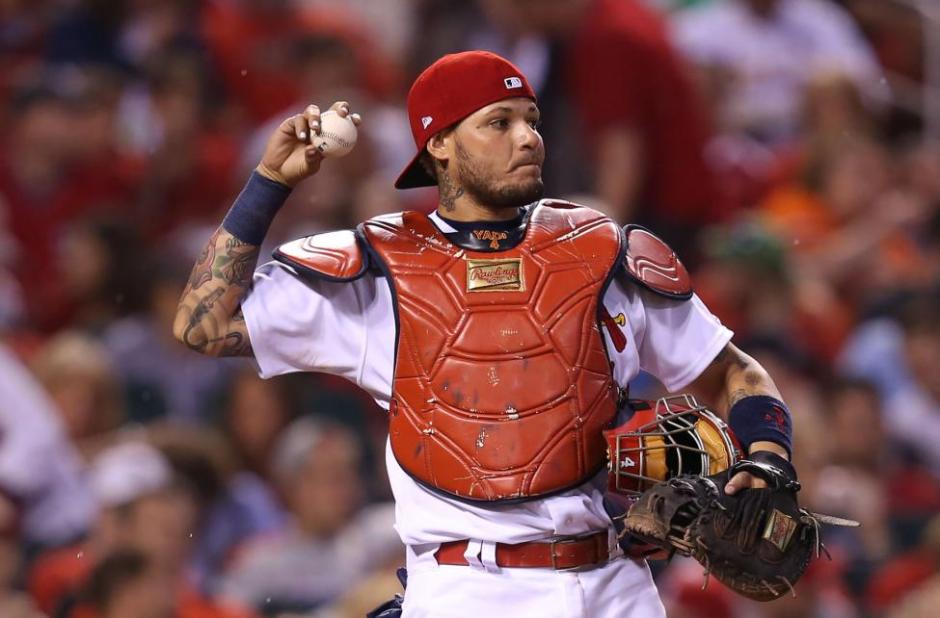
St Louis Cardinals catcher Yadier Molina was ranked as the best active catcher and number three on the all time list (UPI file photo)

Behind the Mask: The Three Best Catchers

That’s Amaury News and Commentary

Most catchers are defined by their defense. There are two positions in the game of baseball where you must field the ball to play every day. One is shortstop, the other is catcher. And unless you are a great hitter, it will be tough to stay on a regular line-up there are some obvious exceptions, like Hall of Fame catcher Mike Piazza, considered a poor defensive catcher but #1 in history for catchers in home runs with 427 #4 in runs-batted-in with 1, 335 and #6 in runs scored with 1,048. Piazza was also a designated hitter during his last season in the majors with the Oakland A’s in 2007, the A’s just needed Piazza to hit, since they had Jason Kendall and Kurt Suzuki handling the backstop.

Catching is the most physically demanding position in the game. A catcher has to work the signals and direct his pitcher, he has to hold runners on base and squat for hours. As a kid I was always impressed by such catchers as Del Crandall, Ted Kluszewsi. Yogi Berra, Sherman Lollar, Earl Battey, Johnny Romano, Clay Dalrymple and others.

In those years the uniforms were made of heavier material not to mention the heavier masks and all the gear they would have to wear. A lot of these guys would catch 120 to 150 games each season. The first indoor stadium with “room temperature” was the Houston Astrodome inaugurated in 1965, so these catchers played outdoor most of their careers during hot humid days and nights. Like everything else, the position has evolved and today some of the catcher’s masks are colorful and very light in comparison to those of decades past.

Here are the three best defensive catchers in history. Maybe the best three all-around catchers: Most Gold Gloves

1-Iván Rodríguez 13

2-Johnny Bench 10

3-Yadier Molina 9

Iván Rodríguez won 13 Gold Gloves, the most for a catcher. The Hall of Fame catcher played for 21 years and a total of 2,543 games(most games caught 2,427) Lifetime average .296(hit over.300 in ten different seasons)311 home runs,1,232 runs batted in and 1,354 runs scored. For a catcher(at the time of his retirement)the most hits,2,749,the most All Star Game starts with 12(tied with Johnny Bench) and also tied with Yogi Berra with 14 appearances in All Star games. Seven Silver Slugger Awards, second only to Mike Piazza’s 10

In 2003 Rodríguez won the World Series title with the Florida Marlins. (Quote)National’s manager Dusty Baker: “Pudge was a great catcher. Playing against him, he shut down the running game. I mean, shut it down. That’s big–you didn’t run at all. He was a great clutch hitter and an outstanding, durable catcher.

Johnny Bench dominated the 1970’s with the Cincinnati Reds.”The Big Red Machine” and played for the Reds his whole 17 year career. 2,158 games and was as strong as any catcher in history from 1968 to 1977 he won 10 consecutive Gold Gloves. With a .267 career average, 389 home runs and 1,376 runs batted in while scoring 1.091 runs. Won two World Series and was selected to 12 All Star games. He was a two-time winner of the National League MVP Award.

(Quote)”Johnny Bench’s desire to succeed and his excellent work habits were two of the reasons why he was elected to the Hall of Fame on the first ballot” -Earl Weaver, Orioles manager and fellow Hall of Famer.

Yadier Molina (youngest of the Molina brothers, José and Bengie) is a nine time All-Star, two time World Champion and #1 among active catchers with 41 percent of base runners caught stealing and 65 pickups. Molina has played for 16 years with the St Louis Cardinals, an anomaly these days and for a sure future member of the Hall of Fame. At the end of the 2019 season Yadier Molina lifetime average was .282 with 156 home runs and 916 runs batted-in.

(Quote)”The things he does mid-game, you’d have to watch him with a pretty educated eye as far as realizing when he does something that has meaning. The other side won’t even know.” -Mike Matheny, St. Louis Cardinals manager

Special mention for Yankee Yogi Berra who won ten World Series as a player more than any other player in major league history, selected to 18 All-Star games and is one of six players to win the American League Most Valuable Player Award three times. Yogi’s career numbers are not too shabby, .285 hitting with 358 home runs and 1,430 runs batted in. Not to take any credit from Yogi, a great catcher on his own, he also played with winning teams loaded with super talented teammates.

Baseball fans talk all the time what record can or cannot be broken here is one very unlikely to be broken, because few great players today play their whole careers with the same team. Yogi’s Ten (10) World Series titles as a player. Yogi won three more championships as a coach, and made an astonishing 21 total World Series appearances as a player, coach or manager. Like the great Yankee announcer Mel Allen would say: How about that!

Amaury Pi Gonzalez is the Oakland A’s Spanish play by play voice heard on KIQI 1010 San Francisco and does News and Commentary at http://www.sportsradioservice.com

50 Years Ago: Pilots Land In Milwaukee Pt 3 of 5 By Daniel Dullum

Seattle Pilots image from sportslogos.net

50 Years Ago: Pilots Land in Milwaukee — Part 3

By Daniel Dullum

(Author’s note: This is the third of a five-part series detailing an unusual Major League Baseball franchise shift — In 1970, the Seattle Pilots arrived at spring training in Tempe, Arizona, and left at the end of March as the Milwaukee Brewers.

At the conclusion of Part 2, the Seattle Pilots’ financial woes continued into 1970 spring training, the American League publicly admitted that the Pilots were broke, leaving the players and coaches wondering about the team’s future while trying to focus on preparing for the upcoming season.)

Mike Hegan explained, “There are extraneous factors that enter into day-to-day baseball, and you usually take the cue from the manager, the coaching staff and the front office. At that time, Dave Bristol, a pretty levelheaded guy, just continuously said, ‘Hey, you don’t have any control over this. You can worry about certain things, but you have no control. So what you want to do is prepare to play baseball, whether it be in Seattle or someplace else.’”

Ken Sanders concurred, “I think the manager and the coaches of that team were really good — Dave Bristol, Wes Stock, Jackie Moore — those guys kind of helped keep it together. They would say, ‘We know we’re going to play, we know we’re going to play somewhere, we just need to get ready and prepare for the season.’” Wes Stock added, “Dave [Bristol] wanted everything focused. His idea was to play the game right and he worked on fundamentals. He was real focused, we all had a job to do, and we didn’t think about [the possible move]. Dave was strong that way. His thing was, ‘We’re going to win as many games as we can for a big league ballclub and just go from there. It didn’t bother him where we’d go, and I think that’s what he tried to tell everybody else — ‘We’re in spring training today, tomorrow we’ll be in Milwaukee or Seattle, and let’s go play.’”

While the Pilots were 5–5 in Cactus League exhibition action following a 19–14 win over Cleveland in Tucson, team management returned to the courtroom, this time in Seattle at King County Superior Court. At 9:30 a.m. on March 20, attorney Alfred J. Schweppe was scheduled to place his “outraged self” before a judge to argue that the American League had no right to remove the Pilots from Seattle.

AL attorney Alexander Hadden, meanwhile, tried to convince the judge to lift the restraining order that was preventing the league from moving the shaky franchise. In addition, an antitrust suit filed by the State of Washington and the City of Seattle was to be considered in conjunction with Schweppe’s suit.

If the judgments went against the AL owners, the antitrust action reportedly could cost them as much as $82 million. But by the day’s end, the Pilots’ owners delivered yet another headline-grabbing salvo when they filed a petition in U.S. District Court, asking that the team be sold to Milwaukee Brewers Inc. for $10.8 million under Chapter 11 of the Bankruptcy Act.

This petition stated that Pacific Northwest Sports Inc., “is unable to meet its debts,” listed as $7.4 million (an amount later increased to $8.13 million). The petition also listed demand notes of $200,000 by Max Soriano (with his brother, Dewey, 34 percent owners) and $300,000 by William Daley, a 60 percent stockholder in the Seattle club. Smaller items, as low as $6 to the Seattle Fire Department for permits, were listed as well.

Other debts on the petition included: • $3.5 million to the Bank of California. • $2 million to Sportservice. • $500,000 to First National Bank of Phoenix. • $250,000 to the American League. • $165,000 to the City of Seattle for rent at Sicks’ Stadium. • $161,250 to the Pacific Coast League for indemnities due in 1970 and 1971. • $31,011 to King County for property taxes. • $5,000 to the Major League Scouting Bureau, Inc.

Among those listed on the list of creditors was none other than Fred Danz, whose group loaned the Pilots $261,875 in hopes of keeping the club in Seattle. But there were more legal hurdles. On March 20, E.B. Smith, president of Pilot Properties, Inc., of Phoenix, Arizona, filed a lawsuit for more than $1 million against the Pilots’ owners to “preserve the interests of investors” in the Pilots’ spring training facilities at Tempe.

Smith also cancelled Pacific Northwest Sports’ contract to use the facilities, saying the group had failed to meet obligations in forming a company to operate the training camp. That same day, Superior Court Judge James W. Miffin continued a restraining order that prevented the Pilots from relocating.

Alfred J. Schweppe then jumped in and took a public swipe at Milwaukee Brewers Inc., calling the group “suckers.” But William J. Walsh, an attorney who represented the Pilots’ owners, said even if an injunction is granted, “the team is in too poor shape financially to play in Seattle this season.” As a precaution, the California Angels, who were scheduled to open the 1970 season on the road against the Pilots, reserved hotel rooms in both Seattle and Milwaukee. And through it all, the Pilots players and coaches soldiered on. “[The coaches] tried to keep it non-disruptive because we had a lot of young guys, guys who played ‘A’ ball, like Jim Slaton and Bill Parsons who came back [to the majors] with us,”

Coach Wes Stock said. “We didn’t talk about it. We didn’t know what was going on. There was nothing we could do about it. The two owners were the ones with the control of what was going to happen. We just had to do what we could, regardless of what was going to happen. “We said, ‘Hey guys, don’t worry about it, we’re all in the big leagues. You guys want to be in the big leagues?

This is where you’re trying to get to, whether you play in Seattle or Milwaukee. Let’s just make the best of it.’” This was easier said than done for players like Ken Sanders, who was under enough pressure just to make the 25-man roster. “I was traded by Oakland to the Pilots that winter, and I hadn’t really established myself in the big leagues,” Sanders said. “I’d been up and down at that time. I was hurt [broken leg] the year before and I only pitched about a month in the minor leagues. So we go to spring training like a lot of the players on that team — enthused about the upcoming season. “Then the Seattle Pilots filed bankruptcy, so it was a very difficult time, not only for myself and the younger players, but also the veterans. We didn’t have any idea of where we were going. We assume we’re going to Seattle. ‘Do we get a place to live there? Are we going to get paid?’ … All of those issues. You have to realize that at that time, we weren’t making a million dollars a year or even a hundred thousand, so every paycheck was important.”

As hearings began on March 24, Dave Cohn, a Seattle restaurateur, told King County Superior Court that he could put a group together in 90 days to buy the Pilots and keep them in Seattle. Cohn said his group would be willing to pay $5.25 million — the original cost of the franchise — and that the price was negotiable.

Cohn never had a chance to put that group together or negotiate the price. Federal Bankruptcy Court Judge Sidney C. Volinn, the referee for the case, issued an injunction on March 25, allowing the American League a chance to vote on Milwaukee Brewers Inc.’s offer of $10.8 million to buy the Seattle Pilots and move the club to Wisconsin.

Volinn said the effect of the injunction was “to maintain the status quo” until he made his decision on March 30 to approve or disapprove the sale. The morning session of the hearing was devoted to legal jousting over the language of the injunction.

The final wording, approved by Volinn, prevented further legal action in King County Superior Court, where Washington state, the City of Seattle, and attorney Albert J. Schweppe all sought injunctions to prevent the sale and relocation of the Pilots. “Though various arguments have been presented to keep the Pilots in Seattle, no one has offered a financial plan to support it,” Volinn said. “Every way we turn around, we have an assured $10.8 million offer from Milwaukee. If we don’t take that, we have nothing.”

At the same time, Volinn emphasized he was not endorsing a sale to the Milwaukee group, saying that his primary responsibility was to Pacific Northwest Sports, and the best interests of the Pilots and their creditors. This was good news to the creditors, especially after team treasurer Max Soriano testified that the Pilots were losing $12,500 a day, and Robert W. Schoenbachler, the team controller, projected a $1.5 million loss for the Pilots if the team stayed in Seattle for 1970.

While all parties waited through the weekend for Judge Volinn to make his ruling, Dewey and Max Soriano were burned in effigy at a downtown Seattle shopping mall, Florida Judge John Hodges dissolved a temporary injunction that barred the AL owners from voting on the proposed sale of the Pilots, and King County was given the legal go-ahead to build a $40 million sports complex in downtown Seattle.

Faced with the possibility of overseeing a white elephant, county executive John Spellman said he hoped to convince the AFL’s Boston Patriots to move west if they couldn’t find a suitable home in New England, all but conceding that the Pilots were leaving. — — As the 1970 exhibition season wound down, the Pilots won three games the weekend of March 27–29, edging Cleveland 2–1 and enjoying victories of 19–1 and 7–6 over Oakland.

Word also leaked out of the Pilots camp that two players, who asked to remain anonymous, said they rented apartments in Milwaukee on a contingency basis. Other players said they would live in hotels until they could find permanent residence in Milwaukee if the team did move there. But Bobby Sullivan, the Pilots’ equipment manager, insisted, “Until I’m told otherwise, I have to tag [the equipment and gear] for Seattle.”

Summing up a common approach by the players, Ken Sanders said, “I hadn’t gotten a place to live in Seattle yet. That’s one of the things the ballplayers still do — wait until the last few days to find an apartment. I’m in the real estate business and I’m sure they still do that today. It wasn’t a real inconvenience, just the stress and strain of where you were going to go.”

As the bankruptcy hearing reconvened on March 30, Judge Voiinn expressed disgust that, in his opinion, no offer for the Pilots had been formally presented by anyone representing Milwaukee in his court. Attorney Elwen Zarwell was at the hearing on behalf of Milwaukee Brewers Inc., but said he was “awaiting instructions” before he could represent the group officially. Another last-minute offer came from California businessman Fred Ruge, who said Statewide Security Depositors of Sacramento, California, would invest $100 million to buy the team and build the domed stadium.

However, Carl Dumbra, who called Statewide Security Depositors “basically himself,” said the announcement was “premature,” adding that his company “has no money at all like that.” Dumbra explained that his company has “liaison with investors that desire to place funds in good investments.” Attorney C.T. Hatten, representing Ruge, asked for a delay so the court could consider an $11.5 million offer to buy the Pilots. Noting that the Ruge offer was “based on several contingencies,”

Volinn suggested that the hearing proceed as scheduled until the various attorneys had a chance to study the new development. During the bankruptcy hearing, Max Soriano testified that the Pilots were nearly broke, had only $91,000 in cash, and were unable to meet current expenditures, such as a $216,000 note due on March 31.

Dewey Soriano testified that the club didn’t have the funds to make necessary upgrades to Sicks’ Stadium. Marvin Milkes told the court there wasn’t enough money to pay the players, coaches and office staff, noting that if the Pilots were more than 10 days late with payroll, all of their players would become free agents. And W.B. Campbell, representing the Bank of California, said the Pilots owed his bank $3.65 million plus interest, and that “others,” including the Soriano brothers, owed another $4 million in personal notes.

William Dwyer, special assistant to the state attorney general in Washington, referred to the American League constitution, claiming that since the Pilots filed for bankruptcy, the action automatically put the league in charge of the club. Dwyer argued that the team was not bankrupt because the American League wasn’t.

Milwaukee attorney Elwen Zarwell, the last to speak, told Volinn the Brewers “were ready, willing and able” to proceed with the purchase of the club. Volinn said he was aware that the 1970 season was about to begin, but didn’t want to rush a decision, explaining, “I realize … there is an atmosphere of haste. But the court will take all the time necessary in order to receive all the evidence that is necessary to make a decision in this case.”

Apparently, Volinn didn’t need much time for contemplation. At 10:21 p.m. on March 31, he ordered the Pilots to be sold to Milwaukee Brewers, Inc., for $10.8 million. Thinking back to that night, Bud Selig said he “took nothing for granted,” and was convinced the purchase of the Pilots went from pipe dream to reality “on the night of March 31, 1970. “But we knew about a week before, because [the Pilots] were in bankruptcy court. My lawyers were telling me, ‘We’re going to be OK.’ But in everything in life, I’m a Yogi Berra theorist in that it ain’t over until it’s over,” Selig said, while recalling the telephone conversations he’d anxiously waited for. “When our lawyer [Elwen Zarwell] called from Seattle, he called from a pay phone. But I’d already heard about it from [Lloyd Larson] the sports editor of the Milwaukee Sentinel. He yelled in the phone, ‘You got it!’ and hung up.

Then the lawyer called and said the same thing,” Selig said. “I went out and took a walk … I was stunned. It was five-and-a-half years. It was a long journey.” Ken Sanders recalled, “Bud Selig did a good PR job when he came to town. I remember … Selig came down and he was one of the minority stockholders — I think he invested $100,000 — he announced that he bought the team and he was moving it to Milwaukee. They purchased that team for $10.8 million, and [Selig] said his greatest fear was how he was going to pay the salaries of the team, which included 25 players and five coaches.

The combined total of those salaries was $729,000.” As expected, Dwyer said the City of Seattle and the State of Washington would proceed with their $82 million antitrust suit, which already was filed and waiting for Volinn’s decision. And, on April 16, 1970, Senators Jackson and Magnuson followed through on their threat to introduce legislation to remove baseball’s antitrust immunity when Congress reconvened.

In a joint statement, Magnuson and Jackson said, “It seems apparent that the nature of baseball has changed dramatically in the many years since organized baseball received antitrust exemption. It is our feeling that all aspects of baseball — including radio and television contracts, concessions, player-management relations, and all other relevant factors — should be reviewed to determine the wisdom of continuing to exempt baseball from the antitrust laws.” Amidst the rampant finger-pointing for losing the Pilots, Washington Governor Dan Evans took his turn, saying, “I think the leadership in the American League and the league owners that have led us to this sorry state of events can’t be condemned too much for the way in which they treated this area.

Next up: Part 4

That’s Amaury News and Commentary: Say Adiós to my Little Friend: Instant Replay

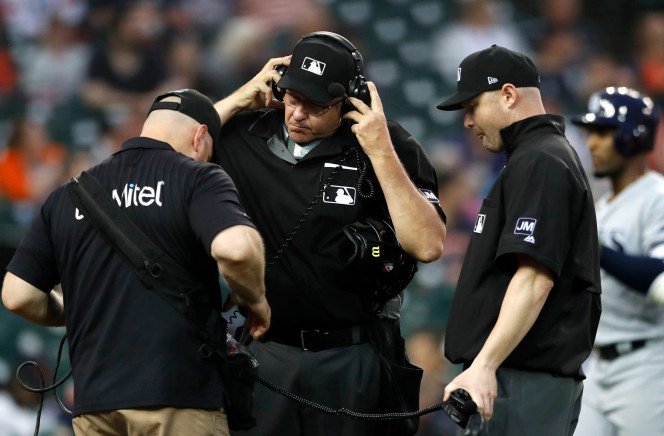
MLB struck an agreement with its umpires on a new deal Friday, according to AP (photo by AP)

Say Adiós to my Little Friend: Instant Replay

That’s Amaury News and Commentary

By Amaury Pi-González

If there is a 2020 baseball season, there is a very good chance the Instant Replay will disappear. It would be a shortened season by the Covid-19 pandemic. Although is not official yet, sources say it looks like both sides came to an agreement. The umpires are guaranteed 50 percent of their salaries for the month of May, but nothing else is there are no season and no games are played.

The Major League Umpires make on average $150,000 to $450, 000 plus, if just one regular season game is played this season the umpires are guaranteed about onethird of their salaries. Umpires already have been paid from January to April. Looks like the umps will do well either way. The MLB Umpires Union said in a statement, they were pleased to reach this agreement with the commissioner’s office.

The old saying ‘the glass is half full or half empty ‘applies to the record since 2014. When the Instant Replay was established, with about half of the challenged calls resulting in reversal. In other words, major league umpires, missed half of the challenged plays and are right on the other half.

There still no timetable for an Opening Day. The parks where they are proposing to play in Arizona and Florida are not wired for the replay review, so they would play these games without no fans, and no replays. On the other hand, it seems what the owners do not want is the “replay review”.

A good scenario would be to open the season/play in Arizona and Florida and then later, if there is an effective treatment for the virus (most experts do not expect a vaccine until 2021) and then move to the original baseball parks where all 30 teams play, under the new proposed realignment of merging both leagues into three by geographical logic: East, Central and West. Even then, it would be with no fans.

Revenues? The games will be entirely for television that means the TV revenue is the only revenue generated. No fans, No tickets sold, concessions or parking. The rest we must leave to the financial experts, but anyway you look at this, is a very ugly situation.

Finally: Since we are talking about numbers, I will make it very simple. In my book there is a 50-50 of a season in 2020.Those are my best odds.

Stay well.

Amaury Pi Gonzalez is the Oakland A’s Spanish play by play on the A’s Spanish flagship station KIQI 1010 San Francisco and does News and Commentary each week at http://www.sportsradioservice.com

50 Years Ago: Pilots Land in Milwaukee Pt 2 of 5 part series By Daniel Dullum

image from sportslogos.net

50 Years Ago: Pilots Land in Milwaukee Part 2

By Daniel Dullum

Author’s note: This is the second of a five-part series detailing an unusual Major League Baseball franchise shift — In 1970, the Seattle Pilots arrived at spring training in Tempe, Arizona, and left at the end of March as the Milwaukee Brewers. At the conclusion of Part 1, Bud Selig’s group Milwaukee Brewers Inc. was rejected in its bid to purchase the Chicago White Sox and move the team to Milwaukee.)

Because ill feelings still lingered from the failed antitrust litigation against the National League, Selig’s group was persona non grata with the Lords of Baseball. They drove this point home at the American League owners’ meeting of October 18, 1967, when, after granting the Athletics permission to move from Kansas City to Oakland, an expansion team was promised to Kansas City for 1971. But after U.S. Senator Stuart Symington of Missouri played the antitrust exemption card and Kansas City Mayor Ilus W. “Ike” Davis threatened legal action, AL President Joe Cronin reopened expansion dialogue and moved the timetable up to 1969 for Kansas City.

Now, needing an even number of clubs, the American League awarded its 12th franchise to Seattle on December 1, 1967. Two weeks earlier, National League President Warren Giles had said the Senior Circuit would not oppose the American League’s expansion plans, and would go ahead with its own.

The second blow to Milwaukee Brewers Inc. — the one that hurt Selig the most — was delivered at the National League owners’ meeting in Chicago on May 28, 1968, when the league announced it would expand to San Diego and Montreal for 1969. Selig was so despondent after the meeting that for the next few hours, he walked the Windy City’s streets alone.

To compound Selig’s frustration, Commissioner Bowie Kuhn addressed the media in Atlanta on July 1, 1969, and told them, “I see no expansion for the major leagues over the next 10 years.” In the meantime, White Sox home-away-from-home games at County Stadium proved popular with Milwaukee baseball fans, drawing 196,684 fans in 11 dates.

One of those games was played on June 16, 1969, against the Seattle Pilots, won by Chicago 8–3. The 13,133 people in attendance didn’t realize it at the time, but in less than 10 months, the visiting team on the County Stadium scoreboard that day would be the ballpark’s next permanent residents. — – By September 1969, the Pilots were putting the finishing touches on a dismal debut season in the Pacific Northwest, winding up in the AL West Division cellar with a 64–98 record, 33 games behind first-place Minnesota.

Attendance was disappointing — 677,944 in 72 home dates (with nine doubleheaders) at rickety Sicks’ Stadium, the old home of the Pacific Coast League’s Seattle Rainiers that was never completely upgraded to major league specifications. “It was not a major league facility. It had its own uniqueness, but that’s all they [Seattle] had at the time and the players understood that,” Rich Rollins pointed out. “It was a minor league ballpark is what it was. They did the best they could with what they had at that particular time. “We didn’t think about the field all that much — we had too many other problems!”

Despite losing a reported $850,000 in 1969, the Pilots still outdrew four other teams — Cleveland and Chicago in the American League, and Philadelphia and San Diego in the National League. If there were rumblings about the team’s possible relocation, word hadn’t filtered down to the dingy Pilots’ clubhouse, at least initially.

Reserve catcher Jim Pagliaroni, acquired in mid-season from Oakland, didn’t recall any talk of the Pilots leaving Seattle. “Not at that time,” he said. “There was nothing. No talk about a move. There was no clue.” Pilots’ first baseman-outfielder Mike Hegan remembered hearing rumors of a possible move toward the end of the 1969 season. “The rumors were there,” he said. “It wasn’t a done deal at the beginning of spring training, but I was one of the few players who actually stayed in Seattle in the off-season. “What’s funny is that it was an ongoing story all winter in Seattle.”

William R. Daley, the Pilots’ absentee board chairman who made his fortune with Otis Elevator and resided in Cleveland, reportedly was ready to sell midway through the 1969 season. In mid-September, Pilots President Dewey Soriano strongly denied rumors of a shift to Dallas-Fort Worth while feuding with Floyd Miller, Seattle’s interim mayor. Miller threatened to evict the Pilots from Sicks’ Stadium unless they presented a security bond of $150,000 and a promised letter of credit for $660,000.

Dewey Soriano responded by refusing to put up the bond, claiming the city failed to keep its promises to upgrade the aging ballpark. Two weeks later, on September 28, Daley confirmed that an offer from Texas millionaire Lamar Hunt was rejected, and that the Pilots would remain in Seattle. Hunt, owner of the American Football League’s Kansas City Chiefs, wanted to purchase the club and move it to Dallas-Fort Worth.

Catching wind of the “Seattle situation,” Selig got busy. He had met secretly with Seattle co-owners Dewey and Max Soriano throughout the month of September and, during game one of the 1969 World Series in Baltimore, hammered out a deal to buy the Pilots for $10.8 million, contingent on approval from the American League and the lack of a local buyer.

The American League, fearing the possibility of lawsuits and congressional action, refused to approve the deal and spoke only in public about keeping the Pilots in Seattle. Daley, meanwhile, issued an ultimatum to the Emerald City’s baseball fans at an October 1969 press conference, declaring, “Seattle has one more year to prove itself.” Looking for a convenient scapegoat, he added, “It’s all the fault of the press.”

George N. Meyers, sports editor of The Seattle Times, noted in a column the Pilots’ top ticket price of $6, as well as 75-cent beer and 35-cent Cracker Jack at Sicks’ Stadium concession stands, then wrote, “That’s upside down, isn’t it? What we’re really doing is giving Daley one more chance.”

American League President Joe Cronin and a six-man committee of the league’s owners met with a Seattle delegation on October 21 and issued three conditions for the city to keep the Pilots: 1) Upgrade Sicks’ Stadium to the original unfulfilled specs. 2) Start construction of a new, domed stadium before the deadline of December 31, 1970. 3) Find a local ownership group to acquire the club by October 30, 1969, a deadline the league later extended to November 5.

Amidst the chaos, Pilots General Manager Marvin Milkes continued conducting the business of running the ballclub. He dismissed pitching coach Sal Maglie, first base coach Ron Plaza, farm system director Art Parrack, and scouting director Ray Swallow. Manager Joe Schultz initially was advised by the club to consider other employment offers and was eventually fired on November 20, replaced four days later by former Cincinnati Reds skipper Dave Bristol.

The Pilots completely overhauled the coaching staff, and, unlike Schultz, Bristol was allowed to select his own assistants, as per normal for major league managers. Gone from 1969 were third base coach Frank Crosetti (hired along with Maglie by Milkes), Eddie O’Brien (hired by Dewey Soriano) and Sibby Sisti (hired by Milkes). O’Brien and Sisti had been brought aboard primarily to accrue enough time in uniform to qualify for a major league pension.

Immediately, Bristol brought in Cal Ermer — a former Minnesota Twins coach and manager — as the new third base coach, along with baseball veterans Roy McMillan (the former All-Star shortstop) and Jackie Moore. To complete the staff, Seattle-area native Wes Stock was hired away from the New York Mets, where he had been the minor league pitching instructor. “It was quite an experience because Seattle was my home, so that was a special reason I wanted to go back to Seattle,” said Stock, who had pitched in the majors with Baltimore and the Kansas City A’s. “We were trying to make the best club we could come up with as far as being a pitching coach. It was a tough situation because the guys didn’t know where they were going to go.”

For a while, it looked as though the Pilots would stay put. Fred Danz, a local theater chain owner, announced on November 17 that his 12-man group of investors had purchased the club for a reported $10.3 million, and the American League approved the transaction on December 5. But on January 3, 1970, Danz held another press conference, this time to explain that the Bank of California had requested immediate payment of a $3.5 million loan it made to Pacific Northwest Sports and that his group was unable to meet that demand.

By mid-January, the AL withdrew its approval of the sale to Danz, and ownership of the Pilots boomeranged back to Pacific Northwest Sports. By now, the Hot Stove League was rampant with solutions for the Pilots. John Wilson, a sports writer for The Houston Chronicle, added grist to the rumor mill on January 23, reporting that the American League already approved a shift of the Pilots to Dallas-Fort Worth with a vote by telephone survey. But AL President Joe Cronin, White Sox owner John Allyn and Athletics owner Charles O. Finley all denied the report.

Edward E. Carlson, board chairman of Western International Hotels, announced on January 27 that he’d put a group together that wanted to run the Pilots as a non-profit organization. The AL owners, feeling the approach would devalue the league’s other franchises, also rejected the bid from Carlson’s group.

On January 28, the Pilots were given nine days to come up with necessary financing to remain in Seattle. Three days later, Edward J. Daley, president of World Airways of Oakland, California, said he was interested in buying the team and keeping it in Seattle. And on February 5, 1970, the Bank of California offered to renegotiate its $3.5 million loan — on its terms. The Bank of California later offered to remain involved for $750,000 if other Seattle banks would join in. But two banks backed out and the proposed consortium fizzled.

Despite the misinformation and ongoing chaos, Mike Hegan was so impressed that he ignored the rumors, plus the dark financial cloud that hovered over the Pilots, and decided to move from Massachusetts to suburban Seattle. Hegan explained, “It looked at one time like there was going to be an infusion of new money into the ballclub that would keep the Pilots in Seattle.

At that time, my wife and I were looking to plant roots someplace anyway, so we bought a house in Seattle.” Meanwhile, General Manager Marvin Milkes continued to make deals. He acquired veteran lefthander Bob Bolin from San Francisco for outfielder Steve Whitaker and utility man Dick Simpson. Reliable pitcher Diego Segui returned to the Athletics along with light-hitting Ray Oyler in exchange for infielder Ted Kubiak, and reliever Dave Baldwin arrived from the Washington Senators.

On January 15, 1970, the Pilots made another deal with Oakland, swapping All-Star first baseman Don Mincher and journeyman infielder Ron Clark to the A’s for outfielder Mike Hershberger, righthander Lew Krausse, catcher Phil Roof and reliever Ken Sanders. Upon joining the Pilots’ fold, Roof recalled, “Rumors [about moving] were there right off the bat. They knew the ownership in Seattle was short on cash and also, the park wasn’t a major league park. That was another detriment. They couldn’t come up with concrete plans to build a stadium on short notice at that point.”

Three days later, at the Milwaukee Baseball Writers’ 17th annual Diamond Dinner on January 18, Commissioner Bowie Kuhn discussed the possibility of the Pilots landing in Milwaukee. “If this does not take place, it would not be my advice to Milwaukee to give up hope. When I think the sponge should be thrown in for Milwaukee, I’ll say so. “I do not think that time is now, and I hope it never comes,” the commissioner continued. “I can assure you that there is no grudge in baseball against Milwaukee and Wisconsin. When and if a franchise becomes available, Milwaukee will receive serious consideration.” Kuhn added that he hoped Seattle would find a solution to its financial woes, but noted, “I do not encourage shifting of franchises because I believe they hurt the stability of baseball. But we recognize that in certain circumstances, shifts can become likely.”

Selig also spoke at the Diamond Dinner, issuing a thinly veiled reference to the Seattle situation: “We do not consider ourselves predatory raiders. At no time have we instituted any negotiations for a franchise. Accusations that we have are unjustified and completely without fact.” At a meeting of American League owners in Chicago on February 10, 1970, AL President Joe Cronin confirmed that there was one possible solution — the league could operate the Pilots until a buyer could be found. He reiterated that the league wanted the Pilots to remain in Seattle, and when the meetings concluded, the AL owners decided that the Soriano brothers and Daley would again operate the Pilots.

On the legal front, Seattle attorney Alfred J. Schweppe filed a “ticket buyer’s” lawsuit against the Pilots’ owners on behalf of himself as a season ticket holder, and obtained a temporary restraining order on March 13 to keep the Pilots from leaving Seattle. Schweppe had purchased two field box seats for $700 and a season parking space for $75 for the next four seasons.

On March 16, 1970, when rumors about a shift of the Pilots to Milwaukee resurfaced, William Dwyer, special assistant to Washington Attorney General Slade Gorton, followed through on earlier threats and filed breach-of-contract and antitrust suits against the American League. King County and the City of Seattle also joined the legal action, which involved a minimum $75 million in damages and sought a temporary restraining order and injunction to block any move of the ballclub.

In addition, Washington’s U.S. Senators — Warren G. Magnuson and Henry M. “Scoop” Jackson — said they would introduce legislation to repeal baseball’s longtime immunity from antitrust laws (dating back to a landmark 1922 Supreme Court ruling), claiming a transfer of the Pilots would clearly show baseball to be a business, rather than a sport. — — The American League owners voted to loan the Seattle Pilots $650,000 on March 9, 1970, to operate through spring training. They also appointed Roy Hamey, a semi-retired former general manager of Pittsburgh, the Philadelphia Phillies, and the New York Yankees, as “special supervisor” to oversee the operation, with Milkes still in place as the team’s general manager.

Hamey was granted a leave of absence from his part-time post as the Yankees’ West Coast scouting director to assume babysitting duties on behalf of the league. During the meeting, Milkes (who was promoted to team vice president when Hamey was brought on board) walked out in disgust when Baltimore Orioles owner Jerry Hoffberger suggested developing a trusteeship of the Pilots with the American League, and that Bill DeWitt, the former general manager of the St. Louis Browns, Detroit Tigers and Cincinnati Reds, be placed in charge.

Seattle sports writer Hy Zimmerman observed in his weekly report for The Sporting News, “Here sat Milkes, who had gone without pay, who had pleaded with and cajoled other unpaid employees to hang tough, who had kept the organization together with hairpins and chewing gum. “Now they were going to make an errand boy out of him. He could not, and would not, take it, and left in a huff.”

After the meeting — held on Ash Wednesday — concluded, one unnamed AL owner quipped, “The American League has given up $650,000 for Lent!” As the Pilots began arriving in Tempe for spring drills, work toward beginning construction of a 55,000-seat domed stadium in Seattle remained on schedule, according to John Spellman, a King County spokesman. The only visible problem was a legal tussle over whether to build the stadium downtown or in the suburbs. But other problems continued to mount for the Pilots.

When the American League granted its loan, $400,000 was paid out immediately to cover outstanding debts, leaving $250,000 — not enough to get the Pilots through spring training. After being asked by Commissioner Kuhn to resubmit its bid, Edward E. Carlson’s nonprofit group officially notified the American League on March 12 it was no longer interested in purchasing the Pilots.

As primary reasons to reconsider their offer, the Carlson group cited lagging season ticket sales, a renegotiated radio contract for less money (dropped from $815,000 to $215,000), the lack of a local television contract, and “public disgust and apathy.” When the American League owners met on March 17 in Tampa, Florida, they were served with papers by sheriff’s deputies and a representative of the State of Washington’s attorney general’s office, detailing a restraining order blocking any move of the Pilots.

The league’s owners faced possible jail time for contempt of court if they ignored the injunction. Schweppe also surprised the owners by obtaining a similar, but broader injunction from Circuit Court Judge Joe Bruton Jr. of Hillsborough County, Florida. Bruton ordered the AL to suspend its actions in the case until all legal questions were settled.

The league responded with a resolution saying it could not continue financial support of the Seattle Pilots “beyond the amount already committed.” An exasperated Cronin said, “Our hands are tied now.” Hinting at the possibility of folding the Pilots, he added, “It’s almost impossible to operate with 11 clubs.” But Alexander Hadden, the American League’s attorney, mildly disagreed, “It’s a theoretical possibility if legal constraints could not be removed before the start of the season.”

White Sox owner John Allyn agreed with Hadden, saying, “I think you’ll see your first [modern major league] baseball franchise go down the drain.” In a statement drenched in legalese, the American League admitted that the Pilots were broke. Two days later, on March 19, the Pilots’ minority owners attempt to have the lawsuits and injunctions against them and the American League withdrawn ended in failure. Meanwhile, on the field, the Pilots pressed on with its Cactus League schedule in Arizona, and the players and coaches wondered what their futures would bring.

NEXT: Part 3