That’s Amaury News and Commentary: Major League Baseball Leader in Hispanic Heritage

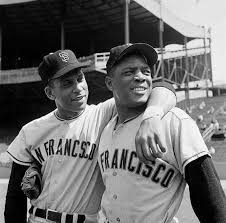
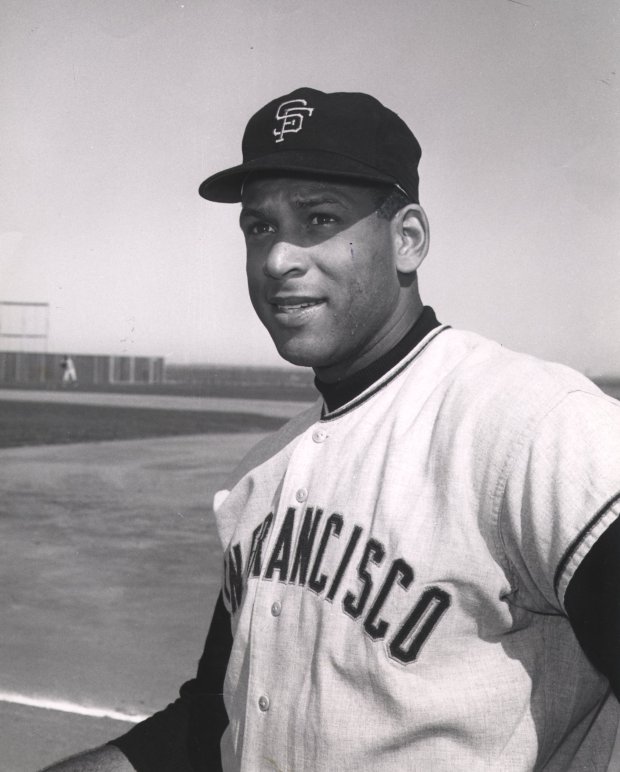
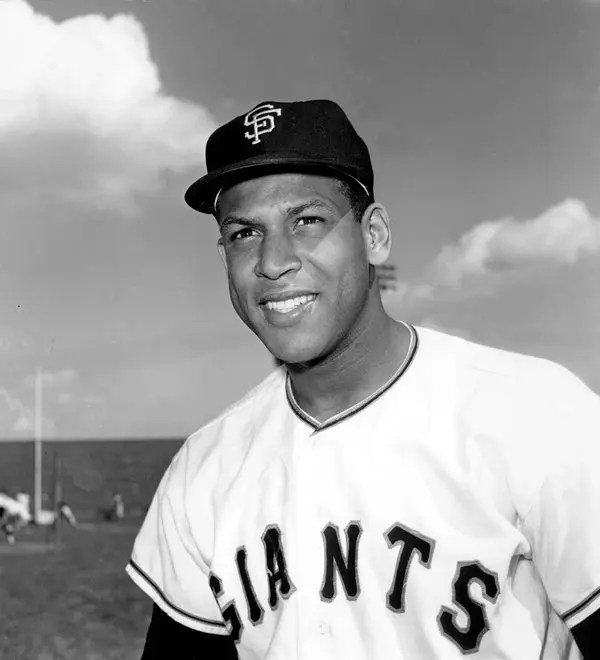
Former San Francisco Giant first baseman Orlando Cepeda was one of the many Hispanic players in the National League in the 1960s. Cepeda is a member of the Major League Baseball Hispanic Heritage Hall of Fame Museum. (New York Times file photo)

Major League Baseball Leader in Hispanic Heritage

That’s Amauiry News and Commentary

By Amaury Pi-González

The US government designated National Hispanic Heritage Month as a one-month celebration, starting on September 15 and ending on October 15, in 1989 under President George H.W. Bush. Some of the earliest documented celebrations among all US professional sports leagues, like MLB, NFL, NBA, NHL, and MLS, originated from Major League Baseball organizations, given the league’s long history with Hispanic/Latino players.

The National League of professional baseball clubs is the oldest professional sports league in the United States, founded in 1876. Major League Baseball (MLB) has the highest percentage of Hispanic/Latino players among the major professional sports leagues in the U.S.

With over 30% of players identified as Latino, and a rich history of talent from countries such as, (in alphabetical order) Colombia, Cuba, Dominican Republic, México, Nicaragua, Puerto Rico, Panamá, Venezuela and other smaller countries like Aruba, Bahamas, Honduras and Curacao.

Here in the Bay Area, the San Francisco Giants have been leaders in recognizing Hispanic/Latino communities as well as one of the leaders nationwide. These celebrations are conducted by the team(s) not only because of the Hispanic talent on their rosters, but also for the Hispanic/Latino communities in which they play and the many Hispanics who are fans and support their teams.

Of the three most populous cities in the Bay Area, San José, Oakland, and San Francisco, San José is the largest, with at least 33% of its population being Hispanic, followed by Oakland at 29% and San Francisco at 16%. According to the latest 2020 US Census.

The Bay Area is one of the most diverse areas in the US and the world, and teams draw a great number of fans of Hispanic Heritage. Since the Oakland Athletics left the Bay Area after the 2024 season, the Giants have become the “only Major League” baseball team that plays within the nine-county Bay Area, with a total population of approximately 8 million people.

Overall, at the time of the 2020 Census, there were 65.3 million Americans who were Hispanic or Latino. Only México, with 130 million, has more Spanish speakers than the United States of America. The importance of Sports teams’ marketing to the largest minority in the country is just good business Down in LA.

There is no precise figure for the number of Hispanic/Latino fans of the LA Dodgers who attended Dodger Stadium. this season. However, considering the Dodgers’ attendance was over four million fans, and Los Angeles is 50% Hispanic(some say more), you do not need to be Isaac Newton or Archimedes to figure out that 1 million Spanish-speaking fans is a very possible figure for the Dodgers, the team leading the Hispanic market in all US professional leagues.

However, this is nothing new for the Dodgers; they have long recognized the importance of their Hispanic community. The relationship between a team and its fans is frequently viewed as symbiotic. Success is seen as something achieved together, lifted by those around you.

Recognition plays a role in this relationship, reinforcing positive connections. Teams that fail to recognize their own market are bound to fail. Hispanics are the largest consumer group in the US, representing a significant and fast-growing segment of the market with trillions of dollars in buying power that is projected to continue increasing.

Amaury Pi-Gonzalez – Cuban-born Pi-González is one of the pioneers of Spanish-language baseball play-by-play in America. Began as Oakland A’s Spanish-language voice in 1977 ending in 2024 (interrupted by stops with the Giants, Mariners and Angels). Voice of the Golden State Warriors from 1992 through 1998. 2010 inducted in the Bay Area Radio Hall of fame.

While in the Bay Area, great food and great prices. 998cuba.com

That’s Amaury News and Commentary: Orlando Cepeda Day in Puerto Rico  (Exclusive to Sports Radio Service)

Orlando Cepeda Day in Puerto Rico on Fri Dec 6, 2024 was an opportunity for the people of Puerto Rico to pay tribute to the former St Louis Cardinal and San Francisco Giant who passed away on Jun 28, 2024 (photo image by Multinacional de Seguros)

Orlando Cepeda Day in Puerto Rico  (Exclusive to Sports Radio Service)

Amaury Pi-González

December 6, 2025 —Orlando Cepeda Day

Hiram Bithorn Stadium San Juan, Puerto Rico

Orlando’s family and friends, and thousands of fans will gather to honor one of the greatest players to ever play in the Major Leagues. Orlando “Peruchín”Cepeda

Orlando Cepeda   “Success is not given to you, it is earned, you have to work very hard to achieve it”.

Giants Honor Late Orlando Cepeda, but Fall to the Padres 4-3, on a Beautiful day by the Bay

San Francisco Giants crew setting up for the Orlando Cepeda tribute at Oracle Park in San Francisco on Sun Sep 15, 2024 (photo by Michael Roberson/ The African American Athlete)

By Michael Roberson

SAN FRANCISCO, Calif — The San Francisco Giants (72-78) held a pregame ceremony for former Giant and Hall of Famer the Late Orlando “Baby Bull” Cepeda, before losing to the San Diego Padres (85-65), 4-3 inside the friendly confines of Oracle Park.

Cepeda, who spent his first nine seasons with the Giants, died June 28 of this year at the age of 86. The organization posthumously gave him his flowers in a celebration of his life at Oracle Park, simultaneously while the rest of Major League Baseball celebrated Roberto Clemente in the other ballparks.

Orlando”s career numbers are impressive across the board, but even more so as a Giants’ first baseman. As a major leaguer, Cepeda hit .297, had 2,351 hits, belted 379 home runs, and knocked in 1,365 runs. As a Giant, (1958 – 1966) he batted .308, hit 226 homers, and produced 767 RBIs.

Also during his time in the city by the Bay, Cepeda earned the 1958 National League Rookie of the Year award. In addition to that prestigious honor, Orlando was a 10-time All-Star, representing the Giants.

During the 1966 season, he was traded to the St. Louis Cardinals, where he garnered the National League Most Valuable Player award in 1967, in addition to winning the World Series that same year.

Next he went south to the Peach State and played for the Atlanta Braves (1969 -1972). Midway through the 1972 season, he was back in the Bay Area, after being traded to the Oakland A’s. Unfortunately his reunion on the West Coast was pretty unceremonious.

He was injured right away and considered retirement. Eventually the cantankerous owner Charlie Finley released him of his contract while he was rehabbing in Puerto Rico. Ironically, Oakland went on to win the first of their threepeat of World Series victories (1972 – 1974), while Cepeda was not credited for the team’s championship.

In 1973, with the American League adopting the Designated Hitter position, it revitalized the Caribbean Legend into continuing to play baseball. The Boston Red Sox signed him to the first ever DH contract that allowed him to strictly hit and not have to worry about playing on the field defensively.

Cepeda parlayed that opportunity into being awarded the Outstanding Designated Hitter Award, on the merits of batting .289, hitting 20 home runs, and tallying 86 RBI’s. He also had the distinction of hitting at least 20 homers on four different teams (Giants, Cardinals, Braves & Red Sox).

In 1974, Orlando played briefly in Mexico, then he was offered a contract by the Kansas City Royals. The season resulted in stats that were lower than his prime campaigns, and eventually became his final season in the Big Leagues. Cepeda hit .215, hit only one home run, and knocked in 18 runners.

He played in his native Puerto Rico the next season, but ended up retiring because he felt his body was not up to continuing playing baseball. He faced trials and tribulations for a while after baseball, but things did eventually get better.

In 1987, he returned to the fold of the San Francisco Giants family, serving several posts and capacities over the years. His number 30 is retired and on the outfield wall next to Wille Mays’.

With all the ceremonial respect being paid to Cepeda, the game started 30 minutes (1:35) later than the usual start time for Sunday Afternoon. The visiting Southern California “Fathers” were on a mission (journey), not the building they founded, but winning the game.

San Diego scored first, on a sacrifice fly by Manny Machado, scoring Luis Arraez in the top of the sixth inning. Donovan Walton tied the game with a solo homer in the bottom of the same inning,

In the top of the 8th, Fernando Tatis Jr. came into the game as a pinch hitter and promptly belted a solo bomb, propelling the Padres back on top, 2-1. The Giants used the drama of the bottom of the ninth inning to tie the game at 2 and force extra innings. Heliot Ramos also hit a solo home run to tie the score.

During the bonus inning (10), Padres’ David Peralta hit an RBI single (Crownenworth), then he later scored on Donovan Solano’s groundout. San Diego was up 4-2 after 9 1/2 innings.

The Giants tried to use the spirit of Orlando Cepeda and comeback and win in the bottom of the tenth, but that did not exactly happen. Michael Conforto stepped to the plate as a pinch hitter, and hit a deep fly ball out, which resulted in an additional run, but not enough for the win. San Diego escaped with a 4-3 victory, and series sweep.

Rest in Peace Orlando Cepeda.

San Francisco Giants podcast with Bruce Magowan: Interviews and meeting with Mays and Cepeda experiences

Bruce shared many memories of his experiences with Orlando Cepeda (left) and Willie Mays (right) interviewing and speaking with them (photo from facebook.com)

San Francisco Giants podcast with Bruce Magowan:

#1 Bruce, we didn’t get to talk to you about the passing of two Giants legends this month of June and that of Willie Mays and Orlando Cepeda. What did each of these players mean to the Giants and their history.

#2 Giants manager Bob Melvin called the passing of Mays and Cepeda a gut punch and it’s puts a big hole in the Giants history with the passing of these two Hall of Famers.

#3 Mays passing just two days before the Rickwood game in Birmingham that paid tribute to him and the Negro Leagues something no doubt that Mays would have liked to have attended.

#4 Orlando had those two memorable seasons with the St Louis Cardinals in 1967 and 1968 as their first baseman and leading the Cards to the World Series in each of those years.

#5 On a personal note for you Bruce can you recall any great stories or memories you’ve had with with either Orlando or Willie?

Bruce Magowan is a podcast contributor at http://www.sportsradioservice.com

Headline Sports podcast with Charlie O: Cepeda the second of Giants Heroes to pass in June; Gallen back in D-Backs rotation; plus more

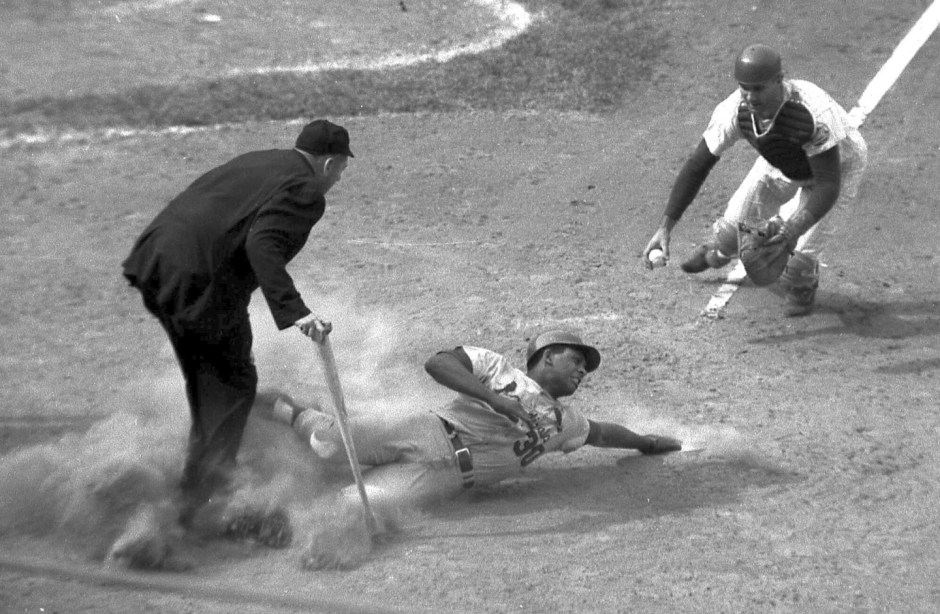
No Bull, Orlando Cepeda was one of the best he shined when playing for the St Louis Cardinals in the 1967 and 1968 seasons leading them to the World Series in each of those years. Here is Cepeda taking in a slide scoring on the New York Mets catcher JC Martin at Shea Stadium in 1968. (AP file photo)

On Headline Sports podcast with Charlie O:

#1 Orlando Cepeda the St Louis Cardinals first baseman who went to the World Series as their starting first baseman for the 1967 and 1968 seasons. Cepeda won the National League MVP in 1967 passed away on Friday night at age 86. Cepeda was a longtime San Francisco Giant before going to the Cards after the 1966 season.

#2 San Francisco Giants manager Bob Melvin called Cepeda’s passing a gut punch as his passing is the second Giants Hall of Famer to go as the legendary Giants outfielder Willie Mays passed away on Tue June 18, 2024. It’s been a very rough month for the Giants Hall of Famers and fans.

#3 The Arizona Diamondbacks Zac Gallen has returned to the pitching rotation he started Saturday’s game against the Oakland A’s at Chase Field. Gallen a right hander faced only one batter in his last outing on May 30th. Gallen had a left hamstring strain where he was placed on the IL.

#4 The A’s opened up their three game series on Friday with a win that snapped a long 11 game road losing streak and ended their six game skid. Defeating the Diamondbacks at Chase Field 9-4. It’s been a long tough road but the A’s figured it out on Friday night.

#5 Los Angeles Dodgers bat boy Javier Herrera snared a line drive foul ball that was headed into the Dodger dugout and could have take out Shohei Ohtani but Herrera’s quick thinking and fast hands caught the drive barehanded avoiding hitting Ohtani who just so happened to be right behind Herrera. Ohtani said of the line drive catch and Herrera “my hero.”

Join Charlie O for Headline Sports podcasts each Sunday at http://www.sportsradioservice.com

That’s Amaury News and Commentary: Adiós Cha Cha Cepeda, Descansa en Paz, RIP

Flashback: Hall of Fame acknowledgement for Orlando Cepeda in 1999 at Candlestick Park in San Francisco. From left to right: Lon Simmons Giants broadcaster (seated), Amaury Pi Gonzalez Giants Spanish broadcaster, Giants manager Dusty Baker, Orlando Cepeda Hall of Famer, and Giants managing partner Peter Macgowan (seated) (photo furnished by Amaury Pi Gonzalez)

Adios Cha Cha Cepeda, Descansa en Paz, RIP

That’s Amaury News and Commentary

By Amaury Pi Gonzalez

Ten days after Willie (“The Say Hey Kid”), Mays left us, Adiós today to Cha Cha. Rest in peace. Orlando Cepeda passed on June 28, 2024, at 86, in the Hall of Fame, elected by the Veterans Committee. He was born in Ponce, Puerto Rico; the first baseman played for 17 seasons in the major leagues, and ended with a .297 average, 379 Homeruns, hit over .300 nine times in his career, a six-time All-Star who in 1958, won the National League, Rookie of the Year honors, was the 1966 Comeback Player of the Year Award, the 1967 Most Valuable Player in the National League, and 1973, at the end of his career won the DH of the Year Award.

Orlando’s debut was in 1958 with the San Francisco Giants, where he played most of his 17 seasons. He also played in St. Louis, Atlanta, Oakland, and Boston, and his last season with the Kansas City Royals was in 1974. A power hitter from Puerto Rico, Orlando made his debut in the majors just three years after his compatriot Roberto Clemente, who in 1955 was a rookie with the Pittsburgh Pirates.

I had the chance to speak with Orlando on many occasions, just talking baseball with him in Spanish and all the great memories of his days as a player that he shares with yours truly, the years when he (like many African-American and Latino players) were discriminated in the minor leagues and later here in the big show.

His telephone at home had a recording with Salsa music in the background. He once told me he would be either a musician or a ballplayer. He shared a great love for Latin music and always had a smile when we spoke about that topic.

Many times, either at Candlestick or later after 2000 at what is today Oracle Park, Orlando will come to the Spanish broadcast booth to join me as he enjoyed doing commentary. He was not part of the broadcast team, but it was an honor for us to welcome him, his experience, knowledge, and stories of his great career.

In February 2018, after a fall, he suffered a cardiac episode, a head injury, and a stroke after falling in a parking lot. Orlando Cepeda’s father was one of the most famous baseball players in Puerto Rico. Nicknamed Perucho was a solid professional baseball player in the “Isla del Encanto” trans “Island of the Charm.”

Orlando told me his dad could have played in the major leagues, but he did not want to suffer the discrimination that Hispanic players were subjected to. His father’s full name was Orlando Manuel Cepeda Pennes.

In 1998, through Orlando Cepeda, I met Garbiel (Tito) Avila Jr, who had the idea of starting a Hispanic Baseball Museum in the United States. I joined Avila Jr and, with him, co-founded the museum, which is still going strong after 25 years of traveling across the country.

In 2002, Orlando Cepeda was inducted into The Hispanic Heritage Baseball Museum and Hall of Fame (hhbmhof.com). Orlando shared their passion for the game as he was part of the HHBM during many of our public events and always hopes that we will have the permanent site for the Museum near the San Francisco Giants Park.

As a fan I always remember Orlando Cepeda aka The Baby Bull for his pure power at the plate; he hit a lot to centerfield and had power to spare.

Que en Paz Descanse una de las leyendas de Latinoamerica, el gran Boricua Orlando Cepeda.

Adiós Cha Cha Cepeda, Descansa en Paz, RIP.

Amaury Pi Gonzalez is the vice president of the Major League Baseball Hispanic Heritage Hall of Fame Museum and does News and Commentary at http://www.sportsradioservice.com

That’s Amaury News and Commentary: Adiós Cha Cha Cepeda, Descansa en Paz, RIP

Flashback: Hall of Fame acknowledgement for Orlando Cepeda in 1999 at Candlestick Park in San Francisco. From left to right: Lon Simmons Giants broadcaster (seated), Amaury Pi Gonzalez Giants Spanish broadcaster, Giants manager Dusty Baker, Orlando Cepeda Hall of Famer, and Giants managing partner Peter Macgowan (seated) (photo furnished by Amaury Pi Gonzalez)

Adios Cha Cha Cepeda, Descansa en Paz, RIP

That’s Amaury News and Commentary

By Amaury Pi Gonzalez

Ten days after Willie (“The Say Hey Kid”), Mays left us, Adiós today to Cha Cha. Rest in peace. Orlando Cepeda passed on June 28, 2024, at 86, in the Hall of Fame, elected by the Veterans Committee. He was born in Ponce, Puerto Rico; the first baseman played for 17 seasons in the major leagues, and ended with a .297 average, 379 Homeruns, hit over .300 nine times in his career, a six-time All-Star who in 1958, won the National League, Rookie of the Year honors, was the 1966 Comeback Player of the Year Award, the 1967 Most Valuable Player in the National League, and 1973, at the end of his career won the DH of the Year Award.

Orlando’s debut was in 1958 with the San Francisco Giants, where he played most of his 17 seasons. He also played in St. Louis, Atlanta, Oakland, and Boston, and his last season with the Kansas City Royals was in 1974. A power hitter from Puerto Rico, Orlando made his debut in the majors just three years after his compatriot Roberto Clemente, who in 1955 was a rookie with the Pittsburgh Pirates.

I had the chance to speak with Orlando on many occasions, just talking baseball with him in Spanish and all the great memories of his days as a player that he shares with yours truly, the years when he (like many African-American and Latino players) were discriminated in the minor leagues and later here in the big show.

His telephone at home had a recording with Salsa music in the background. He once told me he would be either a musician or a ballplayer. He shared a great love for Latin music and always had a smile when we spoke about that topic.

Many times, either at Candlestick or later after 2000 at what is today Oracle Park, Orlando will come to the Spanish broadcast booth to join me as he enjoyed doing commentary. He was not part of the broadcast team, but it was an honor for us to welcome him, his experience, knowledge, and stories of his great career.

In February 2018, after a fall, he suffered a cardiac episode, a head injury, and a stroke after falling in a parking lot. Orlando Cepeda’s father was one of the most famous baseball players in Puerto Rico. Nicknamed Perucho was a solid professional baseball player in the “Isla del Encanto” trans “Island of the Charm.”

Orlando told me his dad could have played in the major leagues, but he did not want to suffer the discrimination that Hispanic players were subjected to. His father’s full name was Orlando Manuel Cepeda Pennes.

In 1998, through Orlando Cepeda, I met Garbiel (Tito) Avila Jr, who had the idea of starting a Hispanic Baseball Museum in the United States. I joined Avila Jr and, with him, co-founded the museum, which is still going strong after 25 years of traveling across the country.

In 2002, Orlando Cepeda was inducted into The Hispanic Heritage Baseball Museum and Hall of Fame (hhbmhof.com). Orlando shared their passion for the game as he was part of the HHBM during many of our public events and always hopes that we will have the permanent site for the Museum near the San Francisco Giants Park.

As a fan I always remember Orlando Cepeda aka The Baby Bull for his pure power at the plate; he hit a lot to centerfield and had power to spare.

Que en Paz Descanse una de las leyendas de Latinoamerica, el gran Boricua Orlando Cepeda.

Adiós Cha Cha Cepeda, Descansa en Paz, RIP.

Amaury Pi Gonzalez is the vice president of the Major League Baseball Hispanic Heritage Hall of Fame Museum and does News and Commentary at http://www.sportsradioservice.com

Giants survive wild 11-10 game over Rockies

Photo credit: @SFGiants

By: Mary Anne

The San Francisco Giants and Colorado Rockies concluded their four-game series on Sunday. The Giants survived a wild 11-10 game over the Rockies at Coors Field. San Francisco improved to 76-74, while Colorado fell to 56-93.

The Giants’ last dance in Denver began with a starting lineup with Mike Yastrzemski, Thairo Estrada, Joc Pederson, Michael Conforto, J.D. Davis, LaMonte Wade Jr., Mitch Haniger, Patrick Bailey, Brandon Crawford, and Sean Manaea. Manaea pitched 5 1/3 innings and gave up eight hits, two earned runs, three strikeouts, and one home run.

After four scoreless innings, San Francisco got on the board first. Mitch Haniger doubled on a line drive to Brenton Doyle. J.D. Davis scored for a 1-0 lead in the top of the fifth inning.

The Giants took a commanding lead in the top of the sixth inning. Joc Pederson doubled on a sharp line drive to Hunter Goodman. Thairo Estrada scored for a 2-0 lead. J.D. Davis singled on a ground ball to Nolan Jones. Pederson scored to make it a 3-0 game as Michael Conforto went to second base. Mitch Haniger doubled on a sharp fly ball to Brenton Doyle. Conforto and Davis scored to make it 5-0 as LaMonte Wade Jr. went to third base. Brandon Crawford homered on a fly ball to right center field. Wade Jr. and Mitch Haniger scored to expand the Giants’ lead to 8-0. Estrada capped the top of the sixth inning’s scoring with a single on a line drive to Doyle. Mike Yastrzemski scored to extend the Giants’ lead to 9-0.

The Rockies finally got on the board in the bottom of the sixth inning. Hunter Goodman homered on a line drive to left center field. Nolan Jones scored to reduce the Giants’ lead to 9-2. Brenton Doyle homered on a fly ball to left field. Brendan Rodgers and Alen Trejo scored to cut the Giants’ lead to 9-5.

The Giants added to their lead in the top of the seventh inning. Patrick Bailey doubled on a sharp line drive to Hunter Goodman. Austin Slater and J.D. Davis scored to put the Giants up 11-5.

The Rockies made it a five-run game in the bottom of the seventh inning. Brendan Rodgers singled on a line drive to Mitch Haniger. Ezequiel Tovar scored to lower the Giants’ lead to 11-6 as Hunter Goodman went to second base.

The Rockies picked up the pace in the bottom of the ninth inning but fell just short. Hunter Goodman was out on a sacrifice fly to Austin Slater. Elehuris Montero scored to slash the Giants’ lead to 11-7 with one out. Kris Bryant reached on a fielding error by Camilo Doval. Nolan Jones scored to slice the Giants’ lead to 11-8 as Brendan Rodgers went to third base. Elias Diaz sealed the scoring with a single on a ground ball to Mike Yastrzemski. Rodgers and Sean Bouchard scored to put down the Giants’ lead to 11-10.

Notes
Thairo Estrada achieved a new personal best — a career-high 22 stolen bases.

The Giants wished a special 86th birthday to former Giant Orlando Cepeda. Cepeda, also known as the Baby Bull and Peruchin, played in San Francisco from 1958 to 1966.

Up Next
The Giants will continue their road trip against the Arizona Diamondbacks on Tuesday at 6:40 p.m. Pacific. The starters haven’t been confirmed yet.

That’s Amaury’s News and Commentary: A One on One with Orlando Cepeda

Former San Francisco Giant first baseman and Hall of Famer Orlando Cepeda the subject of Amaury Pi Gonzalez’ interview on That’s Amaury’s News and Commentary (file photo mercurynews.com)

A One on One with Orlando Cepeda

That’s Amaury News and Commentary

By Amaury Pi-González

On the eve of the 2021 baseball season, I had the pleasure of speaking over the phone with the great Cha Cha, Orlando Cepeda, somebody I have not seen or spoken with in a few years. Through the years we have spoken numerous times.

During the 1990’s working Giants Spanish radio at Candlestick and later at ATT, SBC, PAC BELL Park. He used to come around and we would talk. On some occasions he sat with me during a radio broadcast and did some commentary. Orlando was one of the first Major League Players who endorsed The Hispanic Heritage Baseball Museum Hall of Fame when it was founded in 1999 in San Francisco.

He is enshrined in that Hall of Fame as well as in The National Baseball Hall of Fame at Cooperstown. He won the rookie of the year with the San Francisco Giants in 1958, the Most Valuable Player of the National League in 1967 with the St Louis Cardinals.

He was one of the most popular players ever to wear a San Francisco Giants uniform. The interview was conducted in Spanish, Orlando born in Ponce, Puerto Rico always prefer to speak Spanish when we talk. In our chat we talked about the day when the Giants retired his number 30 prior to a game in Candlestick Park against the St Louis Cardinals in 1999, a ceremony on the field with Giants announcer Lon Simmons, yours truly who was asked by the Giants to be the co-mc with Simmons, Jack Buck, radio voice of the St. Louis Cardinals and the owner of the Giants Peter Magowan.

We were all on the field between home plate and the mound, lined-up behind a podium. Towards the end of the ceremony a big Number 30 was unveiled in front of the fence in right-center field as the fans stood-up and cheered. I asked Orlando about that moment, responded right away.

Orlando: “Yes, of course I remember and I also remember that Mr. Magowan told me “now Orlando the next step for you is the Hall of Fame” and that helped me a lot. Soon I was in the Hall of Fame. He was a great owner…Magowan loved the game, very committed owner and that was a great honor for me that the Giants retired number “30”.

Orlando was in good spirits. We reminisced about some of the great points in his career. Like the people who saw him play in San Francisco and remember him playing with the Giants in 1958, his very first year in the majors. Is it true that in 1958 you were more popular than the great Willie Mays in San Francisco?

Orlando: ”Well, what happened is that I was a rookie; it was a new team for me. Willie came from New York, and I did very well that year, you know, people liked me in San Francisco. Willie is the greatest ballplayer ever, but good things happened to me that year, and when that happens and the people like you…also I had a good year…and that’s what happened”.

(That year he won the Rookie of the Year hitting .312 with 25 home runs and 96 runs batted-in) In 1967 Orlando was traded to the St Louis Cardinals from pitcher Ray Sadecki. Were you happy when that trade happened?

Orlando: “Well, I had problems with Herman Franks (Giants manager) and it was going to be me or McCovey who was going to be traded”

About his arrival in St Louis? Orlando responded

Orlando: “I had a great welcome there, the guys like Gibson, McCarver, and Brock they all welcome me and treated me very well”

At one the time in the interview, there was a moment when even before I asked the next question, he said something about five Puerto Ricans in the Hall of Fame. And that is true. Puerto Ricans like Roberto Clemente, Iván Rodríguez, and Roberto Alomar and soon to be Edgar Martínez who was born in New York to Puerto Rican parents, moved to the island to live with his grandmother, he said: Orlando followed…

Orlando: “Yes, great…we have five Puerto Ricans now in the Hall of Fame, that’s great, I am very proud of that”.

How about your relation with your compatriot Roberto Clemente?

Orlando: “When I first played with the Giants, Roberto was already playing (since 1955) with the Pirates, Roberto helped me a lot, he was a great guy”

I asked him about what does he thinks about the recent changes in the game of baseball, many with the purpose of making the game faster

Orlando: “Well, a lot of people making these changes never played the game, they are not baseball people, they are computer and business people and all that, but not real baseball people”.

Orlando’s opinion is a common one for older players who had to do everything to win a game, including bunting, hit and run and other stuff that today is well…cancelled in baseball? Orlando was getting a little tired, and he said:

Orlando: “I am speaking too fast, too much”

He seemed to be a little short of breath, so we paused. Then… after a few seconds. We spoke about Opening Day in baseball this April 1.

Orlando: “I am hoping to be at the Giants first game at home April 9”

He said as we said goodbye mutually wished each other well and told me he send his best wishes to everybody. A couple of years ago Orlando had a cardiac incident and spent some time in the hospital. However he made a public appearance in January 2018 to celebrate the 80th birthday of Willie McCovey at AT&T Park.

Gracious, passionate and always ready to talk baseball, it was fun to talk for about 15 minutes, not more, but he seemed alert and with very good memory of some of the events we spoke about in his very stellar career. Other stuff we touch bases, like, he doesn’t agree much with some of the changes in the game today, although he did say at the end of his career the DH rule helped him, he played in 1973 (next to his last year) with the Boston Red Sox, as he said “I was one of the first designated hitters”.

1973 was the first year for the DH rule, Orlando seems to be fine with that, but not with some of the recent changes in the game as previous stated.

Muchas gracias al gran Orlando Cepeda por su cortesía de concederme esta entrevista por la vía telefónica, sigues siendo el mismo Cha Cha, que Dios te Bendiga. Translation “Thanks to the great Orlando Cepeda for his courtesy granting me this interview over the phone, your still the same Cha Cha, may God Bless You.

Stay well and stay tuned

Amaury Pi Gonzalez is the vice president and Orlando Cepeda is a founder of the Major League Baseball Hispanic Heritage Hall of Fame Museum and does News and Commentary at http://www.sportsradioservice.com

That’s Amaury’s News and Commentary: Jackie Robinson Legacy is International

Jackie Robinson who broke the color line in Major League Baseball in 1947 with the Brooklyn Dodgers takes a swing at Ebbets Field in Brooklyn (jackierobinson.com file photo)

Jackie Robinson Legacy is International

That’s Amaury News and Commentary

Amaury Pi-González

April 15,2020 marks the 73rd Anniversary of Jackie Robinson as the first African-American player in MLB,with the Brooklyn Dodgers at Ebbets Field in Brooklyn. His legacy and career was honored and his uniform number 42 retired by Major League Baseball by Commissioner Bud Selig 33 years ago on April 15,1997.

Robinson’s #42 was the first and only number retired by all MLB 30 teams. Generally people focus on African Americans who followed Robinson into baseball,but the great pioneer also opened the door for Black Latino players.

Jackie Robinson’s legacy goes beyond US borders.  Because of Robinson, Latino players of dark skin were also able to come and play in the big leagues with their American brothers.

Today almost 33 percent of all players in MLB are born in Latin America(higher percentage in the minor leagues)and after Jackie Robinson broke the color barrier,some great Latino black players,like Cuban-born Orestes(Minnie) Miñoso who signed as a rookie in 1949 with the Cleveland Indians, before becoming the last player in baseball history to play for five (50 years) different decades.

Minnie played from 1949 until 1980. The Cuban-born Miñoso was the first unquestionable black Latin American in the major leagues, although some others with some black ancestry had played in MLB. By early 1950’s other Latino’s of black skin included, Luis Márquez(Puerto Rico)signed by the Boston Braves and Cuban catcher Rafael(Ray)Noble with the New York Giants as well as Ozzie Virgil Sr.from the Dominican Republic.

According to SABR (Society for American Baseball Research) in 1947; 98.3 perfect of players were white,0.9 percent African-American, 0.7 percent Latinos and 0.0 percent Asian. Decades later, especially in the mid 1950’s the great Roberto Clemente (Puerto Rico) and 1960’s many more came from Latin America, like Juan Marichal, Orlando Cepeda, Manny Mota, Felipe, Jesús and Mateo Alou, Tony Oliva, Luis Tiant, Leonardo(Leo) Cárdenas, Tony González, Francisco(Panchón)Herrera, José Cardenal, Dagoberto(Campy)Campaneris and more not mentioned.

Some of these Latino players are remembered with statues in the cities where they played,the one and only Roberto Clemente not only with a Statue at PNC Park but with the Roberto Clemente Bridge in downtown Pittsburgh over the Allegheny River.

Today all baseball fans around the world honor the great #42 Jackie Robinson,because he is also a historic figure in countries like Cuba, Colombia, Dominican Republic, Panamá, Puerto Rico, México,Nicaragua,Venezuela, Jamaica and all countries where baseball is a major sport, not to mention in Japan, South Korea and Taiwan.

“I never cared about acceptance as much as I cared about respect” -Jackie Robinson.

Amaury Pi Gonzalez is the vice president of the Major League Baseball Hispanic Heritage Museum and does News and Commentary each week at http://www.sportsradioservice.com