That’s Amaury’s News and Commentary: NAACP joins boycott against S.F. Giants and owner Johnson; Donations came after racist remark and Confederate uniform photo of Hyde-Smith

photo from cnn.com: Mississippi Senator and Republican candidate Cindy Hyde-Smith wearing Confederate hat and carrying authentic Confederate rifle from the Civil War has received two donations from San Francisco Giants majority owner Charles B Smith

On That’s Amaury’s News and Commentary podcast:

#1 San Francisco Giants majority owner Charles B Johnson is feeling the heat after his second donation to Mississippi Republican candidate Senator Cindy Hyde-Smith. While Hyde-Smith leads her Democratic opponent Mike Espy by 10 points in the polls for a run off election this Friday. Johnson is feeling the heat from Giants fans for his donation to Hyde-Smith, who has made racist remarks.

#2  How much do the Giants need to cut ties with Johnson and the partners’ vote to force Johnson to sell his share to them? Johnson defended himself saying he knew nothing about Hyde-Smith being a political racist and from a legal stand point that Johnson has a legal right to donate to any candidate he deems fit.

#3 There are a number of fans who do not want to do business with the Giants some and are ready to get a refund for their season tickets or refuse to come back to AT&T Park until Johnson is out as team owner. The NAACP announced on Monday night that they have called for a boycott against the Giants.

#4 Johnson made a donation to a Mississippi candidate in the maximum of $2700 and said he didn’t know anything about Smith saying that if she was invited to a public hanging she’d want front row seats and that she wore a confederate gray uniform and had her picture taken with it on. Johnson 85 made a donation to Hyde-Smith some nine days after she made the public hanging remark.

#5 We asked Amaury if this could bring the Giants down. The Giants hold a number of heritage ethnic themes before many Giants games, but no one right now believes the Giants’ sincerity about diversity with Johnson donating money to a political bigot according to fans, the NAACP and some sports analysts.

Amaury Pi-Gonzalez is the vice president of the Major League Baseball Hispanic Heritage Museum and does News and Commentary each week at http://www.sportsradioservice.com

That’s Amaury’s News and Commentary: Se Habla Español–Baseball More Hispanic Than Ever

Photo credit: @1013TheGame

By: Amaury Pi-González

57.5 million. That is the Hispanic population of the United States as of July 1, 2016; making people of Hispanic origin the nation’s largest ethnic or racial minority. Hispanics constituted 17.8 percent of the nation’s total population. And of all the professional sports leagues in the United States,when it comes to Hispanic/Latino talent, baseball is Número Uno. The Hispanic Heritage Baseball Museum and Hall of Fame, founded in San Francisco, Calif. in 1998 by Mr. Gabriel “Tito” Avila is a non-profit organization dedicated to the history and the contributions of Hispanic Americans in the game of baseball. The growth of the Hispanic baseball player participation has grown expediently.

According to my good friends at SABR (Society American Baseball Research), a great organization serving baseball, as of the 2016 MLB season, 27.4% of all players were Hispanic. Enter any baseball locker room before or after a game, it is not only rap or country music blasting out of speakers, but salsa, merengue and cumbia. Although the emphasis is on the Major Leagues, it should be mentioned that there is an equally large percentage of Hispanics in the minor leagues across the country.

In 1873, Cuban-born Esteban Bellán was the first ever Hispanic in organized baseball in the United States. Later, Luis Manuel Castro from Colombia in the MLB as well as stars like Cuban-born pitcher Adolfo Luque, who pitched for 20 years in the big leagues and in 1923 with the Cincinnati Reds, then earned a 27-8 record and 1.93 ERA. Those are just some of the Hispanic pioneers. Today, J.D. Martínez of the World Champion Boston Red Sox, who almost won the Triple Crown, to newcomers like Ramón Laureano of the Oakland Athletics, are showing their talents. Alex Cora, who was born in Caguas, Puerto Rico, became the first rookie manager from Latin America to win a World Series and only the second in history. Venezuelan Ozzie Guillén (not as a rookie manager) won the 2005 World Series for the Chicago White Sox, sweeping the Houston Astros.

The great #21 Roberto Clemente, from Puerto Rico, of the Pittsburgh Pirates, was one of the first Hispanic super-stars. The MLB gives The Roberto Clemente Award to players for their humanitarian involvement in their respective communities. This award is for all players, regardless of ethnic background, and each team nominates a player. In 2018, the Roberto Clemente Award in the Bay Area went to A’s second baseman Jed Lowrie and Giants catcher Buster Posey.

Currently, all 30 Clubs have academies in the Dominican Republic, many with state-of-the-art facilities. The academies, which often include dormitories for players and coaches, also feature playing fields, weight rooms, training facilities, clubhouses, classrooms and recreational areas for participating players. While many of the clubs have erected new academies in the last several years, almost all of the clubs have operated academy programs dating back as early as the 1980’s. While it is thought by many that baseball was first introduced to the D.R. by U.S. Army soldiers stationed there, it was actually its Caribbean neighbor, Cuba, who brought the sport to the shores of the country.

These are the leading baseball countries in Latin America: Cuba, D.R., México, P.R. and Venezuela. They all have professional leagues, except socialist Cuba, whose government eradicated all professional sports in 1961. Cuba’s baseball leagues are directed and controlled by the government under their Institute of Sports.

The two biggest baseball tournaments to date in Latin America with the participation of all these counties are the World Baseball Classic, which takes place once every four years (next one in 2021), and also includes the participation of the U.S., Japan and South Korea. The Caribbean World Series, which is played each year in February, includes only the countries in the region and is the oldest of all baseball tournaments in Latin America with the first ever played in La Habana (Havana) Cuba in 1949.

Hispanics/Latinos are not only monolithic groups, they can be of any race, ancestry, ethnicity and/or political affiliation and the sport that mostly represents Hispanics in the U.S. is baseball because baseball is intertwined with the history of the U.S.. While the first Hispanics to play organized and professional baseball in the U.S. over 100 years ago where fair skinned players were dominant, but after 1947 as Jackie Robinson broke the color barrier, dark skinned Hispanic players like Cuban-born Orestes “Minnie” Miñoso also had the opportunity to come and play in this country. In the case of Miñoso, a rookie with the Cleveland Indians in 1949.

Baseball teams today recognize the importance of the Hispanic market in the U.S., not only as a huge consumer block of people, but also historically as a big part of the National Pastime in our American continent.

¡Hasta la Vista!

MLB Mexicali Baseball: Long Weekends and Extended Seasons Across the Border (Part 3)

Photo credit: @AguilasDeMxli

By: Lewis Rubman
SRS Contributor
November 11, 2018

Charros de Jalisco: 0 | 5 | 2
Aguilas de Mexicali: 7 | 11 | 0

MEXICALI, Baja California — The Caribbean Series is the culmination of the Winter Leagues’ season and, very likely, the most important event in the world of Spanish-speaking baseball. It began in 1949 and continued through 1960, as a result of Cuba’s ban on professional sports. Cuba, the Dominican Republic (then known as Santo Domingo), Puerto Rico, Panama, and Venezuela competed during the dozen years of this stage in Caribbean Series history. Each of these except Venezuela won at least one championship, with Cuba leading the pack with seven, followed by Puerto Rico with four, and Panama with one.

The Series was revived in 1970, without Cuban participation. The Liga Mexicana del Pacífico was added in 1971. The tournament has been celebrated every February since then with the exception of a one-year hiatus in 1981. Cuba returned to competition as a guest, but not a member, of the sponsoring Caribbean Baseball Federation, in 2015 and promptly won the tournament. Puerto Rico’s Caguas Criollos has brought the crown home to that island for the last two years. The totals for championships since 1949 is nineteen for the Dominican, sixteen for Puerto Rico, nine for Mexico, eight for the Cubans, seven for Venezuela, and one for Panama.

In its current format, the five participating teams play 13 games in seven days. In the first round, which lasts five days, each team plays two games against each of the others and enjoys one day of rest. At the end of this round, the team with the lowest won-lost percentage is eliminated.

Today, we won’t go into the complex tie breaking procedures. The surviving squads play a one-and-done four team double header, with the first and fourth place finishers facing each other, as do the second and third place teams. The winners of those games duke it out in the final game. In both the semi-finals and the final contest, the team with the higher winning percentage in the opening round gets to bat last. Jalisco has never competed as Mexico’s representative to the Series, while the closest Mexicali has come to winning since its 1968 championship was in 2017 when it lost the final game–played in Culiacán–to Puerto Rico’s Caguas Criollos by the score of 1-0.

I suffer from gout, so I can’t enjoy eating the tempting food for sale in the Estadio B’Air, aka the El Nido de los Aguilas, The Eagles’ Nest.But, just as General Sternwood indulged his vices by proxy while watching Phillip Marlowe down brandy and smoke a cigar at the beginning of The Big Sleep, I get great pleasure from watching people at the Nido enjoy the culinary delights that are denied to me. I mentioned one of them, Bubba Smith’s hotdogs, in yesterday’s report. They’re similar to the ones you can buy fresh off the griddle on the bridge between BART and the Oakland Coliseum and, judging by their smell, delicious. Another delicacy are the pig tails, fried and sold by Chel Vásquez and his family at the stadium. You might want something to wash down all your Bubbas and pig tails. Try a clamato, a juice invented in Mexicali. You can get it straight or mixed with olives. Cerveza Sol offers its beer mixed with clamato and sold in cans but served in plastic bottles at the ballpark. They were giving away shot glass sized samples at todays game. My wife says it was delicious. Tecate is another beer prominent on the premises. Or maybe you’d prefer a few tequilas with lime and salt. Indeed, lime and hot sauce are available with practically every bit of food or drink you want at the ball park.

Mexicali swept its three-game series with Jalisco by whipping them 7-0 in this afternoon’s contest, repeating many elements of last night and the night before’s story. Once again, neither team’s batter provided a home run. And the Aguilas starter again went deep into the game with an extremely strong performance. Javier Solano held the Charros scoreless over seven innings, in which he yielded five hits, struck out seven, and walked two. Michael Devine and Randel Lazo each pitched a perfect frame to preserve the win for Solano and Mexicali.

Agustin Murillo, the Charros’ usually sure handed third baseman contributed twice to Mexicali’s scoring. Jason Bourgeois opened the bottom of the third with a hard hit bouncer than skipped between his legs, leading to starting and losing pitcher Elián Leyva being yanked after two and two-thirds innings, even though none of the three runs he had alllowed was earning and he had given up only one hit. Still, it was clear that Leyva had no command over the situation. Felipe González, Jared Lakind, and Linder Castro held Mexicali at bay until things fell apart for the Charros in Mexicali’s bottom of the seventh, when they pushed four runs across the plate, aided by Murillo’s inability to handle Ramón Ríos’ hard shot to third. It was a tough play, and Ríos deserved the hit with which he was credited, but it opened the door for the four runs that put the game out of reach for the Jalisco nine.

Mexicali finished the weekend in third place, at 13-12. Jalisco, with a 12-14 record, slipped to seventh place in the eight-team league.

We were sorry to leave Mexicali, especially because after an hour and a half’s waiting in line to cross the border (it could be worse; a fellow press box denizen told us of a relative who had spent seven hours in line one day), we were randomly selected to wait another half an hour while our rental car received a secondary inspection. I’ve had a lot of good things to say about Mexicali, and I hope they will encourage some of you to enjoy the pleasures the city, its people, and its peloteros can provide. But I’d be remiss if I didn’t warn you about the unpleasant nature of a northbound border crossing.

MLB Mexicali Baseball: Long weekends and extended seasons along the border (Part 2)

Photo credit: @AguilasDeMxli

By: Lewis Rubman
SRS Contributor
November 10, 2018

Charros de Jalisco: 0 | 4 | 1
Aguilas de Mexicali: 8 | 14 | 1

MEXICALI, Baja California — Yesterday, I made a mistake. I said that Mike Sánchez had been credited with an unmerited save because when he entered last night’s game, the on=deck hitter didn’t represent the potential tying run. I had forgotten, that it was Rodolfo Aguilar who entered the game in that situation. After giving up a run-scoring single to the only batter he faced, Aguilar left the bases loaded for Sánchez, who did, indeed, began his stint with the potential tying run in the on deck circle.

I also promised to explain the Mexican Pacific League’s method of determining the final standings of its teams. Here goes. From October through December, the teams play a 68 game season, divided equally into two rounds. In each half season, the team with the best won-lost percentage receives eight points; the second, seven; the third, six; the fourth, five; the fifth, four and a half points; the sixth, four points; the seventh, three and a half; and the eighth, three. Then the totals for each half season are added up to determine the teams’ overall positions. The tie breakers for establishing the standings for all the fragments of the season until the participants in the semi-finals have been determined, are in decreasing order of importance, face-to-face won-lost records and the “run-average.” This last figure is computed by multiplying the teams’ total runs scored, multiplying it by 100, and dividing the result by the runs scored against them.

Starting just after New Year’s Day, there are three play-off rounds, each of them best of seven games. In the opening round, the first place team faces the sixth place finisher; the second, the fifth; and the third place team plays the fourth. The teams with the three best records, along with the wild card (called “the best loser”) advance to the semi-finals. The best loser is the one with the most play-off wins. The two tie-breakers are play-off run-average, followed by the place in the over-all regular season standings. For the semi-finals and final series, teams can add to players to their rosters (although one of them can play) from the two eliminated teams. The first seed plays the wild card team and the second and third place teams face each other in a best of seven series to determine the finalists, who then duke it out in another best of seven series. The survivor goes on to the Caribbean Series, which I’ll discuss in tomorrow’s article, the last of this three-part report.

I also promised to continue my brief history of the Aguilas after they left “organized” baseball in 1958. After years of unsuccessful attempts to enter what everyone calls the winter leagues, although almost all of their games are played in the fall, Mexicali was admitted to the Mexican Pacific League in 1976. It took the Eagles a decade to win their first league championship, but that 1985-86 team, with the A’s current minor league defensive coordinator, Juan Navarrete, playing second base and John Kruk in the outfield, went on to win the Caribbean Series. Three of the champions’ four wins came in the last inning. The Aguilas also topped the league in 1988-89, 1999-2000, and 2016-17, but that initial Caribbean victory was the only time they’ve taken home all the marbles. As I mentioned, the 1989 Series took place in Mexicali.

Over the years, many other players known to American fans have taken the field for the Aguilas. Among them are Mike Piazza, Fernando Valenzuela, Jonny Gomes, Rudy Seánez, Jeff Samardzija, Sergio Romo, Dan Serafini, Matt Joyce, David Cortés, Rubén Amaro, Yuniesky Betancourt, Jason Bourgoeois, Adam Rosales, and Ron Washington. Also, great Mexican players, not well known in the states, like Cananea Reyes, Matías Carrillo, and Houston Jiménez also have played for the Mexicali faithful. Some American players have carved out major careers playing in the Mexican League in the summer and the with the Eagles during the fall. Derrick Bell and Oakland born Chris Roberson are among these, as is the belovèd Bubba Smith (pronounced BOObah Esmith in Spanish), who was extremely popular with young fans in the US minor leagues, Korea, Japan, and Mexico. A rotund first baseman, Bubba gave his name to a hot dog stand at the Eagles’ Nest.

Eventually the word Bubba replaced salchica as the local word for that delicacy. Today you can walk into the local supermarket and find the clearly marked Bubbas section.

Tomorrow, I’ll provide a brief overview of the food available and The Nest, now it’s time to report on this evening’s game.

Mexicali even its record at 12-12 and dropped Jalisco below .500 at 11-13 by lambasted the Charros 8-0 at the Eagles’ Nest tonight. Taking a leaf from last night’s book, the Eagles soared to a commanding lead early in the game, this time going ahead 6-0 after two innings. Again, their starting pitcher held this lead as long as he was on the mound. Tonight, it was David Reyes, who held his opponent scoreless of six frames, yielding only three hits and one walk while striking out eight Charros. C.C. Delgado earned the save by pitching three shutout innings, allowing only one hit, an eighth inning double to Kevin Medrano, and striking out four of the 10 batters he faced. Jalisco’s unfortunate starter, Vince Malesky, was touched up for five runs, two of them earned, in one plus innings pitched.

The three unearned runs scored as the result of his own throwing error in the top of the second. A trio of Jalisco relievers held the Eagles to one run each over the remaining seven innings, but the damage was done.

For the second straight night, neither team hit a home run. The Eagles scored on a combination of timely hitting and hustle. Malesky’s fatal error occurred on a sacrifice bunt by Javier Salazar that allowed him to reach second and Ricky Alvarez to score while Ramón Ríos made it to third. David Harris stole a base, and Jason Boureois purloined two.

Tomorrow, we’ll see Mexicali go for the sweep, while Jalisco tries to salvage its honor in the series finale.

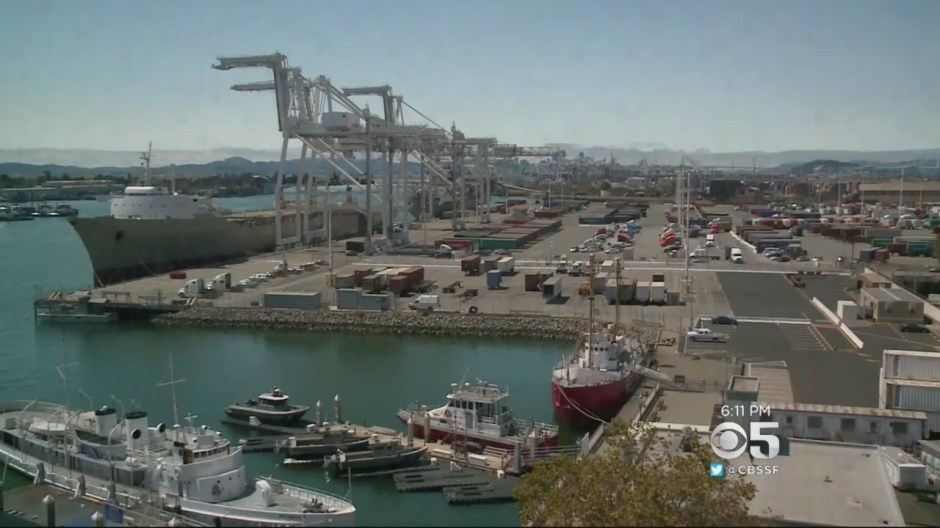
That’s Amaury’s News and Commentary podcast: A’s lean towards Jack London Square site as announcement for new stadium coming

Photo credit: youtube.com

On That’s Amaury’s News and Commentary podcast:

#1 The Oakland A’s are just a couple months away until the big announcement for their plans for a new ballpark.

#2 The A’s made it no secret of their first choice where they want to have their new permanent site at Howard Terminal at Jack London Square.

#3 Amaury has had a chance to speak with Oakland A’s team president David Kaval about the new stadium. He says the team makes it no secret leans towards Jack London Square.

#4 Kaval did say until the A’s get the deal the team has to keep it’s options open and could settle for the Coliseum.

#5 Will a Howard Terminal location be a better place that will draw more fans?

Join Amaury each Tuesday for News and Commentary at http://www.sportsradioservice.com

That’s Amaury’s News and Commentary podcast: Sox were unstoppable; Kershaw, Dodgers couldn’t do anything with Sox lineup; plus more

Photo credit: @MLB

On That’s Amaury’s News and Commentary podcast:

#1 The Boston Red Sox did what so many clubs couldn’t do–win an amazing 108 games.

#2 They cut through the playoffs and World Series like butter.

#3 With the World Series now over and the 2018 season, will the A’s add to what was a successful season to their roster?

#4 In football, the Oakland Raiders lose another tough one Sunday to the Indianapolis Colts 42-28. Another tough home loss at the Coliseum.

#5 The San Jose Sharks continue their success with a win Sunday in overtime past the Anaheim Ducks at the Honda Center 4-3. The Sharks are showing why they’re a first place club.

Amaury Pi Gonzalez is the vice president of the Major League Baseball Hispanic Heritage Museum and does News and Commentary each week at http://www.sportsradioservice.com

That’s Amaury’s News and Commentary podcast: Giants considering hiring woman for GM spot

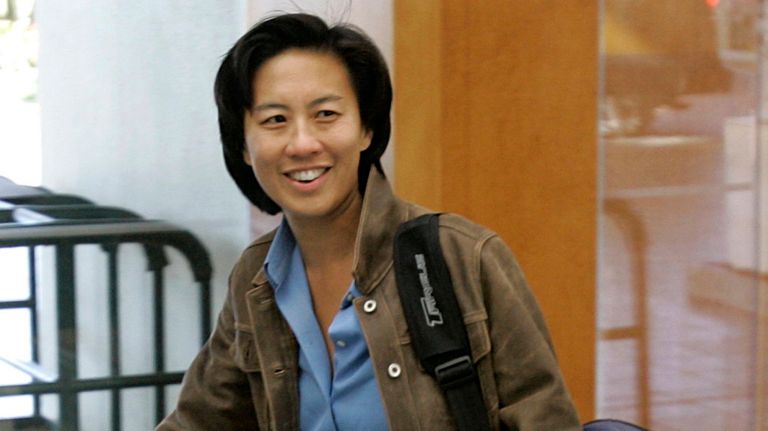
newsday.com photo: Then-Dodgers assistant general manager Kim Ng walks through the hotel lobby during the first day of MLB annual general managers meetings in Orlando, Fla., on Nov. 5, 2007.

By Amaury Pi-González

SAN FRANCISCO — The Major League Baseball General Manager meetings are scheduled to begin November 5th.

The San Francisco Giants are searching for a new General Manager, and many are asking, will they have one in place by then? The organization needs somebody to take charge and make important decisions pertaining their immediate future. Kim Ng is among the qualified people for the job. She has overseen international operations and talent development for the MLB. She also worked for the LA Dodgers as Vice President and Assistant to then-GM Ned Coletti as well as the front offices of the Yankees and White Sox. Her reputation is impeccable.

Among others candidates, the Giants have also shown interest on Milwaukee Brewers GM David Stearns, but the owner of the Brewers, Mark Attanasio, declined the Giants permission to speak with Stearns. Bobby Evans, who was the GM, was fired last month and the Giants announced they are searching for another executive to take that position. Maybe the Giants will find the person they want during those winter meetings starting on November 5th and conduct the interviews of the people available for the job. Who knows, and maybe make news with the announcement then.

If the Giants sign Kim Ng, it will obviously make news nationwide, and it would make sense since they play in San Francisco–one of the most diverse and progressive cities in the country.

On the other hand, the main priority for any baseball club seeking such an important position is to find the most qualified person regarding of gender or ethnic background. Whomever takes over will have to go to work right away. Trade Madison Bumgarner or not? Also, evaluate the scouting for the club. The Giants will have to take a different direction and look for younger talented players.

The Warriors will be playing within walking distance from AT&T Park at the Chase Arena next basketball season and they are the perennial winners currently in the Bay Area, dethroning the Giants, who were the winners from 2010 until 2016.

Baseball is at a very important crossroad in history as the international scouting, the sabermetrics side and the old school methods are at an intersection. It would make sense that the person for this job will grasp the understanding of all these and show the leadership required to revive a financially healthy franchise than until a couple of years ago enjoyed great success on the field.

If Ng has all those qualifications, she could be the one.

MLB The Show podcast with Daniel Dullum: Sox closing in just one more to go all the way; Trump says Dodgers manager Roberts goofed in pitching change; Mets pick baseball agent as new GM

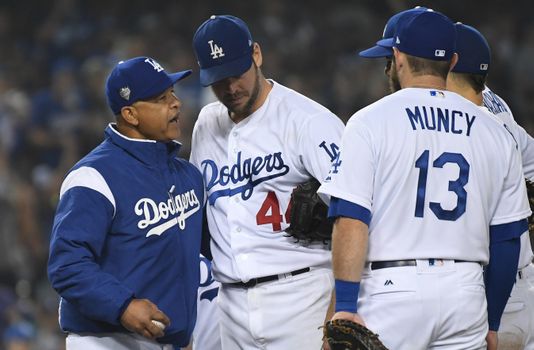
usatoday.com photo: Dodgers manager Dave Roberts relieves Rich Hill in the seventh inning in Game 4. The Dodgers were up 4-0 at the time.

On the MLB The Show podcast with Daniel:

1 The 2018 World Series — Boston vs. LA Dodgers — Red Sox are up 3-games-to-1

2 President criticizes Dodgers manager via Twitter for pulling starter in game 4

3 Reports: Mets have picked a player agent as new GM

Daniel does the MLB The Show podcast each Sunday at http://www.sportsradioservice.com

MLB The Show podcast with Matt Harrington: Red Sox piecemeal lineup isn’t enough to get by Dodgers on Friday night

Photo credit: @NESN

On the MLB The Show podcast with Matt:

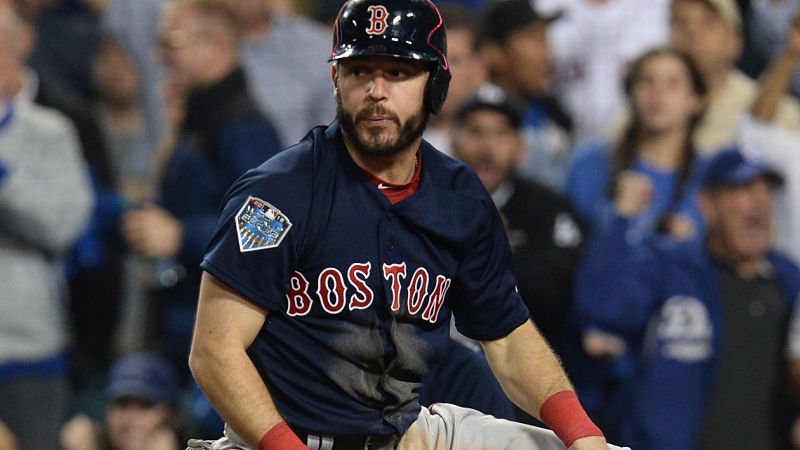
The way that Boston Red Sox manager Alex Cora had managed the 18 inning affair on Friday night at Dodgers Stadium from a hitting stand point where he missed not executing a double switch properly and didn’t make the right substitutions so heading into extra innings you in that Sox line up missing JD Martinez, Rafael Devers, Mitch Moreland, Steve Pearce.

So they really took a couple of weapons away and also no Andrew Benintendi as a pinch hitter. The Red Sox took away a lot of their weapons early in that game and they went with a makeshift line up that included having the pitcher bat through the game and the Sox kind of piecemealed the game and lost by a run in the end.

Matt Harrington does the MLB The Show podcasts each Saturday at http://www.sportsradioservice.com

That’s Amaury News and Commentary: The Mesa Brothers From Cuba to the Marlins

Photo credit: @donovanc7sports

By: Amaury Pi-González

The last Cuban star on the Miami Marlins was the late pitcher José Fernández. The very talented 24-year-old died in a boating crash off the coast of Miami Beach on September 25, 2016. On October 22, 2018, the Marlins made it official when they introduced the Mesa brothers, Victor Victor and Victor Jr., during a press conference hosted by the Marlins’ top executive officer and part owner Derek Jeter. The Mesa brothers are the two sons of Cuban legend Victor Mesa.

“When I was doing the showcase, I was thinking this could be my ballpark,” Victor Jr. said through a translator. “It was beautiful. I felt like a big leaguer.”

Victor Victor is 22-years-old and Victor Jr. is 17-years old. They are both outfielders. Jeter is hoping that these two will help to rebuilt a struggling franchise that were founded as an expansion team in the National League in 1993 and won two World Series in 1997 and 2003. Victor Victor is the most advanced and closer of the two brothers to be playing next year with the Marlins.The Marlins were last in attendance this season–#30 in MLB with 10,013 fans per game. The team finished last in the National League East this season with a record of 63-98.

The Mesa brothers could bring back the interest of the large Cuban community in Miami and Southern Florida