50 Years Ago: Pilots Land in Milwaukee Part 5 of 5 By Daniel Dullum

Seattle Pilots image from sportslogos.net

By Daniel Dullum

(Author’s note: This is the fifth of a five-part series detailing an unusual Major League Baseball franchise shift — In 1970, the Seattle Pilots arrived at spring training in Tempe, Arizona, and left at the end of March as the Milwaukee Brewers. This story is part of a baseball history book project.

At the conclusion of Part 4, the Seattle Pilots moved to Milwaukee with only six days to prepare for their 1970 home opener at County Stadium, an adjustment for all parties concerned, some with more serious issues than others. As the Brewers settled in to their new home, legal battles continued.)

Bob Bolin thought going to Milwaukee was “quite a thrill.” He added, “It’s a great sports town and of course the snow was a little deep that time of year. It was a little colder and we had to build a fire in the bullpen, things like that!”

Mike Hegan said, “The thing I remember most was the enthusiasm of the fans, in spite of the fact that there was only a week to get ready. [Angels pitcher] Andy Messersmith beat us 12–0 and people were still cheering for us in the seventh inning. I think people were just happy that baseball was back in Milwaukee. “The people in Milwaukee accepted the team and the players to a degree, I will say. There was still a lot of animosity because of the fact that the Braves left town. I think that Milwaukee, at that time, was considered a National League city more than an American League city.”

Ken Sanders recalled, “the guys really liked Milwaukee, but we had to do some embracing there because [of how] the Braves had left. And a number of us were familiar with Milwaukee because as American Leaguers, we played the White Sox in one game there. A lot of the players ended up making their home there.”

On April 16, 1970, the Atlanta Braves agreed to play a special exhibition game against the Brewers on May 14 at County Stadium — the Braves’ first appearance in Milwaukee since their acrimonious 1965 exit. — — Back in Seattle, Judge Volinn wasn’t through dealing with the legal woes of Pacific Northwest Sports, Inc.

In a U.S. District Court ruling on June 7, 1971, he ordered the Pilots’ old ownership group to pay the Pacific Coast League $150,000 plus interest to complete payments on a 1969 territorial indemnity fee of $300,000. The Pilots’ former owners felt their Chapter 11 bankruptcy ruling should have freed them from that obligation, but Volinn disagreed. As publicly promised, the City of Seattle, King County and the State of Washington followed through on their threat to file a lawsuit against the American League, but by the time the case went to trial on April 22, 1974, the dollar amount dropped from $82 million to $32.5 million.

Three days later, the suit was postponed until January 1975 to give the American League time to craft an out-of-court settlement. Washington State Attorney General Slade Gorton held a news conference, saying that a special meeting in Chicago produced assurances that Seattle would receive an American League expansion team by 1976. Gorton felt the league would make a “sincere effort” to field a team that would move into the yet-unnamed domed stadium that was under construction.

Negotiations continued on a cordial level, and on January 31, 1976, American League owners resolved to add Seattle as its 13th team on three conditions: 1) The State of Washington, City of Seattle and King County would drop the $32.5 million antitrust lawsuit. 2) The franchise would go to a Seattle group headed by local businessman Lester Smith and entertainer Danny Kaye. 3) A satisfactory lease agreement would be worked out.

While the antitrust lawsuit dragged on, the Kingdome was built and opened on March 26, 1976, originally to house the Seattle Seahawks, an NFL expansion team. Smith and Kaye called a press conference for February 7, 1976, announcing their purchase of the new Seattle franchise for $5.56 million.

A 20-year lease at the Kingdome was included in the deal, with a key clause binding the franchise to stay in Seattle. Still unresolved was the antitrust suit, as the City of Seattle wanted to recover $600,000 spent on renovations at Sicks’ Stadium.

On February 13, Seattle City Council members approved a plan to settle the antitrust suit, saying they would accept a proposal from the American League, King County, and the state of Washington to recess the suit until the new franchise officially took the field. Seattle Mayor Wes Uhlman insisted on keeping the lawsuit alive in case the AL reneged on the agreement.

After smoothing out the details, the Seattle Mariners played their first official American League game at the Kingdome on April 6, 1977, and the seven-year lawsuit was dismissed. — — – As satisfying as it was for Bud Selig to bring major league baseball back to Milwaukee, landing in the American League initially was perceived as a consolation prize, mostly by older fans who followed the Braves.

Changing times provided an unlikely opportunity for the Brewers to again make a noteworthy relocation. When Major League Baseball expanded to Phoenix and Tampa in 1998, the resulting realignment gave the American and National leagues 15 teams each. But to properly accommodate interleague play, both leagues needed to carry an even number of franchises, and the owners decided that one team would move from the AL Central Division to the NL Central — a division that included the popular Chicago Cubs and St. Louis Cardinals.

At this point, Selig was wearing two hats — owner of the Brewers and commissioner of baseball. To avoid the perception of a conflict of interest, he gave the Kansas City Royals first choice to make the move. The Royals declined, and, on November 6, 1997, the Milwaukee Brewers joined the National League as part of Phase One of MLB’s realignment plan, the first modern major league baseball franchise to make such a transfer.

Ken Sanders, who led the American League with 31 saves and 83 relief appearances for the Brewers in 1971, said, “I think it’s a good thing they went to the National League later, because Milwaukee was always a National League town.” Mike Hegan concurred. “Even though the Brewers stayed in the American League for that many years, they might even be more comfortable now back in the National League.”

It took 32 years, but Selig’s quest to bring a National League baseball club back to Milwaukee was now complete. — – Within their first four seasons in Milwaukee, the Brewers gradually weeded out most of their Seattle on-field lineage.

By 1972, only infielders Mike Ferraro and Ron Clark, and pitcher Skip Lockwood remained from the 1969 Pilots. Lockwood was the last to go, traded to the California Angels after the 1973 season. In 1982, their 14th season, the Brewers reached their first World Series, losing in seven games to the St. Louis Cardinals — the first Fall Classic hosted by Milwaukee since 1958. By that time, the Brewers’ only active links to the Seattle days were two selections from the 1969 amateur draft — two-time AL home run champion Gorman Thomas (1st round) and pitcher Jim Slaton (15th round).

Serving in a middle relief role, Slaton was the winning pitcher in game four of the ’82 Series. Five decades removed from their one glorious season in the Pacific Northwest, the Pilots have yet to completely disappear from the Brewers’ all-time individual record book.

As of 2020, they’ve maintained two final entries from 1969 — Tommy Harper’s major league-leading 73 stolen bases for the season; and his four stolen bases in a game at Chicago on June 18, 1969, against the White Sox, a record Harper shares with John Jaha, who tied the mark in 1992.

Locating visual evidence of Harper’s exploits on the base paths, or any other highlight of the Pilots’ brief history, has confounded baseball historians for decades. Very little film footage or audio recordings exist of Pilots’ games, a remarkable fact considering that the club played in 1969 — not exactly the Dark Ages of media coverage. KVI (570 AM, Seattle), the flagship station of a vast Pilots radio network that included 50 stations spread throughout Washington, Oregon, Idaho, Nevada, Utah, Montana, North Dakota and Alaska, didn’t record any of the team’s broadcasts. And given the nature of the Pilots’ history, it’s apropos that five of its network radio stations no longer exist.

Neither does Sicks’ Stadium, which was razed in 1979. The stadium’s location at the corner of Rainier Avenue South and South McClellan Street eventually became the site of a Lowe’s home improvement store. A display inside the store contains Rainiers and Pilots memorabilia and a plaque marks home plate near the Lowe’s exit. Thanks in large part to “Ball Four,” Jim Bouton’s classic memoir of his days as a knuckleball-throwing relief pitcher in Seattle, the one-year expansion team has achieved a cult status and popularity level that far exceeds their original fan base. And yet, the Seattle Mariners don’t claim the Pilots as their major league ancestor, saying they belong to the Brewers’ heritage.

Milwaukee doesn’t want them either, claiming they belong to Seattle. Thus, the Seattle Pilots have earned a unique status as the Flying Dutchmen of baseball history. For years, the Mariners turned a deaf ear to requests for a Pilots’ old-timers day. Begrudgingly, the team honored the Pilots with a “Turn Back the Clock” promotion for its game against Detroit on July 9, 2006, at Safeco Field, wearing replica Pilots uniforms and bringing back many of the former Pilot players for a curtain call. Shaking his head at the thought of the Pilots’ legendary status, Rich Rollins mused, “I played eight years with the Twins. I played in two All-Star Games, the World Series, and yet, I’ll bet almost 90 percent of the fan mail I still get is about the Pilots.” And Mike Hegan noted, “I played for three teams that were very popular in terms of memorabilia — the A’s, Yankees, and Seattle Pilots. And not necessarily in that order.”

A popular Web site devoted to the Pilots is http://www.seattlepilots.com, run by Mike Fuller, a Seattle paralegal. In 2006, he told The Seattle Times that his site receives more hits than the Archdiocese of Los Angeles, according to the Web company that hosts both. When Fuller got in touch with Jim Bouton and told him this fact, the old knuckleballer was struck with a 1960s flashback — a famous verbal faux pas by The Beatles’ John Lennon in particular — and responded, “Can I put it on my Web site that the Pilots are more popular than Jesus?

Daniel Dullum authored the five part series of the defunct but well remembered Seattle Pilots from 1969 in his book 50 Years Ago the Pilots Landed in Milwaukee
That’s Amaury’s News and Commentary: Day One of Negotiations–Owners 0 Players 0

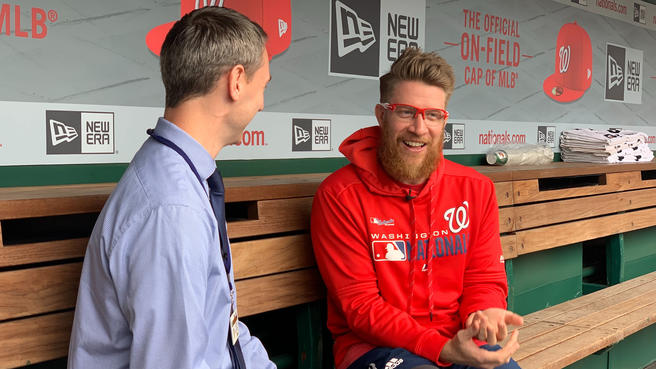
nbcsports.com file photo: Washington Nationals pitcher Sean Doolittle (right) spoke out on Tuesday saying the players concerns were safety and a vaccine is needed to guarantee safety concerns before returning back

Day One of Negotiations: Owners 0 Players Union 0

That’s Amaury News and Commentary

By Amaury Pi-González

The negotiations began today in New York. The main point of contention is two-prone. One is financial, the other health.

1-How to split the revenues if they agree to start the 82 games season during the 4th of July weekend, as the MLB/Owners proposed a 50-50 split. The players union is not happy with that arrangement.

2-The situation with Covid-19, what happens if a player gets infested, testing, local, state, federal authorities quarantines and the whole enchilada during this unprecedented time in our country.

It is said that without any revenues the owners have already lost in the hundreds-of-millions of dollars (each team) thus 2020. In 2019 the revenue in MLB was between $10 and $11 billion among all 30 teams.

If they get an agreement, the season would begin with no fans in the stands, no broadcasters and probably no baseball writers at the actual locations of the games. Television cameras at location with announcers calling the games from the studio watching on video screens. Writers could probably cover the game at home, looking at their television screens. I refer to this over a month ago, speculating how games can be covered if announcers are not on location, since I have extensive experience doing this during regular times.

Both sides did agree in one thing today. Health and safety of all involved, coaches, managers and staff, these are the primary concerns

Super agent Scott Boras said he is not telling the players to sign on this deal as proposed by MLB/Owners. Ex-Oakland Athletics reliever now with the World Champion Washington Nationals Sean Doolittle “We want to restart the season again,” Doolittle posted on Twitter again Tuesday. “We also want everyone it would require to resume a baseball season to be as safe as possible.”

Looks like both sides played by the rules, there were no ejections (that we know) but nobody scored….yet.

Stay tuned and Stay well.

Amaury Pi Gonzalez is the Major League Baseball Hispanic Heritage Museum Vice President and does News and Commentary each week at http://www.sportsradioservice.com

Headline Sports podcast with Barbara Mason: Players and MLB on starting season July 1st

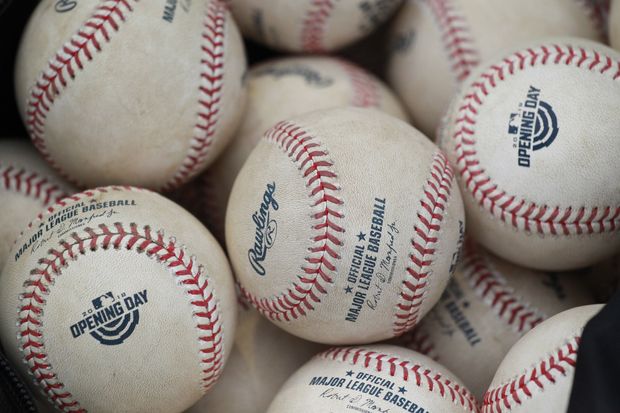
MLB Baseball and the players negotiated on Tuesday to play the regular season starting July 1st (MLB opening day baseballs image wsj.com)

Barbara Mason on Headlines Sports podcast:

#1 Barbara MLB was discussing today ways to open up the season with a target date of July 1st. The biggest concern is safety and how to prevent Covid-19 getting into the park and all the precautions for the players, front office staff, media, security, scouts, medical and trainer staff and so forth.

#2 The gate revenue will be 51 percent local gate revenue and 49 percent MLB total revenue. The players would receive an agreed upon amount of this revenue.

#3 Baseball at the very latest could start August 1st and run through October 31st. It would be an 81 game schedule with teams playing regionally only West, Central and East in each of the American and National Leagues.

#4 MLB said that teams would share 48% of it’s revenue with the players and the owners came away optimistic that the players would be on board with the idea when the go to vote on it on Tuesday.

#5 This will be the first time in MLB history that revenue will be lost at 20% but the owners were just relieved to get something in front of the players union and get some daylight into opening up the MLB season.

Join Barbara each Tuesday night for Headline Podcasts at http://www.sportsradioservice.com

That’s Amaury’s News and Commentary podcast: MLB Players and owners negotiating on opening season; NBA considering opening season Christmas Day; plus more

logo image from mlb.com file

On That’s Amaury’s podcast:

#1 MLB players agent Scott Boras says that what the owners are proposing a 50-50 revenue and the players are not interested in that offer plus testing, safety, social distancing and how that will work has been a factor in Tuesday’s negotiations.

#2 Players are guaranteed safeguards social distancing, masking, disinfecting, and protections in prevention of Covid 19 virus.

#3 The NBA is now considering opening up their regular season on Christmas Day. After having the NBA season suspended in March the league wants to open up on Christmas.

#4 The idea of opening the season on Christmas had also been suggested but some don’t think it’s a good idea and would like to keep opening month in October.

#5 One of the ideas of the NBA wanting to open on Christmas Day is because there is much less competition with the NFL at that time of the year as the NFL season is winding down towards post season.

Amaury Pi Gonzalez is the Spanish play by play announcer for the Oakland A’s heard on the A’s Spanish flagship station 1010 KIQI San Francisco and Amaury does News and Commentary each week at http://www.sportsradioservice.com

That’s Amaury’s News and Commentary: MLB Season Would the Players say Fair or Foul?

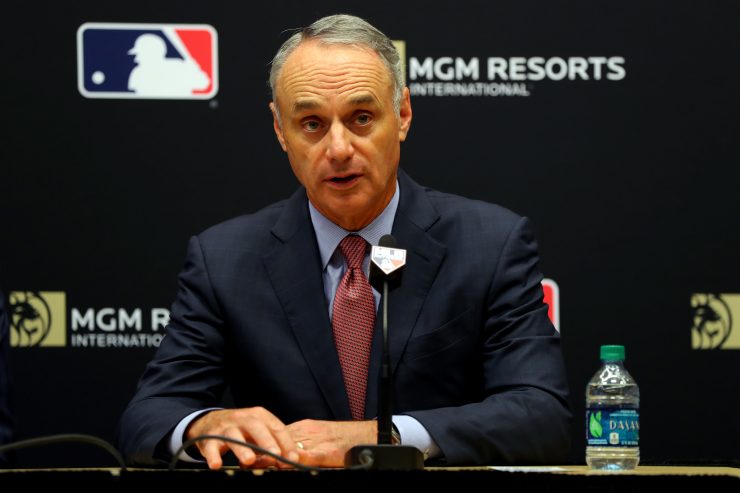
amNY.com file photo: MLB Commissioner and the owners will present their proposal to start the 2020 regular season by July 1st on Tuesday

MLB Season: Would the Players say Fair or Foul?

That’s Amaury News and Commentary

Amaury Pi-González

This entire plan is contingent on MLB getting the green light from local, state and federal officials. The sport can secure testing for the players, medical personnel. The owners approved the plan, but now it is the MLBPA (players union) that have to approve it, and there are obstacles in baseball and outside baseball.

MLB and the Owners are proposing:

-A season of 82 games that would begin during the July 4th weekend. Teams only face geographical division rivals.

-Teams would only face division rivals and the same geographic division in the other league to keep games regional.

-Inter-league match-ups limited to AL East vs. NL East, AL Central vs. NL Central and AL West vs. NL West.

-Teams would prefer to play at their regular ballparks at home, but if medical and government approvals can’t be obtained then they will play at Spring Training Stadiums. Here in California (five major league clubs) the Governor said recently, no sports with fans until there is a vaccine.

-Postseason: Expanded from 10 to 14 games and doubling wild cards in each league to four. The DH will be expanded to be used by both leagues.

-The All Star Game at Dodger Stadium in Los Angeles on July 14, as of today is called off.

-The owners propose that players will receive a percentage of their 2020 salaries based on the revenues that MLB receives during the regular season and postseason. This is probably the biggest obstacle for the players.

Those, and the health concerns, figure to be the main point of contention between MLB and the MLBPA. The players already agreed to prorated salaries back in March and do not want to take further pay cuts. The owners claim they are losing 40% of the revenues, by playing in empty stadiums, no tickets sold, no luxury boxes revenue, no concessions no parking. The players said there is no:”revenue exit” for them as they solely depend on their salary.

At the End: All of this stuff depends on the Covid-19, situations in each State. In the US (unlike other countries) there is no “one size fit all” all 50 States made their own decisions. And that, as we know, is very fluid at this time, nevertheless MLB made this proposal, probably in a last ditch effort to rescue the 2020 season. If it happens it would look like the 1981 and 1994 seasons.

It takes two to tango.

Stay well.

Amaury Pi Gonzalez is the Oakland A’s play by play talent heard during the regular season on KIQI 1010 San Francisco and does News and Commentary each week at http://www.sportsradioservice.com

Headline Sports with Morris Phillips podcast: MLB owners on conference call today with players to open season July 1st

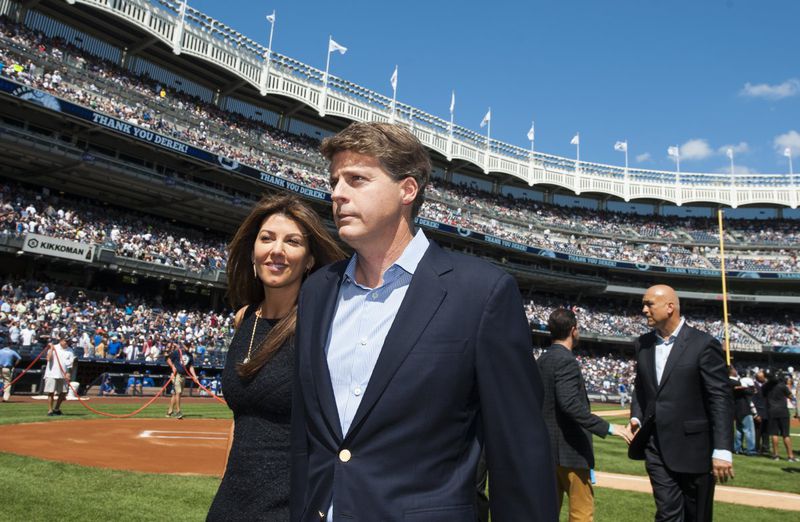
New York Yankees owner Hal Steinbrenner and MLB owners will be on a conference call with player representatives to go forward in starting the MLB season on July 1st (New York Daily News file photo)

On Headline Sports with Morris Phillips podcast:

#1 MLB is holding a conference call today regarding opening the regular season on July 1st. The discussion will include where they’ll play, the schedule will be done, social distancing and mandatory mask wearing.

#2 MLBPA executive and St Louis Cardinals pitcher Andrew Miller said that there will be no agreement until MLB can guarantee the safety for it’s players, coaches, umpires and family.

#3 Morris until there is some guarantee for the safety of the players and MLB personnel which also includes the news media covering the events there might not be a baseball season.

#4 Also the players want their a guaranteed salary before they get back on the field. In the event one or more persons are positive during the season and they have to suspend play again the players want a guarantee that they will be paid for the season.

#5 Baseball is proposing playing in regional home parks of the NL East and AL East and AL West and NL West for 80 games with no fans.

Join Morris each Monday for Headline Sports at http://www.sportsradioservice.com

Headline Sports podcast with Jeremiah Salmonson: Baseball wants to come back by July 1st; Cal Gov says find a vaccine first; plus more

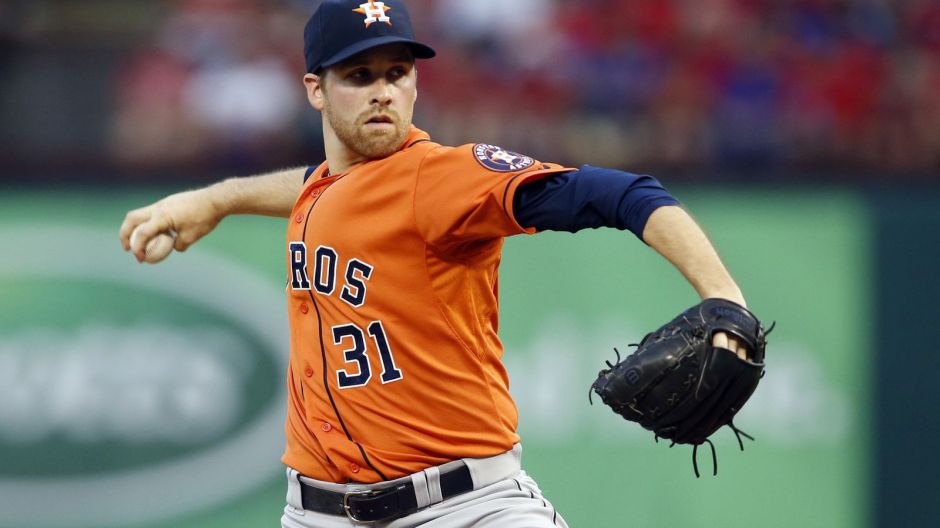
Former Houston Astro and now Boston Red Sox pitcher Collin McHugh said as a father and family man it’s risky to return to the game when there is no guarantee that there will be someone at the park or hotel that is asymptomatic or someone could get Covid-19 by someone who is a carrier in remarking about baseball’s possible return on July 1st (royalsreview.com file photo)

On Headlines podcast with Jeremiah:

#1 Jeremiah there has been talk that baseball could return July 1st meaning the players have to get ready by June and start the regular season in July. Critics of the idea include Dr. Anthony Fauci who said it’s too early and the spread of Covid-19 hasn’t flattened in many parts of the country.

#2 To open baseball it could start up you have all the excitement of it coming back but at what cost what if one person is a carrier then baseball would have to start from square one again.

#3 The idea of baseball coming back has excited the fans but it might turn out the closest fans will see baseball again is watching the Korean Baseball Organization which has been telecast live overnights on ESPN as America leads the world in Corona cases.

#4 Also the players might have their reservations about returning in July anyway the Boston Red Sox’ pitcher Collin McHugh shares his feelings saying that coming back with players or personnel having pre existing conditions and underlying conditions brings too much of a risk.

#5 California Governor Gavin Newsom said on Thursday that sports may not be able to return in California until a vaccine is found. With that said things could very well be on hold for awhile.

Join Jeremiah for the Headlines Conversation every other Saturday at http://www.sportsradioservice.com

50 Years Ago Pilots Land in Milwaukee Part 4 of 5 By Daniel Dullum

JSOnline.com file photo: The Milwaukee Brewers who moved into County Stadium in Milwaukee in 1970 from Seattle at the last moment is a five part series “50 Years Ago Pilots Land in Milwaukee”

50 Years Ago: Pilots Land in Milwaukee Part 4

By Daniel Dullum

(Author’s note: This is the fourth of a five-part series detailing an unusual Major League Baseball franchise shift — In 1970, the Seattle Pilots arrived at spring training in Tempe, Arizona, and left at the end of March as the Milwaukee Brewers.

At the conclusion of Part 3, Bud Selig’s Milwaukee Brewers Inc. group was awarded the Seattle Pilots in bankruptcy court on March 31, 1970. The Brewers had six days to get ready for the 1970 home opener at County Stadium. Meanwhile, the City of Seattle and the State of Washington would proceed with their $82 million antitrust suit, which already was filed and waiting for Judge Volinn’s decision.)

However, Judge Volinn pointed out that the only alternative was forcing the American League to operate the team on deficit financing to more than $3 million over the ensuing three years. He explained, “It’s obvious that the club cannot pay its debts and may well be insolvent. With the baseball season only a week away, the Pilots were in an emergency situation.

“The unique character of a major league baseball team has been considered, and its importance to the community has been considered. But it’s obvious the debtors [Pilots] are incapable of carrying on. That is beyond question.”

A prominent defender of Volinn’s decision was C.C. Johnson Spink, editor and publisher of The Sporting News. In his April 18, 1970, editorial, Spink quoted an anonymous American League source: “The Sorianos tried all over the city to find local people who would invest in the club. Part of the American League’s agreement with Daley was that control would be in Seattle. Daley himself met with people all over the Pacific Northwest — the biggest people — and couldn’t interest any of them.

“The Pilots had no cooperation from anyone, not even the newspapers. They had no cooperation from the Chamber of Commerce, the city or the county. The city did not finish the park on schedule and it was never put into the condition that the city promised.”

Spink wrote, “We believe that Seattle and Washington state officials should be red-faced about the club’s failure and should put the blame where it belongs, instead of attempting to make the American League the fall guy through a multi-million-dollar antitrust suit.”

— – On the appropriate date of April 1, 1970 — April Fool’s Day — the name “Milwaukee Brewers” appeared on an active American League standings board for the first time since September 28, 1901. Ironically, the original Milwaukee Brewers had lasted only one season and also filed for bankruptcy. They were dropped from the American League on December 3, 1901, and replaced by the St. Louis Browns.

Manager Dave Bristol expressed relief at the announcement of the verdict, saying, “I’m glad they finally reached a decision. The players should be relieved. It’ll be much easier to get the total concentration of the players now. … I’m happy for the players’ sake. My job is managing wherever the team goes.”

Pitcher Gene Brabender, who led the Pilots with 13 wins in 1969, looked forward to playing closer to his home in Sturgeon Bay, Wisconsin, 110 miles from Milwaukee. He told The Associated Press, “I regret things couldn’t have worked out better for the people of the Northwest. They were great fans last season through thick and thin. But playing in Milwaukee will be closer to home, and my wife and family will like that.”

Upon learning of Volinn’s decision, truck drivers who were hauling the team’s equipment could now leave Provo, Utah, where they waited in limbo along I-80, and move along to Milwaukee. And with less than a week to go before Opening Day, the Pilots/Brewers players now had to make creative decisions to secure living quarters for the upcoming season.

Catcher Phil Roof recalled, “We’d already sent our wives out on the road, headed to Interstate 90, which is straight north [from Phoenix] and it’s an east-west link between the West Coast and the Midwest. We told them to call in after each day — it was going to be at least a two-day ride to get to Interstate 90 — and on the second day out, we found out that we were headed to Milwaukee. We told them to hit I-90 east, and that’s where we started.

“It was unsettling because at the time, I had a wife and three kids and we were expecting the fourth one. There were other wives in the same boat, and it was more unsettling for them than it was for us, because we didn’t know where to put them, and once we got to Milwaukee, we finally had to rent apartments in Waukesha, which is 22 miles from the ballpark. That was the only thing available that would give us short-term leases, and we managed to survive there. I stayed there for almost two years.

“Those things are a part of baseball. It’s part of travel, part of being involved with a trade — I got traded three times in the course of a season once — and you just get kind of used to it.”

Or, in the case of new homeowner Mike Hegan, it was a matter of coming to grips with an unfortunate housing decision. “We bought a house in Seattle in January of 1970 and we never lived in it!  We went to spring training and never came back,” Hegan said. “The problem with that was, it was during the first major layoff in Boeing history — they laid off about 40,000 people — so it took me about two-and-a-half years to sell my house that I never lived in!

“That was a personal problem, obviously, but there were other guys who were making plans for apartments and different places to live, people getting ready to drive cars and ship belongings to Seattle, and ended up going to Milwaukee instead.”

This is what happened to pitcher Bob Bolin, among others.

“[I’m] going to spring training with the Pilots, an expansion team, and I’m excited about it because I played in Tacoma in the minor leagues,” Bolin said. “Then, three or four days before the season opened, I shipped my car to Seattle and they turned around and Milwaukee bought the team. We got our car about a month later when somebody found it on some rails somewhere in Chicago.

“In baseball, you’re always flexible. It wasn’t that unsettling for the team, because you’re out there playing a game. It was a little troubling the first couple of weeks to get settled, trying to find a place and getting the family situated.” The City of Milwaukee tried to help the players feel welcome in a variety of ways, mostly superficial.

When the Brewers deplaned in Milwaukee, they walked on a red carpet into the airport terminal before participating in a downtown motorcade. A downtown hotel offered three days’ free lodging after the team left spring training in Tempe, and the Milwaukee Association of Commerce honored the team with a luncheon, selling 650 tickets at $5 apiece. But players like Rich Rollins needed more than a parade and a complimentary rubber chicken lunch.

When it came to being inconvenienced in this last-minute upheaval, Rollins was the uncontested grand champion. “I remember [the move] well. It was a Sunday afternoon game we played in Tempe, and we didn’t know until after the game where we were going,” Rollins said. “My wife was in Seattle. We’d moved lock, stock and barrel from Minneapolis to Seattle. We had a duplex out there and were looking forward to going back to Seattle. “We didn’t know [where we were going] until we were in the parking lot. I’ll never forget the day. A big bus was there, and we’re either heading to Seattle or Milwaukee. It ended up at the Pfister Hotel in Milwaukee.

“That whole situation cost me a whole lot of money. I’d moved three-fourths of our furniture from Minneapolis, and now I had to move out of Seattle lock, stock and barrel. We had five kids — including a real young daughter who was born in Seattle [on April 16], she was only a month or so old — it wasn’t a good situation.”

Rollins felt the ballclub did “absolutely nothing” to help the players. “Fergie (Tom Ferguson), the traveling secretary, tried to help a whole lot of people. He was a class guy. But there wasn’t a whole lot he could have done. He expressed his concern, but it was costing me a lot of money. “My furniture was being sent by moving van to Cleveland, but was supposed to be held up until we decided where to go with it. The driver was on the turnpike wondering where to go,” Rollins said.

“I wasn’t about to settle in Milwaukee. I had my family out in Seattle; my original home was in Cleveland, so we finally decided to move to Cleveland after this thing was over with, and my family had to move in at my mother’s house.” And, when Rollins didn’t think the situation could get much worse … “I had all of our furniture — sofas, the television, chairs, tables, everything — in storage and it was all stolen out of the warehouse. I got 20 percent of the furniture’s value in a settlement, but the whole thing was a nightmare. It eventually cost me around $6,000 to make that move.”

Then, adding the coup de grâce, Rollins was released by the Brewers on May 13, 1970. “I wasn’t there very long, about a month and a half, and I was released. My wife was still in Seattle. I went home to Cleveland,” Rollins said. “The thing I remember: I’d never been released before. I got called into [Dave] Bristol’s office and he said, ‘We’re going to let you go.’ And that was it. I watched one of the games from the right field stands with the clubhouse guy.

“I got back to the hotel after the game and I get this phone call from [Brewers executive] Frank Lane. He had a reputation [as a wheeler-dealer], but he was the only guy who called me. He said if I wanted to keep playing, he’d find me a spot. It was impressive that he would do that.

“So, I went back to Cleveland. I was there for three or four days when the Indians called me. Alvin Dark was the manager there, Hank Peters was the general manager, and they said, ‘We want to sign you for the rest of the year.’ That was really nice. It really helped me, moving back to Cleveland because I’d been away from there for a whole long time and I really didn’t know that many people there. I’d kind of lost contact.” Mike Hegan philosophically observed, “It’s a problem in that it’s the unknown factor — you don’t know. I think for a lot of us, it wasn’t a huge problem, except for somebody like me who had the house.

“The other part of that equation is that this was an expansion team, so a lot of guys were used to traveling. I had played in four minor league cities in five years while I was up and down with the Yankees, so you never really established roots and were in one place for any length of time. So it was like going to spring training with a minor league team, and ‘Was I going to Buffalo, or was I going to Erie?’

It was probably a little more complicated than that, but I don’t think there were a lot of people who had real feelings about going to Seattle or going to Milwaukee. “What made it psychologically easier was that you were still in the major leagues. It would be much different if you were sent to a minor league team. Those are problems that everybody faces in life — moving around and doing certain things — it was something that got in the way a little bit, but you learned to live with it and handle it.”

As local newspaper headlines proclaimed “Baseball to Return Here” (Milwaukee Sentinel) and “We’re Big League Again” (Milwaukee Journal), the Brewers had less than one week to put together a ticket office, hire an office staff, find batboys, and get County Stadium ready.

The team didn’t have time to order new uniforms, so the Pilots logo and front jersey number were removed and “Brewers” was stitched over it. The pilot’s stripes on the sleeves were too difficult to remove quickly, so they remained on both the home and road jerseys for 1970.

The team’s color scheme of royal blue and gold — the one used in Seattle — was adopted by default, even though Selig preferred navy blue and red that was used by the old minor league Brewers. As Selig explained to The Sporting News correspondent Terry Bledsoe, “The ‘S’ on the cap comes off and an ‘M’ goes on. The ‘Pilots’ on the uniform comes off and ‘Brewers’ goes on.

The letters and the embroidery stay the same [except for the ‘scrambled eggs’ on the cap bill]. The uniforms are fine.” In addition, the Brewers issued Pilots media guides and yearbooks, new schedules and tickets were hastily printed, and broadcasting deals were pulled together quickly with radio station WEMP (1250 AM) and WTMJ-TV (Channel 4).

Former Braves play-by-play announcer Merle Harmon asked for and received a release from his contract with the Minnesota Twins to return to Milwaukee and call the Brewers games. The grounds crew at County Stadium was under the gun as well, with only six days to get the partially snow-covered field ready for the home opener. They came through, and earned rave reviews. “The grounds crew got an award,” Bobby Bolin said. ”In fact, that was the highlight of the Brewers for 1970 — they had the best grounds crew in the league!” Mike Hegan added, “You know what? The field at County Stadium was better than the field in Seattle the first day that we were there! It didn’t make any difference!” Phil Roof observed, “The field (in Milwaukee) was in pretty good shape because the White Sox played some regular season games there and they kept the field maintained.

It was nice of the city fathers of Milwaukee to do that because they wanted a major league franchise back. By keeping the stadium in tip-top shape, it was easy for the owners to vote Milwaukee in.” While Pacific Northwest Sports Inc. was busy liquidating Seattle Pilots merchandise (which would become highly sought-after memorabilia), William Daley, the Pilots’ former principal owner, quietly invested $1 million in the Brewers, but had no management control. And fans in Milwaukee stood in up to six inches of wet snow, waiting to purchase either single-game or season tickets for Brewers baseball.

Over 2,000 season tickets were sold on April 2 alone, at prices ranging from $150 to $375. “I think the fans here have missed baseball,” Selig told the local media. “I sense an excitement about the team that probably is better than mass hysteria.” Selig wasn’t too far off the mark. Despite the cool spring weather in Wisconsin, 37,237 fans showed up on Opening Day at County Stadium to see the Brewers pick up where the old Pilots left off, with a 12–0 loss to the California Angels.

NEXT: Part 5 — Epilogue 1

50 Years Ago: Pilots Land In Milwaukee Pt 3 of 5 By Daniel Dullum

Seattle Pilots image from sportslogos.net

50 Years Ago: Pilots Land in Milwaukee — Part 3

By Daniel Dullum

(Author’s note: This is the third of a five-part series detailing an unusual Major League Baseball franchise shift — In 1970, the Seattle Pilots arrived at spring training in Tempe, Arizona, and left at the end of March as the Milwaukee Brewers.

At the conclusion of Part 2, the Seattle Pilots’ financial woes continued into 1970 spring training, the American League publicly admitted that the Pilots were broke, leaving the players and coaches wondering about the team’s future while trying to focus on preparing for the upcoming season.)

Mike Hegan explained, “There are extraneous factors that enter into day-to-day baseball, and you usually take the cue from the manager, the coaching staff and the front office. At that time, Dave Bristol, a pretty levelheaded guy, just continuously said, ‘Hey, you don’t have any control over this. You can worry about certain things, but you have no control. So what you want to do is prepare to play baseball, whether it be in Seattle or someplace else.’”

Ken Sanders concurred, “I think the manager and the coaches of that team were really good — Dave Bristol, Wes Stock, Jackie Moore — those guys kind of helped keep it together. They would say, ‘We know we’re going to play, we know we’re going to play somewhere, we just need to get ready and prepare for the season.’” Wes Stock added, “Dave [Bristol] wanted everything focused. His idea was to play the game right and he worked on fundamentals. He was real focused, we all had a job to do, and we didn’t think about [the possible move]. Dave was strong that way. His thing was, ‘We’re going to win as many games as we can for a big league ballclub and just go from there. It didn’t bother him where we’d go, and I think that’s what he tried to tell everybody else — ‘We’re in spring training today, tomorrow we’ll be in Milwaukee or Seattle, and let’s go play.’”

While the Pilots were 5–5 in Cactus League exhibition action following a 19–14 win over Cleveland in Tucson, team management returned to the courtroom, this time in Seattle at King County Superior Court. At 9:30 a.m. on March 20, attorney Alfred J. Schweppe was scheduled to place his “outraged self” before a judge to argue that the American League had no right to remove the Pilots from Seattle.

AL attorney Alexander Hadden, meanwhile, tried to convince the judge to lift the restraining order that was preventing the league from moving the shaky franchise. In addition, an antitrust suit filed by the State of Washington and the City of Seattle was to be considered in conjunction with Schweppe’s suit.

If the judgments went against the AL owners, the antitrust action reportedly could cost them as much as $82 million. But by the day’s end, the Pilots’ owners delivered yet another headline-grabbing salvo when they filed a petition in U.S. District Court, asking that the team be sold to Milwaukee Brewers Inc. for $10.8 million under Chapter 11 of the Bankruptcy Act.

This petition stated that Pacific Northwest Sports Inc., “is unable to meet its debts,” listed as $7.4 million (an amount later increased to $8.13 million). The petition also listed demand notes of $200,000 by Max Soriano (with his brother, Dewey, 34 percent owners) and $300,000 by William Daley, a 60 percent stockholder in the Seattle club. Smaller items, as low as $6 to the Seattle Fire Department for permits, were listed as well.

Other debts on the petition included: • $3.5 million to the Bank of California. • $2 million to Sportservice. • $500,000 to First National Bank of Phoenix. • $250,000 to the American League. • $165,000 to the City of Seattle for rent at Sicks’ Stadium. • $161,250 to the Pacific Coast League for indemnities due in 1970 and 1971. • $31,011 to King County for property taxes. • $5,000 to the Major League Scouting Bureau, Inc.

Among those listed on the list of creditors was none other than Fred Danz, whose group loaned the Pilots $261,875 in hopes of keeping the club in Seattle. But there were more legal hurdles. On March 20, E.B. Smith, president of Pilot Properties, Inc., of Phoenix, Arizona, filed a lawsuit for more than $1 million against the Pilots’ owners to “preserve the interests of investors” in the Pilots’ spring training facilities at Tempe.

Smith also cancelled Pacific Northwest Sports’ contract to use the facilities, saying the group had failed to meet obligations in forming a company to operate the training camp. That same day, Superior Court Judge James W. Miffin continued a restraining order that prevented the Pilots from relocating.

Alfred J. Schweppe then jumped in and took a public swipe at Milwaukee Brewers Inc., calling the group “suckers.” But William J. Walsh, an attorney who represented the Pilots’ owners, said even if an injunction is granted, “the team is in too poor shape financially to play in Seattle this season.” As a precaution, the California Angels, who were scheduled to open the 1970 season on the road against the Pilots, reserved hotel rooms in both Seattle and Milwaukee. And through it all, the Pilots players and coaches soldiered on. “[The coaches] tried to keep it non-disruptive because we had a lot of young guys, guys who played ‘A’ ball, like Jim Slaton and Bill Parsons who came back [to the majors] with us,”

Coach Wes Stock said. “We didn’t talk about it. We didn’t know what was going on. There was nothing we could do about it. The two owners were the ones with the control of what was going to happen. We just had to do what we could, regardless of what was going to happen. “We said, ‘Hey guys, don’t worry about it, we’re all in the big leagues. You guys want to be in the big leagues?

This is where you’re trying to get to, whether you play in Seattle or Milwaukee. Let’s just make the best of it.’” This was easier said than done for players like Ken Sanders, who was under enough pressure just to make the 25-man roster. “I was traded by Oakland to the Pilots that winter, and I hadn’t really established myself in the big leagues,” Sanders said. “I’d been up and down at that time. I was hurt [broken leg] the year before and I only pitched about a month in the minor leagues. So we go to spring training like a lot of the players on that team — enthused about the upcoming season. “Then the Seattle Pilots filed bankruptcy, so it was a very difficult time, not only for myself and the younger players, but also the veterans. We didn’t have any idea of where we were going. We assume we’re going to Seattle. ‘Do we get a place to live there? Are we going to get paid?’ … All of those issues. You have to realize that at that time, we weren’t making a million dollars a year or even a hundred thousand, so every paycheck was important.”

As hearings began on March 24, Dave Cohn, a Seattle restaurateur, told King County Superior Court that he could put a group together in 90 days to buy the Pilots and keep them in Seattle. Cohn said his group would be willing to pay $5.25 million — the original cost of the franchise — and that the price was negotiable.

Cohn never had a chance to put that group together or negotiate the price. Federal Bankruptcy Court Judge Sidney C. Volinn, the referee for the case, issued an injunction on March 25, allowing the American League a chance to vote on Milwaukee Brewers Inc.’s offer of $10.8 million to buy the Seattle Pilots and move the club to Wisconsin.

Volinn said the effect of the injunction was “to maintain the status quo” until he made his decision on March 30 to approve or disapprove the sale. The morning session of the hearing was devoted to legal jousting over the language of the injunction.

The final wording, approved by Volinn, prevented further legal action in King County Superior Court, where Washington state, the City of Seattle, and attorney Albert J. Schweppe all sought injunctions to prevent the sale and relocation of the Pilots. “Though various arguments have been presented to keep the Pilots in Seattle, no one has offered a financial plan to support it,” Volinn said. “Every way we turn around, we have an assured $10.8 million offer from Milwaukee. If we don’t take that, we have nothing.”

At the same time, Volinn emphasized he was not endorsing a sale to the Milwaukee group, saying that his primary responsibility was to Pacific Northwest Sports, and the best interests of the Pilots and their creditors. This was good news to the creditors, especially after team treasurer Max Soriano testified that the Pilots were losing $12,500 a day, and Robert W. Schoenbachler, the team controller, projected a $1.5 million loss for the Pilots if the team stayed in Seattle for 1970.

While all parties waited through the weekend for Judge Volinn to make his ruling, Dewey and Max Soriano were burned in effigy at a downtown Seattle shopping mall, Florida Judge John Hodges dissolved a temporary injunction that barred the AL owners from voting on the proposed sale of the Pilots, and King County was given the legal go-ahead to build a $40 million sports complex in downtown Seattle.

Faced with the possibility of overseeing a white elephant, county executive John Spellman said he hoped to convince the AFL’s Boston Patriots to move west if they couldn’t find a suitable home in New England, all but conceding that the Pilots were leaving. — — As the 1970 exhibition season wound down, the Pilots won three games the weekend of March 27–29, edging Cleveland 2–1 and enjoying victories of 19–1 and 7–6 over Oakland.

Word also leaked out of the Pilots camp that two players, who asked to remain anonymous, said they rented apartments in Milwaukee on a contingency basis. Other players said they would live in hotels until they could find permanent residence in Milwaukee if the team did move there. But Bobby Sullivan, the Pilots’ equipment manager, insisted, “Until I’m told otherwise, I have to tag [the equipment and gear] for Seattle.”

Summing up a common approach by the players, Ken Sanders said, “I hadn’t gotten a place to live in Seattle yet. That’s one of the things the ballplayers still do — wait until the last few days to find an apartment. I’m in the real estate business and I’m sure they still do that today. It wasn’t a real inconvenience, just the stress and strain of where you were going to go.”

As the bankruptcy hearing reconvened on March 30, Judge Voiinn expressed disgust that, in his opinion, no offer for the Pilots had been formally presented by anyone representing Milwaukee in his court. Attorney Elwen Zarwell was at the hearing on behalf of Milwaukee Brewers Inc., but said he was “awaiting instructions” before he could represent the group officially. Another last-minute offer came from California businessman Fred Ruge, who said Statewide Security Depositors of Sacramento, California, would invest $100 million to buy the team and build the domed stadium.

However, Carl Dumbra, who called Statewide Security Depositors “basically himself,” said the announcement was “premature,” adding that his company “has no money at all like that.” Dumbra explained that his company has “liaison with investors that desire to place funds in good investments.” Attorney C.T. Hatten, representing Ruge, asked for a delay so the court could consider an $11.5 million offer to buy the Pilots. Noting that the Ruge offer was “based on several contingencies,”

Volinn suggested that the hearing proceed as scheduled until the various attorneys had a chance to study the new development. During the bankruptcy hearing, Max Soriano testified that the Pilots were nearly broke, had only $91,000 in cash, and were unable to meet current expenditures, such as a $216,000 note due on March 31.

Dewey Soriano testified that the club didn’t have the funds to make necessary upgrades to Sicks’ Stadium. Marvin Milkes told the court there wasn’t enough money to pay the players, coaches and office staff, noting that if the Pilots were more than 10 days late with payroll, all of their players would become free agents. And W.B. Campbell, representing the Bank of California, said the Pilots owed his bank $3.65 million plus interest, and that “others,” including the Soriano brothers, owed another $4 million in personal notes.

William Dwyer, special assistant to the state attorney general in Washington, referred to the American League constitution, claiming that since the Pilots filed for bankruptcy, the action automatically put the league in charge of the club. Dwyer argued that the team was not bankrupt because the American League wasn’t.

Milwaukee attorney Elwen Zarwell, the last to speak, told Volinn the Brewers “were ready, willing and able” to proceed with the purchase of the club. Volinn said he was aware that the 1970 season was about to begin, but didn’t want to rush a decision, explaining, “I realize … there is an atmosphere of haste. But the court will take all the time necessary in order to receive all the evidence that is necessary to make a decision in this case.”

Apparently, Volinn didn’t need much time for contemplation. At 10:21 p.m. on March 31, he ordered the Pilots to be sold to Milwaukee Brewers, Inc., for $10.8 million. Thinking back to that night, Bud Selig said he “took nothing for granted,” and was convinced the purchase of the Pilots went from pipe dream to reality “on the night of March 31, 1970. “But we knew about a week before, because [the Pilots] were in bankruptcy court. My lawyers were telling me, ‘We’re going to be OK.’ But in everything in life, I’m a Yogi Berra theorist in that it ain’t over until it’s over,” Selig said, while recalling the telephone conversations he’d anxiously waited for. “When our lawyer [Elwen Zarwell] called from Seattle, he called from a pay phone. But I’d already heard about it from [Lloyd Larson] the sports editor of the Milwaukee Sentinel. He yelled in the phone, ‘You got it!’ and hung up.

Then the lawyer called and said the same thing,” Selig said. “I went out and took a walk … I was stunned. It was five-and-a-half years. It was a long journey.” Ken Sanders recalled, “Bud Selig did a good PR job when he came to town. I remember … Selig came down and he was one of the minority stockholders — I think he invested $100,000 — he announced that he bought the team and he was moving it to Milwaukee. They purchased that team for $10.8 million, and [Selig] said his greatest fear was how he was going to pay the salaries of the team, which included 25 players and five coaches.

The combined total of those salaries was $729,000.” As expected, Dwyer said the City of Seattle and the State of Washington would proceed with their $82 million antitrust suit, which already was filed and waiting for Volinn’s decision. And, on April 16, 1970, Senators Jackson and Magnuson followed through on their threat to introduce legislation to remove baseball’s antitrust immunity when Congress reconvened.

In a joint statement, Magnuson and Jackson said, “It seems apparent that the nature of baseball has changed dramatically in the many years since organized baseball received antitrust exemption. It is our feeling that all aspects of baseball — including radio and television contracts, concessions, player-management relations, and all other relevant factors — should be reviewed to determine the wisdom of continuing to exempt baseball from the antitrust laws.” Amidst the rampant finger-pointing for losing the Pilots, Washington Governor Dan Evans took his turn, saying, “I think the leadership in the American League and the league owners that have led us to this sorry state of events can’t be condemned too much for the way in which they treated this area.

Next up: Part 4

That’s Amaury News and Commentary: Say Adiós to my Little Friend: Instant Replay

MLB struck an agreement with its umpires on a new deal Friday, according to AP (photo by AP)

Say Adiós to my Little Friend: Instant Replay

That’s Amaury News and Commentary

By Amaury Pi-González

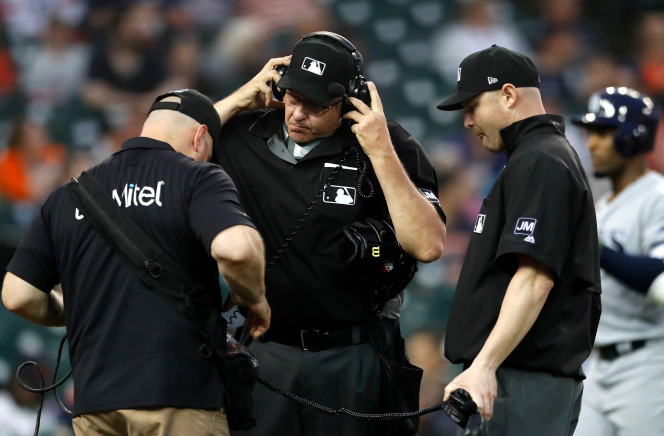
If there is a 2020 baseball season, there is a very good chance the Instant Replay will disappear. It would be a shortened season by the Covid-19 pandemic. Although is not official yet, sources say it looks like both sides came to an agreement. The umpires are guaranteed 50 percent of their salaries for the month of May, but nothing else is there are no season and no games are played.

The Major League Umpires make on average $150,000 to $450, 000 plus, if just one regular season game is played this season the umpires are guaranteed about onethird of their salaries. Umpires already have been paid from January to April. Looks like the umps will do well either way. The MLB Umpires Union said in a statement, they were pleased to reach this agreement with the commissioner’s office.

The old saying ‘the glass is half full or half empty ‘applies to the record since 2014. When the Instant Replay was established, with about half of the challenged calls resulting in reversal. In other words, major league umpires, missed half of the challenged plays and are right on the other half.

There still no timetable for an Opening Day. The parks where they are proposing to play in Arizona and Florida are not wired for the replay review, so they would play these games without no fans, and no replays. On the other hand, it seems what the owners do not want is the “replay review”.

A good scenario would be to open the season/play in Arizona and Florida and then later, if there is an effective treatment for the virus (most experts do not expect a vaccine until 2021) and then move to the original baseball parks where all 30 teams play, under the new proposed realignment of merging both leagues into three by geographical logic: East, Central and West. Even then, it would be with no fans.

Revenues? The games will be entirely for television that means the TV revenue is the only revenue generated. No fans, No tickets sold, concessions or parking. The rest we must leave to the financial experts, but anyway you look at this, is a very ugly situation.

Finally: Since we are talking about numbers, I will make it very simple. In my book there is a 50-50 of a season in 2020.Those are my best odds.

Stay well.

Amaury Pi Gonzalez is the Oakland A’s Spanish play by play on the A’s Spanish flagship station KIQI 1010 San Francisco and does News and Commentary each week at http://www.sportsradioservice.com