That’s Amaury’s News and Commentary: ESPN Deportes saying Adios by September

Photo credit: espn.com

By: Amaury Pi-Gonzalez

Social Media has done it once again. They just about eradicated print media in this country as they continue to advance as part of the biggest media transformation of our lives. ESPN Deportes from Bristol, Connecticut confirmed that their radio channel in Spanish will cease to operate this fall. As a result, many full-time and part-time jobs will be going away. Most of these jobs are in Coral Gables (Miami) as well as in New York. However, while Miami and New York were their major hubs, they have stations all across the country. Maybe the best example of what has been happening for a decade with the social media transformation is the New York Times, the most famous newspaper in the country, received a loan from Mexican billionaire Carlos Slim in 2009. Slim gave the NYT $250 million dollars to keep operating.

“Hispanic audience consumer habits are changing rapidly and this requires ESPN to evolve as well,” the statement said. “It’s no secret Hispanic fans skew heavily on digital and social media, which is why we made the decision to discontinue ESPN Deportes terrestrial radio (ESPN Deportes radio) in September.”

It is obvious that the majority of people in the US get their news and sports via social media. Everybody has a cellphone and can now access live and instant information at their fingertips. Social media facilitates the sharing of information and ways of expression via virtual communities and networks.

The future of media is truly in the hands of social media, the main engine of transformation in this business. Print media was first, then radio and television finding a way how to “befriend” social media.

Until as recently as 2016, today’s Oakland Athletics flagship station KTRB 860 AM was part of ESPN Deportes. When it comes to social media in relation to “old” media, the best thing to do is listed below.

In other words, if you can’t beat them, join them!

That’s Amaury’s News and Commentary: David Ortiz Shot for $8K Bounty

Photo credit: @nypost

By: Amaury Pi-Gonzalez

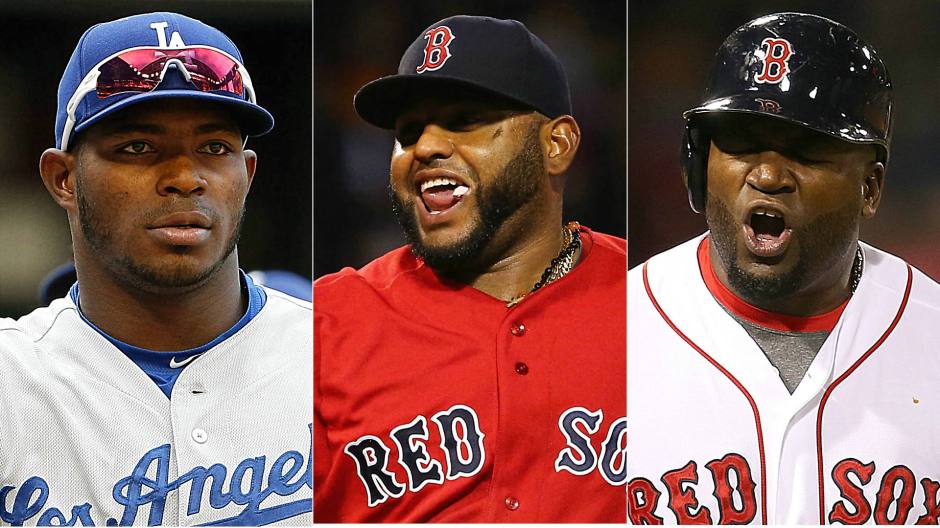
Former Boston Red Sox star David Ortiz was shot Sunday in Santo Domingo for an $8,000 bounty according to the latest police reports from his hometown of Santo Domingo, Dominican Republic. While $8,000 would only pay for a couple of months rent in a San Francisco apartment, in the D.R.–a poor Caribbean country of 12 million people, $8,000 is a lot of money. As a matter of fact, that is the equivalent of $400,000 Dominican pesos.

Ortiz was shot at a bar as part of a plot that also included two cars, a motorcycle and at least a half-dozen men, Dominican police revealed Wednesday. That was the motive behind the attempted murder of Big Papi, a national heroe in the baseball rich island. During the ambush, Ortiz and two others were wounded. Dominican police investigators believe the conspirators met hours before the ambush, hoping to collect the $8,000 bounty. Ortiz was shot inside the Dial Lounge and Bar. Witnesses captured one man, a shooter of Ortiz, beat him and waited until the police arrived. The police instantly put him in jail.

Two other suspects were arrested. According to the D.R. police, this attack involved several people who arrived in two cars and a motorcycle, per Ney Aldrin Bautista, Director de la Policia Nacional (Translation: Director of the National Police). At this time, the Dominican police has not revealed who paid the bounty for the murder of Ortiz. The investigation continues. As of today, the Dominican Police now have six people in custody who revealed that somebody hired 10 people to kill Ortiz.

After a successful second surgery, Ortiz is resting comfortably in a Boston, Massachusetts hospital. Of all the countries outside the United States, the D.R. remains as “Numero Uno” as far as major league talent today.

That’s Amaury’s News and Commentary: Check the Ball? On Pace for 6,513 Home Runs

Photo credit: @SportmaniaM

By: Amaury Pi-Gonzalez

It used to be the Home Run was the most exciting play in the game of baseball, but at this pace, the 2019 MLB season is becoming so much of a routine event that it’s like “an intoxication of eating too much candy”. Last season, there was a total of 5,585 home runs hit among all 30 teams, but that is not the record for a single season. The record for a single season was established in 2017 with 6,105. Today, we are on a pace for 6,514 or more.

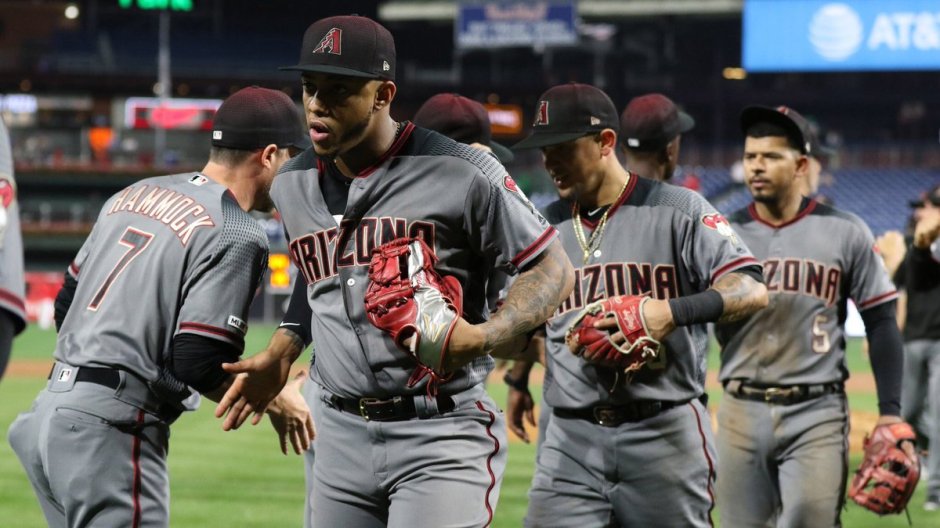
On Sunday, the Washington Nationals hit four straight home runs off of pitcher Craig Stammen. It was the ninth time in MLB history a team has hit back-to-back-to-back-to-back homers. On Monday, the Arizona Diamondbacks and Philadelphia Phillies hit 13 home runs at Citizens Bank Park. The D-Backs finished with eight home runs while the Phillies hit five for the new major league record.

A major league ball is supposed to weight between 5 and 5 1/4 ounces. Nowadays, pitchers throw harder than ever, and hitters have the launch angle mode, which is the perfect storm as managers really do not have to use a lot of strategies. It is all about Earl Weaver’s favorite play, the three-run homer. The game has changed and the ball has also “changed”.

That’s Amaury’s News and Commentary: Adjusting to Hit Against the Shift

Photo credit: chicagotribune.com

By: Amaury Pi-Gonzalez

During the last 10 years or so, the shift has taken over, which was something that was an oddity. Harry S .Truman was the President of the United States when during the summer of 1946, Cleveland Indians Manager Lou Boudreau witnessed three Ted Williams hit three home runs during the first game of a doubleheader against the Boston Red Sox. Which was very interesting because the shift never stopped a ball that went over the fence for a home run. But Boudreau was sick and tired of Williams pulling the ball to right field, so he decided to put four infielders between first and second. During that time only one player came to the plate with that defensive alignment. Therefore, it was called the “Ted Williams shift” for many years.

The Houston Astros are one of the teams that have used the shift the most. Nothing rare to see a left-handed hitter, that could be hitting .236 to see Yuliesky Gurriel at first-base, Jose Altuve the second baseman playing between first and second in short right field, shortstop Carlos Correa playing between second and first, to the right of Altuve and their regular third-baseman Alex Bregman playing just behind second base. Right-handed hitters also hit with the shift with frequency like Atlanta’s Freddy Freeman, and that is why he is a .300 hitter.

Matt Olson is he first-baseman for the Oakland Athletics. Olson is the 6’5″ and 230 lb cleanup hitter for the A’s. He has hit 142 home runs since his debut with the team in 2016. Yet, he has bunted looking for a base hit a few times this season to the opposite side of the shift for him the left side.

“Honestly, I think it’s always in play unless it’s kind of late in the game and I’m a tying or go-ahead run, something where driving the ball would be big for us,” said Olson.

And why not? I need to mention that there are major league players than can hit to the opposite field with frequency like I have recently seen more players with power like Olson trying to get on base with the bunt. A bunt hit today is breaking news and should be reported by Wolf “Breaking News” Blitzer on CNN. The bunt is healthy when used to be an integral part of the game, whose purpose is to get on base and score. Baseball historians say that the bunt was invented by Dickey Pearce, who played seven seasons with the New York Mutuals, Brooklyn Atlantics and St. Louis Brown Stockings. The bunt was not common until the 1880’s and then it was integrated in the 20th century as part of baseball strategy.

Thousands of home runs are hit in today’s game,specially with a “new”and lighter baseball it is common to see the balls going over the fences 420,430 feet or more. It would be ironic if the bunt is making a comeback but what is not ironic but a reality, is that power hitters with very low batting averages are trying to do more than just hit home runs and that is to bunt when they have the shift right in front.

Can the bunt have a revival in 2019? Maybe not, but we are seeing it with more frequency, and I do not mind especially when and if it works. Not only a sacrifice bunt, but a bunt for a base hit against the shift. Although home runs will never be boring and most fans love it.

The bunt? Let’s face it, it is a beautiful thing. By the way, the best I ever seen here in the Bay Area when it came to the art of bunting is Dagoberto “Blanco” Campaneris, a three-time World Champion shortstop for the Athletics from 1972-74.

Amaury Pi-Gonzalez is a pioneer of Spanish broadcasting in the Bay Area and has been broadcasting in the major leagues since 1979 for radio and television. He is currently on KIQI 1010AM/990AM Oakland Athletics Spanish radio network, covering the Bay Area and Sacramento/Stockton. Amaury got his start with A’s owner Charlie O. Finley.

That’s Amaury’s News and Commentary: Baseball in Latin America Is Risky Business

Photo credit: sportingnews.com

By: Amaury Pi-Gonzalez

In Latin America, the Dominican Republic,Puerto Rico,Cuba,Venezuela,Mexico, Colombia, and Curacao (Dutch Caribbean island) are the main producers of baseball talent in the major leagues.

Cuba was the pioneer in Latin America. From Esteban (Steve) Bellán, who in 1871 became the first Latin-born player to compete in a top professional baseball league, to Hall of Famer Tony Perez to Minnie “Mr. White Sox” Minoso, Cuban-born players have been big-league pioneers since the game’s earliest days. Cubans like Jose Abreu, Yasiel Puig, Yoenis Cespedes, Aroldis Chapman, Jose Iglesias and others have been keeping up with the great Cuban tradition.

My friend Roberto González Echevarría is a Cuban-born critic of Latin American literature and culture. He is the Sterling Professor of Hispanic and Comparative Literature at Yale University. Back in 1998, I introduced him to Giants manager  Dusty Baker. In his book, The Pride of Havana, he depicted the career of Cuban-born pitcher Adolfo “Dolf” Luque, whom in 1923 with the Cincinnati Reds had a record of 27-8 with 1.93 ERA, pitched in 41 games, started 37 games and completed 28 games with a total of 322 innings pitched. He was a Cuban pioneer of fair skin, so he was able to pitch in the majors in the 1920’s. The Castro brothers have ruled communist Cuba during 12 different US Presidents from Dwight D. Eisenhower to Donald Trump, and the politics of all these leaders didn’t matter, the Cuban government has never opened to free Democratic elections and still consider the US as an enemy. However, they welcome American tourism because they need the money. When Fidel Castro died (he earlier said he wanted a socialist society where all Cubans were the same) died with about $1 billion dollars in the bank, according to Forbes.

Today, Dominican Republic and Venezuela have the majority of players in the major leagues among all Latin American countries. Most of these countries are not rich countries and some are in dire economic situations. Cuba has been a communist dictatorship since 1960. Many players had to escape in home-made rafts (balsas) across the treacherous Florida straights to make it to freedom in the US. Some defected while playing tournaments outside the island. Yasiel Puig, among others, had to entangle with human traffickers to complete his journey, while the Yankees’ Kendrys Morales tried eight times to escape and succeeded in his ninth attempt. All baseball in Cuba is centralized and ran by the Cuban government, like everything else in that country. There are no diplomatic relations between the US and Cuba.

Venezuela, the land of the great Hall of Famer shortstop Luis Aparicio and many others like Miguel Cabrera, is going through an ugly part in their history. According to the United Nations, and reported by AP and Reuters, three million Venezuelans have fled economic and political crisis in their homeland since 2015. In that country, proven oil reserves are recognized as the largest in the world. Since the Hugo Chavez regime and now Nicolas Maduro, that country has collapsed with the highest inflation in the word. It is incredible that in Caracas, the Venezuelan capital, people line in the streets searching for food from garbage cans and stand in line to get a bucket of clean drinking water. That is the legacy for Venezuela since they were tutored by Cuba’s communist dictator Fidel Castro. Most Venezuelan players, who usually went back to their homeland to play winter ball, have now left to live in the United States.

Mexico might have the most stable baseball leagues today in Latin America. It is another country full of riches, but mismanaged by governments for many decades. Mexico’s Vinicio “Vinny” Castilla, Fernando Valenzuela and many others in the past. Currently, Dodgers’ Julio Urias and A’s Joakim Soria and Marco Estrada, just to mention a few.

Puerto Rico was hurt by Hurricane Maria, but prior to that, they were in bankruptcy due to poor political leadership. It has been a US territory since 1898 and a “Estado Libre Asociado” (Free Associated State) commonwealth since 1952, but they can’t decide if they want to be a US state or remain as they are due to profound ideological divisions. They have three different political parties with different ideas. Puerto Rico has been a mess way before Hurricane Maria devastated most of that island. Baseball was also hurt by Hurricane Maria. For many years, they didn’t send much talent to the major leagues, but in the last few years, some star players like Astros’ Carlos Correa, Indians’ Francisco Lindor and others have been enjoying great success. The one and only Roberto Clemente along with Orlando Cepeda were both born in Puerto Rico and made it to Cooperstown.

Still, with all those bad governments, Latin American baseball talent will keep growing in the major leagues, just like the population of the US, which is approximately 50-plus million Hispanics.

Adios, amigos!

That’s Amaury’s News and Commentary: Giants Stuck With Heavy Contracts of Under-Producing Players

Photo credit: @NBCSAuthentic

By: Amaury Pi-Gonzalez

The Opening Day Payroll of this 2019 MLB season for the San Francisco Giants was $138,030,231. The estimated CBT payroll is different at $155,030,231. CBT is commonly known as the Luxury Tax. The threshold for 2019 is $206 million. The Boston Red Sox, Chicago Cubs, and New York Yankees are over that figure.

The Giants’ larger salaries per year are those of Buster Posey ($22 million) plus Johnny Cueto, Jeff Samardzija, Mark Melancon, Evan Longoria, and Madison Bumgarner. Some of the most recent Giants like Cueto and Longoria have multi-year deals for more than $100 million. Samardzija signed for $90 million and Melancon signed for $62 million. Cueto and Melancon have been hurt and Longoria, who was a franchise player for the Tampa Bay Rays, is not the same player after 10 years of great production. Longoria seems to be done.

In 2018, in his first season for the Giants, Longoria hit .244 with 16 home runs and 54 runs batted in. This season, Longoria has hit for a .220 average with six home runs and 19 runs batted in. Others like Brandon Belt and Brandon Crawford are not starving, but are big disappointments. For example, Belt currently sports a .230 average with eight home runs and 20 runs batted in. Since he began his career with San Francisco in 2011, Belt has never hit more than 18 home runs and 82 runs batted in during a season at first base, which is supposed to be a power position. Crawford is currently hitting .209 with three home runs and 13 batted in.

I hear people talking about bringing the fences in at Oracle Park because the Giants do not hit well there, but everybody else that comes to play the Giants hit plenty of home runs. It is not the park for the Giants’ lack of hitting, it is the players. They won three World Series at the same park, which has been SBC, Pac Bell and AT&T. It’s now Oracle. Since the inauguration of this beautiful park, the dimensions have been the same, so instead of focusing on the fences, the Giants should focus on the team.

The Giants simply got old, and they are playing not the same type of baseball that everybody else is playing today — home runs, home runs, and more home runs. Since MLB got a new ball this year, which is much lighter (a good friend of mine in this business told me, “Amaury, the ball is on Steroids.” Yes, and everybody is hitting home runs, except for the Giants.

You do not need Statcast or any other of the new and fancy baseball analytics to tell you that the Giants have spent more that most teams in baseball and got little in return for their money. On July 31, we will likely see this team trade Madison Bumgarner and perhaps reliever Will Smith. Only God knows who else, but they need more than a tune-up, they need a new engine.

Amaury Pi-Gonzalez is the Spanish voice of the Oakland Athletics. He was born in Cuba and has lived in the Bay Area since 1969. He has broadcasted for the A’s, Giants, Mariners, and Angels — a veteran of radio and television. He has been inducted to BARHOF (Bay Area Radio Hall of Fame) in 2010, Cuban Sports Hall of Fame (Miami), and The Hispanic Heritage Baseball Museum and Hall of Fame (San Francisco), and nominated multiple times for the MLB Ford C. Frick Award for broadcasters.

That’s Amaury’s News and Commentary: Bill Buckner Played 22 Years, but Remembered for One Miscue

Photo credit: @BostonGlobe

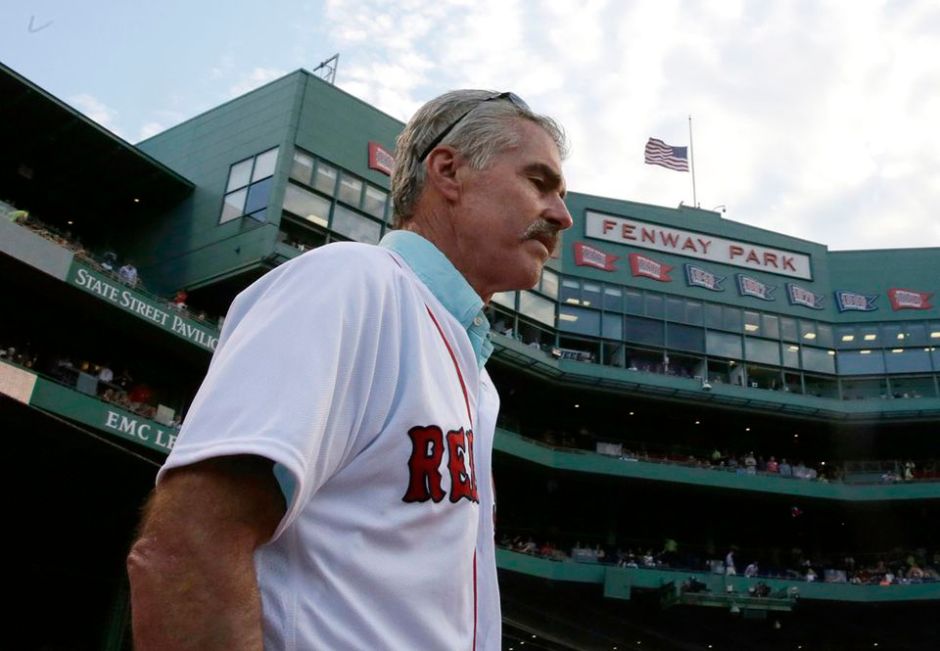
Bill Buckner was a very good baseball player. Born in Vallejo, California on December 14, 1949. He died after a battle with dementia on May 27,2019 in Boise, Idaho. Buckner played for the Los Angeles Dodgers, Chicago Cubs, Boston Red Sox, California Angels (now Los Angeles Angels) and Kansas City Royals.

After 22 years in the Major Leagues, the first baseman ended with a solid .289 batting average. Buckner played in 2,517 games and collected 2,715 hits. Buckner also won the 1980 batting title in the National League with the Chicago Cubs batting .324.

Unfortunately, Buckner was always remembered for the costly error during the 1986 World Series between the Boston Red Sox and the New York Mets. I happened to be broadcasting for the old CBS Hispanic Radio Network over 200 Spanish format stations in the US and Latin America alongside veterans Juan Vene and Billy Berroa and international producer Armando Talavera. It was Game 6 at Shea Stadium in Queens, New York at the bottom of the 10th inning when the Mets’ Mookie Wilson hit a grounder that went through Bill Buckner’s legs, allowing Ray Knight scoring from second with the winning run for a Mets’ 6-5 win. The next day, in Game 7 game, the Mets beat the Red Sox 8-5 to win the series. The key play was the one that turned around the series — Buckner’s error.

Baseball is a wonderful game. However, moments, good or bad, will be remembered for many years. After that error, Buckner was not welcome in Boston, home of one of the most passionate fanbases in baseball. There were death threats, and he was persona non grata for many years in that great city.

Although I vividly remember that moment of Game 6 of the 1986 World Series, Red Sox fans that were at Shea Stadium crying, while Mets fans could not be any more pleased, I personally remember Buckner as a very good dependable professional MLB player for over two decades.

You cannot judge a career for one play, however, it unfortunately happens. Remember when Jose Canseco played right field for the Texas Rangers on May 26, 1993 and let a ball hit him in the head and rebounded over the fence for a home run? Yes, that happened, but people should also remember in 1988, Canseco was with the Oakland Athletics and was the first ever 40-40 man when he hit 42 home runs and stole 40 bases en route to the American League MVP. Canseco had a 17-year career with 462 home runs.

However, the Canseco play was during a regular season, Buckner’s play was during a World Series. Though I remember the infamous play, I moreso remember Buckner as a very productive MLB player.

That’s Amaury’s News and Commentary: ESPN President says political commentary killed the network

Photo credit: @CornellNews

By: Amaury Pi-Gonzalez

James Pitaro, new President of ESPN, said: “My job is to provide clarity. I really believe that some of our talent was confused on what was expected of them.”

Pitaro admitted political commentary killed the network and vowed for change.

Pitaro added: “Our fans do not want politics mixed with sports.”

Alexandra J. Robert, a law professor specializing in trademark law, entertainment law and pop culture recently wrote in The Boston Globe how one business in particular feels. In this case, Dunkin Donuts said: “We are not Starbucks, we aren’t political, we aren’t gonna put stuff on our cups to start conversations. we don’t want to engage you in political conversation, we want to get you in and out of our store in seconds. It’s donuts and ice cream– just be happy.”

The majority of businesses have one agenda — to make money. I do not know of anybody that goes into business to lose money. Having said that we live in a free capitalistic free enterprise society, and people (even businesses) are allowed to promote certain causes. There is nothing wrong with that.

When it comes to sports, Pitaro has seen what has happened to his network and he is trying to change that. ESPN has always been a sports network. They do not tell you how to cook an omelet or how to elect somebody to Congress, while those watching the Food Channel could care less (well, at least when they are watching their favorite show) what was the score of the game. To each their own. I am old enough to remember when we had ABC, CBS, NBC, PBS and vice versa way before cable. Now, we have 200-plus channels to chose from.

For years, I have maintained that sports is one of the biggest escapes to the boring everyday life. Let’s face it, most people’s lives consist of going to work in the morning and coming home in the afternoon. The overwhelming majority see sports that should always be neutral, something to enjoy, escape and relax from a hard day of work.

Pitaro gets it. He knew he has been hired to heal a network that during the past few years have been going downhill, not only from the competition, but also because some who get paid to cover sports dived into politics.

Pitaro knows very well he has not been hired to save the world, but to save a sports network.

That’s Amaury’s News and Commentary: Ted Williams & Hispanic heritage

Photo credit: @MH_Investment

By: Amaury Pi-Gonzalez

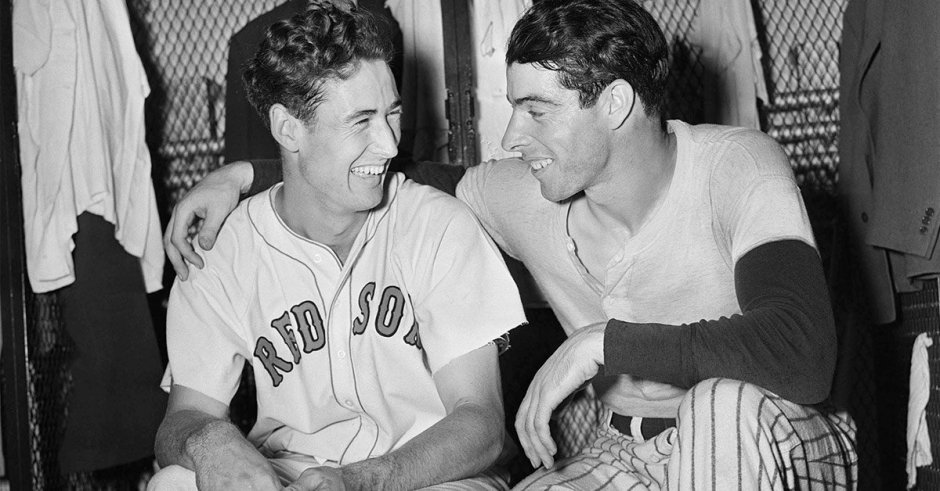
Ted Williams, also known as Teddy Ballgame, is the last man to hit .400 over a full season. In 1941, Williams, as a member of the Boston Red Sox, played 143 games (the season was a total of 154 games) with an average .406, drove-in 120 runs, received 147 bases on balls and struck out just 27 times. By any measure, that was one of the greatest seasons for anybody in the history of the game. The Hall of Famer played his entire 19-year career with Boston. Many agree he was the best pure hitter ever.

Williams was born in San Diego, California. His mother was Maria Hernandez-Benzor, born in Ciudad Juarez — near El Paso,Texas. The El Paso–Juárez region is the largest bilingual, bi-national work force in the Western Hemisphere.

The Hispanic Baseball Museum is the only museum of its kind in the country. It was established in San Francisco, California in June 1999, as a nonprofit institution 501(c)(3). This Museum is dedicated to recognizing the contributions made to baseball by its Hispanic players. Ted Williams is in The Hispanic Heritage Baseball Hall of Fame — not only because he was a great player, but also because his mother was born in Mexico. When the museum first reported this, many ignored this fact, but when Williams played, this country was not really looking at people’s heritage. Williams was a very private man who dedicated himself to the game with a stellar career. In the 1940’s, US demographics were not what they are today — the amount of Hispanic-American players was just a handful unlike today’s 35%.

Some players still do not want to admit their heritage. For example, Reggie Jackson, whose full name is Reginaldo Martinez Jackson. He of Puerto Rican descent. He is also in Cooperstown and speaks a little Spanish. I have spoken to him on many occasions, like, say, when he played and after he retired. Some people do not feel comfortable admitting their heritage, but in today’s world, things have changed, and if you asked them directly, most players will not hesitate to tell you about how proud they feel of their lineage.

Decades ago, some players were shy, like the first Puerto Rican Ruben Gomez to pitch in a World Series. Gomez was with the New York Giants, who won Game 3 against the Cleveland Indians. Considering that, Jackie Robinson was the first to break the color barrier in 1947. Many Latin players, even those who are fair-skinned, were conscious that there was so much discrimination perpetuated on them. The media even made fun of how they spoke English. It was a tough environment for many of them. The great Roberto Clemente was often misquoted and he did not like it.  Orestes “Minnie” Minoso, who was born in Cuba and dark-skinned, told me that he never complained, but lived and played during those very difficult times. Also, Orlando Cepeda told me it was very difficult and said: “During those days,the white player was #1, the black player was #2 and the Latino player was #3 in baseball.”

But those years are now in the past. It is a part of history, and even though some people do not want to talk about it, it happened and no country can erase its history. For Ted Williams, it was a totally different situation. Although he was of Hispanic heritage, he was also white, and one of the best players of his generation — a mega star. As a matter of fact, many who played with or against Williams during those years did not know about his heritage. They would have been very surprised if they learned Ted Williams’ mother was Mexican.

That’s Amaury’s News and Commentary: Liam Hendriks for “openers”

Photo credit: athleticsnation.com

By: Amaury Pi-Gonzalez

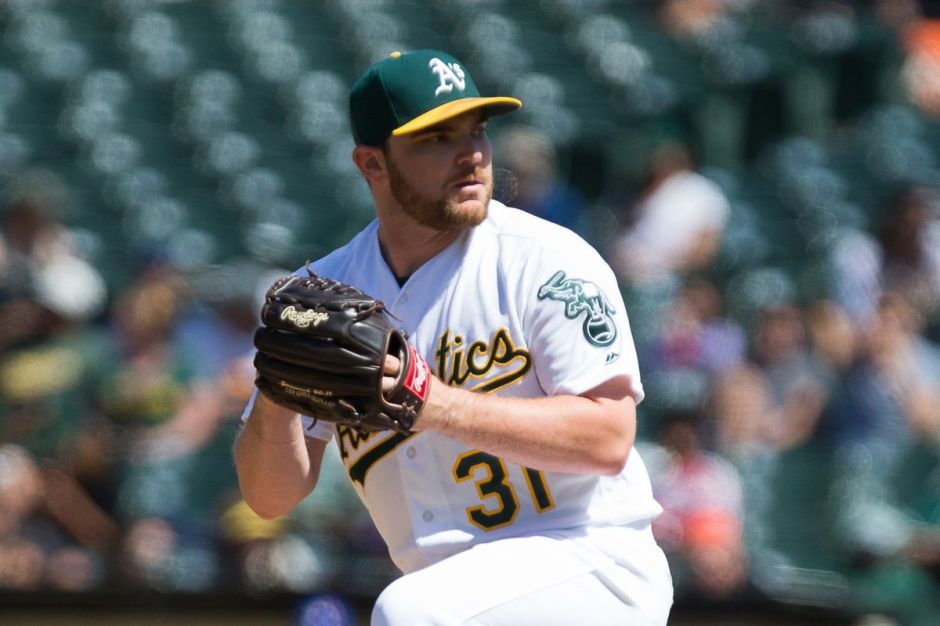
On Saturday, the Oakland Athletics against the visiting Cleveland Indians, started a game with Liam Hendriks, as an “opener” for the first time since October 3, 2018 at Yankee Stadium for the one-game Wild Card elimination game, which the Yankees won 7-2. After Hendriks was slated to open the game and pitch only the first inning, he allowed no runs, walked one and struck out one. A’s manager Bob Melvin followed with a parade of pitchers: Aaron Brooks, Yusmeiro Petit, Lou Trivino and Blake Treinen, who was accredited with the A’s 3-2 win over the Indians.

Thirty years ago, there were 622 complete games in MLB. Last season, just a total of 42 and just 13 pitchers threw for 200-plus innings. That was the way pitching has gone, and with just about every team hitting lots of home runs so far this season, with the exceptions of the Marlins and Giants, pitching is so deluded now, that I would not be surprised “openers” are here to stay.

I know it is the wrong sport, but the great Al Davis used to say “just win baby” and the same thing applies in baseball. Use whatever formula works. Soon the National League will adopt the DH rule. It is inevitable, you know it and everybody knows it. So there are some general changes and regulations that MLB will establish, but there are others that just happen and the “opener” is one of those.

Pitching is becoming a commodity as hard to find as diamonds, the hardest mineral to find on earth. Not many years ago, pitching coaches will tell their starters on the rotation “give me six good innings”.  Today, that is for the “opener” give me one good inning — three outs in the first inning and your are out of the game.

I am not the one who likes to predict the future, but I predict one record that will never be broken is that of Cy Young, who pitched 7,356 innings in 22 seasons. Of course, different eras. Back then, the only count was that of the attendance, but no count of pitches thrown. But that was then and it’s something that we will never see again.

Bob Melvin is one of the best managers in the game. In a perfect world, he would have had at least a semi-set rotation and would have never used the “opener”, but it is not easy to win a game in the majors.

After he retired and did TV commentary, I once asked my all-time favorite manager Sparky Anderson: “In your opinion how many games does a manager win during a season using pure strategy?” He told me: “Maybe 10 to 15 games.” Sparky and many others never had to manage “openers” because a pitcher that begins a game, if not abused in the first inning, is expected to go a long way.

The defensive shift, is slowly changing as hitters are adjusting. but you better get used to the “opener”, and if it becomes a common thing, there will also be a stats for openers and their success. Why not? Baseball is filled with changes. Remember there was no RBI recorded until 1920.

So, the tale of the story, you better get use to “openers”, because they could be as valuable as closers.