Headline Sports podcast with Marko Ukalovic: Daly talks about how testing will go in the NHL; Sharks Thornton shaves beard plus more

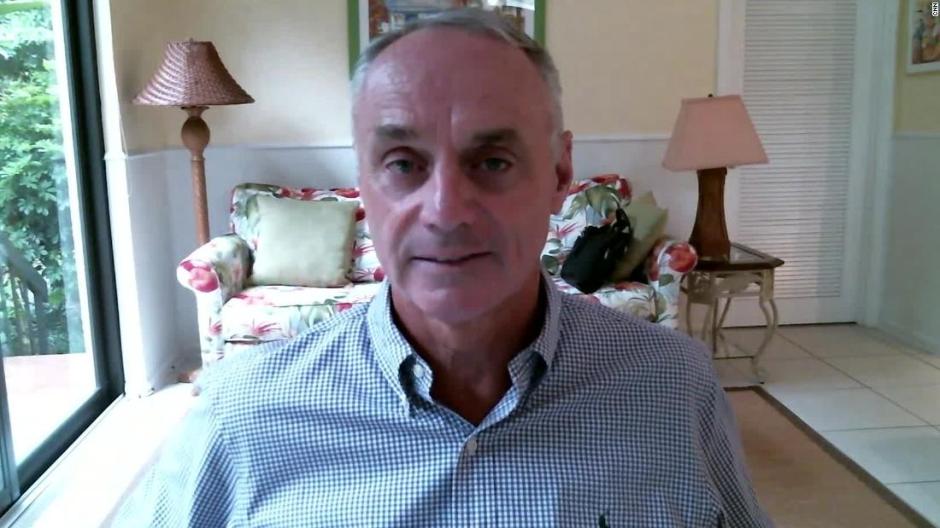
NHL Deputy Commissioner Bill Daly says talks will go on on how to proceed with resuming the NHL season that is currently suspended (thehockeynews.com file photo)

On Headline Sports podcast with Marko:

#1 With a soft opening and patient numbers going down at least in the Bay Area would you say hockey is still a long, long, way off from returning?

#2 NHL Deputy Commissioner Bill Daly in an interview with 630 CHED in Edmonton saying that testing would be the key issue to coming back. “We will not test asymptomatic players ahead of symptomatic people who are unable to get tested. It’s just something we will not do.” Said Daly.

#3 San Jose Shark Joe Thornton’s daughter Ayla did a video with her father standing by with a full beard and then the next without his beard when Ayla played a genie who tapped her head forward and gone. The Thornton beard was a staple for the longest time and since there’s no hockey and no growing a playoff beard necessary off it came.

#4 The Florida Panthers forward Grigori Denisenko was signed to a three year entry level contract with the Panthers. Denisenko was the No.15, 2018 draft and came out of the Russian 2020 World Juniors, he had 12 points, six goals, six assists in 38 games last season.

#5 The former Montreal Canadiens Georges Laraque says that having Covid-19 “is the worst thing ever” Laraque says he could remember being able to go running for miles two weeks ago and do many things. At 43 and retired he says having Coronavirus is a struggle just to brush his teeth because the disease has attacked his lungs. He did receive well wishes from many former and active NHL players.

Join Marko for Headline Sports each Wednesday night at http://www.sportsradioservice.com

That’s Amaury’s News and Commentary: Behind the Mask–The Three Best Catchers

St Louis Cardinals catcher Yadier Molina was ranked as the best active catcher and number three on the all time list (UPI file photo)

Behind the Mask: The Three Best Catchers

That’s Amaury News and Commentary

Most catchers are defined by their defense. There are two positions in the game of baseball where you must field the ball to play every day. One is shortstop, the other is catcher. And unless you are a great hitter, it will be tough to stay on a regular line-up there are some obvious exceptions, like Hall of Fame catcher Mike Piazza, considered a poor defensive catcher but #1 in history for catchers in home runs with 427 #4 in runs-batted-in with 1, 335 and #6 in runs scored with 1,048. Piazza was also a designated hitter during his last season in the majors with the Oakland A’s in 2007, the A’s just needed Piazza to hit, since they had Jason Kendall and Kurt Suzuki handling the backstop.

Catching is the most physically demanding position in the game. A catcher has to work the signals and direct his pitcher, he has to hold runners on base and squat for hours. As a kid I was always impressed by such catchers as Del Crandall, Ted Kluszewsi. Yogi Berra, Sherman Lollar, Earl Battey, Johnny Romano, Clay Dalrymple and others.

In those years the uniforms were made of heavier material not to mention the heavier masks and all the gear they would have to wear. A lot of these guys would catch 120 to 150 games each season. The first indoor stadium with “room temperature” was the Houston Astrodome inaugurated in 1965, so these catchers played outdoor most of their careers during hot humid days and nights. Like everything else, the position has evolved and today some of the catcher’s masks are colorful and very light in comparison to those of decades past.

Here are the three best defensive catchers in history. Maybe the best three all-around catchers: Most Gold Gloves

1-Iván Rodríguez 13

2-Johnny Bench 10

3-Yadier Molina 9

Iván Rodríguez won 13 Gold Gloves, the most for a catcher. The Hall of Fame catcher played for 21 years and a total of 2,543 games(most games caught 2,427) Lifetime average .296(hit over.300 in ten different seasons)311 home runs,1,232 runs batted in and 1,354 runs scored. For a catcher(at the time of his retirement)the most hits,2,749,the most All Star Game starts with 12(tied with Johnny Bench) and also tied with Yogi Berra with 14 appearances in All Star games. Seven Silver Slugger Awards, second only to Mike Piazza’s 10

In 2003 Rodríguez won the World Series title with the Florida Marlins. (Quote)National’s manager Dusty Baker: “Pudge was a great catcher. Playing against him, he shut down the running game. I mean, shut it down. That’s big–you didn’t run at all. He was a great clutch hitter and an outstanding, durable catcher.

Johnny Bench dominated the 1970’s with the Cincinnati Reds.”The Big Red Machine” and played for the Reds his whole 17 year career. 2,158 games and was as strong as any catcher in history from 1968 to 1977 he won 10 consecutive Gold Gloves. With a .267 career average, 389 home runs and 1,376 runs batted in while scoring 1.091 runs. Won two World Series and was selected to 12 All Star games. He was a two-time winner of the National League MVP Award.

(Quote)”Johnny Bench’s desire to succeed and his excellent work habits were two of the reasons why he was elected to the Hall of Fame on the first ballot” -Earl Weaver, Orioles manager and fellow Hall of Famer.

Yadier Molina (youngest of the Molina brothers, José and Bengie) is a nine time All-Star, two time World Champion and #1 among active catchers with 41 percent of base runners caught stealing and 65 pickups. Molina has played for 16 years with the St Louis Cardinals, an anomaly these days and for a sure future member of the Hall of Fame. At the end of the 2019 season Yadier Molina lifetime average was .282 with 156 home runs and 916 runs batted-in.

(Quote)”The things he does mid-game, you’d have to watch him with a pretty educated eye as far as realizing when he does something that has meaning. The other side won’t even know.” -Mike Matheny, St. Louis Cardinals manager

Special mention for Yankee Yogi Berra who won ten World Series as a player more than any other player in major league history, selected to 18 All-Star games and is one of six players to win the American League Most Valuable Player Award three times. Yogi’s career numbers are not too shabby, .285 hitting with 358 home runs and 1,430 runs batted in. Not to take any credit from Yogi, a great catcher on his own, he also played with winning teams loaded with super talented teammates.

Baseball fans talk all the time what record can or cannot be broken here is one very unlikely to be broken, because few great players today play their whole careers with the same team. Yogi’s Ten (10) World Series titles as a player. Yogi won three more championships as a coach, and made an astonishing 21 total World Series appearances as a player, coach or manager. Like the great Yankee announcer Mel Allen would say: How about that!

Amaury Pi Gonzalez is the Oakland A’s Spanish play by play voice heard on KIQI 1010 San Francisco and does News and Commentary at http://www.sportsradioservice.com

50 Years Ago: Pilots Land In Milwaukee Pt 3 of 5 By Daniel Dullum

Seattle Pilots image from sportslogos.net

50 Years Ago: Pilots Land in Milwaukee — Part 3

By Daniel Dullum

(Author’s note: This is the third of a five-part series detailing an unusual Major League Baseball franchise shift — In 1970, the Seattle Pilots arrived at spring training in Tempe, Arizona, and left at the end of March as the Milwaukee Brewers.

At the conclusion of Part 2, the Seattle Pilots’ financial woes continued into 1970 spring training, the American League publicly admitted that the Pilots were broke, leaving the players and coaches wondering about the team’s future while trying to focus on preparing for the upcoming season.)

Mike Hegan explained, “There are extraneous factors that enter into day-to-day baseball, and you usually take the cue from the manager, the coaching staff and the front office. At that time, Dave Bristol, a pretty levelheaded guy, just continuously said, ‘Hey, you don’t have any control over this. You can worry about certain things, but you have no control. So what you want to do is prepare to play baseball, whether it be in Seattle or someplace else.’”

Ken Sanders concurred, “I think the manager and the coaches of that team were really good — Dave Bristol, Wes Stock, Jackie Moore — those guys kind of helped keep it together. They would say, ‘We know we’re going to play, we know we’re going to play somewhere, we just need to get ready and prepare for the season.’” Wes Stock added, “Dave [Bristol] wanted everything focused. His idea was to play the game right and he worked on fundamentals. He was real focused, we all had a job to do, and we didn’t think about [the possible move]. Dave was strong that way. His thing was, ‘We’re going to win as many games as we can for a big league ballclub and just go from there. It didn’t bother him where we’d go, and I think that’s what he tried to tell everybody else — ‘We’re in spring training today, tomorrow we’ll be in Milwaukee or Seattle, and let’s go play.’”

While the Pilots were 5–5 in Cactus League exhibition action following a 19–14 win over Cleveland in Tucson, team management returned to the courtroom, this time in Seattle at King County Superior Court. At 9:30 a.m. on March 20, attorney Alfred J. Schweppe was scheduled to place his “outraged self” before a judge to argue that the American League had no right to remove the Pilots from Seattle.

AL attorney Alexander Hadden, meanwhile, tried to convince the judge to lift the restraining order that was preventing the league from moving the shaky franchise. In addition, an antitrust suit filed by the State of Washington and the City of Seattle was to be considered in conjunction with Schweppe’s suit.

If the judgments went against the AL owners, the antitrust action reportedly could cost them as much as $82 million. But by the day’s end, the Pilots’ owners delivered yet another headline-grabbing salvo when they filed a petition in U.S. District Court, asking that the team be sold to Milwaukee Brewers Inc. for $10.8 million under Chapter 11 of the Bankruptcy Act.

This petition stated that Pacific Northwest Sports Inc., “is unable to meet its debts,” listed as $7.4 million (an amount later increased to $8.13 million). The petition also listed demand notes of $200,000 by Max Soriano (with his brother, Dewey, 34 percent owners) and $300,000 by William Daley, a 60 percent stockholder in the Seattle club. Smaller items, as low as $6 to the Seattle Fire Department for permits, were listed as well.

Other debts on the petition included: • $3.5 million to the Bank of California. • $2 million to Sportservice. • $500,000 to First National Bank of Phoenix. • $250,000 to the American League. • $165,000 to the City of Seattle for rent at Sicks’ Stadium. • $161,250 to the Pacific Coast League for indemnities due in 1970 and 1971. • $31,011 to King County for property taxes. • $5,000 to the Major League Scouting Bureau, Inc.

Among those listed on the list of creditors was none other than Fred Danz, whose group loaned the Pilots $261,875 in hopes of keeping the club in Seattle. But there were more legal hurdles. On March 20, E.B. Smith, president of Pilot Properties, Inc., of Phoenix, Arizona, filed a lawsuit for more than $1 million against the Pilots’ owners to “preserve the interests of investors” in the Pilots’ spring training facilities at Tempe.

Smith also cancelled Pacific Northwest Sports’ contract to use the facilities, saying the group had failed to meet obligations in forming a company to operate the training camp. That same day, Superior Court Judge James W. Miffin continued a restraining order that prevented the Pilots from relocating.

Alfred J. Schweppe then jumped in and took a public swipe at Milwaukee Brewers Inc., calling the group “suckers.” But William J. Walsh, an attorney who represented the Pilots’ owners, said even if an injunction is granted, “the team is in too poor shape financially to play in Seattle this season.” As a precaution, the California Angels, who were scheduled to open the 1970 season on the road against the Pilots, reserved hotel rooms in both Seattle and Milwaukee. And through it all, the Pilots players and coaches soldiered on. “[The coaches] tried to keep it non-disruptive because we had a lot of young guys, guys who played ‘A’ ball, like Jim Slaton and Bill Parsons who came back [to the majors] with us,”

Coach Wes Stock said. “We didn’t talk about it. We didn’t know what was going on. There was nothing we could do about it. The two owners were the ones with the control of what was going to happen. We just had to do what we could, regardless of what was going to happen. “We said, ‘Hey guys, don’t worry about it, we’re all in the big leagues. You guys want to be in the big leagues?

This is where you’re trying to get to, whether you play in Seattle or Milwaukee. Let’s just make the best of it.’” This was easier said than done for players like Ken Sanders, who was under enough pressure just to make the 25-man roster. “I was traded by Oakland to the Pilots that winter, and I hadn’t really established myself in the big leagues,” Sanders said. “I’d been up and down at that time. I was hurt [broken leg] the year before and I only pitched about a month in the minor leagues. So we go to spring training like a lot of the players on that team — enthused about the upcoming season. “Then the Seattle Pilots filed bankruptcy, so it was a very difficult time, not only for myself and the younger players, but also the veterans. We didn’t have any idea of where we were going. We assume we’re going to Seattle. ‘Do we get a place to live there? Are we going to get paid?’ … All of those issues. You have to realize that at that time, we weren’t making a million dollars a year or even a hundred thousand, so every paycheck was important.”

As hearings began on March 24, Dave Cohn, a Seattle restaurateur, told King County Superior Court that he could put a group together in 90 days to buy the Pilots and keep them in Seattle. Cohn said his group would be willing to pay $5.25 million — the original cost of the franchise — and that the price was negotiable.

Cohn never had a chance to put that group together or negotiate the price. Federal Bankruptcy Court Judge Sidney C. Volinn, the referee for the case, issued an injunction on March 25, allowing the American League a chance to vote on Milwaukee Brewers Inc.’s offer of $10.8 million to buy the Seattle Pilots and move the club to Wisconsin.

Volinn said the effect of the injunction was “to maintain the status quo” until he made his decision on March 30 to approve or disapprove the sale. The morning session of the hearing was devoted to legal jousting over the language of the injunction.

The final wording, approved by Volinn, prevented further legal action in King County Superior Court, where Washington state, the City of Seattle, and attorney Albert J. Schweppe all sought injunctions to prevent the sale and relocation of the Pilots. “Though various arguments have been presented to keep the Pilots in Seattle, no one has offered a financial plan to support it,” Volinn said. “Every way we turn around, we have an assured $10.8 million offer from Milwaukee. If we don’t take that, we have nothing.”

At the same time, Volinn emphasized he was not endorsing a sale to the Milwaukee group, saying that his primary responsibility was to Pacific Northwest Sports, and the best interests of the Pilots and their creditors. This was good news to the creditors, especially after team treasurer Max Soriano testified that the Pilots were losing $12,500 a day, and Robert W. Schoenbachler, the team controller, projected a $1.5 million loss for the Pilots if the team stayed in Seattle for 1970.

While all parties waited through the weekend for Judge Volinn to make his ruling, Dewey and Max Soriano were burned in effigy at a downtown Seattle shopping mall, Florida Judge John Hodges dissolved a temporary injunction that barred the AL owners from voting on the proposed sale of the Pilots, and King County was given the legal go-ahead to build a $40 million sports complex in downtown Seattle.

Faced with the possibility of overseeing a white elephant, county executive John Spellman said he hoped to convince the AFL’s Boston Patriots to move west if they couldn’t find a suitable home in New England, all but conceding that the Pilots were leaving. — — As the 1970 exhibition season wound down, the Pilots won three games the weekend of March 27–29, edging Cleveland 2–1 and enjoying victories of 19–1 and 7–6 over Oakland.

Word also leaked out of the Pilots camp that two players, who asked to remain anonymous, said they rented apartments in Milwaukee on a contingency basis. Other players said they would live in hotels until they could find permanent residence in Milwaukee if the team did move there. But Bobby Sullivan, the Pilots’ equipment manager, insisted, “Until I’m told otherwise, I have to tag [the equipment and gear] for Seattle.”

Summing up a common approach by the players, Ken Sanders said, “I hadn’t gotten a place to live in Seattle yet. That’s one of the things the ballplayers still do — wait until the last few days to find an apartment. I’m in the real estate business and I’m sure they still do that today. It wasn’t a real inconvenience, just the stress and strain of where you were going to go.”

As the bankruptcy hearing reconvened on March 30, Judge Voiinn expressed disgust that, in his opinion, no offer for the Pilots had been formally presented by anyone representing Milwaukee in his court. Attorney Elwen Zarwell was at the hearing on behalf of Milwaukee Brewers Inc., but said he was “awaiting instructions” before he could represent the group officially. Another last-minute offer came from California businessman Fred Ruge, who said Statewide Security Depositors of Sacramento, California, would invest $100 million to buy the team and build the domed stadium.

However, Carl Dumbra, who called Statewide Security Depositors “basically himself,” said the announcement was “premature,” adding that his company “has no money at all like that.” Dumbra explained that his company has “liaison with investors that desire to place funds in good investments.” Attorney C.T. Hatten, representing Ruge, asked for a delay so the court could consider an $11.5 million offer to buy the Pilots. Noting that the Ruge offer was “based on several contingencies,”

Volinn suggested that the hearing proceed as scheduled until the various attorneys had a chance to study the new development. During the bankruptcy hearing, Max Soriano testified that the Pilots were nearly broke, had only $91,000 in cash, and were unable to meet current expenditures, such as a $216,000 note due on March 31.

Dewey Soriano testified that the club didn’t have the funds to make necessary upgrades to Sicks’ Stadium. Marvin Milkes told the court there wasn’t enough money to pay the players, coaches and office staff, noting that if the Pilots were more than 10 days late with payroll, all of their players would become free agents. And W.B. Campbell, representing the Bank of California, said the Pilots owed his bank $3.65 million plus interest, and that “others,” including the Soriano brothers, owed another $4 million in personal notes.

William Dwyer, special assistant to the state attorney general in Washington, referred to the American League constitution, claiming that since the Pilots filed for bankruptcy, the action automatically put the league in charge of the club. Dwyer argued that the team was not bankrupt because the American League wasn’t.

Milwaukee attorney Elwen Zarwell, the last to speak, told Volinn the Brewers “were ready, willing and able” to proceed with the purchase of the club. Volinn said he was aware that the 1970 season was about to begin, but didn’t want to rush a decision, explaining, “I realize … there is an atmosphere of haste. But the court will take all the time necessary in order to receive all the evidence that is necessary to make a decision in this case.”

Apparently, Volinn didn’t need much time for contemplation. At 10:21 p.m. on March 31, he ordered the Pilots to be sold to Milwaukee Brewers, Inc., for $10.8 million. Thinking back to that night, Bud Selig said he “took nothing for granted,” and was convinced the purchase of the Pilots went from pipe dream to reality “on the night of March 31, 1970. “But we knew about a week before, because [the Pilots] were in bankruptcy court. My lawyers were telling me, ‘We’re going to be OK.’ But in everything in life, I’m a Yogi Berra theorist in that it ain’t over until it’s over,” Selig said, while recalling the telephone conversations he’d anxiously waited for. “When our lawyer [Elwen Zarwell] called from Seattle, he called from a pay phone. But I’d already heard about it from [Lloyd Larson] the sports editor of the Milwaukee Sentinel. He yelled in the phone, ‘You got it!’ and hung up.

Then the lawyer called and said the same thing,” Selig said. “I went out and took a walk … I was stunned. It was five-and-a-half years. It was a long journey.” Ken Sanders recalled, “Bud Selig did a good PR job when he came to town. I remember … Selig came down and he was one of the minority stockholders — I think he invested $100,000 — he announced that he bought the team and he was moving it to Milwaukee. They purchased that team for $10.8 million, and [Selig] said his greatest fear was how he was going to pay the salaries of the team, which included 25 players and five coaches.

The combined total of those salaries was $729,000.” As expected, Dwyer said the City of Seattle and the State of Washington would proceed with their $82 million antitrust suit, which already was filed and waiting for Volinn’s decision. And, on April 16, 1970, Senators Jackson and Magnuson followed through on their threat to introduce legislation to remove baseball’s antitrust immunity when Congress reconvened.

In a joint statement, Magnuson and Jackson said, “It seems apparent that the nature of baseball has changed dramatically in the many years since organized baseball received antitrust exemption. It is our feeling that all aspects of baseball — including radio and television contracts, concessions, player-management relations, and all other relevant factors — should be reviewed to determine the wisdom of continuing to exempt baseball from the antitrust laws.” Amidst the rampant finger-pointing for losing the Pilots, Washington Governor Dan Evans took his turn, saying, “I think the leadership in the American League and the league owners that have led us to this sorry state of events can’t be condemned too much for the way in which they treated this area.

Next up: Part 4

Headline Sports podcast with Barbara Mason: Were the women’s soccer team punished for their success?; plus much more

The United States Women’s National Team poses for a team photo before a SheBelieves Cup women’s soccer match against Japan, Wednesday, March 11, 2020 at Toyota Stadium in Frisco, Texas. (AP file photo)

On Headline Sports with Barbara:

#1 On Friday Judge R.Gary Klausner ruled against the US Women’s soccer team who sued the US Soccer team for underpaying them less than the men’s team.

#2 The women’s soccer team played 111 games between Feb 2015-Nov 2018. The men’s team played 87 games . The women’s team during that time earned $24.5 million or $220,747 per woman. The men’s team earned $18.5 million, $212,638 per man. Giving the women more money per game.

#3 The argument is that the women’s success was used against them in court and the men’s team had played less games because they failed to make the playoffs and the women’s won the cup playing more games.

#4 In the Michael Jordan documentary “Last Dance” Chicago writer Sam Smith quoted Jordan in 1995 after being asked why he didn’t support Democratic Harvey Gantt who was running against Republican Jesse Helms for Illinois senator who was a well known racist. Jordan told Smith that he wasn’t into politics and reportedly told Smith “I’m not into politics, Republicans buy shoes too.” But according to Jordan spokesperson Estee Portnoy she told the Slate in 2016 that Jordan never said it.

#5 ESPN has struck a deal with the Korean Baseball Organization saying they will broadcast at least one Korean baseball game a day six games total a week. Karl Ravech, Jessica Mendoza, Eduardo Perez, Boog Sciambi and Kyle Peterson will serve as the in studio play by play and analysts during each game.

Join Barbara each Tuesday night for Headline Sports at http://www.sportsradioservice.com


He was a Giant? 50 Years Ago Giants Mexican Rookie Was Orange & Black One Hit Wonder

San Francisco Giant pitcher Migel Puente in 1968 file photo from JG Preston Experience wordpress.com

He was a Giant?

By Tony The Tiger Hayes

Cinco De Mayo Special

50 Years Ago Giants Mexican Rookie Was Orange & Black One Hit Wonder

MIGEL PUENTE

RHP – 1970 – # 41

In the spring of 1970, Norman Greenbaum – a an unknown San Francisco songwriter – became an improbable overnight sensation with his unorthodox divine anthem “Spirit in the Sky.”

Greenbaum’s take on psychedelic gospel rose as high as no. 3 on the Hot 100 – shockingly, competing for airtime with the Beatles and Jackson 5 – before his star soon faded.

Though the groundbreaking rock track would live on in cover versions, commercials and soundtracks, the name “Norman Greenbaum” would never again pass the lips of Casey Kasem.

During that same time frame, the Giants celebrated a one-hit-wonder of their own in Mexican pitcher Puente, who on his birthday came out of obscurity to knock ‘em dead for one night – and one night only – on center stage in New York.

But like Greenbaum, Carl Douglas and the Starland Vocal Band, Puente’s follow-ups went straight to the cut-out bin.

Why Was He a Giant?

A native of the central Mexico city of San Luis Potosí, Puente was discovered by Giants scout Dave Garcia who would manage Puente as a first-year pro at Single-A Fresno in 1968.

After pitching a Texas League no-hitter at Double-A Amarillo in 1969, the right-hander with a big kick found himself being compared to, you guessed it, Juan Marichal.

Puente shadowed his idol the following spring training, even picking up Marichal’s signature screwball pitch.

“(Marichal) didn’t teach it to me,” Puente told reporters. “He’s a star and he’s very busy, so he wouldn’t have time to teach me. But I stood around in spring training and watched him and just copied him.”

Before & After

Ironically it was when the “Dominican Dandy” was shelved with an adverse reaction to a penicillin shot early in the ‘70 campaign that Puente got a call-up to the bigs.

Overall Puente was not impressive as a Giant. He was shelled for five or more earned runs in three of his six appearances. Puente’s Giants record stood at 1-3, 8.20 and he never played in the majors again.

Puente would soon return to his native Mexico where he continued to pitch professionally for the remainder of the 1970s.

He Never Got His Own Bobblehead. But…

New York City was abuzz on the night of 5/8/70. At Madison Square Garden, the Knicks dramatically won the NBA Championship, beating the Lakers in a dramatic Game 7 (the Willis Reed game) to give NYC it’s third pro championship in a year.

Meanwhile more than 40,000 fans turned out a across town to see the visiting Giants take on the defending MLB champion Mets on a cool evening at Shea Stadium.

Puente, who turned 22 that day, would go the distance vs. New York, allowing seven hits, walking four, while striking out seven.

Powered by a pair of HR by Willie Mays and another off the bat of Bobby Bonds, the Giants won easily 7-1.

“There were so many people watching,” Puente said as teammate Tito Fuentes presented him with a huge wedge of birthday cake. “I have never pitched before so many people before.”

Giant Footprint

Probably the most famous birthday performance by a Giant came on Barry Bonds’ 39th when the HR King crushed a walk-off solo blast off Mike Myers at Pac Bell Park to settled a spirited 3-2 win over Arizona (7/24/03).

But you can’t go wrong with Bob Knepper’s 25th b-day party of 1979 when the lefty starter went 7.1 innings, earning a win, and hit a solo HR high into the night sky off future Hall of Famer Phil Niekro in 6-4 home defeat of Atlanta (5/25/79).

P.S. Believe it or not, San Francisco has had just two other Mexican born players: RHP Miguel Del Toro (1999-2000) and IF Tony Perezchica (1988, 1990-91).

That’s Amaury’s News and Commentary podcast: Passing of A’s minor leaguer Miguel Marte; Tyler Rogers and Taylor Rogers twins who could have matched up; plus more

Oakland A’s minor league first baseman Miguel Marte who passed away Friday at age 30 from complications from Covid-19 (mercurynews.com file photo)

On Amaury’s News and Commentary podcast:

#1 Happy Cinco DeMayo Amaury, the sad news about Oakland A’s minor league player Miguel Marte who passed away from Covid-19 complications early last week. Marte was 30 and hit .230 with three home runs in his final season in 2012. He played for the A’s organization from 2008-12.

#2 The San Francisco Giants almost had two brothers who almost face each other the Giants Tyler Rogers and the Minnesota Twins Taylor Rogers and yes both are twins but Tyler is not a Minnesota Twin.

#3 The Oakland A’s had two heavy loses this week with Miguel Mante who we talked about to pen today’s podcast and their there was A’s pitcher Matt Keough who passed away over the weekend at age 64. Keough was part of the Fine Aces consisting of Brian Kingman, Rick Langford, Steve McCatty, and Mike Norris.

#4 Former Five Ace pitcher and A’s teammate Rick Langford said, “I was proud to call him friend I’m so sad he’s gone”

#5 With a number of states opening up is this a safe indication that there might be a chance that baseball could opening in the not too far future.

Join Amaury each week for That’s Amaury’s News and Commentary at http://www.sportsradioservice.com


Headline Sports podcast with Morris Phillips: Matt Keough was part of the A’s five aces

si.com file photo: The Five Aces of the Oakland A’s in 1981 Rick Langford, Steve McCatty, Brian Kingman (left to right top) and Matt Keough and Mike Norris (left to right front)

On Headlines pod with Morris:

#1 Former Oakland A’s pitcher Matt Keough who passed away on Saturday was remembered for his days with those Billy Martin teams in the early 80s after going a career worst  2-17 in 1979 Keough came right back with a 16-13 the next season.

#2 Keough was part of a solid pitching rotation for the A’s which consisted of Mike Norris, Brian Kingman, Steve McCatty, and Rick Langford.

#3 Keough pitching on that 1981 Oakland A’s team that went to the playoffs during the strike shortened season going 10-6. The A’s did lose to the Yankees in post season.

#4 Billy Martin led that colorful team and Billy’s antics were just as colorful with the Billy Ball brand of baseball of speed and stealing bases and pitchers almost throwing the distance and going to the bullpen if he had to.

#5 Keough also was a team executive for the A’s who gave advice to pitchers on the team and team vice president Billy Beane said that Keough left an unforgettable impression on everyone he touched in baseball.

Join Morris each Monday for Headline Sports podcasts at http://www.sportsradioservice.com

Headline Sports podcast with Daniel Dullum: Little League World Series canceled first time ever; MLB Umps make the call for pay cuts; plus more

Empty Lamade Stadium in Williamsport Pennsylvania home of the Little League World Series will not host the series this season due Covid-19 (file photo littleleague.org)

On Headline Sports with Daniel Coronavirus concerns:

1 Little League World Series cancelled for 2020, 75th anniversary series pushed to 2022

2 Umpires reach agreement with MLB for Covid-19 shortened season, accept a 30 percent pay cut

3 After 16 positive cases of Covid-19 on-site, Allegiant Stadium workers in Las Vegas will be tested for coronavirus

4 Report: Bettman says December start for 2020-21 NHL season ‘under consideration’

5 NBA postpones draft lottery, scouting combine

6 Isiah Thomas ranks Michael Jordan as his 4th best opponent

#7 RIP – Matt Keough, former A’s pitcher and special assistant

Join Daniel each Sunday for Headline Sports at http://www.sportsradioservice.com

That’s Amaury News and Commentary: Say Adiós to my Little Friend: Instant Replay

MLB struck an agreement with its umpires on a new deal Friday, according to AP (photo by AP)

Say Adiós to my Little Friend: Instant Replay

That’s Amaury News and Commentary

By Amaury Pi-González

If there is a 2020 baseball season, there is a very good chance the Instant Replay will disappear. It would be a shortened season by the Covid-19 pandemic. Although is not official yet, sources say it looks like both sides came to an agreement. The umpires are guaranteed 50 percent of their salaries for the month of May, but nothing else is there are no season and no games are played.

The Major League Umpires make on average $150,000 to $450, 000 plus, if just one regular season game is played this season the umpires are guaranteed about onethird of their salaries. Umpires already have been paid from January to April. Looks like the umps will do well either way. The MLB Umpires Union said in a statement, they were pleased to reach this agreement with the commissioner’s office.

The old saying ‘the glass is half full or half empty ‘applies to the record since 2014. When the Instant Replay was established, with about half of the challenged calls resulting in reversal. In other words, major league umpires, missed half of the challenged plays and are right on the other half.

There still no timetable for an Opening Day. The parks where they are proposing to play in Arizona and Florida are not wired for the replay review, so they would play these games without no fans, and no replays. On the other hand, it seems what the owners do not want is the “replay review”.

A good scenario would be to open the season/play in Arizona and Florida and then later, if there is an effective treatment for the virus (most experts do not expect a vaccine until 2021) and then move to the original baseball parks where all 30 teams play, under the new proposed realignment of merging both leagues into three by geographical logic: East, Central and West. Even then, it would be with no fans.

Revenues? The games will be entirely for television that means the TV revenue is the only revenue generated. No fans, No tickets sold, concessions or parking. The rest we must leave to the financial experts, but anyway you look at this, is a very ugly situation.

Finally: Since we are talking about numbers, I will make it very simple. In my book there is a 50-50 of a season in 2020.Those are my best odds.

Stay well.

Amaury Pi Gonzalez is the Oakland A’s Spanish play by play on the A’s Spanish flagship station KIQI 1010 San Francisco and does News and Commentary each week at http://www.sportsradioservice.com

Headline Sports podcast with Matt Harrington: NHL forms Return to Play Committee; Zubs joins Sens in one year deal; plus more

The Ottawa Senators signed defenceman Artem Zubs on Friday for a one year deal. Zubs played in the KHL (senshot.com file photo)

On Headlines podcast with Matt:

#1 Matt, NHL Commissioner Gary Bettman has formed a Return to play committee and is in a holding pattern as to how teams will line up the schedule and if games will be played in neutral sites or by divisions. Also decisions are being made based on how local municipalities enforcement on shelter in place.

#2 Artem Zubs has signed a one year entry level deal with the Ottawa Senators for the 2020-21 season. Although terms were not disclosed Zubs tied in the Kontinental Hockey League with a plus 35 rating and had 13 goals, nine assists, in 57 games.

#3 The new arenas in Belmont Park for the New York Islanders and Key Arena in Seattle are getting the once over as they should both be ready for play in September 2021. It’s a real can’t wait and see once they pull the sheet off the new buildings.

#4 The Calgary Flames signed a three year entry level deal with goaltender Dustin Wolf coming out of the WHL. In the WHL Wolf was 1.88 in goals against, .935 saves percentage, and had nine shutouts. He’s someone to really look forward to whenever he joins the Flames AHL affiliate in Stockton.

#5 One of the things that Chicago Blackhawks defenseman Brent Seabrooks could say about the current downtime in the NHL is that it gave him time to recover from shoulder surgery in December and hip procedures in January and February. Seabrooks has 103 goals and 361 assists in 1,114 games.

Join Matt each Saturday for Headline Sports at http://www.sportsradioservice.com