

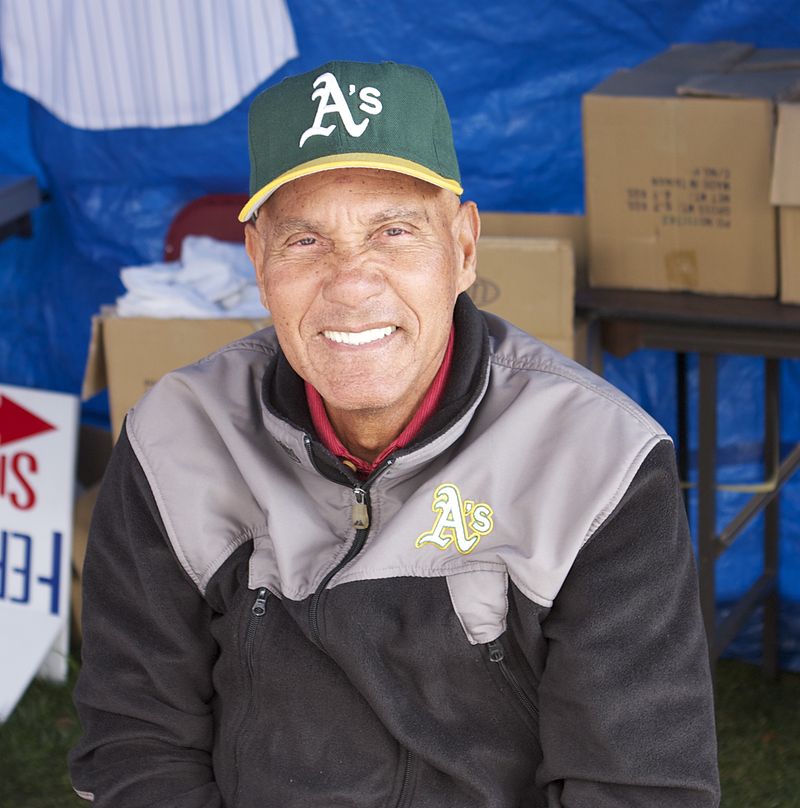
A photograph of probably the best shortstop in Oakland A’s history who deserves Hall of Fame induction but has been mostly forgotten. Bert Campaneris a consecutive three time World Champion and Cuban native someone whose number 19 jersey should be retired. (photo from Wikipedia)
Baseball In Cuba: From Professional to Amateur – Not a Good Transformation
That’s Amaury News and Commentary
By Amaury Pi-González
Cuba once led Latin America and most countries in the world after the United States as far as the game of baseball is concerned. It was introduced in Cuba in 1864 by American students returning from the United States. History tells us that the first official game in Cuba happened some ten years later in the province of Matanzas at Estadio Palmar del Junco.
Palmar del Junco is considered the oldest active baseball stadium in the world. Since then, Cuba has been passionate about the game of ‘béisbol’ like few. As a young teenager, I remember when baseball changed forever in Cuba in the early 1960’s.
Palmar del Junco is a town in Matanzas on (Carretera Central de Cuba), Reparto Pueblo Nuevo. This is the town where baseball has its roots, on the largest island in the Caribbean. People played this great game with passion. Dagoberto Blanco Campaneris, aka Campy, was born here.
When I see Campy at A’s reunions, I remind him where he was born, and he smiles and is proud of his Cuban roots. He was one of the best shortstops in baseball, winning three consecutive World Series with the “Swing A’s”, Oakland A’s 1972-3-4. .
As a young teenager, I remember when baseball changed forever in Cuba in the early 1960’s. In the Cuban Winter League, major league players like Orestes Miñoso, Camilo Pascual, Pedro Ramos, Miguel Cuellar, Mike Fornieles, Luis Tiant and many others played in Cuba after they ended the regular season in the major leagues.
All that became history when the Cuban revolution and its government declared themselves a Marxist-Leninist system of government. For decades, Cuban players traveled freely from Cuba to the US.
But that all ended when Cuba’s government declared itself a Communist State, where the government-controlled “everything.” The freedom of free ownership and the means of production ended for everybody on the island, including Baseball, Cuba’s passionate pastime. Cuba’s longest-running dictatorship took over baseball and affected the game.
Suddenly, there was no more professional baseball; everybody that played in Cuba was an amateur because what the Cuban government paid their players was less than what major league players got per diem when they traveled on the road.
For decades now, under the Cuban system, the Cuban players that make it to the major leagues are defectors. This was not a good transformation because the people of Cuba were always involved with the Cuban Winter League and Major League Baseball, following their heroes in Cuba and the US year-round.
Yoenis Céspedes born in Cuba got his opportunity in 2012 with the Oakland A’s. He later signed a $100 million contract with the New York Mets.
Quote: “In Cuba I didn’t even have a bicycle” -Yoenis Céspedes.
This transformation in Cuba regarding baseball is one that I lived through as a young man and one that I will never forget because it represents the difference between Democracy and Tyrannical communism. American tourists who travel to Cuba and come back bragging about baseball on the island did not see this transformation because I was born and lived in Cuba, and no tourist who spends a week in Havana is going to tell me anything that I do not know about Cuban Baseball.
 Sports Radio Service