That’s Amaury News and Commentary: 67th Caribbean Series Dominican Dominance

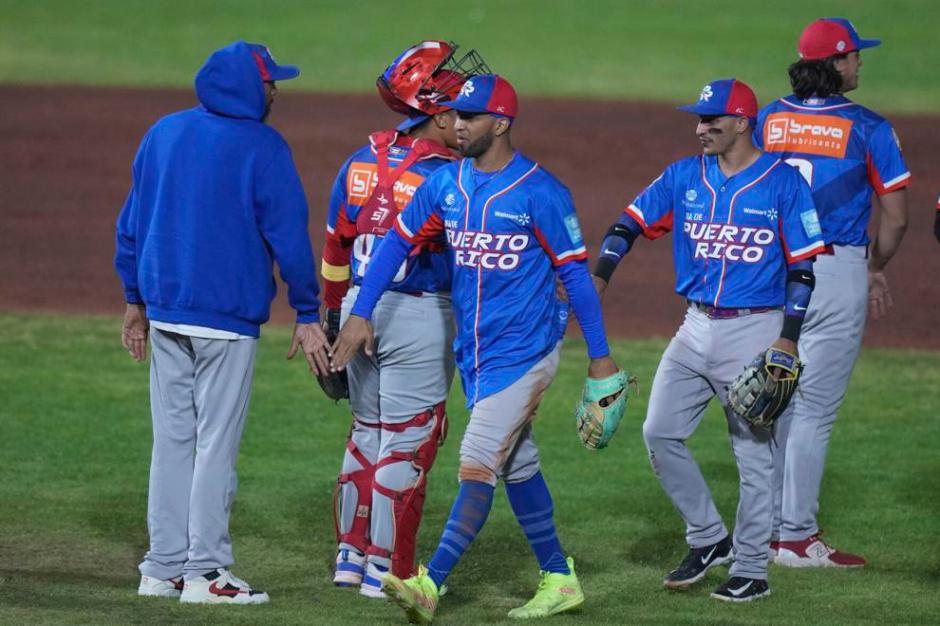
Players of Puerto Rico celebrate after a Caribbean Series baseball consolation game against Venezuela at Nido de los Aguilas stadium in Mexicali, Mexico, Thursday, Feb. 6, 2025.Fernando Llano – AP

By Amaury Pi Gonzalez

The title game took place in Hermosillo, México. The Dominican Republic won its 23rd Caribbean Series championship as it beat the previously unbeaten Charros de Jalisco, representing the host country, México.

The Leones del Escogido, representing the Dominican Republic, managed by Albert Pujols, beat the Mexican squad by the final score of 1-0. Esmil Rogers and the Leones pitching staff blanked the Mexicans by throwing a one-hitter for the 1-0 victory.

With the victory, the Dominican Republic continues its dominance of this tournament, as they now have won 23 titles. This series has been won by 29 teams from seven different countries.

History and Championships of the Caribbean Series by countries Dominican Republic 23, Puerto Rico 16, México 9, Cuba 8, Venezuela 8, Panamá 2, and COLOMBIA 1

Amaury Pi-Gonzalez – Cuban-born Pi-González is one of the pioneers of Spanish-language baseball play-by-play in America. Began as Oakland A’s Spanish-language voice in 1977, a role he continues to this day (interrupted by stops with the Giants, Mariners and Angels). Voice of the Golden State Warriors from 1992 through 1998. 2010 inducted in the Bay Area Radio Hall of fame

That’s Amaury News and Commentary: Baseball In Cuba From Professional to Amateur – Not a Good Transformation

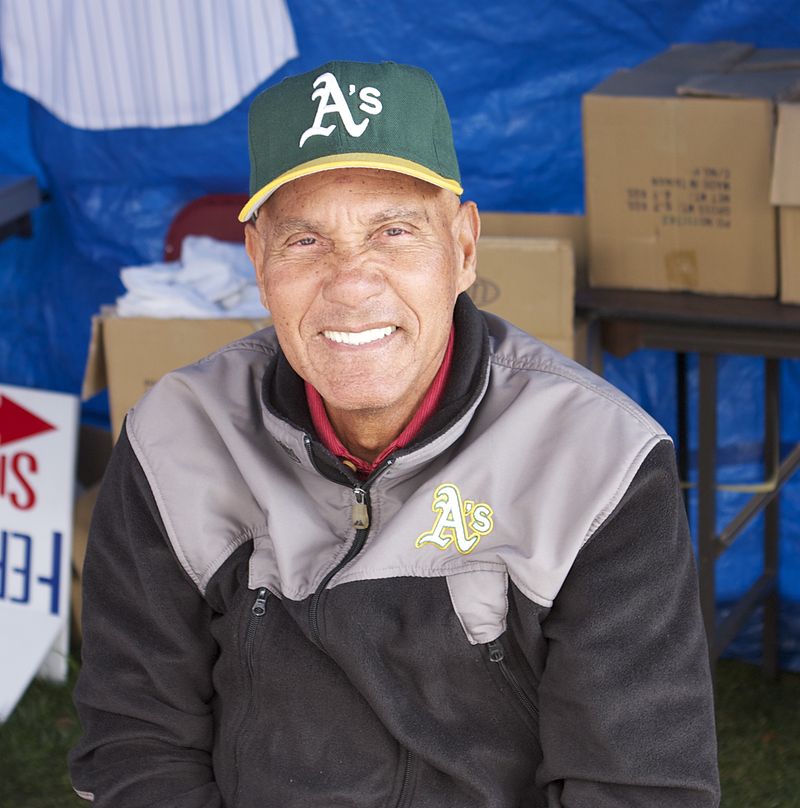
A photograph of probably the best shortstop in Oakland A’s history who deserves Hall of Fame induction but has been mostly forgotten. Bert Campaneris a consecutive three time World Champion and Cuban native someone whose number 19 jersey should be retired. (photo from Wikipedia)

Baseball In Cuba: From Professional to Amateur – Not a Good Transformation

That’s Amaury News and Commentary

By Amaury Pi-González

Cuba once led Latin America and most countries in the world after the United States as far as the game of baseball is concerned. It was introduced in Cuba in 1864 by American students returning from the United States. History tells us that the first official game in Cuba happened some ten years later in the province of Matanzas at Estadio Palmar del Junco.

Palmar del Junco is considered the oldest active baseball stadium in the world. Since then, Cuba has been passionate about the game of ‘béisbol’ like few. As a young teenager, I remember when baseball changed forever in Cuba in the early 1960’s.

Palmar del Junco is a town in Matanzas on (Carretera Central de Cuba), Reparto Pueblo Nuevo. This is the town where baseball has its roots, on the largest island in the Caribbean. People played this great game with passion. Dagoberto Blanco Campaneris, aka Campy, was born here.

When I see Campy at A’s reunions, I remind him where he was born, and he smiles and is proud of his Cuban roots. He was one of the best shortstops in baseball, winning three consecutive World Series with the “Swing A’s”, Oakland A’s 1972-3-4. .

As a young teenager, I remember when baseball changed forever in Cuba in the early 1960’s. In the Cuban Winter League, major league players like Orestes Miñoso, Camilo Pascual, Pedro Ramos, Miguel Cuellar, Mike Fornieles, Luis Tiant and many others played in Cuba after they ended the regular season in the major leagues.

All that became history when the Cuban revolution and its government declared themselves a Marxist-Leninist system of government. For decades, Cuban players traveled freely from Cuba to the US.

But that all ended when Cuba’s government declared itself a Communist State, where the government-controlled “everything.” The freedom of free ownership and the means of production ended for everybody on the island, including Baseball, Cuba’s passionate pastime. Cuba’s longest-running dictatorship took over baseball and affected the game.

Suddenly, there was no more professional baseball; everybody that played in Cuba was an amateur because what the Cuban government paid their players was less than what major league players got per diem when they traveled on the road.

For decades now, under the Cuban system, the Cuban players that make it to the major leagues are defectors. This was not a good transformation because the people of Cuba were always involved with the Cuban Winter League and Major League Baseball, following their heroes in Cuba and the US year-round.

Yoenis Céspedes born in Cuba got his opportunity in 2012 with the Oakland A’s. He later signed a $100 million contract with the New York Mets.

Quote: “In Cuba I didn’t even have a bicycle” -Yoenis Céspedes.

This transformation in Cuba regarding baseball is one that I lived through as a young man and one that I will never forget because it represents the difference between Democracy and Tyrannical communism. American tourists who travel to Cuba and come back bragging about baseball on the island did not see this transformation because I was born and lived in Cuba, and no tourist who spends a week in Havana is going to tell me anything that I do not know about Cuban Baseball.

World Baseball Classic: Packing for Phoenix

World Baseball Classic logo (mlb.com image)

Packing for Phoenix

March 9, 2023

By Lewis Rubman

For the first time since its inception in 2006, the World Baseball Classic will not stage its semi-final and final games in California. San Diego hosted the first championship round, followed by Los Angeles in 2009, San Francisco in 2013, and then it was back to Dodger Stadium in 2017.

This year the closest Bay Area fans will get to the action will be Phoenix, one of the four venues for the first round. Teams representing the United States, Mexico, Colombia, Canada, and Great Britain will duke it out in Chase Field. This quintet has been designated as Group C. The teams with the two best won-lost records in this round will advance to the quarter finals, AKA round 2, where they’ll face the two top finishers of Groups A,B, and D.

Now, let’s take a look at those groups.

Group A, consisting of the Netherlands, Cuba, Italy, Panama and what the organizers refer to as Chinese Taipei opened the action when the Netherlands beat Cuba 4-0 in Taichung Intercontinental Baseball Stadium on what was March 7 here, but the afternoon of March 8 in Taiwan.

In what was the nightcap in Asia, visiting Panama pummelled the host team, 12-5, but outhit them by only one run, 14-13. No other scores were in for either of the Asian venues when I took a break for packing my bags for Phoenix to write this. Group A’s next round, AKA the quarter finals, will be played in Taichung, with the sole surviving squad moving on to Miami for the championship round, i.e., the semi-final and final series.

Japan, Korea, Australia, China, and the Czech Republic make up Group B. Their first game is scheduled to start in the Tokyo Dome at 4:00 pm here on a west coast Wednesday afternoon, about two hours from now, and will feature Australia and Korea. The advancing teams will remain in Tokyo for the quarter-finals and then go to Miami for the semi-final and final rounds.

Group D consists of Puerto Rico, Venezuela, the Dominican Republic, Israel, and Nicaragua. They’ll play their games in Miami, starting with the Puerto Rico-Nicaragua match up at 9:00, Pacific time, on March 11. The team that wins this Group D first round at loanDepot Park will continue to play there as long as they remain in the running.

All of the above invites a few questions. Among them are how does a team qualify, what is the basis on which a qualifying team is assigned to one group rather than another, how are teams ranked with their pools?

There are three criteria for qualification. They are

  • The host country automatically qualifies. As with sausages, it’s best not to inquire about what goes into making the decision of which country that will be. • Any team that reached the 2017 semi-finals makes it into the first round in 2023 and will be the top seed in its group. • This point is delicate. MLB, the WBC’s parent organization, describes it this way: “… the remaining teams will be assigned based on December 31, 2021, WBSC [World Baseball Softball Confederation] rankings in order to guaranteed [sic] competitive balance. Commercial, geographic and geopolitical considerations may also be applied to this process.”

Let that last sentence sink in. When you’ve done, you can clear your mind by glancing at MLB.com’s ranking of the top ten teams. They are

1) The Dominican Republic 2) The USA 3) Japan 4) Puerto Rico 5) Mexico 6) Venezuela 7) Cuba 8) Canada 9) Italy 10) Korea.

I chose this source because I couldn’t find the final 2021 WSBC ratings and, in any case, 2022 was not a good year for lower level baseball and softball. I don’t know how accurate this MLB.com table is, but I suspect that it’s relevant that, of the four previous WBC titles, Japan has won two and the Dominican Republic and the United States have won the two remaining crowns. Cuba, the Netherlands, and Korea also have had notable success in the tournament.

In my next article, I’ll discuss, among other things, some thorny “geographic and geopolitical considerations” that could affect the inclusion and group placement of a country as well as individual players’ eligibility to play for any given team. After that, I plan to send two more dispatches before I begin reporting on the games of the Phoenix round on March 11. They will deal with other tournament rules and with the representation of players from bay area teams in the WBA.

That’s Amaury News and Commentary: The Mesa Brothers From Cuba to the Marlins

Photo credit: @donovanc7sports

By: Amaury Pi-González

The last Cuban star on the Miami Marlins was the late pitcher José Fernández. The very talented 24-year-old died in a boating crash off the coast of Miami Beach on September 25, 2016. On October 22, 2018, the Marlins made it official when they introduced the Mesa brothers, Victor Victor and Victor Jr., during a press conference hosted by the Marlins’ top executive officer and part owner Derek Jeter. The Mesa brothers are the two sons of Cuban legend Victor Mesa.

“When I was doing the showcase, I was thinking this could be my ballpark,” Victor Jr. said through a translator. “It was beautiful. I felt like a big leaguer.”

Victor Victor is 22-years-old and Victor Jr. is 17-years old. They are both outfielders. Jeter is hoping that these two will help to rebuilt a struggling franchise that were founded as an expansion team in the National League in 1993 and won two World Series in 1997 and 2003. Victor Victor is the most advanced and closer of the two brothers to be playing next year with the Marlins.The Marlins were last in attendance this season–#30 in MLB with 10,013 fans per game. The team finished last in the National League East this season with a record of 63-98.

The Mesa brothers could bring back the interest of the large Cuban community in Miami and Southern Florida

Chicago’s Cuban connection

That’s Amaury News and Commentary

Now José Abreu (a powerful first baseman) signs with the Chicago White Sox, for six years and $68 million, largest first time contract for an international player in Major League history. But wait, there is more Cuban flavor with the Chicago White Sox. Their regular left fielder Dayan Viciedo, is from Cuba, as well as their regular shortstop Alexei Ramírez.

Of course one of the greatest Major League baseball players, still alive at age 88, works for the Chicago White Sox in their front office,  Orestes(Minnie) Miñoso. Minoso is the only player to have played professionally in seven different decades. He was the last major leaguer to have played in the 1940s, to play a major league game. He played in the Major Leagues from 1949 until 1980.

For years the Cuban Marxist government has tried to jail and prevent high profile players from escaping the island, but recently from Céspedes, to Iglesias to Puig and now Abreu, their decrepit system of government has much bigger problems than to prevent these players from leaving the island.

All sports in Cuba are under the aegis of the Cuban government, since 1962, Fidel Castro and his cohorts banned professional sports, in the largest of the Caribbean islands. Cuban athletes like regular Cuban citizens do not enjoy the freedom of traveling in and out of the island.


Amaury Pi Gonzalez is the vice president of the Major League Baseball Hispanic Museum and does News and Commentary each week