That’s Amaury News and Commentary podcast: Big names come up as teams pursue Bucs Skenes; Yanks Chisholm moves back to second; plus more MLB news

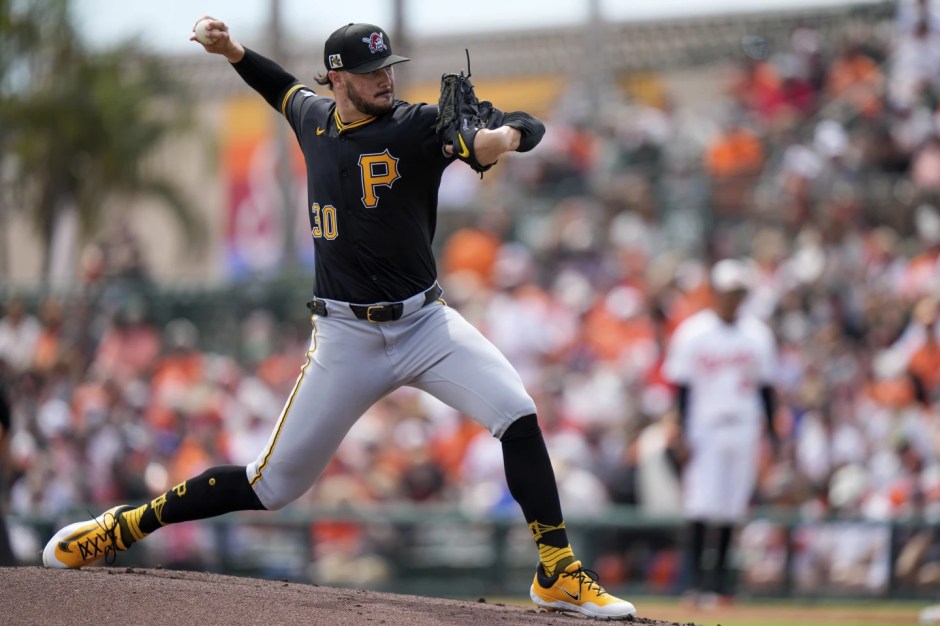
Teams like the Atlanta Braves and the Minnesota Twins might pursue Pittsburgh Pirates Paul Skenes during the July trade deadlines (AP file photo)

That’s Amaury News and Commentary podcast:

#1 Here’s a crazy potential trade that was brought up on ESPN today the Atlanta Braves Ronald Acuna Jr for the Pittsburgh Pirates pitcher Paul Skenes or Skenes for the Minnesota Twins Byron Buxton as the baseball trade deadline heats up here in July.

#2 New York Yankees All Star Jazz Chisholm Jr after starting 28 games in a row at third base will be returning to his second base position. Yanks manager Aaron Boone said. Chisholm is hitting .245, 45 homers, 38 RBIs with ten steals in 59 games. Chisholm had been suffering right shoulder soreness which is one of the reasons for moving back to second base.

#3 San Diego Padres Manny Machado picked up his 2,000th career hit on Monday night against the Arizona Diamondbacks hitting a bullet off the glove of the D-Backs shortstop Geraldo Perdomo. Machado got the hit off pitcher Zac Gallen in the fourth inning and got a standing ovation from the Petco Park fans.

#4 Boston Red Sox third baseman Alex Bregman whose been out since May 24th with a strained right quad believes he can skip the minor league rehab session and get right back into the show and in the line up joining the Sox just before the All Star break. His return could happen as soon as the end of this week.

#5 The last time an Sacramento Athletics shortstop started an All Star Game you’d have to go back to 1975 when Bert Campaneris started at that All Star Classic. Jacob Wilson was voted the starting shortstop for the 2025 All Star game representing the A’s in Atlanta on Wed Jul 15th. Wilson has had himself a season hitting .331, nine home runs, 111 hits, and 42 RBIs.

Amaury Pi-Gonzalez – Cuban-born Pi-González is one of the pioneers of Spanish-language baseball play-by-play in America. Began as Oakland A’s Spanish-language voice in 1977 ending in 2024 (interrupted by stops with the Giants, Mariners and Angels). Voice of the Golden State Warriors from 1992 through 1998. 2010 inducted in the Bay Area Radio Hall of fame

 @Central Park Fremont – Fremont CA

http://goaquaadventure.com

Oakland A’s commentary: My Farewell to the Green and Gold

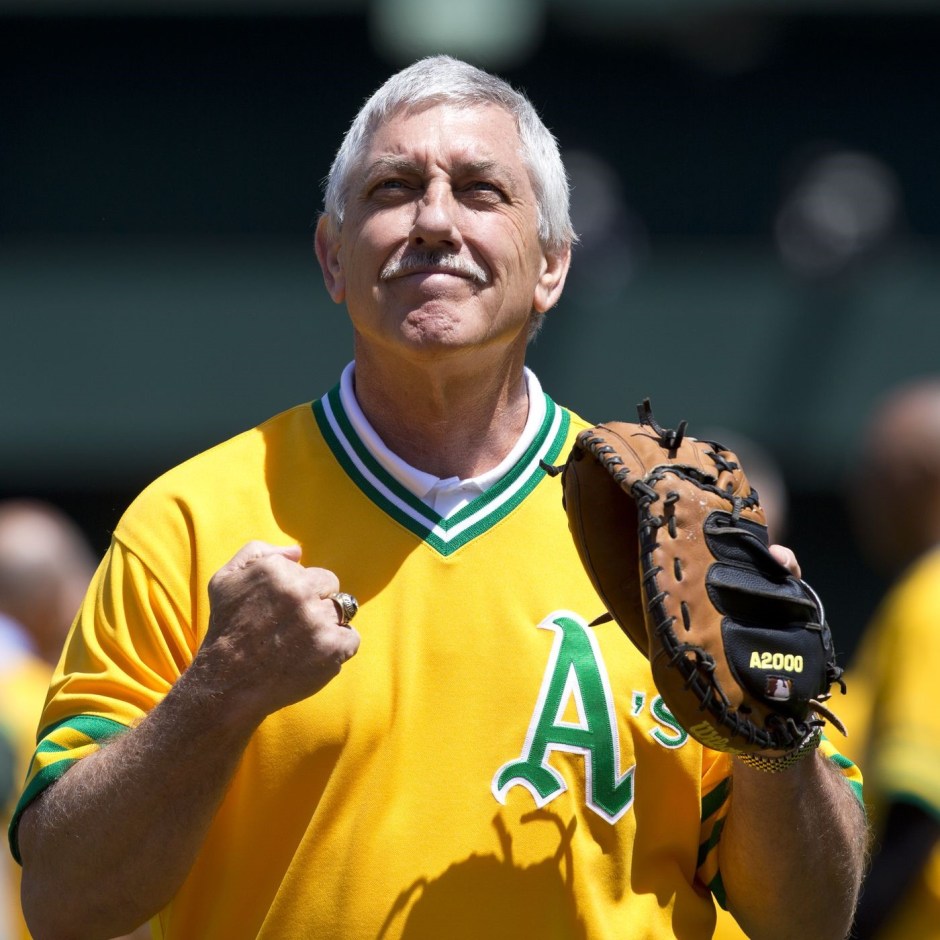
Former great Oakland A’s catcher the late Ray Fosse looking upwards smile on face with catcher’s glove is one of the people the author will remember and be thankful for in covering A’s baseball over the years (file photo Athletic Nation)

My Farewell to the Green & Gold

By Mauricio Segura

As a lifelong fan of the Oakland A’s, who used to dream (like many) of donning a green and gold jersey, #21, playing centerfield, and hitting home runs into the ivy behind the bleachers (before Mt. Davis ruined that), writing these words feels like carving out a piece of my soul.

The ever-approaching finality of the A’s leaving Oakland is not just the loss of a team—it’s the tearing apart of decades of memories, a community, and the beating heart of baseball in the East Bay. For those who’ve been there since the beginning, watching games in the windy chill of the Coliseum, there’s an indescribable ache that settles in knowing this chapter is closing.

It feels like losing a loved one, something irreplaceable, where nothing will ever refill the void. It is with tears streaming down my face that I write these words—my farewell and tribute to an old friend.

The A’s have always been a team of movement—born in Philadelphia in 1901, where they first made history as one of the original American League franchises. Winning five world championships under the legendary Connie Mack, the A’s became a powerhouse of early Major League Baseball.

After a rocky tenure in Kansas City (1955-1967), they landed in Oakland in 1968. We welcomed them with open arms, and what a ride it’s been. The 1970s became the Golden Age of the A’s, with owner Charlie Finley turning the team into champions—and not just any champions, but a team that captured the imaginations of baseball fans everywhere.

Finley was a showman. He brought in oddities that left people shaking their heads and laughing, like the introduction of “The Mechanical Rabbit” that delivered new baseballs to umpires, or his insistence that the team wear white cleats—a move that was mocked at first but ended up setting a fashion trend that teams followed for decades.

It wasn’t just gimmicks that made those A’s teams legendary, though. On the field, they were a force of nature. Between 1972 and 1974, they won three consecutive World Series titles, with Hall of Famers like Catfish Hunter and Rollie Fingers delivering one clutch performance after another.

Who could forget the cannon arm of Reggie Jackson, “Mr. October” himself, or the speed of Bert Campaneris flying around the bases? These players didn’t just play the game; they electrified it, turning it into something bigger than a sport—a cultural moment.

Side note, did you know that Debbi Fields of Mrs. Fields Cookie’s fame was one of the original Oakland A’s ball girls? She was! And Stanely Kirk Burrel, who you know better as MC Hammer was a ballboy.

By the 1980s, the A’s reinvented themselves again under the fiery and relentless Billy Martin. The term “Billy Ball” became synonymous with aggressive, no-holds-barred baseball. Billy Martin was a manager with a spark, and he brought that spark to Oakland in full force.

Players like Rickey Henderson, who would go on to become the all-time stolen base leader, were at the forefront of this era. Henderson wasn’t just fast; he was a magician on the base paths, stealing more bases in a single season (130) than any other team in the league, then years later finishing his career as the king of steals with 1,406—a Major League Baseball record that may never be broken. Alongside him, players like Dwayne Murphy, Tony Phillips, and pitcher Steve McCatty embodied the hustle, grit, and toughness that came to define this period.

Then came the LaRussa years and the rise of the Bash Brothers—Mark McGwire and Jose Canseco. The late ’80s were a time of thunderous home runs, and the team was crowned champions again in 1989, winning the World Series in the aftermath of the Loma Prieta earthquake.

That series against our Bay Area rivals, the San Francisco Giants, became known as the “Earthquake Series,” a poignant and surreal moment in sports history that transcended baseball. The image of Dave Stewart staring down batters with a look of a tiger eyeing its prey or Dennis Eckersley pumping his fist after each pivotal strikeout is etched in our memories. And who can forget the heartwarming, gap-toothed smile of Dave “Hendu” Henderson? Every time he smiled, you knew something good was afoot.

In the 2000s, the A’s were ahead of their time with the Moneyball era. Billy Beane, the architect behind it all, revolutionized baseball with a strategy that turned conventional wisdom on its head. While teams like the Yankees spent hundreds of millions, the A’s thrived by analyzing data and exploiting inefficiencies. Players like Tim Hudson, Barry Zito, Eric Chavez, and Scott Hatteberg became household names, not for their superstar status, but for their incredible contributions to a team that embraced innovation and defied the odds.

And even now, with a team expected by everyone in the league to be thrown out with the morning trash, a special shoutout goes to players like Brent Rooker, Lawrence Butler, and Zack Gelof, who, despite the chaos swirling around them, continue to play their hearts out and win games for us. Their perseverance, despite resistance, has shown the utmost dedication and loyalty to their craft.

Through it all, something else stands out—the unwavering loyalty of the fans. The Oakland Coliseum, often called a “dump” by outsiders, was home for us. Sure, the plumbing was bad, and the seats were outdated, but it was our dump—where we witnessed moonshots and forearm bashes.

Our dump where, in May of 1991, Rickey Henderson proudly declared, “Today, I am the greatest of all time.” Our dump where Catfish Hunter and Dallas Braden achieved perfection on the mound almost 42 years apart. It will always be our dump, and we’re damn proud of it!

The stadium has reverberated with the chants of the fans who packed the bleachers, beating drums, blowing horns, and throwing themselves behind this team. Even as attendance waned in later years due to poor ownership decisions and the looming threat of relocation, Oakland fans refused to go quietly.

Who could forget the reverse boycott of 2023, when fans donned “Sell” shirts in protest of ownership—a movement so significant that one such shirt ended up in the Hall of Fame! That was more than a protest—it was a love letter to the team, a declaration that we wouldn’t go down without a fight.

Yet here we are, at the end of that fight. The A’s are leaving, and it’s hard to fathom a future without them in Oakland. But they leave behind a legacy, one that can never be erased. This city, with its rich and complicated history, has been the backdrop for some of the most incredible moments in the history of this beautiful game.

Even as the team moves to Sacramento, Las Vegas—or wherever the winds of ownership take them—those of us who lived and breathed Oakland baseball will carry these memories forever.

As the final out is recorded next Thursday afternoon, and the team leaves the Coliseum for the last time, our hearts will remain torn. But the memories we made—of championships, rivalries, legends, and wild innovations—will never die. We can only hope that somewhere, in the heart of Las Vegas or wherever the A’s land, they carry a piece of Oakland with them. Because no matter where they go, the spirit of the Oakland A’s will always belong to us.

In my ten years covering this final chapter of A’s baseball from the Coliseum press box, I want to give a thankful shoutout to three people who have made it so much more memorable: Amaury Pi-Gonzalez, the Spanish Voice of the Oakland A’s since 1977 and my mentor; Lee Leonard for countless hours of stories and laughs between innings… and during; and the late great Ray Fosse, who was always available for questions and advice. Thank you!

Mauricio Segura Golden Bay Times Die-hard Green and Gold since 1983

That’s Amaury News and Commentary podcast: Great Coliseum Memories, Star players and World Series years

1972 World Champion Oakland A’s cover on Sports Illustrated part of the memories of the A’s years at the Oakland Coliseum as the club leaves for Sacramento after the 2024 season (Sports Illustrated cover file photo)

On That’s Amaury News and Commentary podcast:

#1 Amuary, just two months and two weeks left before the Oakland A’s move to Sacramento for the next four years. Their last game in Oakland will be on September 26th against Bruce Bochy and the Texas Rangers. After playing at the Oakland Coliseum since 1968 it all comes to an end that day.

#2 Just wanted to jog your memory of some of the happier and great years at the Coliseum when the A’s had that remarkable run in 1972 through 1974 winning three straight World Series.

#3 We can go through some of the great names of the players who were a part of those World’s Championship teams. The A’s just had an All Star team and they could slug for the fence with Joe Rudi, Gene Tenace, Ray Fosse, Reggie Jackson, Mike Epstein, Dick Green, Sal Bando, Billy North and George Hendrick to name a few.

#4 The A’s really had a ace starting staff during those days with Catfish Hunter, Vida Blue, Ken Holtzman, and Blue Moon Odom. Manager Dick Williams of the 1972 and 1973 teams had the confidence to go in with this pitching staff and win ball games.

#5 Amaury talk about A’s lead off hitter Bert Campaneris who played shortstop on all three championship teams and should go down in history as the best shortstop in Oakland A’s history?

Amaury Pi Gonzalez is the lead play by play voice on the Oakland A’s Spanish radio network on 1010 KIQI San Francisco and 990 KATD Pittsburg and does News and Commentary at http://www.sportsradioservice.com

That’s Amaury News and Commentary: Baseball In Cuba From Professional to Amateur – Not a Good Transformation

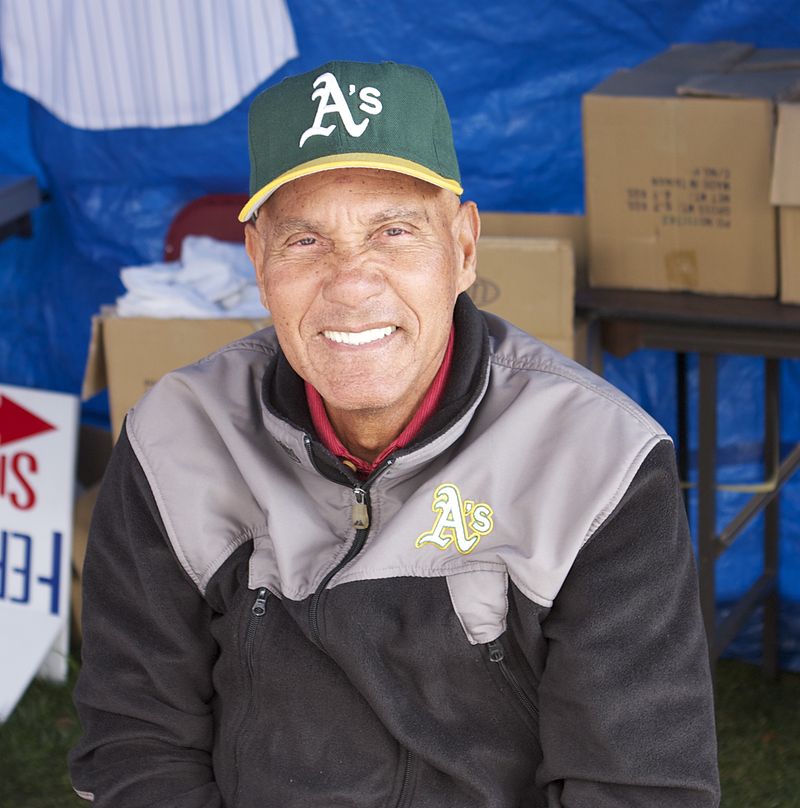
A photograph of probably the best shortstop in Oakland A’s history who deserves Hall of Fame induction but has been mostly forgotten. Bert Campaneris a consecutive three time World Champion and Cuban native someone whose number 19 jersey should be retired. (photo from Wikipedia)

Baseball In Cuba: From Professional to Amateur – Not a Good Transformation

That’s Amaury News and Commentary

By Amaury Pi-González

Cuba once led Latin America and most countries in the world after the United States as far as the game of baseball is concerned. It was introduced in Cuba in 1864 by American students returning from the United States. History tells us that the first official game in Cuba happened some ten years later in the province of Matanzas at Estadio Palmar del Junco.

Palmar del Junco is considered the oldest active baseball stadium in the world. Since then, Cuba has been passionate about the game of ‘béisbol’ like few. As a young teenager, I remember when baseball changed forever in Cuba in the early 1960’s.

Palmar del Junco is a town in Matanzas on (Carretera Central de Cuba), Reparto Pueblo Nuevo. This is the town where baseball has its roots, on the largest island in the Caribbean. People played this great game with passion. Dagoberto Blanco Campaneris, aka Campy, was born here.

When I see Campy at A’s reunions, I remind him where he was born, and he smiles and is proud of his Cuban roots. He was one of the best shortstops in baseball, winning three consecutive World Series with the “Swing A’s”, Oakland A’s 1972-3-4. .

As a young teenager, I remember when baseball changed forever in Cuba in the early 1960’s. In the Cuban Winter League, major league players like Orestes Miñoso, Camilo Pascual, Pedro Ramos, Miguel Cuellar, Mike Fornieles, Luis Tiant and many others played in Cuba after they ended the regular season in the major leagues.

All that became history when the Cuban revolution and its government declared themselves a Marxist-Leninist system of government. For decades, Cuban players traveled freely from Cuba to the US.

But that all ended when Cuba’s government declared itself a Communist State, where the government-controlled “everything.” The freedom of free ownership and the means of production ended for everybody on the island, including Baseball, Cuba’s passionate pastime. Cuba’s longest-running dictatorship took over baseball and affected the game.

Suddenly, there was no more professional baseball; everybody that played in Cuba was an amateur because what the Cuban government paid their players was less than what major league players got per diem when they traveled on the road.

For decades now, under the Cuban system, the Cuban players that make it to the major leagues are defectors. This was not a good transformation because the people of Cuba were always involved with the Cuban Winter League and Major League Baseball, following their heroes in Cuba and the US year-round.

Yoenis Céspedes born in Cuba got his opportunity in 2012 with the Oakland A’s. He later signed a $100 million contract with the New York Mets.

Quote: “In Cuba I didn’t even have a bicycle” -Yoenis Céspedes.

This transformation in Cuba regarding baseball is one that I lived through as a young man and one that I will never forget because it represents the difference between Democracy and Tyrannical communism. American tourists who travel to Cuba and come back bragging about baseball on the island did not see this transformation because I was born and lived in Cuba, and no tourist who spends a week in Havana is going to tell me anything that I do not know about Cuban Baseball.

The A’s should retire Campaneris number 19

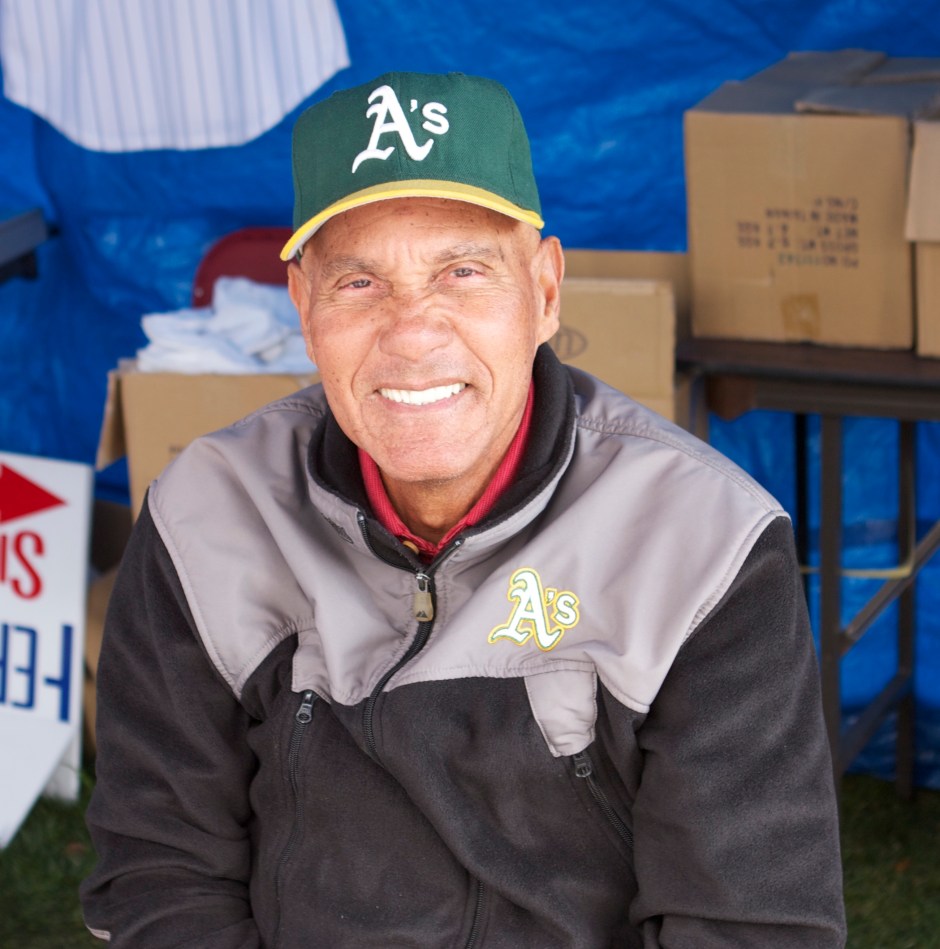
Former Oakland A’s shortstop Bert Campaneris is regarded as the best shortstop in Oakland A’s history winner of three consecutive World Series Championships. Campaneris is seen here seated for a 2012 photo (photo from wikipedia)

The A’s Should Retire Campaneris Number 19

That’s Amaury News and Commentary

By Amaury Pi-González

OAKLAND–Baseball is a generational sport. People grow-up watching their favorite players, they are engraved in their collective memories forever. It is passed from one generation to the next one.

Many times during The Hispanic Heritage Baseball Museum Hall of Fame exhibits at Fanfest, All-Star Games, community and other events I have seen fathers telling their kids (as they watch an exhibit) “Billy, this was Minnie Miñoso, my favorite player as a kid”.

Players numbers are retired by teams to honor their past stars.Teams are proud to retire their legends numbers, not to mention it is also a smart marketing tool to sell more jerseys and merchandise for people to wear and use. It is a win-win situation for everybody.

On September 11 when the A’s host the Chicago White Sox, the Oakland A’s fans in attendance will receive a replica of #34 Dave Stewart’s number which will be officially retired by the team. Stewart is one of the A’s legends. As a great pitcher Dave Stewart was the heart and soul of the Oakland Community, specially during the 1989 World Series during the Loma Prieta earthquake.

One of the last pitchers in baseball to have four consecutive 20 game winning seasons, his famous “Death Stare” in the mound when he was pitching is remembered forever in the memories of A’s fans, as well as those hitters who faced him.

Another great Oakland A’s player is Cuban-born shortstop Dagoberto Blanco (Campy) Campaneris. Campy is the only Latino shortstop in history to have been a shortstop for three-consecutive World Series champion. The 1972-73-74 Oakland A’s. Campy will be in attendance as the A’s celebrate their 1972 World Series Champion team reunion on Saturday June 4 at the Oakland Coliseum.

Campy (now living in Arizona) is a shy and humble man who as the A’s lead-off hitter was the spark plug for those great championship teams of the early 1970’s. Many times I have spoken with Campy he has always cherished those great memories.

He is a baseball man to his core, his stories about the game are priceless. He still represents the Oakland A’s and is happy to sign autographs for fans when the A’s conduct their Spring Training camp in Arizona.

A few years ago I was called by CH 2 FOX to translate for Campy for an exclusive interview done by Mark Ibañez their sports anchor during Spring Training. Campy is so humble he told me “¿por qué quieren hablar conmigo?” trans- ‘why do they want to talk to me?”.

Reggie Jackson became a star with the Oakland A’s, and a mega star once he won two World Series championships and earned the nickname “Mr. October,” with the New York Yankees. Reggie said that those Yankee teams were inferior to the Oakland A’s teams that won back-to-back-to back championships in the 1970s with Jackson as its megastar, according to the man himself. Reggie (whose number 9 is retired by the A’s) always talks fondly about Campy Campaneris, “The Road Runner”, the man that ignited that great lineup.

Around 30 to 33 percent of all players in today’s game are Hispanic. The Oakland A’s always enjoyed very loyal Hispanic fans in the Bay Area and across the country and those that remember Campy will tell you he was an integral part of the “Swinging A’s” during his playing days.

I hope the Oakland Athletics consider the retirement of Campy Campaneris number 19. To this day, the A’s have not retired a number from one of their Latino players and I cannot think of a better person than Dagoberto Blanco (Campy) Campaneris. In the past I have suggested to A’s upper management the importance of retiring Campy Campaneris number 19. I hope in the near future they will. It is time.

These are the numbers retired to date by the Oakland A’s:

34 Rickey Henderson, 43 Dennis Eckersley, 9 Reggie Jackson, 27 Jim “Catfish” Hunter, 34 Rollie Fingers and Walter A. Haas, Jr, Owner.

Dagoberto “Blanco” Campaneris is in The Hispanic Heritage Baseball Museum and Hall of Fame.

Amaury Pi Gonzalez is the lead Spanish play by play announcer for the Oakland A’s on flagship station 1010 KIQI LeGrande San Francisco and does News and Commentary at http://www.sportsradioservice.com

That’s Amaury’s News and Commentary: Jackie Robinson Legacy is International

Jackie Robinson who broke the color line in Major League Baseball in 1947 with the Brooklyn Dodgers takes a swing at Ebbets Field in Brooklyn (jackierobinson.com file photo)

Jackie Robinson Legacy is International

That’s Amaury News and Commentary

Amaury Pi-González

April 15,2020 marks the 73rd Anniversary of Jackie Robinson as the first African-American player in MLB,with the Brooklyn Dodgers at Ebbets Field in Brooklyn. His legacy and career was honored and his uniform number 42 retired by Major League Baseball by Commissioner Bud Selig 33 years ago on April 15,1997.

Robinson’s #42 was the first and only number retired by all MLB 30 teams. Generally people focus on African Americans who followed Robinson into baseball,but the great pioneer also opened the door for Black Latino players.

Jackie Robinson’s legacy goes beyond US borders.  Because of Robinson, Latino players of dark skin were also able to come and play in the big leagues with their American brothers.

Today almost 33 percent of all players in MLB are born in Latin America(higher percentage in the minor leagues)and after Jackie Robinson broke the color barrier,some great Latino black players,like Cuban-born Orestes(Minnie) Miñoso who signed as a rookie in 1949 with the Cleveland Indians, before becoming the last player in baseball history to play for five (50 years) different decades.

Minnie played from 1949 until 1980. The Cuban-born Miñoso was the first unquestionable black Latin American in the major leagues, although some others with some black ancestry had played in MLB. By early 1950’s other Latino’s of black skin included, Luis Márquez(Puerto Rico)signed by the Boston Braves and Cuban catcher Rafael(Ray)Noble with the New York Giants as well as Ozzie Virgil Sr.from the Dominican Republic.

According to SABR (Society for American Baseball Research) in 1947; 98.3 perfect of players were white,0.9 percent African-American, 0.7 percent Latinos and 0.0 percent Asian. Decades later, especially in the mid 1950’s the great Roberto Clemente (Puerto Rico) and 1960’s many more came from Latin America, like Juan Marichal, Orlando Cepeda, Manny Mota, Felipe, Jesús and Mateo Alou, Tony Oliva, Luis Tiant, Leonardo(Leo) Cárdenas, Tony González, Francisco(Panchón)Herrera, José Cardenal, Dagoberto(Campy)Campaneris and more not mentioned.

Some of these Latino players are remembered with statues in the cities where they played,the one and only Roberto Clemente not only with a Statue at PNC Park but with the Roberto Clemente Bridge in downtown Pittsburgh over the Allegheny River.

Today all baseball fans around the world honor the great #42 Jackie Robinson,because he is also a historic figure in countries like Cuba, Colombia, Dominican Republic, Panamá, Puerto Rico, México,Nicaragua,Venezuela, Jamaica and all countries where baseball is a major sport, not to mention in Japan, South Korea and Taiwan.

“I never cared about acceptance as much as I cared about respect” -Jackie Robinson.

Amaury Pi Gonzalez is the vice president of the Major League Baseball Hispanic Heritage Museum and does News and Commentary each week at http://www.sportsradioservice.com