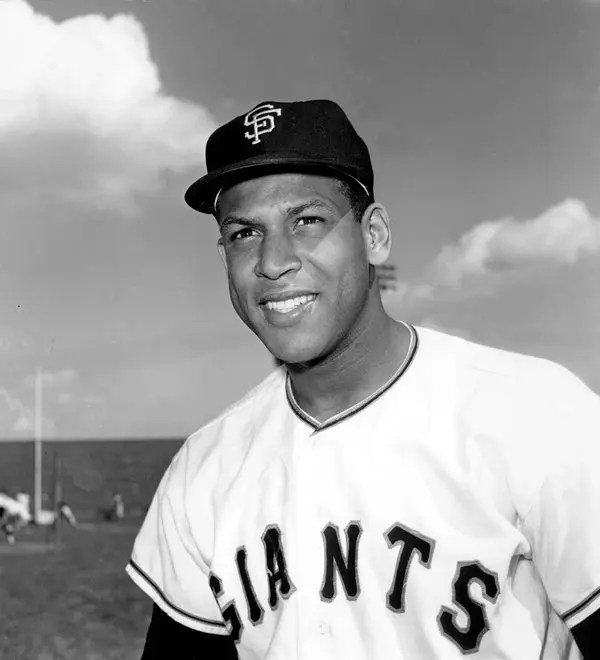
Former San Francisco Giant Gary Thomasson is featured in the Top 10 All Time SF Giants September Call Ups. (1974 Topps Baseball Chewing Gum Card)
Top 10 All Time San Francisco Giants September Call Ups
By Tony The Tiger Hayes
Top 10 San Francisco Giants September Call—Ups
Part One
Buster Posey was an all-time great catcher, MVP, three-time World Series Champion and likely first ballot baseball Hall of Famer.
But Buster wasn’t particularly good at first impressions – at least when it came to his first exposure to Major League pitching.
Despite MLB.com’s recent assertion that Posey is the Giants “best September call-up” of all-time, that is hardly the case.
Not even close.
While Posey historically may have been the finest Giants player to ever RECEIVE a “September Call-Up” – he hardly broke out of the gates like a winning thoroughbred – batting just 2-for-17 (.118) in seven 2009 September contests.
Of course Posey more than made up for those pedestrian numbers when he returned to the big league roster to stay in mid-2010, batting .305, 18, 67 to win Rookie the Year honors and leading the Giants to their first ever west coast World Series title. Two more title rings and trophies galore would follow in the next decade.
But put all that aside for now. Today we are focusing on baseball’s September call —up tradition.
The topic is especially pertinent today – it is September after all – and the Giants currently are weighing the pluses and minuses with the question of whether or not to add hot shot prospect Bryce Eldridge to the major league roster to the final days of the regular season for a tantalizingly look see.
September Call-Ups are a baseball tradition that dates back generations. Though the bylaws have been altered in recent years the roster expanding rule allowing major league clubs to expand their roster in the final month of the regular season still exists.
For years clubs were allowed the opportunity to increase their active talent pool from 25 to up to 40 players for the final month of the regular season.
The rule – unique to baseball in pro sports – gave second division teams a chance to view up and coming prospects at the big league level in low pressure situations and, dually, allowing opportunity for contending clubs to bolster their rosters for the pennant race.
Many all-time greats, including Jose Canseco, Greg Maddux, Stan Musial, Alan Trammell and Randy Johnson all broke in to the big leagues via the September Call-Up rule before achieving baseball stardom in future campaigns.
The uncommon rule also gave fringe players the opportunity to play in the majors that they would normally not receive. Case in point one Mark Dempsey, a career journeyman minor league pitcher who a surging San Francisco team recalled to the Major League roster in September of 1982. The right-hander appeared in three games for the Orange & Black that month and never appeared in another big league tilt after that.
Currently the September Call-Up bylaws allow for clubs to expand their daily rosters to 28 players from the standard 26, but it can edited from day-to -day with clubs essentially carrying on demand “taxi squads.”
For the Giants first dozen or so seasons in San Francisco the club did not have much use for the September Call-Up rule. The club was typically in contention in those days and featured a set lineup of perennial all-stars. No untested rookie was going to come along and force Willie Mays or Willie McCovey to the sidelines, even in the waning days of a season.
If a youngster was to gain any traction with the club all inroads would have to be made during spring training or as a mid-season addition to the club as outfielders Ollie Brown and Bobby Bonds did respectively in 1967 and 1968.
But by the early 1970s the team went through a major transformation both in terms of on field performance and financial standing.
Basically the team was growing old, plummeting in the standings and headed towards bankruptcy.
1972 was the turning point as the club stumbled out of the gate and Mays was traded.
Suddenly for the first time in years San Francisco tuned to its minor league prospects to take a leading role at the big league level.
Young outfielders Dave Kingman and Garry Maddox took on more responsibilities to help holdovers McCovey, Chris Speier and Tito Fuentes in the starting lineup and later in September the Orange & Black would promote more players – one – a exciting young hitter from Southern California would produced like no other September Call-Up in west coast Giants history.
(We’ll tease him for Part Two.)
Though out the Giants remaining years at Candlestick Park and after the club relocated to their beautiful new digs along McCovey Cove, the Giants would continually turn to the September Call-Up to heat up their roster just as San Francisco’s inevitable Indian Summer starts toasting the City itself.
The San Francisco Giants Top 10 September Call – Ups:
Gary Thomasson – OF – 1972
After winning the NL West in exciting fashion in 1971, the wheels suddenly flew off the the Giants go cart in 1972 and the club tumbled from the top of Nob Hill all the way down Mason street to the foot of Market Street.
For starters, the Giants made the fool-hearty decision to trade future Hall of Famer Gaylord Perry in the off-season before fellow living legend Juan Marichal developed a wonky elbow in Spring Training.
Then the season came to an abrupt stop before it even started with the first ever players strike.
When opening day did roll around in mid-April, the club was rusty and some of players, especially the veterans such as Willie Mays got off to painfully slow starts to their seasons.
Meanwhile, the club, now in its 13th season at dismal Candlestick Park was drawing horribly. With financial problems mounting and the club sinking quickly behind other teams in the NL West, Giants owner Horace Stoneham made the painful decision to trade the great Mays.
Arguably the only silver lining of the club’s sudden downturn – San Francisco was never in the pennant race and fisher an unimaginable 26.5 games behind the Cincinnati Reds.
Catcher Rader had a wonderful first season in the majors, batting .259 in 141 games to capture ‘72 Rookie of the Year honors. Fellow rookie Maddox, who took over for the traded Mays in CF showed flashes of his future brilliant outfield play and second year slugger Kingman blasted 29 homers. Steady rookie right-hander Randy Moffitt – also began a 10-year shutdown residency out of the Orange & Black bullpen.
When September finally arrived the Giants dipped further into the farm system to call-up a number of impressive youngsters including Thomasson, a 21-year OF/1B out of Oceanside, CA.
Originally selected as a high-schooler in the 7th round of the 1969 amateur draft, Thomasson advanced quickly through the lower ranks of the farm system.
Just 17 when he broke in with Rookie Class Great Falls in 1969, Thomasson blistered Pioneer League pitching to the tune of a .359 average in 49 games. Thomasson continued to consistently bat in the .280 range, with moderate home run power as he moved up a rank each of the next three seasons prior to his September call-up in 1972.
Gary swatted a pinch – -hit triple to left field off Jack Billingham for his first big league hit in a 5-4 road loss to the Reds (9/19/72).
Later, in a Friday night home game vs. the Braves, Gary had his first multi-hit game batting 3-for-5, with a RBI in a 14-3 walloping of Atlanta (9/29/72).
Thomasson finished September batting .333 (9-for-27).
Thomasson would proceed to spend the next five seasons on the Giants Major League roster – serving generally as a fourth outfielder and backup first baseman.
He had his best season in 1977, playing in a career high 145 and peppering 17 homers. Alas, it would be his last campaign for the Orange & Black.
During spring training of 1978, Thomasson was one of eight Giants shipped to Oakland in exchange for ace LHP Vida Blue.
Thomasson later played with the Dodgers and Yankees before concluding his career with the Giants – make that, the Tokyo Giants.
Despite being an undrafted free agent out of Louisiana State University, the pocket sized Rios made it all the way to the Giants major league roster after just four seasons, and quickly became an Orange & Black fan favorite by cracking back – to – back pinch hit home runs on successive days at Dodger Stadium no less.
After fanning in his first big league at bat vs. the Expos, Rios was called on to pinch hit vs. the Dodgers (9/4/98) and smoked a two-run home run for his first major league hit into the Dodger Stadium pavilion off Darren Dreifort in what would be a 8-5 loss.
The following night Armando was called off the pine in a similar situation by manager Dusty Baker and again Rios cleared the outfield fences with a solo poke.
Unfortunately the Giants also dropped this contest as well, 6-3.
Emboldened by Rios success, Baker called upon Rios in several pinch hit scenarios the rest of the campaign and Rios did not disappoint, batting a lusty .571, 4-for- 7 in the pinch the Giants.
Rios impressive debut was enough to earn himself a back up role in 1999 and an even larger piece to the playing time pie in 2000, when Rios appeared in a career best 115 games, batting .266, 10, 50.
Rios was dealt to Pittsburgh in 2001 in the deal that netted long-time Giants ace Jason Schmidt.
Bob Knepper, LHP, 1976
A Northern California kid from the Napa Valley, Knepper was a second round selection of San Francisco in 1972 out of Calistoga High School where he lettered in both football and baseball.
The Giants went hard after the high schooler, assigning no less than Hall of Famer and fellow southpaw Carl Hubbell to scout and track Knepper’s progress.
Knepper was a quick minor league study, breezing through the lower ranks of the Giants minor league ranks like a hot knife through butter.
Despite winning 20 games (!) at Single-A Fresno in 1974, San Francisco was cautious with the youngster, allowing him two more full seasons of minor league seasoning in 1975-76 at Triple-A Phoenix before promoting him to Fog City.
In September of 1976, Knepper finally got the call to Candlestick Park and never looked back.
Wizened Giants skipper Bill Rigney wasted little time testing the kid’s meddle, handing Knepper the ball to face the defending World Champion Cincinnati Reds at Candlestick Park (9/10/76).
The very first batter Knepper faced was future Hit King Pete Rose and the rookie got the all time great to ground out to third baseman Kenny Reitz.
Knepper pitched well through seven complete innings, allowing just a pair of runs. He received a no decision in the eventual 4-1 loss to the Big Red Machine who would repeat as
World Champs in ‘76.
The night before teammate John Montefusco hurled his signature no -hitter at Atlanta, Knepper notched the first of his 146 career wins, allowing five hits and a single run over six frames in the 4-1 win over the Braves (9/28/76).
Knepper would be a mainstay in the Giants rotation through 1980.
Known for a bat missing sweeping curveball, Knep’s best season came in 1978 when he went 17-11, with a career topping 2.63 ERA. His six shutouts led the senior circuit.
After spending several successful seasons with Houston, Knepper returned to the Giants in mid-1989 and helped the Orange & Black win its first NL Pennant since 1962.
Rob Deer, OF, 1984
After coming up through the Giants farm system with “all or nothing” scouting reports pinned to him Deer promptly lived up to that reputation upon reaching the Giants.
A hulking 6’3, 210 pounder with flowing flaming red hair, Deer was only 17 and a recent graduate of Anaheim’s Canyon High School when the Giants nabbed him with a 4th round pick in the 1978 amateur draft.
It took awhile for muscle-bound hitter to get untracked in the minors, but when he did, boy, did he provide a fireworks show.
At Single-A Fresno in 1981 Deer topped the California League with 33 home runs. He followed that up with 27 and 35 long ball seasons at Double-A Shreveport in 1982 and 1983 respectively.
In 1984, the middle linebacker sized bruiser followed up by bashing 35 taters for Triple-A Phoenix to top the Pacific Coast League. On the downside however, Deer also led the league in strikeouts – fanning a whopping 175 times.
Still, San Francisco was licking their chops at the opportunity of adding a budding Dave Kingman-style slugger to the major league lineup.
When the calendar flipped to September, Deer was on his way to Candlestick Park.
After going 0-for-5 to start his big league career, Deer collected his first hit on a sunny Sunday afternoon at the ‘Stick.
Naturally Deer’s first knock was a towering home run. After Bob Brenly led off the bottom of the 4th with a single, Deer turned on a fastball from Atlanta’s Rick Camp and sent a soaring drive deep into the left field scrum. The Giants hung on to win 6-4. (9/9/84).
Deer would go on to collect three more hits the rest of September – two of them, naturally, home runs against the Dodgers.
Deer began 1985 with another moon shot vs. Los Angeles – a two-run pinch hit blast off Carlos Diaz in a 8-4 victory at Dodger Stadium (4/14/84).
Deer would spend all of ‘85 with San Francisco as a backup in the outfield and first base. But it was an overall miserable season for the Orange & Black, as it saw the club lose 100 games. On a personal level, Deer soared 8 homers, – but batted just .185. He struck out 71 times in 162 at-bats.
The following offseason, new team president Al Rosen, looking to shake-up the roster traded Deer to Milwaukee for a pair of pitchers, neither of whom would appear in games with the Giants.
The move to the American League however paid off for Deer. He still struck out a ton – leading the junior circuit four times in whiffs – but he also clobbered a lot of long balls -ending his career in 1996 with 230 major league round trippers.
Salomon Torres, RHP, 1993
Those who only remember Torres’ infamous mound meltdown on the final day of the 1993 season, have most likely already incredulously opined ‘what’s this bum doing on a Top 10’ list?
But in spite of his forgettable performance that day (three earned runs over 3.1 innings in a 12-1 flogging defeat at Dodger Stadium that assured Atlanta winning the NL west) Torres pitched well in the waning days of the memorable ‘93 campaign.
Though not officially a “September Call-Up” (he debuted August 29) we’re including him in our survey.
In Barry Bonds’ first year as a Giant – coincidentally Will Clark’s last – the Giants played like a well-oiled machine throughout 1993. At the All-Star break in mid-July the club was a baseball best 59-30 (.663) and led the NL West by 9 games.
But by mid-August that well-oiled machine noticeably began leaking, ahem, oil.
After a demoralizing three game sweep by Atlanta at Candlestick Park (Aug. 23-25) the Giants seemingly insurmountable lead over the Braves had shrunk to 4.5 games.
The offense was in good shape with Bonds and Clark leading the charge with brawny support by stalwarts Matt Williams and Robby Thompson in the heart of the lineup . But the pitching staff was waning.
The top of starting staff was more than solid with two, count ‘em two, 20 game winners in RHP John Burkett and Bill Swift.
Fellow right-hander Buddy Black was solid when available, but a tender elbow set him to the D.L. three times in ‘93, and did not pitch after August 4.
The rest of the starting staff was a revolving door with untested young RHPs Trevor Wilson, Greg Brummett and Bryan Hickerson sharing time with mid-season journeymen pickups Scott Sanderson and Jim Deshaies. The club got so desperate for starting pitching, for a spell they transitioned valuable relief pitchers Dave Burba and Jeff Brantley into starters.
The wildcard was hotshot young Dominican right-hander Torres and when the Giants should promote him to the major league roster.
Originally signed by San Francisco at age 17 in 1989, the phenom had been talked about as a future Bay City ace since 1991 when he dominated minor league batters going 16-5, with a 1.41 ERA at Single-A Clinton of the Midwest League.
In 1993, Torres was also cruising through the Pacific Coast League. Not wanting to risk turning to him too early should he be not ready for savvy big league hitters, the Giants brass waited for the Phoenix Scorpions season to conclude before promoting the 21-year-old to San Francisco.
The calculated Giants brass purposely promoted Torres just prior to the calendar flipped to September to make him eligible for postseason play.
Advertised as the Orange & Black best home grown Latino-born pitcher to make his Giants debut since the great Juan Marichal some three decades earlier, Torres was handed the ball for his first major league assignment on a sweltering Sunday afternoon in Miami to face the expansion Florida Marlins.
Torres proved to be the bolt of adrenaline the Giants needed.
Losers of their four previous games – including a demoralizing three game sweep by the Braves in Atlanta- the Giants still maintained a 4.5 game lead in the NL West, but the Tomahawk Choppers were charging fast when the slight Giants rookie with the big are took the mound (8/29/93).
Torres walked Marlins lead off man Chuck Carr to start the game, but he kept the Teal Fish off the scoreboard until fellow rookie Darrell Whitmore led off the third with a home run. Torres allowed earned solo runs in the fourth and sixth frames, but overall was solid, pitching seven complete innings striking out five and walking two to earn the victory in a 9-3 Giants cakewalk.
Using his four-seam fastball, splitter and curveball to perfection, Torres was even sharper in his next start, as he allowed just one earned run over eight brilliant frames at St. Louis in a San Francisco 3-1 win,
Pitching to contact, Torres did not register a strikeout in this game, and only walked two.
Torres registered a loss in his next three outings, but pitched well in two of the tilts.
He followed up with another win at home vs. the Padres, pitching eight innings of shutout ball in the 3-1 victory (9/25/93).
Despite playing respectable ball, Giants had unfortunately slipped behind the rampaging Braves in the standings.
Torres’ win was the Giants fourth straight and kept the Orange & Black just 1.5 games back but well within striking distance. The club would register wins in their next three contests leading up to Salomon’s next start at Candlestick Park vs. the expansion Colorado Rockies.
What happened next is when Torres rookie season began going sideways.
What turned out to be the final home game of the ‘93 season, nearly 40,000 fans skipped work or schoo on a Wednesday afternoon to see Torres throw (9/29/93).
The pressure may have cracked the youngster.
The power-laden Rockies jumped on the rookie with slight-hitting infielder Nelson Liriano leading off the game with a home run, outfielder Daryl Boston also went deep with a solo poke and Torres was gone after 2.2 innings and the Giants in an insurmountable 4-1 hole.
The 5-3 loss kept San Francisco one game behind the idle Braves with four games remaining on the schedule in Los Angeles vs. the rival Dodgers.
The unrelenting Giants would proceed to rip off three straight win at Los Angeles.
On the morning of the final scheduled day of 1993 regular season (10/1/93), the Braves and Giants sat at a a flat-foot tie for first place in a the NL West with equal 103-58 records.
The Braves went with All-Star Tom Glavine at home vs. the Rockies and Atlanta jumped off to a 4-0 lead, easily rolling to a 5-3 win.
The Giants meanwhile turned to the shellshocked Torres instead of experienced veterans Deshaies or Sanderson.
Los Angeles was kept off the scoreboard for the first two innings, before erupting for three runs in the third and fourth off Torres to knock him from the game. The Dodgers then proceeded to open the floodgates rolling to a 12-1 win to end the Giants season in embarrassing fashion.
Torres took the brunt of the criticism and never recovered his confidence as a Giant – pitching parts of the next two seasons between the big leagues and Tripe -A.
In mid-1995 Torres was dealt in a trade to Seattle that netted LHP Shawn Estes.
He bounced around the sport for the next couple of seasons before going off the radar in 1997.
Miraculously, Torres returned to MLB with Pittsburgh in 2002 and found late career success with the Pirates and Brewers.