Giants preview report: Amid pandemic, baseball is back…. with plenty of questions

By Jeremy Harness

So many questions, so few answers. And a lot of these questions, frankly, have nothing to do with baseball.

How much longer will players be forced to play inside empty ballparks, with the exception of a few employees, cutouts and teddy bears?

The Giants and A’s played a two-game home-and-home exhibition series earlier this week, and the two teams went about this issue in slightly-different ways. The first few rows of seats behind the plate at Oakland Coliseum were filled with said cutouts, which supposedly could give a pitcher a certain sense of support but seemingly have no other purpose.

Oracle Park, on the other hand, did not have any of that, instead relying on the regular public-address announcer as well as fake crowd noise that all teams are employing, to give the impression that these games – and this season – are, but in reality are anything but.

Normal.

Who will emerge with the tightest mask game?

Wearing a mask over the nose and mouth while in an active sports competition is a concept that not everyone has warmed up to – a local driving range just this week made wearing masks mandatory while hitting golf balls – but expect it to be a thing throughout the coming weeks and months.

Only a portion of players wore masks during MLB’s exhibition series, aka Summer Camp, but that number is expected to grow as well. And just like shoes – or any other part of clothing, really – masks come in different forms and can be certainly be used as a fashion statement or to get a certain message across. Which brings us to our next question.

How many players will choose to kneel for the national anthem?

In 2016, 49ers quarterback Colin Kaepernick famously started kneeling during the national anthem to protest police brutality toward African Americans, and was soon joined by fellow NFL players such as his teammate, safety Eric Reid, as well as safety Malcolm Jenkins.

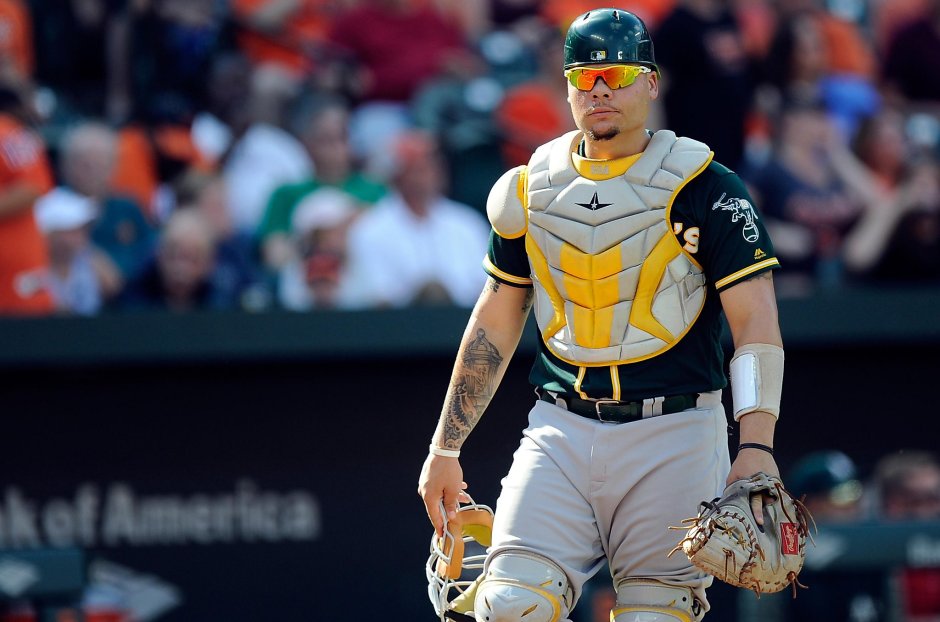
The next year, A’s catcher Bruce Maxwell became the first MLB player to kneel. Fast forward three years, and following the deaths of George Floyd and Breonna Taylor that involved law enforcement and the ensuing re-emergence of the Black Lives Matter movement, the number of players has increased considerably. Giants manager Gabe Kapler as well as three Giants players and a pair of coaches knelt during the national anthem during the recent Giants-A’s exhibition games.

This has also occurred around the league, as Joey Votto was among a number of Cincinnati Reds players to take a knee. Even though the silent protests did not catch on in baseball back in 2017 when Maxwell broke the mold, this has certainly gained momentum, as has the movement in general.

Last but not least, will even this abbreviated season be cut short once more should the COVID-19 pandemic spike to the point where mass shutdowns are to occur?

This has obviously been the most unprecedented, uncertain four-month span of our generation, so to expect anything different for this upcoming baseball season would be absurd. There have been recent spikes in COVID-19 cases, particularly in California, and there is no guarantee that there will not be any roadblocks that arise during this shortened season.

Just like with anything regarding everyday life, we have to take a wait-and-see approach. With that, the Giants and Los Angeles Dodgers will convene inside a mostly-empty Dodger Stadium on Thursday to begin a season that was nearly scrapped entirely amid wrangling between the league’s owners and the MLBPA.

With all the questions that are out there, at least one can be answered at this point: There will be baseball to be played, and watched, around the country, and that’s a good start to possibly getting back to the place that we had known for so long but has since been taken from us.

Normal.

Giants game wrap: Summer training ends with a Giants win 4-2

The San Francisco Giants Mike Yastrzemski belted a homer that landed in the right center field stands on the Levi Plaza level the first volley that put the Giants on top of the visiting Oakland A’s at Oracle Park in San Francisco (sports.yahoo.com photo)

By Jeremy Kahn

It what was the first game at Oracle Park in the Gabe Kapler era ended on a good note for the home team.

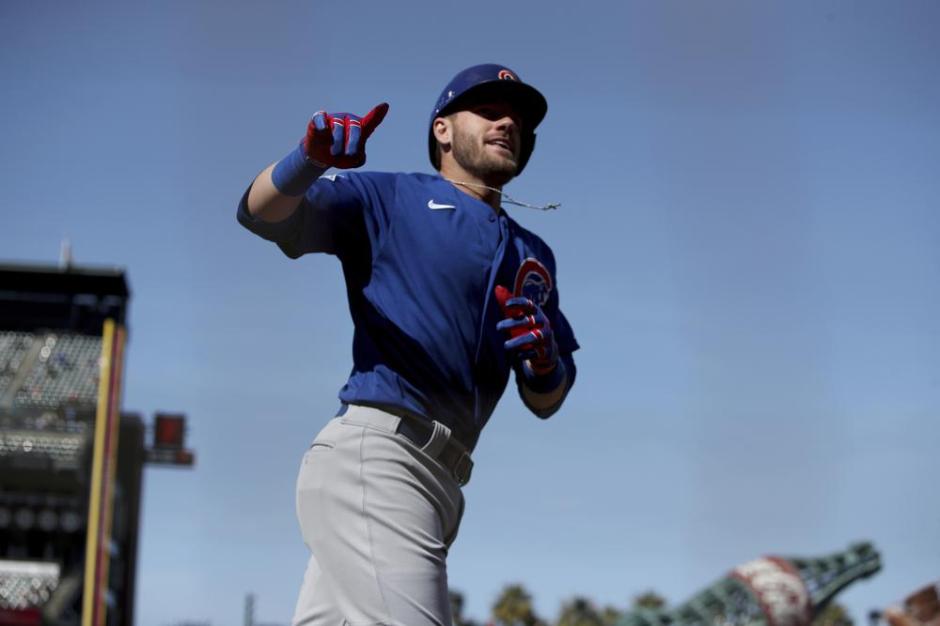
Mike Yastrzemski and Alex Dickerson each hit solo home runs and nine pitchers went one inning each, as the San Francisco Giants defeated the Oakland As 4-2 to sweep the Bay Bridge Series.

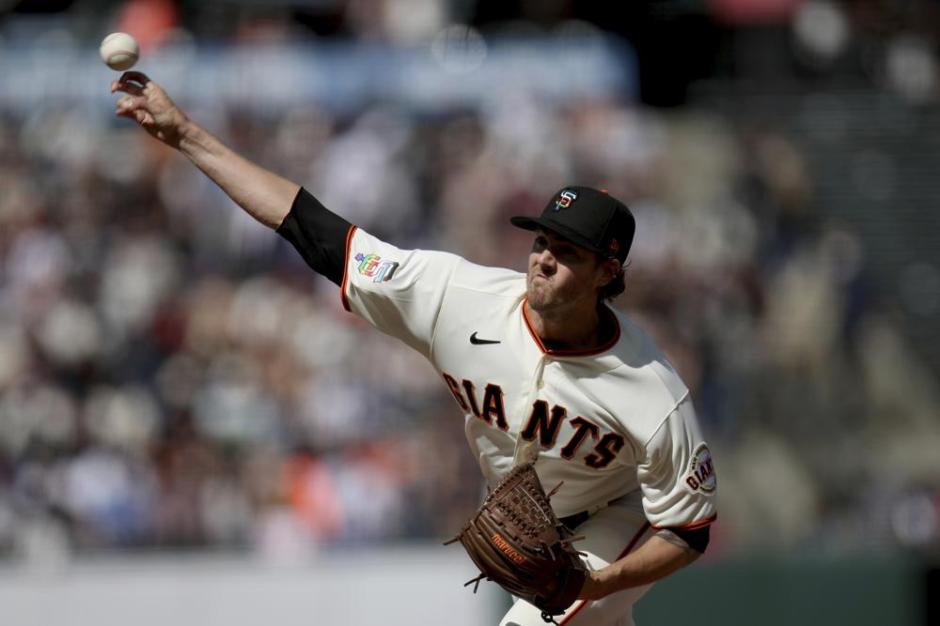
Tyler Rogers, Conor Menez, Dany Jimenez, Wandy Peralta, Andrew Suarez, Sam Coonrod, Andrew Triggs, Sam Selman and Sam Wolff each pitched an inning for the victorious Giants over their East Bay rival.

The nine pitchers gave up only two hits to the As, as Menez gave up both hits in his only inning of work.

Yastrzemski got the Giants on the board in a hurry, as he tattooed Mike Fiers onto the arcade over the right-center field wall.

Unfortunately, the one-run lead would not last long, as Chad Pinder hit a long triple off of Menez that looked like a three-run home run, as Bob Melvin challenged the call; however, the play stood and the As took a 2-1 lead.

Matt Olson got the As first hit of the game, as he beat out an infield bunt to the third base side of the diamond with the Giants playing three infielders and four outfielders. Menez then hit Khris Davis, but regrouped to get Mark Canha to fly out to Dickerson and Stephen Piscotty, who homered on Monday night at the Coliseum struck out for the second out of the inning.

Pinder then launched a long fly ball to right-center that was ruled a triple, despite the fact that Melvin challenged the call.

Dickerson then tied up the game, as he launched a solo home run halfway up the left-center field bleachers.

Donovan Solano gave the Giants the lead for good in the bottom of the fourth inning, as he hit a sacrifice fly to center field that allowed Pablo Sandoval beat the Ramon Laureano throw to the plate.

Tyler Heineman added a second sacrifice fly in the bottom of the seventh inning, as Dickerson scored from third base.

Yastrzemski went 2-for-2 on the night, while Dickerson went three-for-four on the evening, as the Giants picked up eight hits on the game against three As pitchers.

Peralta, who pitched a perfect fourth inning to pick up the win for the Giants and Wolff closed it out for his first save of the season, despite giving up a walk to Skye Bolt, who was quickly retired on a double play ball that Wolff got Davis to ground into and then Seth Brown flew out to Jaylin Davis to end the game.

NOTES: Once multiple players, coaches and Kapler knelt during the National Anthem prior to the game that gained national news when they did it on Monday Night, including a tweet from President Donald Trump.

Looking forward to live sports, but any time I witness a player kneeling during the National Anthem, a sign of great disrespect for our Country and our Flag, the game is over for me!, Trump tweeted.

UP NEXT: Johnny Cueto will start the opener for the Giants on Thursday night, when they open the season against Clayton Kershaw and the Los Angeles Dodgers at Dodger Stadium.

That’s Amaury’s News and Commentary podcast: A’s and Giants conclude two game exhibition tonight at Oracle in SF

The Oakland A’s Sean Manaea who is slated to start Saturday in Anaheim against the Los Angeles Angels at the Big A in the second of a four game series (Napa Valley Register file photo)

On That’s Amaury’s pod:

#1 Amaury the A’s hosted the Giants last night for the first of two pre season games. A’s pitcher Sean Manaea who had his plans rearranged for him last season in a tough loss in a one game Wild Card game against the Tampa Bay Rays is really looking to make amends this season.

#2 Manaea said that he looked forward to facing his teammates in training camp inter squad show downs.

#3 Manaea said he didn’t want to talk too much about some of the A’s split squad hitters he faced who grooved some of his pitches saying “a couple of guys that tagged me pretty hard, so I don’t want to talk about that.”

#4 The A’s are starting Frankie Montas for opening night on Friday in Anaheim. Montas was suspended last season for 80 games when tested positive for using a banned substance on June 21, 2019. Montas says that’s all behind him and is looking forward to the start on opening night against the Los Angeles Angels.

#5 The Oakland A’s are bringing up reliever Jordan Weems who actually was drafted as a catcher in 2011 by the Boston Red Sox. He showed up for spring 0.1 and impressed manager Bob Melvin and pitching coach Scott Emerson so much with his 98 MPH pitches and they said he had great control that he will make the opening night roster for this Friday night.

Amaury Pi Gonzalez is the Oakland A’s Spanish radio play by play lead announcer on 1010 KIQI San Francisco and does News and Commentary each week at http://www.sportsradioservice.com

Slater, Giants bring the noise to Oakland in 6-2 Summer Camp win

By Morris Phillips

Austin Slater knows he’ll be around, he just doesn’t know what his role will be. Given that, Monday’s exhibition in Oakland was about defining things.

Mission accomplished.

Slater had three hits, two doubles and five RBI in the Giants 6-2 Summer Camp win over the A’s. The utilityman was penciled into manager Gabe Kapler’s right-handed dominant lineup as the leadoff guy with pop. Given his success, and Kapler’s preference for platoons, don’t be surprised if Slater assumes the role again this weekend against the Dodgers, for the season-opening series in which the Giants expect to see lefty starters in three of the four games.

During spring and summer training, Slater seen time defensively at every position on the diamond except pitcher and catcher. The 27-year old carries a collection of gloves, and doesn’t seem rattled by all the uncertainty needed as a reserve. Kapler wasn’t around, but Slater’s sneaky good 2019 season helps his cause as well.

“I think guys are able to round out their game and not be so narrowed in on one specific position,” Slater said of his expansive skill set. “It helps you understand the game. It helps the team.”

Slater, singled in the first and doubled in the second off A’s starter Sean Manaea. The double came with bases loaded and cleared the bases. Then in the seventh, Slater took advantage of lefty reliever Jake Diekman with a two-run double.

Nine Giants pitchers, starting with Kevin Gausman, saw an inning of work, and none of the nine gave up more than one hit. Tyler Anderson surrendered Stephen Piscotty’s home run in the second, and 26-year Caleb Baragar gave up a hit, walk and a run in the fourth.

Chadwick Tromp doubled and scored, and Jaylinn Davis singled and scored twice for the Giants.

The abbreviated summer camp concludes Tuesday as the two teams meet again at Oracle Park in San Francisco.

Kapler and several of his players elected to kneel during the national anthem prior to the game. The socially conscious manager announced his plan to kneel before the game, while encouraging his players to kneel or do whatever they were comfortable with.

“I wanted them to know that I wasn’t pleased with the way our country has handled police brutality, and I told them I wanted to amplify their voices and I wanted to amplify the voice of the Black community and marginalized communities, as well,” Kapler said.


No Posey: SF Giants turn to Plan B for 2020 success

By Morris Phillips

SAN FRANCISCO–The most obvious path to  success for the 2020 San Francisco Giants disappeared when Buster Posey opted out of the season, citing his family and the adoption of prematurely-born twin girls.

With just 60 games in a 100-yard dash of a season, the Giants figured to rely on a veteran, starting pitching staff to establish a pattern of low-scoring games winnable with an offense adept in scratching across a run or two as opposed to slugging its way past NL and AL West opponents. Without Posey–in his familiar role as the orchestrator of the pitching staff–the Giants may need to revisit just how capable their offense is.

Any evaluation of the Giants offensively should begin with right fielder Alex Dickerson, the 2019 mid-season acquisition from San Diego who turned heads with 22 extra-base hits in playing time limited by injuries. Dickerson has the swing and the frame of a 30 home run guy at big league level, but a balky back and other physical issues have kept the 30-year old from blossoming. His home run off Shaun Anderson highlighted Tuesday’s intersquad game and provided hope that Dickerson can be the starting left fielder on Opening Day and stay put.

Michael Yastrzemski, the Giants’ other under the radar acquisition from last season, returns with a firm grip on the centerfield job, the leadoff spot and an opportunity to improve on his 101 hits and 21 homers in 2019. The Giants love his work ethic and approach, all reasons to bet on the Hall of Famer’s grandson to trend upward in 2020.

Hunter Pence returns to San Francisco after a year in Texas in which he re-energized a career that appeared to be over. Pence is healthier than he was in his last season as a Giant in 2018, and he’s successfully tweaked his batting approach and daily habits, giving him a shot to recapture the starting job in right field.

Evan Longoria, starting his 13th big league season, is no longer a stranger to San Francisco, the cooler weather and the National League, and is in fact, the team’s closest thing to a senior leader in Posey’s absence. Most importantly, Longo’s not satisfied, believing that his stats should return to previous standards now that he’s completely acclimated. In seven previous seasons, the third baseman hit more home runs than the 20 he had in 2019.

Brandon Belt and Brandon Crawford return at first base and shortstop respectively, and both are out to prove they’re more than the last links to the team’s world championship past. Crawford slipped some defensively last season, and Belt stayed healthy–tying his career high with appearances in 156 games–but saw his batting average and offensive impact slip dramatically. Both Brandons are eager to shore up their defenciencies but Belt’s availability for the opener in Los Angeles is up in the air due to a foot injury.

Maurice Dubon was a breath of fresh air in the clubhouse and on the field following his 2019 acquisition from Milwaukee, but 28 games were hardly enough to show his full capabilities. Can he continue his growth in 2020? Manager Gabe Kaplan is betting yes by handing the second base job to the 25-year old originally from Honduras who played as a prep in Sacramento.

Posey’s catcher spot remains up in the air with Tyler Heineman, Rob Brantly and Chadwick Tromp all in camp and getting reps while free agent veteran Russell Martin keeps getting mentioned as a potential acquisition. Currently, Tromp’s getting a lot of attention with his power bat and dramatic rise after seven seasons at the minor league level.

The universal DH is baseball’s COVID-19, shortened season surprise adjustment that has all 15 National League teams scrambling to staff on the fly. The Giants are even further behind here given their lack of power options, but they’ve already decided to pass on Yasiel Puig who just signed with the Braves. Instead the Giants will cobble together a left-right platoon with Pablo Sandoval, Pence, non-roster invitee Darrin Ruf, Steven Duggar and Tromp all in the mix.

He Was a Giant? Former A’s and Giant pitcher Brian Kingman feature By Tony the Tiger Hayes

Former Oakland A’s and San Francisco Giants pitcher Brian Kingman featured with the A’s Five Aces in 1981 on Sports Illustrated (top far right) is today’s He Was A Giant? Feature (file photo from newsbreak.com)

HE WAS A GIANT?

By Tony The Tiger Hayes

BRIAN KINGMAN: Oakland’s Big Time Loser, Was Worse with San Francisco

Brian Kingman – RHP – 1983 – # 25

If a 20-game win season is the magnum opus for a starting pitcher, you would figure that 20 losses would be the equivalent of finding a turd in the punch bowl.

But not for Brian Kingman.

Since losing 20 games for the 1980 Oakland A’s, Kingman has not only accepted his place in the 20-game loss fraternity, he has became the ignominious club’s self-appointed president, treasurer and spokesperson.

His 20 -game loser status has became Kingman’s calling card – his reason to be remembered.

“I feel sorry for all those guys who (only) get to 19 wins – all that frustration and never be talked about,” Kingman, tongue pressed only partially in cheek, once said. “They might as well take the final step and lose 20.”

Kingman did not lose 20 games for the Giants in 1983 – in fact he had no desisions in the three games he appeared.

But the Los Angeles native did something as a Giant that he didn’t do quite as often as you might have thought in his Oaklandish 20-game loss season.

As a Giant, Kingman pitched exceptionally ghastly.

Why Was He A Giant?

After going 4-12, 4.48 for the 1982 A’s, Kingman was dealt to the Red Sox in a cash deal. But Kingman failed to make the Boston roster the following spring and wound up hooking on with San Francisco.

He debuted in Orange & Black at Candlestick Park in a pair of games vs. Montreal in early June and was promptly battered by Expos hitters.

After two relief outings he was suffering from a 13.50 ERA, which was worse than the 9.00 figure posted by slugger Dave Kingman after his two random mop-up relief appearances for the 1973 Giants.

Before & After

As a rookie in 1979, Brian Kingman was one of the bright spots for Oakland, going 8-7, 4.31 for a confused Green & Gold club that lost a staggering 107 games.

But the A’s made an incredible turnaround the following season after the hiring of fabled firebrand skipper Billy Martin.

An unforeseen Oakland team stunned the Junior Circuit posting a winning record (83-79) with an appealing brand of baseball that relied on daring base running, power hitting and macho starting pitching.

A’s iron -armed starters would complete a staggering 94 games that season. Kingman threw 10 of those full-games, but even that meaty figure ranked fifth among A’s starters.

Despite his very reasonable 3.83 ERA over 211.1 innings, Kingman frequently pitched in tough luck in ‘80.

He lost six one-run decisions. The A’s were shutout in five of his starts and OakTown scored a paltry average of 2.8 runs in his 30 starts.

Kingman had lost nine decisions in a row when Martin mercifully (Billy had a ❤️!) yanked the righty from the rotation late in the campaign with 19 losses on his ledger.

Still, like Wilbur Wood, Jerry Koosman and Phil Niekro, the three previous 20 game losers prior to Kingman – it seemed Kingman was destined to be a historic flop.

Ironically, Kingman’s 20th loss came in relief in a game he would have normally been scheduled to start.

Kingman was forced into the game in the second inning of a game vs. the visiting White Sox when starter Matt Keough was pulled from the game with an injury.

Kingman would allow just two earned runs over 5.2 innings of work in a 6-4 home defeat, but he absorbed the loss when the A’s kicked the ball around like FC Barcelona, committing four errors (9/25/80).

“I thought I was going to be stuck 19,” Kingman quipped at the time.

More than 20 seasons would pass before Mike Maroth of Detroit became baseball’s next 20 game loser. There have been none since.

By the way, the Giants have not had a 20 game loser during their SF era.

He Never Got His Own Bobblehead. But…

Several days after his distressing Giants debut, Kingman made his third and final Giants appearance at Atlanta and pitched decently – allowing three hits and one unearned run over two innings in a 7-3 loss to the Braves (6/10/83).

But it was too little, too late and Kingman was soon optioned to Triple-AAA Phoenix. He pitched in the Giants system through 1984 but never returned to the majors.

Giant Footprint

In the World Series era, 189 pitchers have lost at least 20 games in a MLB season. The group includes several excellent pitchers including a few of immortals, including Hall of Famers Niekro, Steve Carlton, Cy Young and Walter Johnson

That fact has helped Kingman salve the sting of being labeled a big-time loser.

“That would be like if you were a scientist getting linked to Einstein or something,” Kingman said. “I was being mentioned with Walter Johnson and Cy Young.”

He Was A Giant? Jose Cardenal 1963-64 seasons feature By Tony the Tiger Hayes

Jose Cardenal as a San Francisco Giant who played in San Francisco during the 1963 and 1964 seasons (Amazon file photo)

HE WAS A GIANT?

JOSE CARDENAL – OF – 1963-64 – # 10

By Tony the Tiger Hayes

If you collected baseball cards as a kid in the 1970s there were three givens: “bubblegum” that crumbled into brittle shards the moment you touched it; hideous air-brush art work, and, finally, the incremental Chia-Pet like growth of Jose Cardenal’s unwieldy Afro. (Think TV artist Bob Ross.)

A fiery competitor with a stylish hairdo, Cardenal was a career .275 hitter and a familiar presence on the MLB scene for parts of five decades as both a player and coach.

But before the Cuban fly chaser picked his hair out to resemble a spinning classroom world globe, Cardenal broke in with the Giants, appearing in 29 games over 1963-64.

Why Was He a Giant?

Cardenal was one of the last ball players to escape Cuba before Fidel Castro shut the island’s borders. He was just 17 when the Giants paid him $200 to sign with the organization in 1960.

Though off the field he struggled with assimilation process – fueled by being cut off from family back in Cuba – Cardenal had no such issues in the batters box and produced gaudy minor league numbers.

Cardenal was just 19 when he broke camp with SF in 1963. He came and went a few times over the next couple of seasons but never could crack SF’s All-Star studded lineup.

Before & After

Despite great reviews for his on field play in the Giants farm system – hitting for power and stealing bases like a bandit – Cardenal developed a reputation of being a bit of a scoundrel.

As a young man he got into scrapes and arguments with teammates and ran afoul of team management and opposing clubs.

In one 1962 incident, when he was with the El Paso Sun Kings, Cardenal menaced the opposing Austin Senators dugout with a letter opener.

Mouthy bench jockeys had gotten under the young Cuban’s skin by calling him a “Castro Lover” and a “Communist.”

Cardenal became so enraged he considered skinning an entire minor league club. He was stopped however before he could initiate his Davy Crockett routine.

“There’s a lot behind the boy’s flare up,” said El Paso manager George Genovese after Cardenal was placed on Texas League probation. “He is immature all right but he hasn’t been home in a long time and hasn’t seen his family in two years. And there’s a language problem.”

Due to his hair-trigger temper and the fact that the Orange & Black were already brimming with talented OF prospects, the club moved on from Cardenal after the 1964 campaign, trading him to the Angels in a swap for C Jack Hiatt.

Cardenal jumped from team to team for awhile before finding a home with the Cubs for much of the ’70s. He later appeared in the 1980 World Series with Kansas City.

From 1993-2003 Cardenal was a major league coach for several teams including the 1996 World Series Champion Yankees.

He Didn’t Get His Own Bobblehead Doll (Or Chia-Pet). But…

Cardenal smacked the only hit of his Giants career in his second MLB at bat, lining a two-run, pinch hit single to left off the Cardinals Curt Simmons. Cardenal was then nabbed however trying to steal second base in a weekday afternoon 4-3 home loss (4/24/63).

Giant Footprint

It was against the Giants that Cardenal assembled a career best six- hit game at Candlestick Park (5/2/76), batting 6-for-7 with four RBIs in a 6-5, 14-inning Chicago win at Candlestick in the matinee of a double header.

The last several innings of that game can be viewed on You Tube – providing a good look at Cardenal’s glorious Afro in action and a rare look at the Giants much maligned mid-1970s AstroTurf era.

Tony the Tiger does He Was A Giant? features weekly on http://www.sportsradioservice.com

He was a Giant? Feature on former Giant Rick Leach by Tony the Tiger Hayes

Rick Leach former San Francisco Giant on his 1990 Mother’s Cookies baseball card (ebay photo image)

HE WAS A GIANT?

Rick Leach – OF/1B – 1990 – # 25

By Tony the Tiger Hayes

In 1990, the “San Francisco Treat” didn’t just refer to the family of tasty Rice-A-Roni dishes, it also described the City’s gourmet collection of quarterback talent.

That season a pair legendary Hall of Famers: Joe Montana and Steve Young, topped SF’s depth chart. Waiting deeper in the wings was the athletic passer Steve Bono.

But Candlestick Park was also home to another record setting signal caller whose college career rivaled all three of those Forty Niners QBs.

This south-paw passer was a four-year Michigan starter, Sports Illustrated cover boy and noted Ohio State killer: Rick Leach.

A college contemporary of Montana, Leach choose to persue a pro baseball career after leading the Wolverines to three straight Rose Bowl appearances in the 1970s.

In a backup role for the Giants in ‘90, Leach batted .293 in 78 games before abruptly leaving the club under a cloud of suspicion in mid-season.

Why Was He a Giant?

After seven checkered seasons in the American League – he went AWOL from a couple of teams – the Giants took a flyer on Leach after Atlanta released him in spring training of ‘90.

Before & After

Leach was the rare athlete whose lengthy big league career was considered an after -thought to his amateur completion in another sport.

Leach will forever be known first and foremost for his quarterback play at Michigan from 1975-78 when he led Big Blue to three consecutive Big 10 Conference Championships.

Though he went 0-3 in the Rose Bowl, Leach is an icon in Ann Arbor because of his ability to beat bad blood rival Ohio State. Leach compiled a 3-1 career record vs. the Buckeyes.

Though he dominated on the collegiate gridiron, Leach was considered an even better pro baseball prospect.

Along with fellow Michiganensian Kirk Gibson – who starred at the same time in both football and baseball at Michigan State – Leach signed with the home state Detroit Tigers in 1979.

Though he never reached star status on the diamond, Leach was a serviceable back-up, compiling a career average of .268.

He was actually having one of my his best MLB seasons with SF when he suddenly vanished with a puff of smoke in early August of ‘90.

Actually that may have been the problem. After one of his previous unexcused absences with Texas, authorities discovered a stash of weed in his hotel room.

On 8/7/90 it was announced that Leach had failed a league mandated drug test and was suspended 60 games – effectively ending his season – and as it turned out his baseball career.

He Never Got His Own (Giants) Bobblehead. But…

After Giants opening day starting RF Kevin Bass was shelved with knee surgery in late May, Leach became the Giants de facto starting RF for a spell.

He was particularly adapt at hitting in difficult Candlestick Park, batting .341 there, a full 100 points better than his road average.

In a 7-3 home shellacking of Houston (6/3/90), Leach tied a career high with four hits, going 4-for-5, with an RBI.

Later, in back- to -back 4-3 home wins over division rival Cincinnati (7/26-27/90), Leach bashed a HR in each contest- his only long balls for the Orange & Black.

He socked a two-run dinger off Jose Rijo in the first game and ripped a solo round-tripper off Scott Scudder in the later.

Giant Footprint

Leach was a productive and popular Giant, making it all the more difficult for the club when it was announced he was suspended for the remainder of the ‘90 contests season.

“This is a real shock. He’s devastated,” said Giants manager Roger Craig. “He’s done so much for us. He’s been a real leader. We’re going to have to pick up from here.”

A year after winning the NL pennant in 1989, the Giants would finish third, six games behind Cincinnati.

Leach was with the Giants in spring training in 1991, but was a late cut. He never played organized ball again.

Tony the Tiger Hayes does He was a Giant? features at http://www.sportsradioservice.com

They were SF Giants? Chris Bourjos, Al Hargesheimer, and Mike Rowland former Giants history

Topps 1980 baseball card rookie card of San Francisco Giants Chris Bourjos, Al Hargesheimer, and Mike Rowland

Chris Bourjos – OF – 1980 – # 18

Al Hargesheimer – RHP – 1980-81 – # 40

Mike Rowland – RHP – 1980 – # 28

By Tony The Tiger Hayes

They Were Giants?

Unlike the “Chicago Eight,” the hirsute counterculture contingent of Yippies, socialists and Black Panthers that gained noterity for their arrests at the bloody Chicago 1968 Democratic Convention – this Giants’ “Chicago Three” were never accused of Inciting to Riot or Conspiracy.

Not unless you believe this trio – who were all born in Chicago -conspired to make their MLB debuts at the same time for old school, tobacco spittin’ manager Dave Bristol and the woebegone 1980 San Francisco club.

Then they would have been guilty as hell.

Why Were They Giants?

Two years removed from the revolutionary 1978 season, the Giants bottomed out in a big way in ‘80, finishing 17 games off the pace of the NL West Champion Houston Astros. In the process the Giants drained the minor league system looking for anyone that might help going forward.

Among the dozen or so call ups that season were this trio of Windy City natives who would have been in high school when Bobby Seale, Abby Hoffman, Jerry Rubin, Tom Hayden and the other four All-Star Protesters were running amok in the streets of Chicago in ‘68.

Before & After

Bourjos (free agent, 1977), Hargesheimer, (free agent, 1978) and Rowland (22nd round, 1975) were all signed and developed by SF.

Bourjos, a Pete Rose lookalike, played four seasons in the Giants minor league system and jumped around each year. After batting .295, 9, 86 for Phoenix in ‘80, Bourjos was called up to the parent club in September.

After his Giants cameo that month – 13 games – he was traded to the Astros, but never got another shot in the majors.

The athletic Hargesheimer made a similar swift rise to the Giants, debuting in the summer of ‘80 and winning his first two starts. He finished the season at a respectable 4-6, 4.32. He returned briefly in 1981, but was soon traded to his hometown Cubs.

The burly Rowland – with his unruly curls and droopy mustache looked as if he may have picked up a few style tips from Abby Hoffman – toiled in the minors six seasons before joining the SF bullpen.

“I want to get there, I want to get there bad,” said Rowland prior to his promotion. “But I don’t think I’m obsessed with it.”

Despite better than expected results, turns out the Giants weren’t obsessed with Rowland.

He would stay up with SF just parts of two seasons, despite fashioning a 1–2, 2.74 record in 28 contests.

They Never Got Their Own Bobbleheads. But…

In a game at Cincinnati late in ‘81, Hargesheimer was dominate, putting a major roadblock in the way of the Reds postseason goals, allowing just four hits in seven scoreless frames. Greg Minton pitched the final two frames to preserve the W for Hargesheimer and a 4-0 shutout (9/28/81).

“He kept them off balance all night. I think he was more relaxed tonight. He was a little bit more prepared for this start,” said Giants manager Frank Robinson.

Rowland and Bourjos’ top performances as big leaguers came in the same Candlestick Park game vs. the soon to be ‘80 World Series Champion Philadelphia Phillies (9/3/80).

After starter Allen Ripley and reliever Tom Griffin allowed four runs through six innings, Rowland came on and pitched a perfect three frames, in the process getting Pete Rose on a grounder and striking out Mike Schmidt.

Philadelphia starter Dick Ruthven took a 4-1 lead to the bottom of the ninth when SF’s bats suddenly came alive.

Joe Pettini, another of the rookie call ups led off with a line drive single to left. With Rowland due up next, Bristol called on Bourjos – who had yet to collect a big league hit – to pinch hit.

On a 1-1 count, Boujos connected with a Ruthven fast ball and slugged it high and far into the warm September night for a breathtaking home run.

Unfortunately the Giants would lose 4-3, but it was still a memorable night, especially for Bourjos, who in his excitement sprinted around third base and had to put on the brakes before bypassing Pettini.

“I just couldn’t trot. I was too exited,” said Bourjos post game. “Right now I just feel full of energy.”

Giant Footprint

In the psychedelic era, head shop owners couldn’t keep “Chicago Eight” posters in stock. They were staples of radical college students dorm rooms everywhere.

Now, you won’t find much Giants memorabilia in Haight – Ashbury stores that sell funny pipes, but the “Chicago Three” did something the bull-horn toting crowd never did.

They got their own baseball card.

Topps “Future Stars” card No. 502 of the 1981 set pictured in neat alphabetical order left to right Bourjos, Hargesheimer and Rowland in clear head shots taken on spring training fields.

Now that was something to shout about.

He was a Giant? Carl Boles and the Case of the Mistaken Identity

He Was A Giant?

Carl Boles and the Case of the Mistaken Identity

By Tony The Tiger Hayes

What could possibly be better than having Willie Mays on your team? Well, having two Willie Mays’ on your team of course!

The 1962 Giants weren’t lucky enough to have an actual clone of the “Say Hey Kid” on the roster. But in 27-year-old Boles, the squad had a player many people believed was Willie Mays.

Not the “next” Willie Mays mind you. But Willie Mays himself.

Like Mays, Boles was a brown eyed, handsome man. The OF was of comparable height and similar muscular build as Mays.

Typically, fans and media joyously flocked to the rookie with pen and paper ready. But some turned away puzzled.

“I’m signing more autographs than the veterans. The only thing is, after I sign my name they get mad at me,” Boles said in 1962. “Even newspaper reporters come up to me and start to interview me. They’ll say ‘Say Willie, about that hit…’ And when I say ‘I’m not Willie, some of THEM get mad.”

Why Was He a Giant?

Mays’ doppelgänger was promoted to San Francisco from the farm system in mid-1962 and remained with the club the final two months of the season.

The Giants were impressed with Boles rounded tool set.

“I don’t know how he’s going to hit up here,” said farm director Carl Hubbell, the former Giants Hall of Fame lefty. “But he’s not going to make many mistakes in the outfield and he’s a excellent base runner.”

Boles was on the Giants active roster as they clinched their first ever West Coast Pennant in Los Angeles.

In a bizarre scene, when the club returned home, still dizzy from their champagne celebration, they were met by a frenzied mob that spilled out on to the SFO tarmac.

As they tried to motor away, team bus was surrounded by a mob of frenzied Giants fans chanting “We Want Willie! We Want Willie!”

Unbeknownst to the throng – who how began rocking the coach back and forth – Mays had slipped into a taxi and was on his way home.

Of course there had to be a wise acre in the traveling party and OF Bob Nieman sarcastically crowed : “Let’s throw ‘em Boles and get the hell outta here!”

Before & After

The native Arkansan was signed by the Giants in 1954, but his career was interrupted by a military commitment with the Navy. By the time Boles got out of bell bottoms in 1959, he was an expert at knot tying, but a number of other Giants prospects had past him up in the pipe line.

Still, Boles clawed his way to Candlestick Park in ‘62, after batting .337, 18, 74 in 89 games at Double-AA El Paso.

“He’s fast and has a fine arm… He’s a fine OF prospect,” said Giants manager Alvin Dark.

Boles did all he was asked of in a reserve role, pinch hitting and running and spelling Felipe Alou in LF.

Unfortunately Boles would not return to the big leagues after ‘62.

A broken leg the following spring halted Boles momentum and he missed most of the 1963 season.

In 1965, it appeared Boles was retiring from playing when he took a position in the Giants scouting department.

He Never Got His Own Bobblehead. But…

Boles played in a total of 19 games with the Giants in ‘62, batting a satisfying.375 (9-for-24). Four of his hits came as a pinch hitter.

In a rare start, the Giants were trailing 2-1 in the 4th inning at Milwaukee when Boles drilled a game -tying RBI single off Bob Hendley. Later that frame, Boles scored the go ahead run on a Jose Pagan triple. SF hung on to win 6-4 (8/18/62).

Boles did not leave the dugout in the World Series vs. the Yankees that fall.

He did however score a game tying run as a pinch runner in the 7th inning of Game 2 in the special playoff series at LA. The Dodgers would eventually win the contest 8-7 (10/2/62).

Giant Footprint

Just when it appeared Boles’ baseball playing days were over he returned to the field… in Japan.

From 1966-71 Boles played with the Osaka Kintetsu Buffaloes and Nishitetsu Lions of the Japan Pacific League.

It was overseas that fans realized that not only did Boles resemble Willie Mays off the field, but on the field as well.

In his six seasons playing in the “Land of the Rising Sun,” Boles would slug 117 home runs.

When the Giants toured Japan for a series of exhibition games in 1970, one of few Americans to greet them was… Carl Boles.