He Was a Giant? Jeff Stember was a right handed pitcher for the SF

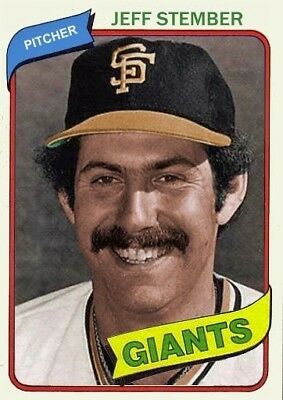
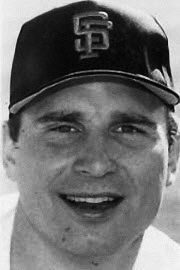
Former San Francisco Giants pitcher Jeff Stember pitched only one game August 5, 1980 at the Houston Astrodome and is the feature of He Was a Giant? by Tony the Tiger Hayes (1980 Topps Baseball Card photo)

Jeff Stember – RHP – 1980 – # 50

He was a Giant?

By Tony the Tiger Hayes

Stember’s big league pitching career could not have gotten off to worse start.

Literally.

On the first pitch Stember ever threw in the majors (8/5/80), Houston’s Terry Puhl squared it up, sending a screaming liner into the rainbow hued left field seats of the Astrodome.

So much for good first impressions.

“As soon as Puhl hit the home run I went out to the mound and told (Stember), ‘Welcome to the National League,” said San Francisco catcher Mike Sadek.

The nervous righty would commit a balk later in the first inning, but actually retired six of the seven Astros following Puhl’s blast. Unfortunately, Houston struck again in the third inning plating two unearned tallies on a Jose Cruz triple.

After Stember retired perennial All-Star Cesar Cedeno on an infield pop-out to end the third, the 6-foot-5, 220 pound New Jersey native’s big league debut – and as it turned out – his MLB career, was over.

With Houston leading 3-1, Max Venable was sent to pinch hit for Stember in the fourth.

The Giants managed to battle back and beat the Astros 9-3. The victory was fueled by a pair of run scoring singles by Sadek. LHP Gary Lavelle recorded the victory with four innings of shutout relief.

Despite the comeback, Giants manager was still chapped about Stember’s outing.

“If he throws the ‘A’ fastball he’ll be alright,” Bristol explained. “It’s that ‘B’, ‘C’ and ‘D’ that I don’t like. And I told him that.”

Stember’s first big league game was also his last big league game.

Why was he a Giant?

In the 1970s, Giants scouts found amateur gold on the pitching mounds of New Jersey, signing two pitchers (Ed Halicki and John Montefusco) who would each throw no-hitters for San Francisco in 1975 and 1976 respectively.

San Francisco was looking to repeat that formula when they selected Stember with a 26th round pick in the 1976 draft out of Westfield High School in Westfield, N.J.

While Stember’s big league career ended in a blink of an eye, he was actually the Giants best pick up of the ‘76 amateur draft. Of all the players San Francisco drafted and signed that year – including first round pick, high school IF Mark Kuecker – Stember was the only one to play in the big leagues.

Future stars they passed on included the eventual Hall of Famers: IF Alan Trammell (second round); IF Wade Boggs (seventh) and local OF Rickey Henderson who was selected by his hometown A’s in the fourth round.

Before & After

Stember’s minor league numbers didn’t blow anyone away as he toiled alongside future Giants such as Chili Davis, Bob Brenly and Fred Breining. In six minor league campaigns – all with the Giants organization – he was 38-49 with a 4.98 ERA .

He Never Had a Bobblehead Day. But…

Though he was roughed up by a good portion of the Houston lineup in his only big league appearance, Stember did manage to muzzle the bat of Joe Morgan, the future Giant and Hall of Fame 2B.

In the first, Stember got Lil’ Joe on a ground out and then a pop out in the third.

Giant Footprint

Stember is recognized by the Jewish Baseball Museum as one of the dozens of Jews to have played big league baseball. Others with ties to the Giants include former team president Al Rosen and manager Gabe Kapler and the all-time best Giants play-by-play man Hank Greenwald.

They were Giants? By Tony the Tiger Hayes; Darren Ford and Horace Speed

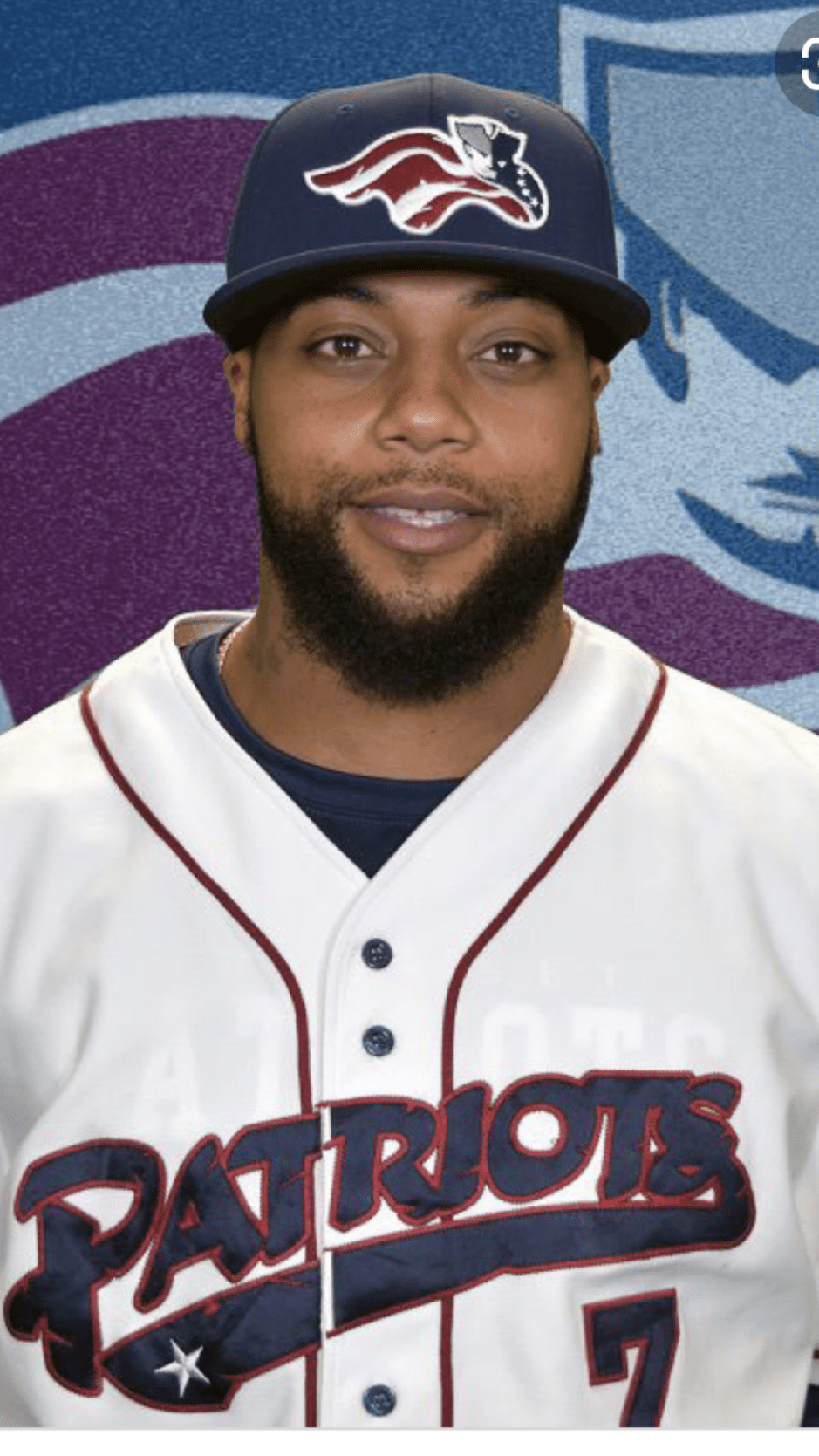
Former San Francisco Giants Darren Ford in his Somerset Patriots uniform played for the Giants for the 2010 and 2011 seasons Ford didn’t get a bobblehead but he got a ring with the 2010 World Series Championship Giants

Faster Than A Speeding Bullet

THEY WERE GIANTS?

By Tony “The Tiger” Hayes

Darren Ford – PR/OF – 2010-11 – # 34

Horace Speed – PR/OF – 1975 – # 38

They Were Giants?

Not since Herb Washington – a former college track star without a baseball background – was issued an unforgettable 1975 Topps card with “pinch runner” as his position, has substitute base running been in vogue.

Like Washington’s sans-a-belt Swingin’ A’s baseball pants and flapless batting helmets, the pinch-runner has been sadly all but been laughed out of baseball. Why waste a player? Excitement be damned. Wait for a home run the analytics say. Over the years, San Francisco has had at least two short-lived players whose direct track into a game has included the slapping of lead-footed teammates on the butt as they took their spot on the base path.

The aptly named Speed and Ford (think Mustang) – combined to play in 50 games with the Giants – with 31 of those appearances coming as pinch-runners.

“I know what my role is to go out there and steal a base and get in scoring position. I trust my instincts,” said Ford in his his first day in the majors with the Giants in 2010. “You can’t teach speed and I’m blessed.”

Why Were They Giants?

The Los Angeles raised Speed, who was signed to his first pro contract by San Francisco in 1969, made the club’s opening day roster in 1975 as a backup to Gary Matthews, Von Joshua, Garry Maddox and Bobby Murcer.

“Deep down I always wanted to be a Giant. I will hit .300, drive in 100 runs and hit 20 home runs. Home runs are the hardest because I hit a lot of line drives,” a confident Speed proclaimed. “But I know you just don’t walk into a starting position, especially on this club.”

He was right. Speed made just three starts for the Giants and was back in the minors by mid-May.

While Speed was considered a more rounded prospect and a clubhouse comic – he supposedly did a great Ed Sullivan impersonation – Ford was promoted to San Francisco in Sept. 2010 strictly for his base path acumen. He may have been the only player ever promoted to the Orange & Black after hitting just .250 at Double-AA.

Before & After

The grandson of former big leaguer Ted Ford, Darren came up through the Brewers farm system before a 2008 trade for 2B Ray Durham brought him to San Francisco.

He would make it into seven games in the fall of ‘10, but never came up to hit.

Ford made it back to the bigs with SF again in 2011 – this time getting a few hits off the bench.

After leaving the Giants organization in 2012, Ford spent a seasons each in the Seattle and Pittsburgh organizations before returning to the Giants fold in 2014-16 – however he did not receive a big league call-up the second time around.

Speed would appear in just 17 games with the Giants in ‘75, batting .133 (2-for-15) before returning to the minors for the next three seasons. He resurfaced with the Cleveland Indians in 1979-80 batting .217 in 96 contests.

They Never Had Bobblehead Days. But…

Ford may not have swung a bat for the 2010 World Champions, but he made an unforgettable first impression on Giants fans – using his speed to lead the Orange & Black to victory in his big league debut in a home game vs. Colorado (9/1/10). Running at first base for Mike Fontenot in the bottom of the 8th with the score tied 1-1, Ford advanced to second on a sacrifice bunt by Tim Lincecum.

With one out and a 0-2 count on Andres Torres, Rockies pitcher Ubaldo Jimenez bounced a pitch in the dirt that bound a short distance from Rox back stop Miguel Olivo.

Ford daringly took the initiative to sprint to third and then he kept on running home with what would be the winning run of a 2-1 outcome when a hurried Olivo airmailed his throw into left field.

“I knew it would be bang-bang. I’ll say this: the kid didn’t hesitate. He can fly,” said Giants manager Bruce Bochy. “He showed no fear there.”

Speed appeared in eight big league games before making his first plate appearance for San Francisco. He reached base in his first start, stroking a double off Don Gullet in a 5-4 win at Candlestick over the eventual world champion Reds (4/29/75).

Giant Footprint

In his first big league multi-hit game (he only had four of them) Speed batted 2-for-4 with 2 RBI to lead Cleveland to a 3-0 win at Toronto (6/30/78). Also collecting two knocks for the Indians that day: Tribe starting 2B Duane Kuiper.

Thirty-two years later, Kuip was behind the mic on the Giants telecast when Ford debuted with his mad dash from second base:

“Ford’s gonna go! “ Kuiper bellowed. “(The throw is) into left field and the Giants take the lead! Unbelievable!”

He Was A Giant? … Brad Gulden 35 Years Ago Humm-Baby Was Born By Tony “The Tiger” Hayes

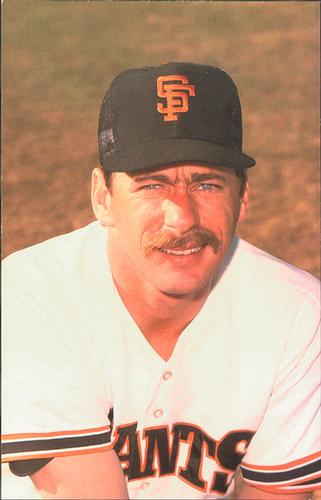
Former San Francisco Giant third string catcher Brad Gulden and the answer to the Giants trivia question where did former Giant manager Roger Craig come up with Humm Baby ( circa 1986 courtesy of Mothers Cookies)

He Was A Giant? … Brad Gulden

35 Years Ago Humm-Baby Was Born

By Tony “The Tiger” Hayes

Brad Gulden – C – 1986 – # 10

He was a Giant?

Brad Gulden’s baseball reference page shows he batted a paltry .091 in 17 games for the 1986 Orange & Black.

What it doesn’t show is the largely forgotten role the third -string catcher played in forging the rebirth of a long-dormant winning culture in San Francisco and his uncredited contribution to one of the best marketing campaigns in club history.

From 1983-85 Bay Area baseball fans labored through three consecutive seasons of moribund Giants baseball. The Candlestick nine bottomed out in 1985 when the club lost a west coast worst 100 games.

Late in the ‘85 season Giants owner Bob Lurie took a bold step and cleared the decks. Out were long-time company men Tom Haller and Jim Davenport as general manager and field manager respectively and in was outsider Al Rosen in a newly created role of club president. Rosen’s first move was to hire former big league pitcher Roger Craig as manager.

Personality-wise, the urbane, buttoned-down Rosen and the homespun, horse riding Craig we’re complete opposites. But each man held the same laser focused opinions on how the team should be run.

They could not guarantee victories, but a few things were certain.

The team would play fundamentally sound baseball. The Orange & Black would hustle. And possibly most importantly, under no circumstances would anyone associated with the Giants ever bitch about, rip or denigrate Candlestick Park – no matter how complaint worthy the miserable dump was.

In 1986, new faces (and a few familiar ones) dotted the Giants spring training fields. The list included the heralded first round draft pick 1B Will Clark and the greatest Giant of them all, Willie Mays, who was officially brought back to San Francisco for the first time since 1972 in an advisory and camp instructor role.

Among the throng of new players was Gulden, a journeyman back-up catcher who came to camp on a minor league pact.

Talent wise, the burly backstop did not grade out well. He was a lifetime .220 hitter, a slow runner, and his throwing arm was about what you would expect from a well traveled 30-year -old receiver.

But what Gulden lacked in All-Star physical talent he compensated with intangibles. He blocked the plate like a 49er, Gulden communicated well with pitchers and he constantly hustled and never groused.

He wasn’t flashy, but Gulden was as reliable as the old pickup truck Craig drove around his California ranch in the off season. And after one particularly inspiring spring training afternoon of breathlessly chugging after foul pops and two-timing it to first on routine grounders – Craig declared for the first time what would become his trademark buzzword to describe a Giants player.

“He’s a “Humm-Baby,” said Craig when quizzed about Gulden. “He’s the kind of kid who will bust it for 10 innings and give you 150 percent.”

Craig explained that “Humm-Baby” was an old sandlot expression – a combination of “Hum it in there” and “Come on Baby.”

“Humm-Baby means aggressive, hard-nosed baseball,” Craig related. “It can mean a great double play, a well executed hit-and-run or a beautiful girl.”

O.K.

Though nobody could ever recall hearing the phrase before, the motto quickly became de rigueur for Giants fans.

Why Was He A Giant?

The Giants opened 1986 spring training with just one hold over at the catcher position – starter Bob Brenly.

Rookie backup Matt Nokes was dealt in a trade to Detroit that returned another unproven young catcher, Cal product Bob Melvin, and RHP swingman Juan Berenguer.

Next veteran receiver Alex Treviño, was swapped to the Dodgers for future starting OF Candy Maldonado. That trade was notable not only for its lopsided result in the Giants favor – but also because it noted the first trade between the two rivals in some two decades.

Another 20 years would pass before the adversaries completed another deal.

A minor league free agent, Gulden was added to the 1986 spring roster for catching depth after spending all of 1985 with the Triple-AAA affiliates of the Reds and Astros.

Gulden was far from a lock to make the Giants major league opening day roster in 1986. His chances were reduced even more due to a cut back in roster spots that season from 25 to 24 players.

But the Giants choose to open the year with three catchers – including the hard scrabble Gulden.

“He shook hands with me about six times and even kissed Al!” said Craig after telling the beefy backstop the good news. “Gulden worked hard. He exemplifies the type of player we want.”

Before & After

Gulden entered pro ball as the Dodgers’ 17th round draft selection in 1975. He signed immediately and reported to Class-A Bellingham at age 18.

After hitting an unstoppable.398 as a senior at Minnesota’s Chaska High School that spring, Gulden’s average plummeted to .163 during his first summer of minor league ball.

But Gulden kept at it, climbing steadily through the Dodgers farm system.

In 1978, Gulden catapulted Triple-AAA Albuquerque into the Pacific Coast League championship series after his 10th inning, game winning hit completed a three-game sweep of Salt Lake City in the Eastern Division playoff series.

Not surprisingly the rugged receiver pounded the two-RBI knock while nursing a broken finger. He was rewarded with a call-up to Los Angeles and finished the ‘78 season with the parent club.

Tragedy led to Gulden receiving his first extended big league look in 1979. Traded to Yankees during spring training, Gulden was unexpectedly thrust into New York’s lineup in mid-season after the shocking death of Thurman Munson. In a 40 game trial for New York, Gulden batted just .163.

Gulden logged time with the Mariners and Expos after that, but it would take another four seasons before Gulden received his next extended look-see. In 1984, Gulden appeared in a career high 107 contests for Cincinnati, batting .226, 4, 33.

He Never Had a Bobblehead Day. But…

Gulden’s signature on-field moment as a Giant came during a chaotic 4-hour, 18-minute, 12-inning affair at Los Angeles in the fourth game of the ‘86 regular season.

Five batters were hit by pitches, there were three wild pitches and five errors (four by the Dodgers). And just for fun, two Giants catchers (Brenly and Melvin) filled in at third base.

Fueled by a three-run Jeffery Leonard long ball, San Francisco took a commanding 8-1 advantage into the bottom of the 7th. Then the Dodgers bats came alive, scoring four runs in the 7th and adding three more in the 9th to tie the game.

Gulden, who entered the game in the 9th as a defensive replacement, had a prime opportunity to drive home the go-ahead run in the 10th.

With Maldonado on second with one out, Los Angeles ace reliever Tom Niedenfuer intentionally walked Clark to face Gulden. The move paid off for Tommy Lasorda’s minions as the intimidating Niedenfuer blitzed Gulden with three straight blazing fastballs.

The score was still knotted at 8-8, when almost the exact same scenario repeated itself in the 12th.

With one out, Maldonado ripped a double to left. Dan Gladden followed with a line drive single to center, but ex-Giant Enos Cabell – who remarkably was playing center field for the first and last time in his 15-year career – hurled a perfect peg to Dodgers catcher Mike Scioscia to nail Maldonado for the second out. Gladden took second base on the throw.

With first base open, Niedenfuer again walked Clark purposely to bring up Gulden again.

This time Gulden turned the tables on the intimidating Dodger, whacking a pitch into center field to drive in Gladden. An aggressive Clark would be thrown out at third on the play, but the Giants took an 9-8 lead to the bottom of the 12th.

Jeff Robinson peacefully set the Dodgers down in order in bottom of the 12th to secure the victory.

After failing his team in the 10th, Gulden vowed not to allow a de je vu situation in the 12th.

“The first time up (Craig) told me, ‘You’re going to win the game.’ And I struck out,” Gulden said afterwards. “The second time, I said ‘Brad, relax, relax.”

But even if Gulden had whiffed again in that spot, there was little chance of seeing a white flag raised in the Orange & Black’s dugout.

“We were fired up,” said Gulden. “We could have played all night.”

Giant Footprint

After the euphoric victory sparked by Gulden , San Francisco went on to win seven of their next 10 games. The upstart Giants would finish April with a 13-8 record – posting their first month of winning baseball since September of 1983.

The Giants unforeseen success would continue. At the ‘86 All-Star Game break, the club shockingly sat atop the NL West with a 48-40 record.

Gulden’s season however peaked with his game winning hit off Niedenfuer. After going hitless in his next 18 at-bats, Gulden was optioned to Triple-AAA Phoenix in favor of OF/1B Mike Aldrete. The catcher remained in the desert until September when he was recalled to the parent club to finish out the season.

There was little fanfare when the Giants released Gulden two weeks after the conclusion of the ‘86 season in which the club finished third, recording their first winning record since 1982 (83-79).

The Giants were officially done with Gulden at that point. But the “Humm-Baby” rally was just getting warmed up.

At a flashy news conference prior to the start of 1987 season, the Giants introduced their promotional campaign for the highly anticipated upcoming season. The catchphrase for the television, radio and print advertising was… “Humm-Baby, It’s Gonna Be Fun.”

The Giants were no strangers to creative ad campaigns – hello, “Croix De Candlestick” and “Crazy Crab” – but this campaign was different because it was supporting what was expected to be a winning team – not a tongue-in-cheek gag for a club with no legitimate shot.

The “Humm-Baby” catch-phrase would be ubiquitous during a Giants remarkable 1987 season that saw the club make it to the playoffs for the first time since 1971.

The “Humm-Baby” phrase appeared everywhere from t-shirts and freeway billboards to bumper stickers. Craig’s credo was even stenciled on to Orange & Black boxer shorts pedaled at Candlestick souvenir stands.

For the first time in years it was cool for Johnny and Jenny Public to rock Giants gear.

The Giants would ride the wave of good times throughout the ‘87 season without nary a mention of Gulden – the very player who inspired the “Humm-Baby” lifestyle.

When the Giants popped corks on their 1987 NL West crown that September, not only was Gulden not present – he was absent from pro ball for good – having gone home to Minnesota to start a new career as a firefighter.

He was a Giant? Featuring former Giant Keith Comstock By Tony the Tiger Hayes

Former San Francisco Giant pitcher Keith Comstock circa 1987 photo is the focus of Tony the Tiger’s feature “He was a Giant?” (photo from wikipedia)

HE WAS A GIANT?

Keith Comstock – LHP – 1987 – # 36

By Tony the Tiger Hayes

Long before he became a professional ball player, San Francisco native Keith Comstock saw Candlestick Park like other kids viewed Disneyland.

Think riding the Matterhorn roller coaster in actual Swiss Alps temperatures with Jimmy Davenport behind the controls.

Willie Mays, Willie McCovey, Orlando Cepeda, Gaylord Perry and Juan Marichal were Comstock’s favorite characters. When Mike McCormick became the Giants’ first Cy Young Award winner in 1967 – fellow left-header Comstock was on the edge of his seat taking studious notes.

But when the Giants finances took a stunning turn for the worse beginning in 1972, and the club began shedding it’s aging stars en masse, Comstock and countless other Orange & Blackers began turning their attention elsewhere.

For several seasons the ‘Stick resembled a toxic waste site with only a few brave soles – drawn in part by the cheap beer – willing to endure the concrete bowl’s artic wind chill and suspect baseball.

“I had grown up as a Giants fan but I had a bad taste about the team. When I was a kid they traded away all the people I loved,” Comstock told reporters in 1987. “They got rid of their whole starting lineup.”

Years later, that sour Orange & Black taste remained with Comstock – especially when the Giants ignored him in the 1976 draft, despite a standout career at nearby San Carlos High School and Redwood City’s Canada College.

So when the well-traveled Comstock found himself between affiliated teams in late 1986, it didn’t even dawn on the southpaw to contact the Giants regarding employment.

Comstock had arranged a showcase game with a local semi-pro team to be played in Golden Gate Park. He invited scouts from the Royals, Cubs, Expos, A’s and even the Dodgers to come check him out. But not the Giants.

It wasn’t until Comstock received a teeth cleaning and a fresh hair cut – not at the same time, mind you – that the Peninsula resident decided to reach out to the Giants.

Fast forward six months later and Comstock would become the sixth City native to cross the DMZ zone that separated Candlestick’s general admission squats and outfield cyclone fencing and play for the Giants.

Though a Giant only briefly, Comstock still played a role in the Giants 1987 Western Division title – even though his contributions had as much to do with his departure as it did his pitching.

Why Was He a Giant?

After debuting in the bigs with the Twins in 1984, Comstock took his talents to Japan, pitching for the Yomiuri Giants. But when he was cut after the 1986 season, the 31-year-old journeyman found himself back home on the Peninsula contemplating his pitching future.

Though the Giants were the team closest to his home, he only sent his resume to San Francisco after a trip to the dentist and a visit with “Jerry” – his trusted barber.

Each urged him to call the Giants.

“They both had me in a chair with sharp metal objects, so I figured I better take them up,” Comstock quipped.

Comstock took the mound for the Palo Alto Oaks at GGP’s Big Rec ball field bordering Lincoln Way on a sunny mid-fall afternoon in November of ‘86. Mixed in with half-interested ancillary scouts was the Giants Big Cheese – club president Al Rosen. Rosen rode his 10-speed bike to the park.

Comstock pitched lights-out that day. Afterward, a trim, tanned and track suited Rosen approached the sweaty and disheveled Comstock and offered him a Triple-AAA contract with an invite to the Giants 1987 big league spring training.

Comstock pitched well that following spring, but he was the final player cut.

As the team prepared to begin the ‘87 min regular season at Candlestick Park, a downcast Comstock – considered giving up baseball.

But he soon realized that he wasn’t ready to quit on his dream. Plus, the only other job Comstock could get immediately was also at the ‘Stick – as a beer vendor.

He changed his mind and reported to Triple-AAA Phoenix.

“It was like looking at a painting on a wall. I needed to step back a little to see it more clearly,” he said.

Comstock bared down and pitch well in the desert outpost. He was recalled to the big team in late May.

In his first game with the Giants, Comstock struck out the first batter he faced – slugger Andres Galarraga – on a called third strike. He allowed one unearned run in 0.2 innings of work in a 10-4 home loss to Montreal (5/29/87).

Before & After

A quotable free spirit, Comstock’s career is notable for the sheer number of stops he made in his career. In 15 professional seasons Comstock drifted through nearly two dozen clubs. Each departure from a club seemingly attached to a whacky sub-plot.

When he was traded by Oakland to Detroit in 1982, the A’s reportedly asked for a measly $100 and a bag of baseballs in return.

Comstock claims to be the only baseball player released from teams from five different countries: the United States, Canada, Venezuela, Mexico and Japan.

“My careers has been like a connect the dots picture,” he once said.

But Comstock was able to survive in part because of his healthy form of self-effacing humor.

Plus, the fact that left-handed pitching is always in demand.

Comstock’s stint with the Giants lasted about a month. In his final Orange & Black outing, the southpaw pitched 1.1 frames of shutout ball in a 4th of July 5-3 loss at Chicago. After that defeat, the Giants were in third place, 5.5 games behind the Reds.

The next day Rosen swung the biggest trade of his general managing career – sending Comstock, 1986 All-Star 3B Chris Brown, LHP Mark Davis, and RHP Mark Grant to the last place Padres in exchange for 3B Kevin Mitchell and LHPs Dave Dravecky and Craig Lefferts. The trade paid immediate and long term dividends for San Francisco.

Mitchell developed into one of the game’s most ferocious hitters, winning 1989 MVP honors. Lefferts was a uber reliable reliever. Dravecky was an astonishingly good starter the rest of 1987 and later became an global inspiration when he overcame a cancerous tumor in his pitching arm to win again for the Giants.

Comstock was watching from the Padres bullpen later that ‘87 season when the Giants clinched their first division title in 17 seasons.

Comstock enjoyed his most success with Seattle in 1989-90. In ‘90 he was the Mariners top left-handed reliever – going an impressive 7-4, 2.89 record in a career-high 60 games. But a rough training camp the following spring sent Comstock back to the minors for good.

When his pitching days ended, Comstock rejoined the Giants as a minor league coach, manager and pitching coordinator. He continues to work with minor league pitchers to this day for the Texas Rangers.

He Never Had a Bobblehead Day. But…

Comstock notched the first two of his 10 big league wins with the Orange & Black.

Comstock entered a game at Houston in the 10th inning with the score knotted 3-3 (6/6/87). Comstock would pitch three shutout innings to earn a 4-3 victory. He struck out Denny Walling and Jose Cruz in succession to close out the Astrodome triumph for his first MLB win.

Comstock could hardly control his emotions upon fanning Cruz to secure the win.

“(Giants catcher Bob Melvin) said I had Ray Guy hang time when I almost jumped out of my uniform,” Comstock crowed.

At the time, Giants manager Roger Craig called the inspirational victory: “The biggest win of the year.”

Four days later Comstock earned win No. 2, this time at Cincinnati in a 4-3 victory (6/10/87).

In all, Comstock made 15 relief outings for his home town club, posting a 2-0, 3.05 ledger.

Giant Footprint

For all his comings and goings, accomplishments and stumbles, Comstock’s most lasting impression in the game may very well come via a minor league baseball card.

Issued in 1989, the card is now a verified collectible. And a pricey one at that too.

Mind you, this is no ordinary bubblegum card

Comstock, then a member of the Las Vegas Stars, is photographed surrendering a hit… surrendering a hit to his groin.

Bored with typical baseball card poses, Comstock somehow convinced the card photographer to try something different.

Comstock’s version of “different” was to super glue a baseball to his uniform pants in a place where you never want to get hit with a hardball.

The pose was augmented with Comstock squinting and pretending to be withering in excruciating pain.

Comstock is still extremely proud of the card issued by ProCards more than 30 years ago.

“You could have told me that I was a Cy Young Award winner and I don’t think I would have felt as much pride as I did with that baseball card,” Comstock, tongue firmly in cheek, told an interviewer. “There have been a lot of Cy Young Award winners. But there’s only one card like that.”

Understandably, card collectors adore Comstock’s artistic contribution to the cardboard hobby.

A recent check of EBay shows the limited printed card priced at more than $50.

He was a Giant? Warren Spahn joined the 1965 Giants for the NL pennant chase

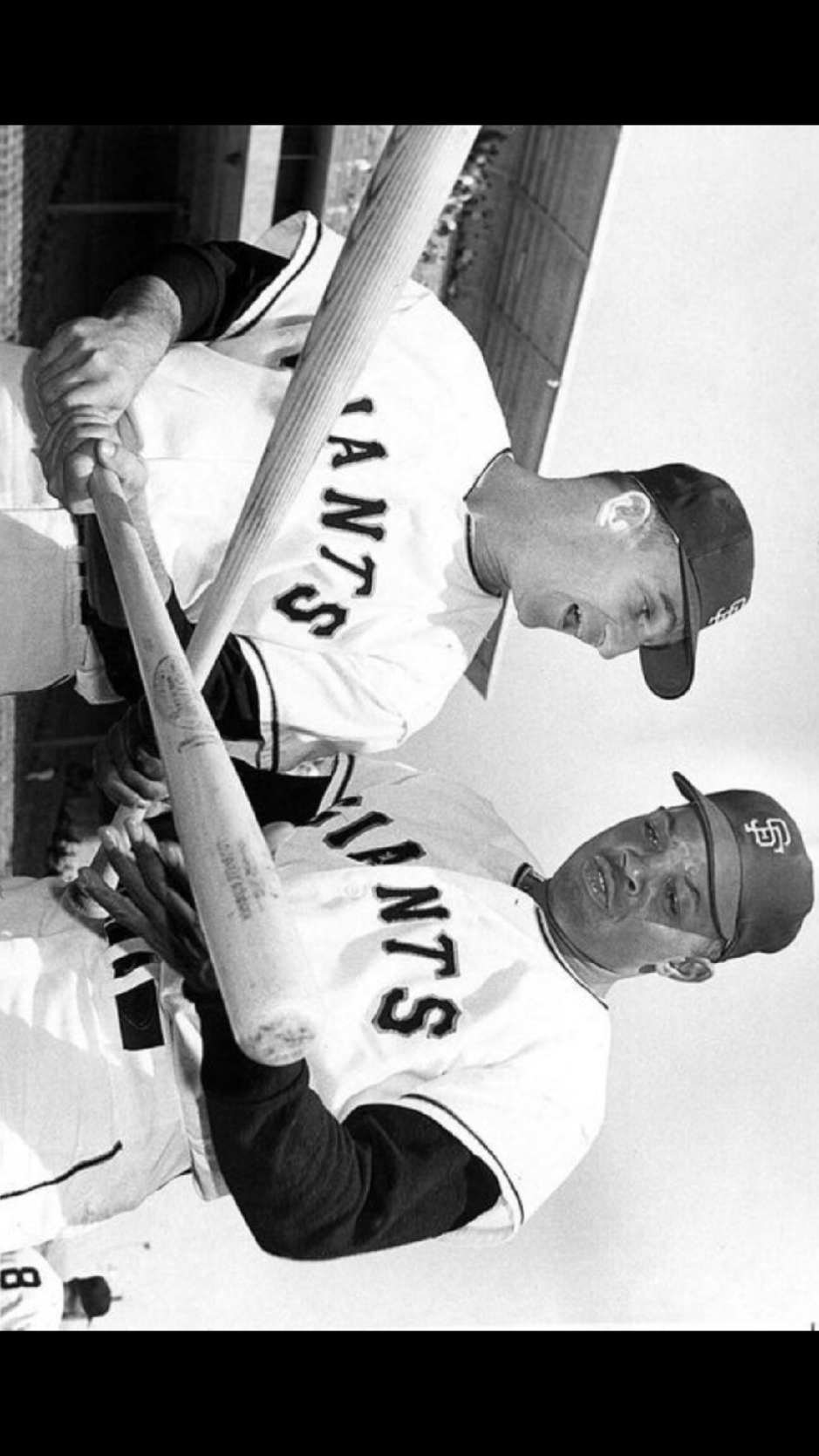
San Francisco Giants pitcher Warren Spahn (left) and centerfielder Willie Mays (right) talk over hitting in 1965 circa photo (photo from San Francisco Giants archives)

He Was A Giant?

Warren Spahn – LHP – 1965 – #21

By Tony “The Tiger” Hayes

SAN FRANCISCO–Apparently 360 lifetime victories wasn’t enough to sate the pitching appetite of baseball’s all-time winningest lefty. So after getting his walking papers from two clubs in less than a year, Spahn caught on with San Francisco in mid-1965 and chipped in three more victories before calling it a career.

What inspired the graybeard southpaw to remain chucking baseballs off a mound instead off tipping back lemonade on a country porch was open to much speculation that summer.

Critics claimed it was Spahn’s overly ambitious – some said delusional – goal of reaching 400 lifetime wins.

Others speculated it was the high-kicking ace’s burning desire to revenge the perceived shoddy treatment he received from his longtime club, the Milwaukee Braves, the previous season.

But according to Spahn, the decision to keep pitching was simple.

The Buffalo native wanted to win another World Series and the Willie Mays led Orange & Black offered the best path to the Fall Classic.

“Had I went to a club in the second division it would have looked like Warren Spahn was trying to milk baseball, like I was trying to hang on as long as I could,” said Spahn, speaking in the third person like a true superstar. “If I win a game here it means something. It’s a contribution towards a pennant instead of just another win for my record.”

Why Was He A Giant?

“I feel fine. I’m in shape. I can pitch.” Spahn proclaimed as he slipped into his familiar No. 21 in Giants colors at Candlestick Park on 7/20/65.

Why would a 17-time All-Star and author of two no-hitters have to recite the sports world equivalent of name, rank and serial number?

Well frankly, Spahn – who was aged 44 and looked closer to 64 – had been going through a rough patch and not just on his increasingly balding pate.

Before signing with the Giants, Spahn had began 1965 in the New York Mets rotation and it didn’t go well. After winning his first two decisions for the Amazins’ he lost his next eight.

With his ledger standing at 4-12, Mets manager Casey Stengel had seen enough and wanted to move Spahn – who was also serving as the Mets de facto pitching coach – into a swing role. But the 1957 Cy Young Award winner disapproved.

Spahn asked for, and was granted his release without much squabble. Spahn – who was beginning to get a reputation as sort of a grumpy old man – then passed unclaimed through waivers before signing with San Francisco.

“We know what the guy has done,” said Giants manager Herman Franks. “Let’s see what he can do.”

Making the move more appetizing to the Giants was Spahn’s sudden flexible regarding relief duty. Prior to refusing to pitch in relief for the Mets, Spahn vociferously rebuffed the Braves efforts to pitch him out of the bullpen.

“I feel I can help the Giants win the pennant,” the wizened hurler said.“I’ll work anyway the Giants want me to work, starting or relieving or both.”

Those statements came as a shock to Spahn’s former Milwaukee manager Bobby Bragen. The excitable skipper – who also had his club in contention in ‘65 – practically choked on his Red Man responding.

The spunky field general opined that Spahn’s stance on relief duty changed only after he passed through waivers without so much as a sniff.

“That shock some humility into him,” Bragen crowed. “When nobody wants you for a buck (the waiver price), I guess you’ll go anywhere.”

Before & After

After breaking into the majors in 1942, Spahn was forced to put his baseball career on hold to fight in World War II. By the time he recorded his first big league win in 1946, Spahn was already 25. He would spend the next two decades making up for lost time.

Though he was slight of stature and far from a flame thrower, Spahn would became the most victorious LHP in history.

What he lacked in zip, he amply made up by painting the corners of the strike zone with a good fastball and darting array of off speed offerings.

His pallet had no one dominant pitch. Spahn’s focus was control. Of his pitching approach, Spahn said, “If hitting is timing, than pitching is upsetting timing.”

Spahn won 20 games or more 13 times. He led the NL in victories eight times and topped the loop in complete games nine times, including seven consecutive seasons from 1957-63.

At the time of his last appearance with San Francisco, Spahn held the record for career strikeouts by a left-handed pitcher.

He was elected to the Hall of Fame in 1973.

Spahn’s last great season came in 1963 when he went 23-7, 2.60 at age 42 for the Braves.

The following season however he struggled and openly feuded with Bragen.

Based on Spahn’s age and drop off in sharpness, Bragen did not view a move to the bullpen so radical.

“He could become another Satchel Paige,” predicted Bragen. “His stuff could be there occasionally, but not on a consistent basis.”

Ultimately however, Bragen said Spahn was was only thinking about himself.

“I came to look upon him as a movie star who is great when you see him on the screen, but isn’t what you expect up close,” a revved up Bragen complained.

And he wasn’t done bloviating, adding:

“Spahn’s personal goals have always obliterated everything else. He had only a mild interest in the team. He is propelled by ego. Ego is in fact what made him a great pitcher. But I never felt that our team effort was as important to him as his personal desires.”

Ouch.

He Didn’t Get His Own (Giants) Bobblehead Doll. But …

Just as advertised, Spahn spent his time as a Giant divided between the bullpen and as a spot starter.

Impressively he completed three of his 11 Giants starts and in the process and helped keep the SF in contention until the final days of the ‘65 season. Spahn’s Giants ledger read 3-4, 3.39 in 16 games. He made 11 starts.

The day Spahn joined the the Giants in July, the club was in fourth place, 5.5 games off the pace of the Dodgers. But by the second week of September, the Giants had leapfrogged everyone.

On 9/12/65, before more than 40,000 at Candlestick Park, Spahn tossed a complete game 9-2 win over the Cubs in nightcap of a Sunday double header sweep. With the wins, the Giants increased their first place lead over the Dodgers by two games.

“I’m thrilled to be part of this Giants club. Age doesn’t mean a thing,” said Spahn. “It’s what you can do.”

It was beginning to look as if Spahn’s goal of making it back to the World Series was taking shape.

The white hot Giants ripped off a 14-game win streak in September and after Juan Marichal whitewashed the Reds 4-0 on the road (9/20/65), the Giants were winners in 17 of 18 games. The surging Orange & Black led the league by 4 games.

The Giants were brimming with confidence and not afraid to show it.

Franks and Mays – who would win MVP honors that season with a monster campaign – each predicted the Giants were five wins away from securing the pennant.

Spahn went them one further, proclaiming: “They’ll never catch us now. We’ve got the momentum.”

But the Giants would drop their next two in Cincinnati and lost that precious momentum. The Dodgers would steam past SF to win the flag by two games and eventually defeat Minnesota in the World Series.

Spahn – who would announce his retirement after the ‘65 season – made his final major league appearance vs. the visiting Reds (10/1/65). Spahn was the sixth pitcher in a conga line of eight SF hurlers in a 17-2 blowout by Cincinnati, allowing one run in a third of an inning.

Giant Footprint

A career long National Leaguer, Spahn pitched 119 career games vs. the Giants, posting a 56-43 record, including six shutouts and his second of two career no-hitters (1961). Spahn also slugged eight career HR vs. the Orange & Black- his most against any one opponent.

One constant foe in his battles with the Giants was another future Hall of Famer whose bronze likeness currently sits prominently at Third and King streets in SF.

In the late spring of 1951, Spahn took the mound as a Boston Brave at the Polo Grounds (5/28/51) to face the Giants and a much hyped rookie who had yet to deliver on his promise.

After starting his big league career 0-for-12, the fresh faced player was beginning to lose confidence in his abilities as he cautiously stepped into the box to face Spahn in the bottom of the first with two outs and the bases clear.

The young Giant took one pitch for a strike and then took a mighty cut sending a soaring drive over the left field roof of the old horse shoe shaped ball yard for his first major league hit and home run.

That rookie was none other than a 19-year-old Mays. It would be the start of a long rivalry between the two.

Mays would go on to have 222 more official at bats against Spahn. He batted .305 and bashed 17 additional career long balls off the famed twirller.

Besides the initial round tripper, Mays’ most noteworthy homer off Spahn would come 12 years later on a cold and windy mid-summer Tuesday night at Candlestick Park (7/2/63).

That was the night that the 41-year-old Spahn and 25-year-old Marichal locked horns in the ultimate pitching duel. It played out more like a death march as both legends took shutouts deep into the night.

From all accounts the game should have ended in the Giants favor in the ninth after Willie McCovey smoked a laser down the right field line and over the fence that umpire Chris Pelekoudas incorrectly ruled foul. The teams soldiered on with no score.

After Marichal retired Norm Larker on a come backer to end the top of 16th frame, the score board featured a long line of zeros. Just as astonishing there was no stirring in either bullpen. The pitchers would throw in excess of 200 pitches each that night.

After Spahn retired Harvey Kuenn on a fly ball to start the Giants half of the 16th, Mays stepped up to meet his old foe.

Though both the Braves and Giants had relocated to new cities since their initial meeting, Spahn and Mays were each wearing virtually the same uniforms they had on in ‘51.

Unfortunately for Spahn, the result on the field was the same as 1951.

After going 0-for-5, with a walk all night, Willie decided it was time to go home, and on the first pitch he powerfully connected with Spahn’s first offering and powered a bolt through the Candlestick bluster and over the left field fence for a game winning solo homer and a 1-0 Giants victory.


He Was A Giant? The Duke of Flatbush a Giant? Pure blasphemy!

Former San Francisco Giant Duke Snider who played for San Francisco for just one season 1964 (San Francisco Giants archives file photo)

HE WAS A GIANT?

Duke Snider – OF – 1964 – #28

By Tony the Tiger Hayes

The Duke of Flatbush a Giant? Pure blasphemy

To old school New Yorkers, the thought of a legendary Brooklyn Dodger – decked out in Orange & Black is about as incongruous as putting ketchup on a hot dog or passing up an opportunity to jay-walk.

But it happened in 1964, when Duke Snider, the iconic 1950s Dodger, turned up in Giants colors in the curtain closing campaign of a spectacular Hall of Fame career.

As a Giant, the 38-year-old Snider had clearly slowed as he ambled about the dugout resembling a wizened coach. He had an fluctuating waistline and steel gray sideburns that contrasted vividly against the midnight black of a Giants cap.

Frankly, Snider’s on-field performance did not belie his appearance. With his CF days behind him, Snider made just 34 starts for SF – his position divided between LF and RF. In 91 games, Snider batted . 210, 4 home runs, 17 RBIs – all career lows.

But there was no denying the prestige Snider added to a Giants club already teeming with all-time greats.

That ‘64 San Francisco club featured no less than six future Hall of Fame players: Willie Mays, Orlando Cepeda, Gaylord Perry, Juan Marichal, Willie McCovey and the Duke.

Throw in World Series Perfect Game pitcher Don Larsen, former Rookies of the Year Harvey Kuenn and Jack Sanford, two out of three Alou brothers (Matty and Jesus) and the first Japanese-born big leaguer : Masanori Murakami, and the Giants were box office gold.

In a tightly packed National League, the ‘64 Giants would finish in fourth place with a fantastic 90-72 record, three games behind the World Champion St.Louis Cardinals.

Though his final numbers we’re pedestrian, Duke, née Edwin Donald, had his most notable moment as a Giant early in the season against the Dodgers.

Why Was He A Giant?

In 1963, after 16 seasons a Dodger, Snider was dealt to the woeful expansion New York Mets.

Snider had seen his playing time dwindle with Los Angeles, and he had openly questioned manager Walter Alston’s strategy in the Dodgers 1962 playoff series loss to the Giants.

On one hand Snider wanted to see how much he had left in the tank. But Duke’s feelings were still hurt by the trade.

Despite helping the Dodgers to their first west coast World Series title in 1959, Snider was not the same ball player in Los Angels as he had been in Brooklyn. His knees were achy and the Dodgers had young talent brimming in the minor leagues. As his time in Los Angeles winded down, Snider found himself losing playing time to the likes of Tommy Davis, Willie Davis and Ron Fairly – all bonafide big league talents.

So the the Big Apple beckoned and the slugger – who once belted 40 or more HRs in five consecutive seasons with Brooklyn- was returning to a city that truly adorned him.

Though the transaction was essentially a public relations move, Snider was still a decent hitter. He would give the Mets a much needed established star after the club went a dreadful 40-120 in their first year of existence.

But Snider’s return to New York was bittersweet.

Though appreciative of the overwhelming fan support, the Mets inadequacies gnawned at the prideful athlete who had never played on a losing ball club with Brooklyn.

Duke was the Mets All-Star Game representative in 1963, but the infamously bumbling club was only marginally better than their maiden season – losing an embarrassing 111 games.

Snider was determined not to end his storied career as a member of the slap-stick comedy routine called the “Amazins.”

“This can drive you out of your mind,” said Snider the following spring when he still found himself on the Mets roster. “You go crazy on a team like this.”

For the sake of his own sanity, Snider practically begged to be traded. He got his wish when his contract was sold to San Francisco.

“Just the opportunity to play for a contender makes me feel younger. I can play two or three more years. It means a lot more when you go up to the plate for something more than individual achievement,” he said.

Before & After

The Golden Age of New York baseball in the 1950s, the game was dictated from center field.

The best player from each NY club during that glamorous era roamed CF. Yankee Stadium had Mickey Mantle, the Polo Grounds’ vast emerald acreage was the playground of Willie Mays and Ebbets Field’s lawn was the domain of Snider’s.

Career-wise; Snider clearly ranks third of the trio. But during a four -year stretch from 1953-56, they were practically equals. Over that period, Snider averaged .320, 42 HR and 124 RBI.

The Duke led Dodgers won the pennant five times and one World Series once during his five borough tenure from (1948-57). During that time frame the Giants captured the pennant twice – winning the World Championship in 1954 – and each season, the Dodgers came in second.

The blood rivals had countless battles in which Snider cemented his legendary pedigree.

When the Dodgers moved to Los Angeles in 1958, Snider was going home, having been born and raised in Southern California.

Snider became the first batter to reach base in the first big league game ever played in California, when he walked in the first inning vs. the Giants at SF’s Seals Stadium (4/15/58).

Though he was one of several Brooklyn stars to make the journey west, Snider was 34 and his numbers declined in California.

In his final at bat in the majors, Snider singled as a Giants pinch hitter off the Cubs Lindy McDaniel in a 10-7 home loss (10/3/64).

He was released after the season and soon announced his retirement.

Snider would finish his career with a lifetime average of .295 with 407 HR and 1333 RBI. He entered the Hall of Fame in 1980.

He Didn’t Get His Own (Giants) Bobblehead. But…

Snider introduced himself to SF by going a deflating 0-for-13. Then SF visited LA. In the Saturday night tilt of a three game series (5/2/64), Snider found his groove.

In his first at bat, Snider cracked a single to right and then came home on a Jim Ray Hart triple. Dodgers starter Joe Moeller carried a 4-2 lead into the ninth, but he walked McCovey on four straight pitches to to start the frame. On the next pitch, Duke hit a searing drive over the head of Frank Howard and into the Dodger Stadium right field pavilion to knot the score. SF would win 5-4 on a 12th inning knock by Chuck Hiller.

Giant Footprint

During the prolonged bitter baseball strike of 1981, obscure songwriter Terry Cashman released a nostalgic day novelty record titled “Talkin’ Baseball (Willie, Mickey and the Duke).”

A surprise hit, the track, dripping with Americana, was a paean to a simpler baseball stars could cure a nation’s ills with a swing of the bat.

The song covers on the sports most romanticized era of the 1950s through the early 1980s – with the lyrical refrain returning to the kicker “Willie, Mickey and the Duke.”

Of the more than two dozen baseball figures name-checked in the lyrics – 10 of them have ties to the Giants, which is more than any other team, including of course “Willie and the Duke.”


Twenty- Eight Years Ago Larry Carter Almost Became the Answer to a Horrible Giants Trivia Question

(truthfinder.com/find/larrycarter file photo) Former San Francisco Giants pitcher Larry Carter is the subject of Tony the Tiger’s column He was a Giant?

Twenty- Eight Years Ago Larry Carter Almost Became the Answer to a Horrible Giants Trivia Question.

By Tony “The Tiger” Hayes

Larry Carter – RHP – 1992 – #52

He Was A Giant?

There’s a good chance that even the most attentive Giants fan would shrug and mutter “never heard of him” at the mention of Larry Carter.

But if baseball’s back room dealings had turned out differently in the fall of 1992, Giants fans would probably have a much different reaction to Carter – a West Virginian right-hander with nice curve and decent split-fingered fastball

Had the National League not reversed course and put the kibosh on the sale and relocation of the Giants to Florida’s Gulf Coast, the name “Larry Carter” would have become the answer to a most horrible trivia question.

“ Who started the final home game in the history of the San Francisco Giants.”

After decades of featuring some of most dazzling and colorful pitchers in the business (Juan Marichal, Gaylord Perry, John Montefusco, to name a few) it appeared the Giants would play their last game in The City with the anonymous, 28-year-old Larry Carter on the mound.

That’s right, Larry Freakin’ Carter.

Why Was He A Giant?

The Giants already had one foot squarely in Tampa Bay when Carter made his big league debut with SF in September of 1992.

Seven years into his professional career, Carter finally got a call to the bigs leagues three weeks after discontented Giants owner Bob Lurie announced the sale of the club.

After more than a decade and four failed ballot measures to construct a new downtown ball park, the frustrated Lurie had had enough. He wanted out.

So on 8/7/92 Lurie announced he had reached an agreement in principle to sell the Giants to a group of investors from Tampa for $115 million.

Once the sale was ratified, the club would wave “Bye Bye Baby”to the Golden Bay Area and say hello to the Humid Bay Area.

The news caused a dour and depressing air to hang over the Giants team and its local fan base.

It was in that environment that the wide-eyed Carter walked into a big league club house for the first time in September of 1992.

“I feel I’m a guy with a big heart,” said Carter. “If you believe you can do it, you can do it. You set your mind to it.”

Before & After

Originally a 10th round draft pick of the Cardinals in 1986, Carter was inked by the Giants as a minor league free agent in 1988 after missing all of 1987 with an elbow injury.

Though never viewed as a big time prospect, Carter proved his worth as a reliable organizational arm -capable of getting outs as both a starter and reliever.

After going 9-8, 2.95 at Double-AA Shreveport in 1991, Carter followed up with a solid campaign at Triple-AAA Phoenix in 1992, posting a 11-6, 4.37 ledger.

Upon joining SF, presumptive lame duck manager Roger Craig figured he had little to lose by inserting the eager Carter into the Giants starting rotation.

Carter would register a decision in each of his six Giants starts, going 1-5, 4.64.

Going forward as we now know – the National League never wanted to vacate the lucrative SF market. So they held off voting on the move to Florida long enough to find a local SF based ownership group.

In the end the Tampa group got huffy, about being jacked around – but SF nevertheless kept the Giants.

Carter however was not part of the Giants effort going forward.

After 1992, he remained in the minors the rest of his playing career.

He Never Got His Own Bobblehead. But…

Before the Giants were rescued from the evil intentions of Tampa, it looked likely that after decades of intense, personal battles, the Giants long-standing territorial rivalry with the Dodgers was coming to an sad end in 1992.

Starting in 1993, the Giants and Dodgers would be geographically separated for the first time ever.

Whether it was a coincidence of the Giants forthcoming move or not, both teams performed as if in a drugged malaise the final stages of the ‘92 campaign.

With the threat of relocation looming, the Giants sputtered to a 5th place finish, with a final record of 72-90.

The Dodgers meanwhile weren’t going anywhere – literally… and figuratively.

Sure, Chavez Ravine was still a destination spot for Angelinos – but in the standings, the Dodgers were stuck in the La Brea Tar Pits.

Tommy Lasorda’s 1992 charges finished with the Dodgers worst record since moving to California – 63-99 – finishing in the cellar of the National League West for the first time.

But when Carter took the ball at Dodger Stadium on 9/11/92, it was still SF vs. LA and that still meant something.

Carter faced a lineup that included Eric Karros, Lenny Harris and Mitch Webster and he earned the only victory of his big league career, allowing just a single run in seven frames in a 7-3 Giants win.

“I think his adrenaline was flowing pitching here against the Dodgers,” manager Craig said. “He was aggressive and kept coming after hitters.”

Giant Footprint

On Sunday 9/27/92 more than 45,000 fans would cram into Candlestick Park for Fan Appreciation Day. It was the final home game of the ‘92 regular season vs. Cincinnati. And it was also looking more and more as if the Giants were playing for the final time in SF.

Despite the near-sellout, the atmosphere felt like a solemn funeral.

Fans circulated throughput the Stick as if in a daze, some carrying signs begging the team to stay; the rest just carrying heavy hearts.

Among the crest-fallen fans in attendance was the greatest Giant of them all – Willie Mays.

“You’re looking at a lot of tradition here. You’re talking about Giants tradition,” Mays said. “Now if you go to Tampa, you’ve got to change all that. I hope they stay here. I mean, I live here!”

So it was that Larry Carter took the mound vs. the visiting Reds that afternoon- an 85 -degree Indian Summer special.

Cincinnati jumped on Carter for a couple of runs early, but then the rookie settled down, and pitching well into the sixth inning. Still he took the loss in the 3-2 Reds win.

It was a few more anxious weeks before the dust settled and Giants fans learned the team was here to stay.

The Giants would return in 1993 to much fan fare, with free agent signee Barry Bonds at the center of a 103-win club.

But Carter wasn’t a part of it.

As it turned out that late September contest vs. the Reds wasn’t San Francisco’s final big league home game after all – but it was was for Carter.


He was A Giant? Former first baseman Mike Laga feature by Tony the Tiger Hayes

Former San Francisco Giants first baseman Mike Laga is the subject interest of Tony The Tiger’s feature “He Was A Giant?” (photo from pinterest.com)

HE WAS A GIANT? Mike Laga

Mike Laga – 1B – 1989-90 – # 21

By Tony The Tiger Hayes

He was a Giant?

Mike Laga, a persevering big lug from New Jersey whose hapless baseball story could have served as inspiration for any number of Bruce Springsteen blue collar anthems, never could catch a break in an itinerant 13-year professional career.

Despite producing Ruthian minor league numbers and receiving gold stars for his determination, Laga never got an opportunity to play a full season in the majors.

Laga would introduce himself to SF fans with a sizzling debut performance in 1989, but like his stops in Detroit and St. Louis, Laga never received much of an opportunity going forward for the Orange & Black.

In parts of two seasons backing up Will Clark with SF, Laga would appear in 40 games, batting .191 with three HRs.

Why Was He A Giant?

Hall of Fame manager Sparky Anderson once championed Mike Laga by saying of his young Detroit Tigers charge: “He will make you forget about every power hitter who ever lived.”

That verbose prediction never materialized, but Giants manager Roger Craig, a former Tigers coach, remembered Laga fondly and recommended the Giants ink the left-handed hitter as backup 1B and pinch hitter for the 1989 season.

Before and After

Creaming minor league pitching was never Laga’s issue. By the time he received his first big league call up in 1982, he had already slammed 77 home runs in three minor league campaigns. He would go on to sock a total of 255 minor league bombs. In parts of nine big league seasons, Laga would muscle 16 balls out of the park.

At times, Laga was not shy about voicing his big league frustrations. After spending three seasons toiling for Detroit’s Triple-AAA franchise in Evansville, IN, Laga had had enough.

“I hate it in Evansville,” he blurted one spring. “I don’t want to go back!”

He got his wish, but only because unbeknownst to Laga, the Tigers had moved their top minor league affiliation from Evansville to Nashville.

He Never Got His Own Bobblehead. But…

In his debut game with SF, Laga would deliver the kill shot in a remarkable win that was the baseball equivalent of the movie “The Expendables.”

After the Giants fell behind early at Cincinnati (9/4/89), Giants manager Craig began removing most of the starters in favor of backups and September call-ups such as Laga.

In the end, when the Giants had overcome a 8-0 deficit to beat the Reds 9-8, Craig would call the riveting victory: “the biggest game I ever won as a manager.”

“I’ve got a lot of guys. I want to give them a chance to play and boy did they ever play,” crowed Craig. “The Killer B’s (the backups) did a hell of a job, but the Killer C’s (the call-ups) won it.”

Trailing 8-0 heading into the seventh, the Giants were literally situated behind the eight ball when their bats began rumbling to life as Will Clark and Terry Kennedy crashed solo long balls off Reds starter Tim Leary.

But then Craig pulled both Clark and Kennedy, seemingly satisfied that the Giants had at least made a decent effort in what appeared to be an inevitable blow out.

Laga, who subbed for Clark, received his first Giants at bat in the eighth with two outs and infield understudy Ernie Riles on first base.

The burly 1B turned on a Leary fastball and crushed it deep into the Queen City night for a home run to make it an 8-4 game.

The Giants were now officially on a roll and that roll would not be slowed.

Flame -throwing , but wildly erratic reliever Ernie Camacho came on to face the Reds in the eighth and he struck out the side, fanning Mariano Duncan, Ron Oester and Herm Winningham in tidy fashion.

Then the Giants bats went back to work in a furious ninth.

With Norm Charlton now on in relief, super utility-man Greg Litton led off with a pinch single. Pinch hitter Candy Maldonado, scalded a line drive but it was right at Luis Quinones at second for an out.

Next, end-of -the – bench guy, Donnell Nixon slashed a single to center field , with Litton stopping at second. Grizzled pinch hitter Bob Brenly reached first on an error by 3B Chris Sabo to load the bases.

John Franco was then summoned to pitch to gray beard Chris Speier – yet another SF pinch hitter – and the veteran infielder ripped a single to center to make it 8-5.

The Reds flop sweat was now starting to form a puddle on the Riverfront Stadium artificial turf.

Catcher Bill Bathe – baseball’s version of Moses – was next, AND, he singled up the middle to plate two runs – making it 8-7.

Rob Dibble came in to face Riles, and yep, the lithe hitter slapped a knock to center to plate Speier and send pinch runner Scott Garrelts to third.

Down a touchdown and a two point conversion just three innings prior, the surging Giants had boomeranged to tie the flailing Reds 8-8.

It was the star- crossed Laga’s turn next, and with steam virtually pouring from Dibble’s nostrils, the new Giant tattooed a sharp two-hopper between first and second base to plate Garrelts with the go ahead run.

The Reds would go on to load the bases off closer Steve Bedrosian in ninth with one out. But Bedrock would retire Sabo on a pop up and negate Dave Collins on a routine grounder to close out a most miraculous 9-8 victory.

After the game the Giants clubhouse turned into a grand jubilee.

“Everybody was screaming and hollering. I’ve never seen anything like it. I’m hoarse from all the yelling,” said pitcher Jeff Brantley.

“That was just a great win,” said Kennedy. “No matter what happens, this game will have a place in Giants lore.”

Keeping with his untimely history however, the man of the hour was no where to be found when his teammates began the merrymaking with chats of “Lags, Lags, Lags!”

“I was outside doing a radio interview,” a disappointed Laga said. “I don’t know what happened.”

Giant Footprint

Wherever Laga traveled in his Major League career his path was blocked by players with deep Giants ties.

At the time of his first major league call up in 1982, aging ex-Giants Enos Cabell and Mike Ivie we’re sharing the 1B position.

While passing those two veterans was not seemingly insurmountable for 1983. But Cabell repaired his swing and rebounded with a career high .311 campaign in 1983, keeping Laga in the minors.

Cabell soon skipped Motown, signing with his former Houston team.

But instead of turning to Laga, the Tigers aggressively pursued SF slugger Darrell Evans who seemingly found the fountain of youth in 1983 – belting 30 HRs while based at Candlestick Park. The Tigers also made a key trade during spring training acquiring star reliever Willie Hernandez AN ex-Giant, the steady and slick fielding 1B Dave Bergman from Philadelphia.

In 1984, a dominant Tigers team would win the World Series with Evans and Bergman, sharing 1B/DH duties. Again Laga would spend most of ‘84 in the minors.

Laga moved on to St. Louis in 1986, but without the DH in play, he was limited to 1B duty. The only problem was, the former Giants slugger Jack Clark was firmly entrenched at 1B. Clark was gone in 1988, but in a 40 game trial with the Cardinals, Laga did not produce.

By the time he reached SF, Laga was pretty much labeled a 4A player. And with Will Clark in front of him, he had no shot of seeing any meaningful action.

It wasn’t until 1991 when Laga received a shot to play in the majors- however it was the major leagues of Japan.

Laga flourished for the Fukuoka Daiei Hawks of the Pacific League, playing in 124 games and batting .236, 32, 81.

At last there were no former Giants blocking his path – not even ex-Yominuri Giants.


He Was a Giant? Former A’s and Giant pitcher Brian Kingman feature By Tony the Tiger Hayes

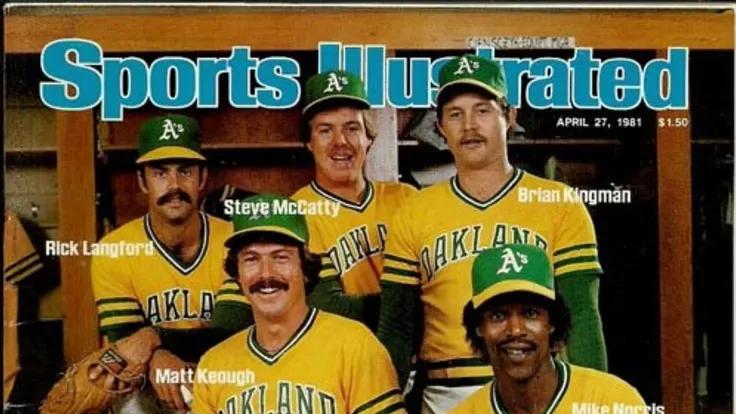
Former Oakland A’s and San Francisco Giants pitcher Brian Kingman featured with the A’s Five Aces in 1981 on Sports Illustrated (top far right) is today’s He Was A Giant? Feature (file photo from newsbreak.com)

HE WAS A GIANT?

By Tony The Tiger Hayes

BRIAN KINGMAN: Oakland’s Big Time Loser, Was Worse with San Francisco

Brian Kingman – RHP – 1983 – # 25

If a 20-game win season is the magnum opus for a starting pitcher, you would figure that 20 losses would be the equivalent of finding a turd in the punch bowl.

But not for Brian Kingman.

Since losing 20 games for the 1980 Oakland A’s, Kingman has not only accepted his place in the 20-game loss fraternity, he has became the ignominious club’s self-appointed president, treasurer and spokesperson.

His 20 -game loser status has became Kingman’s calling card – his reason to be remembered.

“I feel sorry for all those guys who (only) get to 19 wins – all that frustration and never be talked about,” Kingman, tongue pressed only partially in cheek, once said. “They might as well take the final step and lose 20.”

Kingman did not lose 20 games for the Giants in 1983 – in fact he had no desisions in the three games he appeared.

But the Los Angeles native did something as a Giant that he didn’t do quite as often as you might have thought in his Oaklandish 20-game loss season.

As a Giant, Kingman pitched exceptionally ghastly.

Why Was He A Giant?

After going 4-12, 4.48 for the 1982 A’s, Kingman was dealt to the Red Sox in a cash deal. But Kingman failed to make the Boston roster the following spring and wound up hooking on with San Francisco.

He debuted in Orange & Black at Candlestick Park in a pair of games vs. Montreal in early June and was promptly battered by Expos hitters.

After two relief outings he was suffering from a 13.50 ERA, which was worse than the 9.00 figure posted by slugger Dave Kingman after his two random mop-up relief appearances for the 1973 Giants.

Before & After

As a rookie in 1979, Brian Kingman was one of the bright spots for Oakland, going 8-7, 4.31 for a confused Green & Gold club that lost a staggering 107 games.

But the A’s made an incredible turnaround the following season after the hiring of fabled firebrand skipper Billy Martin.

An unforeseen Oakland team stunned the Junior Circuit posting a winning record (83-79) with an appealing brand of baseball that relied on daring base running, power hitting and macho starting pitching.

A’s iron -armed starters would complete a staggering 94 games that season. Kingman threw 10 of those full-games, but even that meaty figure ranked fifth among A’s starters.

Despite his very reasonable 3.83 ERA over 211.1 innings, Kingman frequently pitched in tough luck in ‘80.

He lost six one-run decisions. The A’s were shutout in five of his starts and OakTown scored a paltry average of 2.8 runs in his 30 starts.

Kingman had lost nine decisions in a row when Martin mercifully (Billy had a ❤️!) yanked the righty from the rotation late in the campaign with 19 losses on his ledger.

Still, like Wilbur Wood, Jerry Koosman and Phil Niekro, the three previous 20 game losers prior to Kingman – it seemed Kingman was destined to be a historic flop.

Ironically, Kingman’s 20th loss came in relief in a game he would have normally been scheduled to start.

Kingman was forced into the game in the second inning of a game vs. the visiting White Sox when starter Matt Keough was pulled from the game with an injury.

Kingman would allow just two earned runs over 5.2 innings of work in a 6-4 home defeat, but he absorbed the loss when the A’s kicked the ball around like FC Barcelona, committing four errors (9/25/80).

“I thought I was going to be stuck 19,” Kingman quipped at the time.

More than 20 seasons would pass before Mike Maroth of Detroit became baseball’s next 20 game loser. There have been none since.

By the way, the Giants have not had a 20 game loser during their SF era.

He Never Got His Own Bobblehead. But…

Several days after his distressing Giants debut, Kingman made his third and final Giants appearance at Atlanta and pitched decently – allowing three hits and one unearned run over two innings in a 7-3 loss to the Braves (6/10/83).

But it was too little, too late and Kingman was soon optioned to Triple-AAA Phoenix. He pitched in the Giants system through 1984 but never returned to the majors.

Giant Footprint

In the World Series era, 189 pitchers have lost at least 20 games in a MLB season. The group includes several excellent pitchers including a few of immortals, including Hall of Famers Niekro, Steve Carlton, Cy Young and Walter Johnson

That fact has helped Kingman salve the sting of being labeled a big-time loser.

“That would be like if you were a scientist getting linked to Einstein or something,” Kingman said. “I was being mentioned with Walter Johnson and Cy Young.”

He Was A Giant? Jose Cardenal 1963-64 seasons feature By Tony the Tiger Hayes

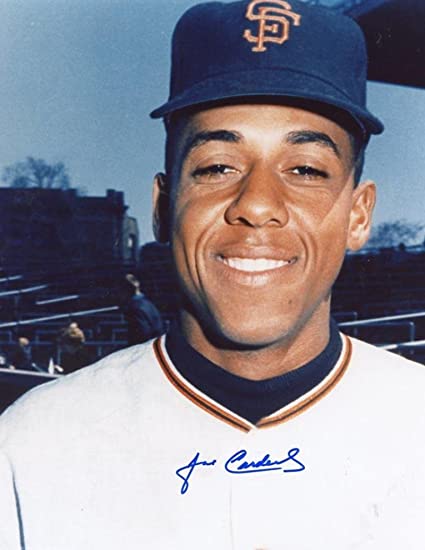
Jose Cardenal as a San Francisco Giant who played in San Francisco during the 1963 and 1964 seasons (Amazon file photo)

HE WAS A GIANT?

JOSE CARDENAL – OF – 1963-64 – # 10

By Tony the Tiger Hayes

If you collected baseball cards as a kid in the 1970s there were three givens: “bubblegum” that crumbled into brittle shards the moment you touched it; hideous air-brush art work, and, finally, the incremental Chia-Pet like growth of Jose Cardenal’s unwieldy Afro. (Think TV artist Bob Ross.)

A fiery competitor with a stylish hairdo, Cardenal was a career .275 hitter and a familiar presence on the MLB scene for parts of five decades as both a player and coach.

But before the Cuban fly chaser picked his hair out to resemble a spinning classroom world globe, Cardenal broke in with the Giants, appearing in 29 games over 1963-64.

Why Was He a Giant?

Cardenal was one of the last ball players to escape Cuba before Fidel Castro shut the island’s borders. He was just 17 when the Giants paid him $200 to sign with the organization in 1960.

Though off the field he struggled with assimilation process – fueled by being cut off from family back in Cuba – Cardenal had no such issues in the batters box and produced gaudy minor league numbers.

Cardenal was just 19 when he broke camp with SF in 1963. He came and went a few times over the next couple of seasons but never could crack SF’s All-Star studded lineup.

Before & After

Despite great reviews for his on field play in the Giants farm system – hitting for power and stealing bases like a bandit – Cardenal developed a reputation of being a bit of a scoundrel.

As a young man he got into scrapes and arguments with teammates and ran afoul of team management and opposing clubs.

In one 1962 incident, when he was with the El Paso Sun Kings, Cardenal menaced the opposing Austin Senators dugout with a letter opener.

Mouthy bench jockeys had gotten under the young Cuban’s skin by calling him a “Castro Lover” and a “Communist.”

Cardenal became so enraged he considered skinning an entire minor league club. He was stopped however before he could initiate his Davy Crockett routine.

“There’s a lot behind the boy’s flare up,” said El Paso manager George Genovese after Cardenal was placed on Texas League probation. “He is immature all right but he hasn’t been home in a long time and hasn’t seen his family in two years. And there’s a language problem.”

Due to his hair-trigger temper and the fact that the Orange & Black were already brimming with talented OF prospects, the club moved on from Cardenal after the 1964 campaign, trading him to the Angels in a swap for C Jack Hiatt.

Cardenal jumped from team to team for awhile before finding a home with the Cubs for much of the ’70s. He later appeared in the 1980 World Series with Kansas City.

From 1993-2003 Cardenal was a major league coach for several teams including the 1996 World Series Champion Yankees.

He Didn’t Get His Own Bobblehead Doll (Or Chia-Pet). But…

Cardenal smacked the only hit of his Giants career in his second MLB at bat, lining a two-run, pinch hit single to left off the Cardinals Curt Simmons. Cardenal was then nabbed however trying to steal second base in a weekday afternoon 4-3 home loss (4/24/63).

Giant Footprint

It was against the Giants that Cardenal assembled a career best six- hit game at Candlestick Park (5/2/76), batting 6-for-7 with four RBIs in a 6-5, 14-inning Chicago win at Candlestick in the matinee of a double header.

The last several innings of that game can be viewed on You Tube – providing a good look at Cardenal’s glorious Afro in action and a rare look at the Giants much maligned mid-1970s AstroTurf era.

Tony the Tiger does He Was A Giant? features weekly on http://www.sportsradioservice.com