Rodon Not the First Giants All-Star Game Snub – Willie Mac Denied a Spot 45 Years Ago

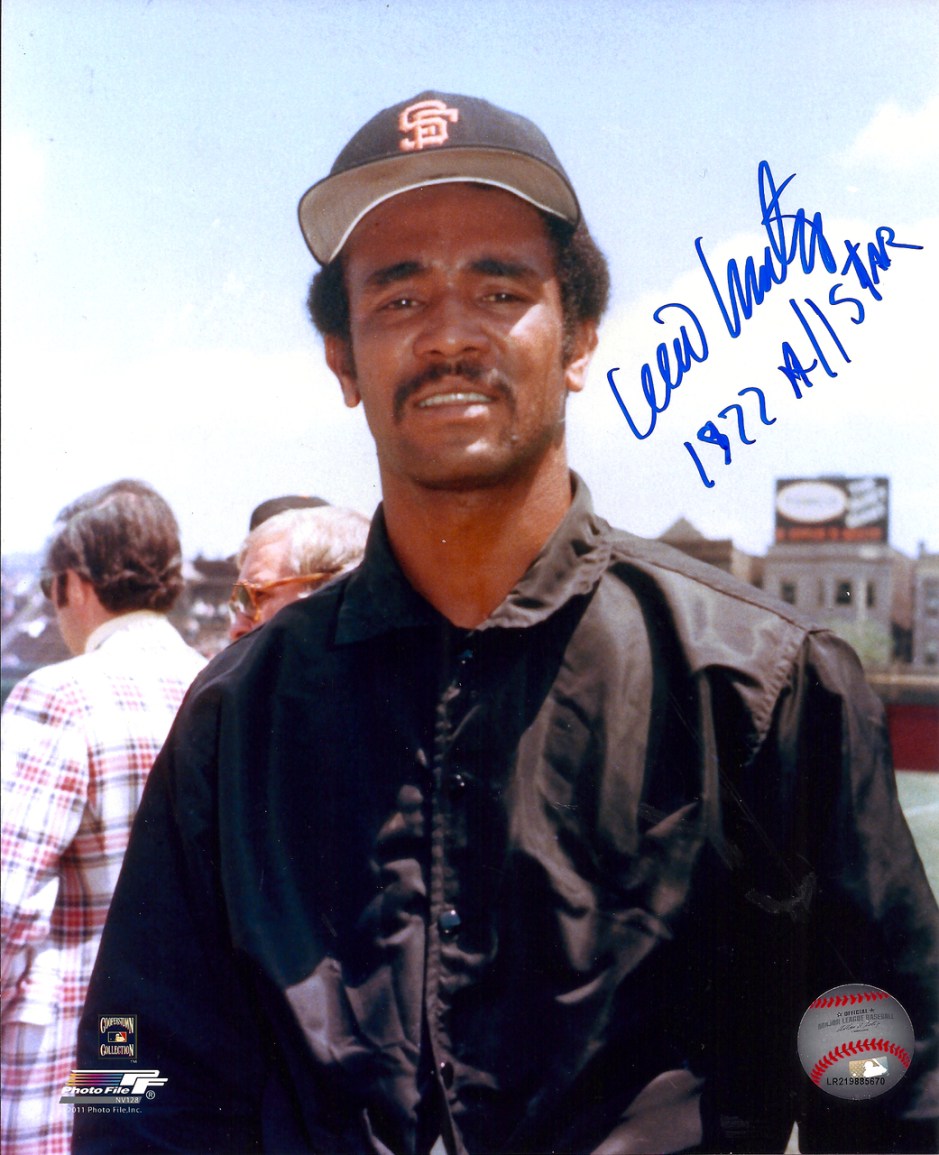
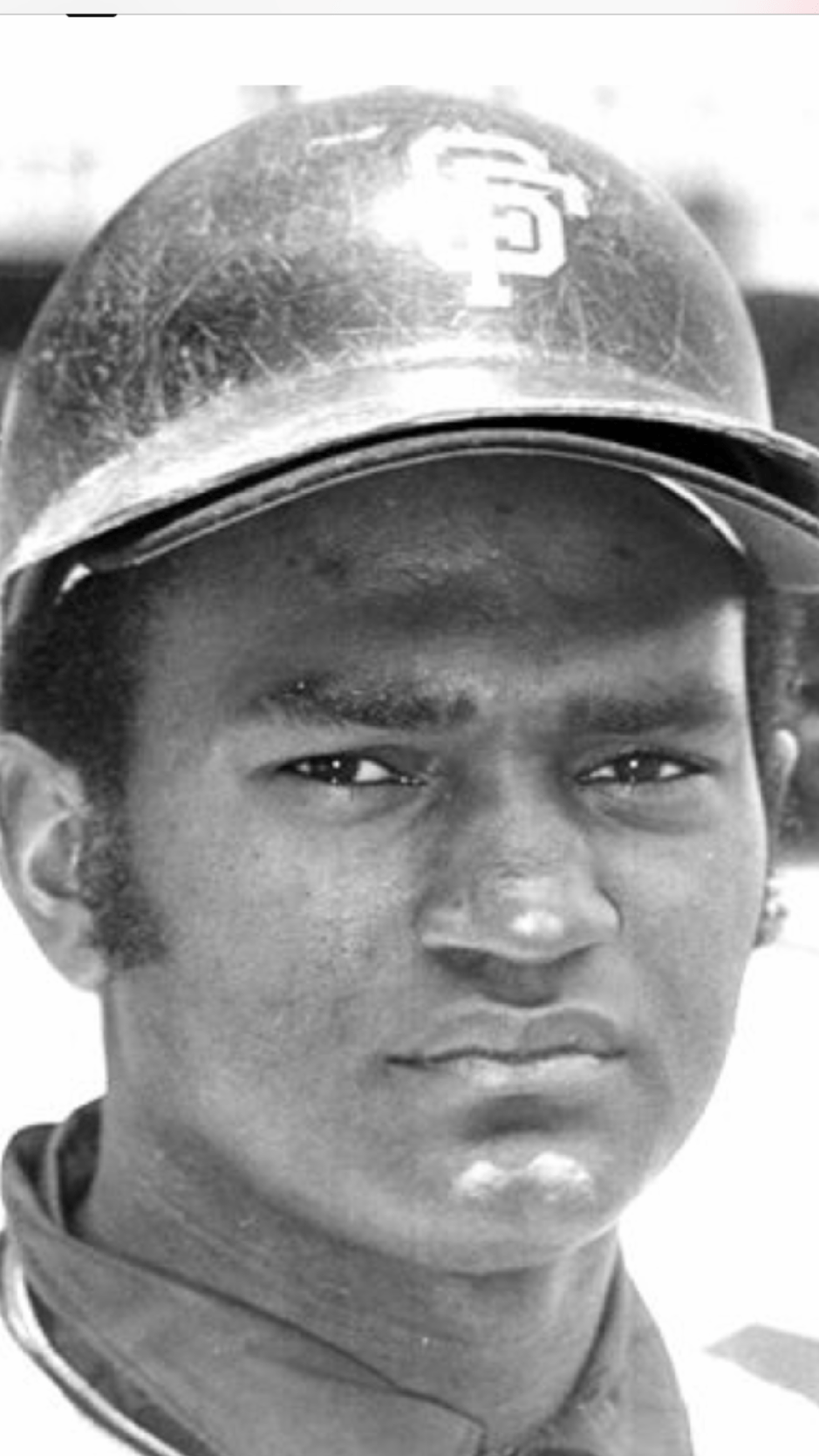
Legendary San Francisco Giants first baseman Willie McCovey did not get selected for the 1977 All Star Game in Yankee Stadium but had no hard feelings saying that other first basemen in the National League did as well or better than him. (photo from the MLB Hall of Fame)

By Tony The Tiger Hayes

SAN FRANCISCO–This week, Ashley Rodon did her best Tammy Wynette impression when the wife of Giants ace Carlos Rodon expressed shock and disbelief that her left-handed hubby was left off the National League All-Star team.

Mrs. Rodon’s “Stand by your Man” moment came on Twitter when she expressed her repudiation by thumbing the following golden nugget after the final All-Star rosters were released.

“Are you actually kidding…. 😂 Man leads the NL in WAR. Wtf,” Ashley Rodon wrote on Twitter.

Rodon has since been added to the NL roster as an injury replacement for Milwaukee’s Josh Hader.

An analytical dreamboat, Rodon – was on the AL All-Star team in 2021 as a member of the Chicago White Sox member – has been one of baseball’s most dominating pitching talents in 2022.

Besides WAR, Carlos Rodon’s 31 percent strikeout rate is second-best among NL starters and fifth-best in all of baseball. His 2.13 FIP is the lowest among National League starters, and his .202 opponents’ batting average is the fifth-lowest in the NL.

For you old schoolers, Rodon also had an 8-5 record and 2.70 ERA.

Though the most blatantly over looked pitcher this year, Rodon was not the only star hurler denied an All -Star nod.

Other tough-luck pitchers this season include White Sox pitcher Dylan Cease (2.45 ERA, 131 strikeouts), Seattle’s Logan Gilbert (10-3, 2.80 ERA) and Toronto’s ex-Giant Kevin Gausman (2.86 ERA).

On the offensive side, slugging Atlanta third baseman Austin Riley (.282, 23, 56), the Dodgers first baseman Freddie Freeman (.303, 11, 54), and Cincinnati third baseman Brandon Drury (.277, 18, 50) will also be sitting out the Mid-Summer Classic to be held at Dodger Stadium next week.

Of course this story is one that repeats it self like bell pepper every summer about this time.

Every season seemingly shoo-in candidates are left off All-Star rosters for varied reasons, including lack of roster space and the fact that every team must be represented.

Historically, the Giants have had their share of overlooked potential All-Stars.

One of the most notorious slighted players was Pablo Sandoval in 2009. The Kung-Fu Panda, in his first full season in the majors, was batting .333, with 14 homers and 35 RBI at the All-Star break that season but was passed over for a spot on the squad.

But arguably the most egregious All-Star Game omission in San Francisco history came in 1977 when a revitalized Willie McCovey was not chosen to represent the Giants in the All-Star Game played at the remodeled Yankee Stadium.

After playing the previous three seasons with San Diego and Oakland, the Hall of Fame slugger made a triumphant return to the the Orange & Black.

Mac had batted a combined . 204, 7, 36 for the Padres and A’s in 1976, and was no lock to make the Giants roster when he came to the San Francisco spring training camp in 1977.

But not only did the 38-year-old McCovey make the club, the long time Golden Gate treasure was the Giants top player.

McCovey scalded the ball the first half of the season and was batting a .284, with 14 homers and 36 RBI.

Among his exploits during the first half of the ‘77 season were a two home run performance (including a grand slam) in the same inning of a 14-9 win at Cincinnati (6/27/77).

McCovey also helped revive a long dormant Giants fan base, bringing back into the Orange & Black fold young adults who grew up rooting for the charismatic 1969 NL MVP and a new crew of young Giants fans.

It would have done wonders for the Giants had Mac received some national love on the All-Star broadcast.

After breaking in with an unforgettable 4-for-4 debut vs. Hall of Fame hurler Robin Roberts 1959 debut vs. Philadelphia at Seals Stadium McCovey quickly became a Giants fan favorite.

Mac helped lead the Giants to their first west coast NL pennant in 1962 and nearly knocked in the winning run of Game 7 of the World Series. Alas, McCovey’s fierce line drive was snared by New York’s Bobby Richardson, with two out in the ninth inning to end the series.

McCovey led the Senior Circuit in home runs in 1963 and 1968-69.

McCovey was also an All-Star Game mainstay during the prime of his 21-year career. Mac was the NL starting first baseman in 1966 and 1968-69. He also appeared in the 1963, and 1970-71 All-Star Games.

McCovey was voted unanimous MVP of the 1969 Mid -Summer Classic when he walloped a pair of home runs and collected three RBIs in the NL’s 9-3 win at Washington.

Because of his late addition to the Giants roster, McCovey’s wasn’t even listed on the ‘77 Gillette All-Star Game ballot. Though loyal Giants fans made a great effort to vote Mac in as a write in candidate, the Dodgers Steve Garvey ran away with the first base vote.

National League manager Sparky Anderson had an opportunity to bring McCovey’s inspirational comeback to a national audience, but he choose not to add McCovey to the NL all-star squad as a first base back-up, going with Atlanta’s first baseman Willie Montanez as the Braves only representative.

Had MLB reserved a spot on the All-Star roster for a popular aging veteran, like they began doing this season, McCovey most likely would have appeared in the ‘77 game.

San Francisco’s only All-Star representative in ‘77 was left-handed reliever Gary Lavelle. While Lavelle was certainly deserving of the honor – 6-4, 1.41, 11 saves – McCovey was also more than worthy.

Not only for his stellar performance that season but also as an honor for his career accomplishments.

Naturally McCovey, arguably the most humble and approachable superstar athletes in Bay Area history took the snub in stride.

“I’m leaving an open mind to it. I don’t care if you’re going for the first time or the seventh, it’s a big honor to make the team. I would have been tickled to go,” the 18-year big leaguer said at the time.

But McCovey knew there was only so much space on each team and didn’t want any special privileges handed to him based on popularity.

“There are also some other first baseman with better stats than me that didn’t make it,” McCovey said. “So why should I.”

He Was a Giant? Joe Pignatano C 1962 by Tony the Tiger Hayes

San Francisco Giants catcher Tony Pigatano trying to coral a live chicken with the help of stadium security later Giants pitcher Stu Miller threw his warm up jacket over the fowl and took him away (file photo from newspapers.com)

Joe Pignatano – C – 1962 – # 2

He was a Giant?

By Tony the Tiger Hayes

Dozens of players from Giants all-time great Juan Marichal to current Dodgers manager Dave Roberts have experienced life on both sides of the legendary San Francisco vs. Los Angeles baseball rivalry.

But catcher Joe Pignatano, who recently passed away at age 92, was the first to do it.

“Piggy” was also the first of only four players to play on pennant winning clubs with both original west coast major league franchises.

A member of the Dodgers’ 1959 World Series winning club, Pignatano also played for the 1962 Giants who took the Yankees to seven games of the World Series before bowing out.

No one could have blamed Pignatano if he felt a bit like Judas, the first time he buttoned up Giants flannels in 1962.

After all, he was born and raised in Brooklyn, had his heart ripped out by Bobby Thomson in 1951 and spent more than a decade on the Dodgers payroll.

But there was the career reserve receiver in 1962 warming up Giants pitchers and playing in seven games for the sworn enemy.

Despite seeing a thimble full of action before his departure from the club in July, Pignatano predicted a bright future for the ‘62 club early that season.

“Sure it’s early,” said Pignatano after San Francisco jumped off to a 33-14 start. “But I think we’re gonna win it.”

The native New Yorker was on the active roster when the Giants made their much ballyhooed initial visit back to the Polo Grounds to face the expansion Mets in June of ‘62.

An overflow crowd of 43,742 was on hand for the festival Friday night opener. The convulsive crowd was especially hyped to welcome home prodigal son Willie Mays.

“Hey, mayor,” Pignatano shouted out to Willie across the clubhouse after Mays clouted a solo home run and batted 2-for-5 in the 9-6 Giants victory (6/1/62). “You’re the mayor of this town alright. Did you hear all that cheering for you?”

The Giants swept New York in the historic four game series, but alas, Pignatano watched it all from the bullpen. He did not make it into a game.

Warming up pitchers comprised most of Joe’s duties in his time with the Giants. Despite being present on the roster through mid-July, he appeared in just seven contests, starting one solitary game.

With power hitting backstops Tom Haller and Ed Bailey sharing the catching load, there wasn’t much left over for the 32-year-old Pignatano.

In fact, the most attention the career backup received during his days in Orange & Black involved chasing a fowl.

Not a foul ball, mind you, but a real live rooster.

During a July game vs. the visiting Dodgers, a rowdy cock suddenly appeared on the field at Candlestick Park near the Giants bullpen and stomped angrily about the warning track.

The following day newspapers across the country ran wire service photos of an animated Piggy unsuccessfully attempting to shoo the annoyed red and black rooster off the diamond.

The game was momentarily suspended as a flock of Giants batboys and stadium security guards tried to coral the aggressive bantam.

Giants relief pitcher Stu Miller finally ensnarled the pissed off poultry by tossing a bullpen parka over the bird.

Why was he a Giant?

Pignatano was acquired from Kansas City prior to the 1962 season. Pignatano had seen his most extensive big league action for the Athletics, hitting .243 in a career high 93 games.

The Brooklyn born native credited K.C. skipper Joe Gordon with improving his batting stroke.

“Gordon stayed right with me and kept reminding me to do certain things,” Pignatano said.

San Francisco was sold. The Giants surrendered young outfielder Jose Tartabull who would enjoy a lengthy major league career in the transaction.

Why, exactly? Well it wasn’t because the Giants lacked backstops. Ahead of Pignatano on the San Francisco catching depth chart were Tom Haller and Ed Bailey and prospect John Orsino was on the come.

And it apparently wasn’t because Giants management respected the ex-Dodger from afar. “(Giants manager) Alvin Dark never cared for me,” Pignatano told his biographer a few years back.

Never the less, Pignatano found his way onto the Giants opening day roster.

Before and After

Pignatano signed with the hometown Dodgers at age 19 in 1948 and would the spend the better part of the next decade dutifully climbing the minor league ranks before making his big league debut in 1957.

But it was bittersweet breakthrough for the catcher. Just as he was arriving, the Dodgers were already cementing plans to decamp his blue collar hometown for sunny Southern California.

Coincidentally, Pignatano appeared the Dodgers’ final home game in Brooklyn, catching the final four innings after subbing in for Roy Campanella and receiving the for the rest of Danny Mc Devitt’s 2-0 Ebbets Field shutout.

In 1959 Pignatano enjoyed a career highlight in the second game of a tiebreaker playoff series in vs. Milwaukee. Pignatano singled to fuel a rally that led to a Dodger win. That victory catapulted the Dodgers to their first west coast World Series berth where they defeated the Chicago “Go-Go” White Sox.

After batting 1-for-5 in his abbreviated Giants stint, the Orange & Black transferred his contract to his hometown Mets on 7/13/62.

“Piggy” would finish his big league playing career with the Mets that season. In his final big league at bat Joe dramatically grounded into a triple play.

He Never Had a Giants Bobblehead Day. But…

In his only start for San Francisco, Pignatano also delivered his only hit, smashing a single to center field off Ray Sadecki in a 5-2 home loss to the Cardinals (6/15/62).

Giant Footprint

In 1965, Pignatano began 20-year consecutive run as a major league bullpen coach with the Senators, Mets and Braves.

During his long tenure with the Mets which included the shocking 1969 World Series Championship club Pignatano started planting vegetables in the New York bullpen. A lavish garden of tomatoes, pumpkins, cucumbers, eggplants, squash, zucchini, radishes and lettuce some how survived the steady stream of tobacco juice from Mets relievers.

Joe was on the Mets staff when New York acquired Mays from the Giants in 1972.

Obviously he was overjoyed with the reunion.

“You were my hero when I was younger,” Pignatano crowed despite being two years older than Willie. “My father used to take me to see you play!”

He Was A Giant (Hot Dog)? Willie Montanez 1975-76 by Tony the Tiger Hayes

Former San Francisco Giant first baseman Willie Montanez who played first for the Giants at Candlestick Park during 1975-76 is the subject of Tony the Tiger’s He was a Giant feature (file photo from Under The Radar Sports)

He Was A Giant (Hot Dog)?

Willie Montanez – 1B – 1975-76 – # 22

He Was A Giant?

Philadelphia sports columnist Bill Conlin once wrote the following about a rangy former San Francisco center fielder:

“Two-thirds of the Earth is covered by water, the other one-third by Garry Maddox.”

Meanwhile, another sage baseball mind once had this to say about the animated first baseman the Giants acquired from Phillies in exchange for Maddox in 1975:

“There isn’t enough mustard in the ball park to cover Willie Montanez.”

While Maddox was a defensive leading man, Montanez was a storied showboat.

Whenever a ballpark vendor cried out “ hey hot dog!”, the Puerto Rican infielder, who played the game with a lot of relish, would turn and ask “que paso?

Though the term has not had much play in recent years, “hot dog” was the old school appellation used to describe players who liked to show over the top flair.

While some of today’s ball players show pizazz with the occasional bat flip or fist pump, few show boastful exuberance on a daily basis like former colorful players such as Babe Ruth, Satchel Paige, Luis Tiant, Jimmy Piersall, Pasqual Perez or former Giants fan favorite Tito Fuentes.

But Montanez, was baseball’s most colorful and consistent frankfurter in spikes.

On defense, Willie swiped at pop flies as if he were literally trying to swat flys.

As he approached the plate to hit he twirled his Louisville Slugger as if he were fronting a marching band at the Rose Parade.

After striking out he would distally flick his bat away as if it were defective.

Montanez’s sideways ambling home run jog approximated a crab casually strolling the beach.

For fans, Montanez was a hoot to watch. But he was hardly exclusively adored.

Not everyone – including a few of his teammates –

“Hot dog” was one of the tamer phrases used to describe Montanez. But he didn’t seem to mind one bit.

“I don’t care what they call me,” Montanez once said. “That’s my style and I can’t change, even if I wanted to. Sure, I hear a lot of stuff yelled at me, but it don’t bother me.”

Montanez played for San Francisco during arguably the most trying time in Orange & Black franchise history.

During Montanez’s mid-1970s tenure by the Bay, the club flailed aimlessly in post-Mays era fog.

As Montanez performed a matador impression with his bat and caught balls between his legs without a care as if he was on loan from Ringling Bros., the Orange & Black was going bankrupt and nearly ended up moving to Toronto.

And while he was outwardly showing zeal for the game, inside Montanez was hating life as a Giant.

The astroturf was too hard, Candlestick was too cold and the City was too far his home base of Puerto Rico.

Not surprisingly his uniform number was “Too-Too”, make that “22.”

So Willie’s life as a Giant did not last long – 195 games – but fans got an eyeful while it lasted.

Why Was He a Giant?

Montanez was acquired by San Francisco in exchange for center fielder Maddox in a straight up deal with Philadelphia on May 4, 1975.

History would soon reveal the swap to be one of the best in Fightins’ history. The stylish Maddox became a perennial All-Star and a lineup stabilizer who would win eight consecutive gold glove awards in Liberty Town.

But the early returns had the advantage in the Giants court. At the time of the trade, the popular and peppy Montanez was batting .331 with Philly, while the introverted Maddox was hitting sub-.200 for the Orange & Black.

Maddox was once the mod-looking signal caller of the most agile outfield trios in baseball (flanked by Gary Matthews and Bobby Bonds in left and right respectively).

Though the Vietnam War veteran had fine season in 1974 (.284, 8, 50), it was a significant regression from his breakout 1973 campaign. The financially flailing Giants responded with a slash to Garry’s pay. Not surprisingly Maddox asked for a trade.

When the a dour faced Garry stumbled out of the gate in ‘75, the Giants decided it was time to cut ties with the adroit athlete who grew up idolizing Willie Mays.

With Oakland born product Von Joshua waiting in the wings to step into center field, the Giants – also, desperately looking for a gate attraction – sprung the deal for the spirited Montanez.

The proficient Montanez would give the Giants there first legitimate starting first baseman since they traded Willie McCovey two years previously.

“Montanez gives us hitting, a good glove, speed and durability,” explained Giants manager Wes Westrum. “The significance of this deal is quite simple. “We wanted Willie for his bat and he will hit fifth between Gary Matthews and Chris Speier.”

Despite Maddox’s soon to be evident dividends, shipping the popular Montanez out of dodge after five very good seasons with Philly was a very difficult choice for Phillies general manager Bill Giles.

The veteran front office man got chocked announcing the Montanez swap.

“I was in tears; he wasn’t… Oh, Willie cried a little bit at first, but then he was very calm and cool and collected. I love the guy,” an emotional Giles told Philly scribes the day of the trade.

Giles was seemingly ashamed to be sending his loyal bat twirler to a destination as abhorrent as Candlestick Park.

“I thought he’d get very emotional, especially when he found out he was going to San Francisco. Nobody wants to play there,” the GM somberly modulated.

Before & After

Montanez is one of the more well-traveled players in baseball history. In 14 big league seasons Montanez played for nine big league clubs, including twice for Philadelphia. He also played a significant amount of time in the Cardinals farm system.

Montanez had yet to formally graduate from high school when he was signed by the Cardinals in 1965. He was just 17.

Surprisingly he found himself in the big leagues the following spring when he was plucked out of the Redbirds nest by the Angels in the Rule 5 draft. But an obviously overmatched Montanez did not remain long in California and was returned to the St. Louis system after failing to bat safely in eight Halos contests.

Montanez eventually resurfaced in the bigs again in 1970 with Philadelphia. He began 1971 as a starting outfielder for the Phillies and belted a career high 30 home runs with 99 RBI for the last place club. Montanez was runner up to Altlanta’s Earl Williams for NL Rookie of the Year honors in 1971.

It was in ‘71 that reports of Willie’s hot dog attitude became a regular addendum to his bio.

His bat flips and demonstrative display of dissatisfaction after strike outs rubbed opponents and umpires alike in a very wrong way.

“I know it’s around the league, Montanez is a big hot dog,” said Phillies manager Frank Lucchesi that season. “But my answer to that is I’ll take 25 hot dogs (if they play like him.)”

After five straight seasons of finishing last or next to last in the NL East, the Phillies began to come together in 1974 – with young talent such as Mike Schmidt, Greg Luzinski and Larry Bowa blossoming around superstar starting pitcher Steve Carlton. The team moved up to third place that season.

Despite putting up good numbers with the Giants, Montanez was never really satisfied with being on the west coast. He groused publicly about Candlestick Park and being separated from his family. Prior to the 1976 season Willie refused to sign a contract extension and requested a trade.

He was dealt later that season to Atlanta in a six-player swap that netted the Giants future long-time starting corner infielder Darrel Evans.

Montanez enjoyed a nice two-year run with the Braves where he became an All -Star in 1977. Montanez saw significant playing time in the Mid-Summer Classic played at Yankees Stadium. As a mid-game replacement for starting first baseman Steve Garvey, Montanez batted 0-for-2.

Montanez also made career stops with the Mets, Rangers, Padres, Expos and Pirates before wrapping up his career back with Philadelphia in 1982.

For his career Montanez was a career .275 hitter, with 139 homers and 802 RBI.

Those are very good career home runs, but all any body seemed to remember was Willie’s on-field flavor and off-field blabber.

He Never Had a Bobblehead Day. But…

Philadelphia’s love affair with Montanez was on full display when the Giants visited Veterans Stadium shortly after his trade to San Francisco.

In an 8-6 loss to the Phils, (5/28/75) Willie batted 2-for-3. He was welcomed with several standing ovations and on two visits from the stands by fans showing true Brotherly Love.

Montanez appreciated the love fest.

“It was a great compliment,” said Willie of the fans who were whisked presumably to Veterans Stadium notorious in house bastille.

Through he would later claim to be dissatisfied with life as a Giant – joining fellow imported ingrate Bobby Murcer – Montanez played some of his best ball with San Francisco, batting .306, 10, 105 in 195 games.

It was near the end of his brief Giants engagement that Montanez enjoyed two near perfect consecutive games at the plate.

In back-to-back home wins over the visiting Astros (5/25-26/76) Montanez batted a composite 8-for-10, with four RBI and two runs scored.

In the first game, played on a Tuesday night before just 2,903 fans, Montanez collected two singles, a double and a game winning, 8th inning homer off Ken Forsch as Giants outlasted Houston 7-6.

The following afternoon, Montanez came back and skidded three more singles off the school yard hard ‘Stick turf and hammered a double while collecting two more RBI behind the pitching of Jim Barr and Randy Moffitt in a 11-4 bulldozing of Houston.

This time there were 3,115 paid to see Montanez batting exhibition.

The win capped a four game winning streak for the last place Giants.

But despite hitting the cover off the ball, hustling as if his life depended on running out ground balls and of course putting on a sideshow with his Frisco Frank schtick, Montanez wasn’t having any of the ‘Stick’s creature feature comforts.

“My family is still far away in Puerto Rico and the wind is going to be cold here when we get back,” said Montanez after the second game as the club prepared to depart for an eight game road trip.

He continued to fill up reporter’s notebooks as if he were a tele-type service. “I don’t want to be traded just to be traded. I want to go to a club that’s in the race, and to a place where it’s warmer and nearer my family,” he blathered.

You are probably now realizing why Montanez moved around so frequently in his career.

He wasn’t exactly easy to please.

Three weeks later, Montanez got his wish and was shipped about as close to Puerto Rico and still be in the big leagues at the time… Atlanta.

No word if his family were pleased however.

Giant Footprint

The Giants didn’t have many positive national headline grabbing events in the mid-1970s, but Montanez played a role in a couple of them.

The Giants recorded their first no-hitter in eight seasons in 1975, when Ed Halicki dominated the feckless Mets 6-0 in the second game of a double header (8/24/75) at Candlestick Park.

Montanez batted 2-for-4 with two RBI in the historic victory, but more importantly he finished played outstanding defense, making nine putouts on the day.

A year later Montanez found himself on the other end of a Giants no-hitter when John Montefusco capped a brilliant sophomore campaign with dazzled the Braves on the road with a brilliant 9-0 no hit, no run game (9/29/76).

Montanez, the Braves starting first baseman that night, batted 0-for-3.

He was a Giant? Tim Layana feature by Tony the Tiger Hayes

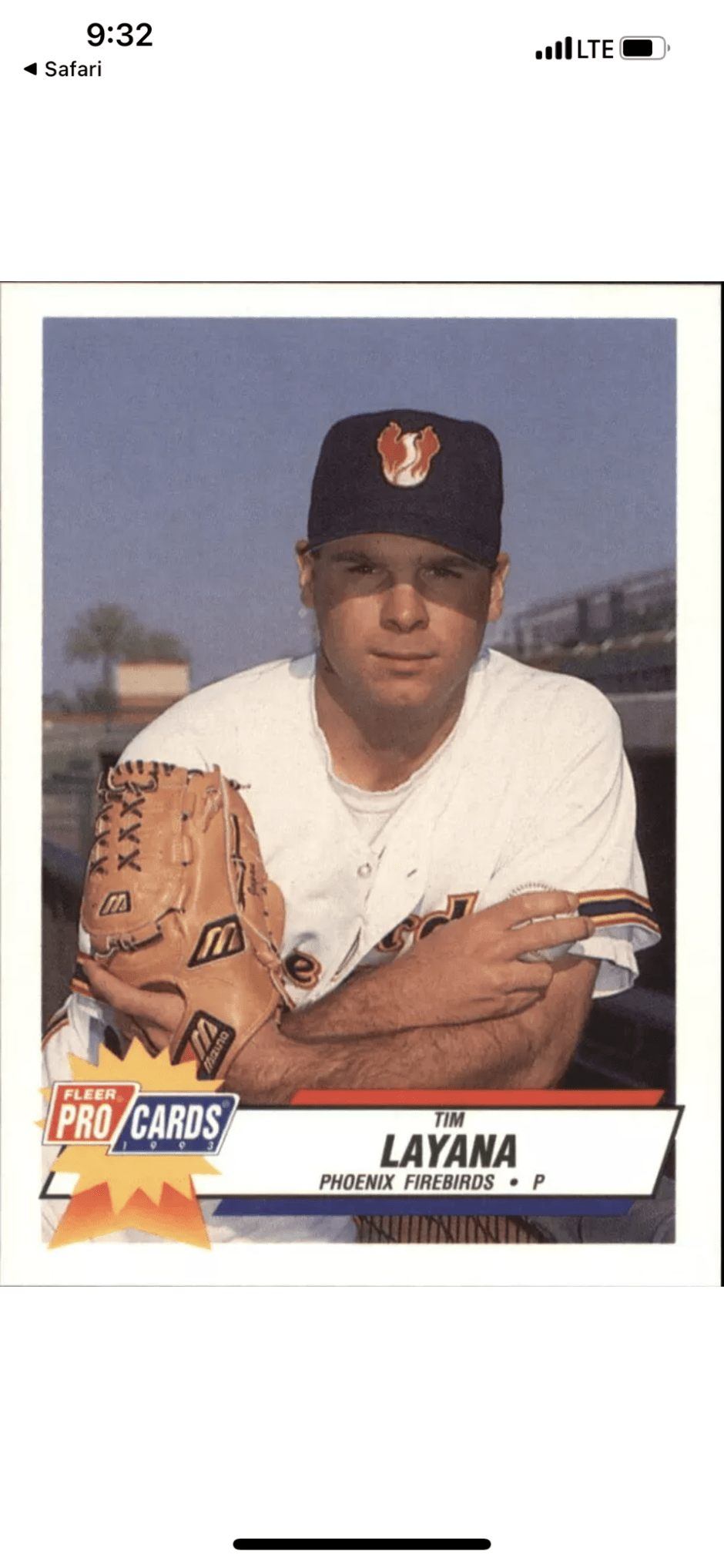
Tim Layana who on pitched just one game for the San Francisco Giants in 1993 is the featured subject on He was a Giant? (baseball card of Layana from Fleer Pro Cards)

One Game Was Enough

Tim Layana – RHP – 1993 – # 36

He was a Giant?

By Tony the Tiger Hayes

SAN FRANCISCO–It’s not often you see a pitcher with a four figure ERA and it’s even more unusual to see a club dump a player after just one game – but that was the tale of Layana’s Giants career which lasted all of a single summer day at Candlestick Park.

Two innings, five earned runs (22.45 ERA) and it was, uh, Tim can we have the uniform back?

The Giants got blown out by the visiting Dodgers, 15-1 that day, with Layana and fellow short-term hurler Gino Minutelli taking a beating out of the pen.

“Tim and Gino took one for the team and didn’t complain about it,” said Giants manager Dusty Baker.

But all good vibes aside it wasn’t enough to keep Layana around. The next day he was sent back to the minors where he remained the rest of his professional career which continued through 1997.

Before & After

A big, hard-thrower out of the Los Angeles area, Layana was a star at Loyola Marymount College where he established 14 school pitching records -including both season and career wins – and led the school to the 1986 College World Series.

Layana was also a lesser known, if not steady, member of the Reds 1990 World Championship team bullpen.

Big and burly and a bit of a hot head, Layana fit in perfectly in the Reds “Nasty Boys” bullpen along with the loathsome Randy Myers, quick-tempered Norm Charlton and obnoxious Rob Dibble.

Originally inked by the Yankees, Layana got into a tiff with Bucky Dent, his Triple-A manager, and was left exposed in the 1989 Rule 5 draft where he was quickly scooped up by the Reds.

Layana did not apparently grasp the romanticism of wearing the Yankee Pinstripes.

“I’m not Joe DiMaggio. I wasn’t born to be a Yankee,” Layana said in 1990. “I grew up in LA and Yankees tradition didn’t mean much to me. I was a Dodgers fan.”

As a rookie Layana went 5-3, 3.49 in 55 game out of the Reds bullpen and was part of the Reds 1990 world championship club that shockingly swept the heavily favored Oakland A’s in four.

In 1991 however he struggled and spent all of 1992 in the minors.

Layana was added to the Giants spring bullpen mix in 1993, but with a relief staff already stacked with the likes of Rod Beck, Mike Jackson, Dave Righetti and Kevin Rogers – Layana began the season a Tripe-A Phoenix.

He got his shot in San Francisco after a strong performance out of the Phoenix bullpen where he saved eight games in 42 appearances.

He wasn’t Dave Righetti. But…

The Giants enjoyed one of their best regular seasons ever in 1993, winning 103 games. They began July 26 with an eight game lead over the Braves that day but, with the Dodgers visiting Candlestick Park that Monday night the Orange & Black dropped a rotten egg.

San Francisco starter Bryan Hickerson was roasted for six earned runs and didn’t survive the third inning.

Layana came on and was roasted for five earned runs on seven hits – including a two-run homer by Henry Rodriguez – in two innings of relief in a 15-1 home beat down by the Dodgers.

Layana made Giants fans temporarily happy by retiring future Hall of Famer Mike Piazza on a ground out that day.

Giant Footprint

Layana was tragically killed in 1998 when the SUV he was driving was broadsided by another automobile in Bakersfield. Layana who was not wearing a seat beat was thrown from the vehicle and killed instantly. He was 35, had a family, and had just embarked on a high school coaching career in Southern California.

He Was A Giant? John Fitzgerald pitched for San Francisco for a lone season in 1958

San Francisco Giants pitcher John Fitzgerald pitched for the Giants for just one season the first year of the team since moving from New York (file photo from pinterest)

He Was A Giant?

John Fitzgerald – LHP – 1958 – # 35

By Tony The Tiger Hayes

In 1958, John Fitzgerald Kennedy was preparing to launch his historic presidential campaign. That year the freshly minted San Francisco Giants briefly had their own John Fitzgerald, a 6-foot-3, left-handed pitcher out of Brooklyn, New York.

How briefly? Fitzgerald’s big league inauguration, full-term, lame duck status and exit from the majors occurred all in a single game.

Why was he a Giant?

It’s kind of a mystery. Prior to making his major league debut with San Francisco, Fitzgerald had not pitched in a professional game since 1956, when he was drafted into military service.

When John Francis Fitzgerald made his major league debut and swan song on the final game of the 1958 season he was 25 years old.

It’s possible Fitzgerald mustered out of the service in the City at the Presidio making it convenient to have him swing by Seals Stadium to appear in the last game of the season.

The facts of him joining the big league club are as murky as the lone photo ever seen of southpaw in a Giants uniform.

Before & After

Signed by the Giants in 1953, Fitzgerald enjoyed significant success in the minors. As a 19 year old minor league rookie in 1953, Fitzgerald went 8-8, 4.64 for the St. Cloud Rox of the Northern League.

The Giants prospect really opened eyes in 1955 when he topped the Carolina League in strikeouts (233) while a member of the Class-D Danville Leafs. He finished with a stellar 14-7, 2.87 ledger and was named to the loop’s All-Star club.

But then, Fitzgerald’s pitching career was put into suspended animation for two seasons as he fulfilled his military obligations at about the same time Elvis Presley was also cleaning and carrying a rifle.

Then suddenly in September of 1958, as the Giants were winding down their inaugural season of fog ball, Fitzgerald was added to the big league roster.

Fitzgerald developed elbow issues the following spring and struggled the remainder of his professional career, spent entirely in the Giants organization.

He pitched two more seasons in the minor leagues (1959-60) before leaving organized baseball at the age of 27 after a winless season at Class-A Springfield in 1960.

He Never Had a Bobblehead Day. But…

Considering he had been on the shelf for two years, Fitzgerald had a stellar big league debut.

With the Giants in third place, 13 games back of Milwaukee, Giants manager Bill Rigney selected Fitzgerald to start the 79-74 Giants 1958 finale vs. the visiting St. Louis Cardinals.

Fitzgerald retired the lead off batter, left fielder Ellis Burton, on a ground out to shortstop Andre Rodgers, before walking shortstop Lee Tate. Fitzgerald faced the toughest batter of his life next, the illustrious Stan Musial. As expected, “Stan the Man” stung the San Francisco rookie’s first pitch, but the liner was snagged by second baseman Danny O’Connell, who then doubled Tate off first base.

With confidence surging through his left arm, Fitzgerald went to work in the second. “Fitz” struck out All-Star third baseman Ken Boyer and then fanned in succession catcher Gene Green and center fielder Bobby Smith.

Fitzgerald took a 3-0 lead into the third inning, but that changed quickly when St.Louis right fielder Joe Cunningham blasted a lead off homer over Seals Stadium’s right field fence. The long ball marked Cunningham’s career high 12th homer of the season.

Fitzgerald quickly regained his composure however and retired second baseman Eddie Kasko on a fly out to Willie Mays in center field. He nabbed pitcher Sam Jones – who would join the Giants in 1959 – on a ground out to Rodgers and notched Burton again on a ground out to third baseman Jim Davenport.

And with that, Fitzgerald exited the contest in favor of fellow rookie Dom Zanni. The fellow New York City native would go the next four frames, allowing one run, and was credited with the victory. Al Worthington recorded his 16th save in the 7-2 Giants win before 19,435 fans.

Fitzgerald would never appear in another major league contest.

Giant Footprint.

Fitzgerald was in the running for a roster spot in 1959, but his chances took a fatal blow when he broke down in an exhibition vs. the Cubs.

Fitzgerald suffered what trainer Doc Bowman described as a “shock to the ulnar nerve” of his left elbow, describing the pain as similar to “hitting your funny bone.”

Only Fitzgerald wasn’t laughing. Today, Fitzgerald would have probably been prescribed “Tommy John” surgery. But of course that baseball career altering ligament replacement surgery was still more than a decade away from being developed in 1959.

Fitzgerald tried pitching through the pain, but he was not effective.

After he left baseball, the trail runs as cold as a Candlestick Park hot dog on Fitzgerald.

Of all the living players from the 1958 club, Fitzgerald was the only one author Steve Bitker could not locate for his 1998 book “The Original San Francisco Giants.” Some recent reports have him residing in suburban New Jersey.

Fitzgerald would be 89 years old making him one of the oldest living former Giants.

George Foster He was a Giant? By Tony “The Tiger” Hayes

Former San Francisco Giants George Foster circa 1971 around the time of his rookie season played for the Giants until May 1971 before being traded to the Cincinnati Reds (ebay file photo)

George Foster -OF – 1971- # 14

He Was a Giant?

By Tony “The Tiger” Hayes

The San Francisco Giants never considered George Foster to be anything more than an understudy to his athletic idol – Willie Mays.

So it was ironic that six years after the Orange & Black dealt Foster to the Cincinnati Reds in late May of 1971, in exchange for a package that turned out to be an empty box, that the late blooming All-Star became the first hitter to punch 50 home runs in a big league season since… you know who.

Foster would finish his border line Hall of Fame career with 347 home runs and 1,235 RBI. He was 1977 National League Most Valuable Player; started six All-Star Games (MVP in 1976 Mid-Summer Classic); and was a member of two World Series Championship teams.

The trade of Foster has come to be known as one of the most embarrassingly lopsided deals in west coast Giants history – and rightfully so – but in the late spring of 1971, the ill-fated swap hardly caused a ripple throughout the Major Leagues.

Foster’s major league sample size was so inconsequential and the naturally shy backup’s demeanor so deferential, that Foster was a virtual unknown 100 yards beyond Candlestick Park’s boundaries.

Cincinnati skipper Sparky Anderson wasn’t even sure what he was getting back in Foster.

“I haven’t seen much of him,” Anderson admitted to the Cincinnati Enquirer. “The only way to find out about him is to stick him out there and see what he does.”

But those who knew the introverted Foster best – his teammates – took the unusual step of ripping the transaction the day it went down.

They recognized the trade as a stinker from jump street.

“I can’t understand this,” said Giants breakout outfield talent Bobby Bonds. “George is a very promising player and I don’t know why he was traded.”

The typically soft-spoken Giants superstar first baseman Willie McCovey added: “There is no telling what can happen in baseball. It is awfully hard to figure out.”

At the time of the trade – in which the Giants received rookie shortstop Frank Duffy and journeyman right-handed reliever Vern Geishert – the club was without starting left fielder Ken Henderson who was sidelined with a groin strain – making the deal all that more curious.

“Who’s going to play the outfield?” an anonymous Giant asked the San Francisco Examiner’s Bucky Walter. “The trade deadline is June 15, couldn’t they wait until Henderson is ready to play?”

“We need outfielders not another shortstop,” complained another unnamed Giant.

The diffident Foster also stated his angst, voicing a public opinion for the first time in his career about… well, anything.

George was especially unnerved that it was Lon Simmons, of all people, who informed him of the trade. Now, Foster had no quarrel with the Giants’ baritone play-by-play man. The thing was, the 22-year-old just didn’t expect to receive orders to clear out his locker stall from someone who had just concluded a read for Lowenbrau beer.

“I learned of the trade via the radio… during the 6th inning without any notification from the front office,” a choked-up Foster told local scribes after the Giants crumpled the visiting Expos 8-3 on a bright Saturday afternoon (5/29/71).

Sans Foster, the Giants would go on to play winning ball the rest of the 1971 season, trading daily punches with the Dodgers before winning the National League flag by one game in the legendary Mays’ final full season in Giants mufti.

There would be no more hand-wringing in Giants-land regarding Foster’s departure the rest of the ‘71 season – nor frankly for the next few seasons.

It would take until 1975 before Foster fully matured as a power hitter and began wrecking havoc on opposing pitchers in a fashion that brought to mind the one and only “Say Hey, Kid.”

Why Was He A Giant?

After two short stints with the big club in 1969-70, Foster broke camp with the Giants in 1971. At the time of the trade to Cincinnati, Foster was doing about as well as expected, batting .267, 3, 8 in 36 contests as Mays’ caddy on a surging Giants club that led the National League West by nearly 10 games.

In his most memorable game with San Francisco, Foster batted 4-for-4, with a double and solo home run and three RBIs in a 5-3 road clocking of the Braves (4/28/71).

The ‘71 club featured a mixture of established Giants stars (Mays, McCovey and storied right-handed starting pitchers Juan Marichal and Gaylord Perry), plus a new breed of San Francisco charges – including the speedy, power-hitting Bonds, flashy second second baseman Tito Fuentes and a fresh-faced left side of the infield comprised of a pair of Bay-born rookies: third baseman “Dirty” Al Gallagher – the first native San Franciscan to play for the west coast Giants – and baby-faced shortstop Chris Speier of Alameda.

So why upset the apple cart and trade Foster in exchange for Duffy, an untested rookie, and ham and egger Geishert.

The answer may have arisen from the pitching side of the Giants clubhouse society. Decades after his final MLB game, Foster spoke of an old school Giants clubhouse where battle scarred athletes ruled the roost.

“The veteran players did not speak to the rookies. For awhile, a couple of guys didn’t speak to me, unfortunately, they were pitchers,” Foster recalled in an interview with “The Road to the Show” (YouTube) “So if you made a mistake in the outfield, they wanted to get you out of the lineup. They’d tell the manager ‘don’t play that kid when I’m pitching.’”

Gaylord Perry was a Giants pitcher who was notoriously hard on young teammates who bungled plays behind him. The taciturn Perry was known to display his pique with dismissive body language or by directly chewing out shoddy defenders right on the spot.

In one Perry start in ‘71, Foster butchered a couple of batted balls which lead directly to 4-1 Giants loss at Houston (5/21/71).

It’s quite possible that Perry privately grumbled to Giants manager Charlie Fox – a former catcher with pitching and defense-first mentality – about Foster’s defensive shortcomings.

Now, we’re not saying Gaylord forced the trade of Foster to Cincinnati, but the fact is, soon after his kick-the-can performance at the Astrodome, George was sent packing.

For San Francisco fans sake, let’s just hope the Giants didn’t foolhardily leave 344 potential home runs on the table and deal a future All-Star just because of a random bad day in the field that left Perry with a knot in his jock strap.

Before & After

Born in Alabama, Foster’s family joined the great southern migration to bustling northern and western U.S. cities in the mid-1950s, settling in the Los Angeles region. Though a young George grew up in the heart of Dodgers country, he was a devoted Willie Mays acolyte and simulated the celebrated Giant’s every move.

So imagine Foster’s delight when the Orange & Black scouted and signed him out of Torrance’s El Camino junior college. Within two years, Foster was lockering about 20 feet from Mays.

While some of the more experienced Giants kept rookies at an arm’s length, that was never the case with the warm-hearted Willie.

Just as he had taken fledging Giants from a previous era under his wing (McCovey, Willie Kirkland, Leon Wagner) Mays did the same with the following generations of young Giants.

In the case of Foster, Mays made sure he had plenty to eat.

“Bobby Bonds and I were were roommates and during spring training we would always go by Willie’s room at dinner time and pretend we we’re testing his food – like poison control- taste it make sure everything was fine,” Foster said with a wink in that same YouTube video. “We saved meal money by going to eat his steaks. We’d say ‘everything’s fine.’ And Willie would order more food for himself.”

Foster also discovered after his trade to Cincinnati, that Mays had called ahead to the Reds’ Pete Rose with a request from one All-Star to another.

“He told Pete, ‘take care of this kid,” Foster revealed years later. “It was heartwarming that Willie was still watching over me by making sure people were taking care of me.”

Foster actually walked into a pretty good situation with the Reds. With Bobby Tolan lost for the season with a Achilles injury, George took over in center field immediately in ‘71. Though he received plenty of big league experience that season, the trial run proved Foster still had lots of work to do on his journey to becoming an all-time great.

Over the next three seasons, Foster rotated between the Reds lineup, the bench and even Triple-A for extended stretches.

It wasn’t until ‘75, when Rose shifted from the outfield to third base, that Foster became a permanent member of the Big Red Machine’s celebrated every day lineup.

Cincinnati won back-to-back World Series titles in 1975-76 featuring a roll call of superstar hitters, including: Rose, Joe Morgan, Tony Perez and Johnny Bench – but Foster was the Reds’ cleanup hitter.

Foster would not only lead the heavy-hitting Reds in RBI – but topped the entire NL in the key stat for three straight seasons from 1976-78.

In 1976, Foster was in contention for the Triple Crown for a good portion of the season – finishing at an sterling .306, 29, 121.

At age 30, the introverted slugger was also slowly breaking out of his shell.

After the ‘76 campaign, Foster raised eyebrows when he self-appointed himself league Most Valuable Player. Sheepishly, Foster was compelled to walk back those comments when he realized his teammate Joe Morgan was voted the honor.

Foster brushed off the fopaux and returned with an even better campaign in 1977. He upped his average to .320 and again was numero uno in the RBI column (149). This time around Foster went extra bananas with the home runs – bopping 52 long balls. No batter had reached the half century mark in taters since Mays also walloped 52 in his 1965 MVP campaign.

In ‘77, Foster was the clear and obvious pick for MVP.

Foster further solidified his superstar status in 1978, leading the NL in HR (40) and RBI (121). His numbers tailed off slightly in 1979-81, but he was still among the best power hitters in baseball.

In 1982, the Reds went in a different direction and traded Foster to the lowly Mets for pitching. After a decade in homespun Cincinnati, the relocation to cynical New York proved to be a difficult move for the sensitive Foster.

With the fabled Reds, Foster was part of a star-studded ensemble cast in a cash-box certified extravaganza. With the bungling Mets – Foster’s name was the only one atop the marquee of a panned revival in a rundown off-Broadway theatre with threadbare seats. In 1982-83, Foster labored though his first losing seasons since 1971.

By 1986, the reborn Mets had made great strides however and were on the crest of their first world championship since 1969. But they would do it without a slumping Foster who was benched in favor of future Giants star Kevin Mitchell.

Foster hinted that the Mets demoted him because he was black. An odd statement considering Mitchell was also African-American.

Foster later clarified that he meant to say baseball preferred to promote it’s white players over blacks as role models to young fans.

But the damage was done and a personally affronted New York manager Davey Johnson arranged for the purging of Foster from the Big Apple – denying George a shot at a third World Series title.

Foster wrapped up his big league career that season – appearing in a handful of games with the White Sox.

He Never Had a (Giants) Bobblehead Day. But…

If the Giants weren’t clear in what they had in Foster when they traded him, it surely must have come sharper into focus when Foster returned to Candlestick Park with the Reds in mid-September of ‘71 for a mid-week two game set.

After back-to-back home losses to the Dodgers, the Giants’ once healthy NL West margin had dwindled to a solitary one-game lead. A year after winning the NL pennant, the Reds meanwhile had slumped in ‘71, settling into a very disappointing fifth place in the division. But Cincinnati was clearly up to playing the role of spoilers.

After taking the first game 4-2 (9/15/71), Cincinnati laid a worse beating on the Orange & Black the next day, winning 8-1 on a scorching Indian Summer afternoon.

The Reds took a slim 2-1 lead into the 8th before breaking open the contest with a five run outburst – the key strike coming on a booming, two-out Foster grand slam off Giants reliever Don McMahon.

After the game, Foster admitted he still had Orange & Black running through his veins -to a point.

“I really regretted leaving my friends and except when I’m batting I’m pulling for the Giants. I don’t want to see them blow it now,” said George after doing his best to make sure the Giants did indeed “blow it.”

The Giants would soon right the ship and clinched the West on the final day of the season with a 5-1 win at San Diego (9/30/71).

Giant Footprint

In hindsight the Giants trade of Foster was, without a doubt, a massive screw-up. But if you go back and dissect the swap from the Giants end, you can kind of see where they were coming from.

For starters, Foster was still a very raw talent when the Giants traded him. Foster had difficulty hitting the breaking pitch and struck out at a high rate (fanning in about 25 percent of his Giants at-bats).

Now, you have give the Reds credit for sticking with Foster through his painfully elongated growth period. But they could have also easily moved on from Foster at some point as well before he blossomed.

As far as the players the Giants received from Cincinnati, Geishert did not report to Triple-A Phoenix and never threw a pitch for the Giants organization, nor in the big leagues again.

But Duffy, the primary player coming back to San Francisco for Foster, was no random pick-up.

The Giants had long been enamored of the slick fielding infielder with Bay Area roots. An Oakland native, Duffy grew up in Turlock, before an impressive turn at Stanford University.

The Reds selected Duffy with their first-round draft pick of the secondary phase of the 1967 draft – apparently just as the Giants were closing in on the Pac-8 standout.

Duffy was slated to be the Reds shortstop of the future, but he was bypassed by the precocious Dave Conception, a future perennial Gold Glove Award winner and All-Star.

The Giants meanwhile we’re going with the fantastic looking rookie Speier at shortstop. Though he was knocking the cover off the ball and flashing impressive defensive skills, Speier was just 20 years old and had previously played just one season of minor league ball.

So trading for Duffy made some me sense as an insurance policy.

“After (Duffy) played at Stanford, we wanted to draft him No. 1 in 1967, but the Reds picked him off just one turn before we had our chance,” said manager Fox. “Duffy has great lateral movement which is a requisite at Candlestick on the AstroTurf. We feel he can help us at third and second base as well as shortstop.”

As it turned out, Speier never stopped playing at a high level and would be the Giants starting shortstop through the 1976 season. He returned in the late-1980s as a key utility-player.

Duffy never got much of a chance with San Francisco in ‘71, batting .179 (5-for-28) in 21 games. After the season he departed the Bay Area for Cleveland, along with Perry, in another disappointing trade for washed-up right-handed pitcher Sam McDowell.

Darryl Strawberry He was a Giant? By Tony the Tiger Hayes

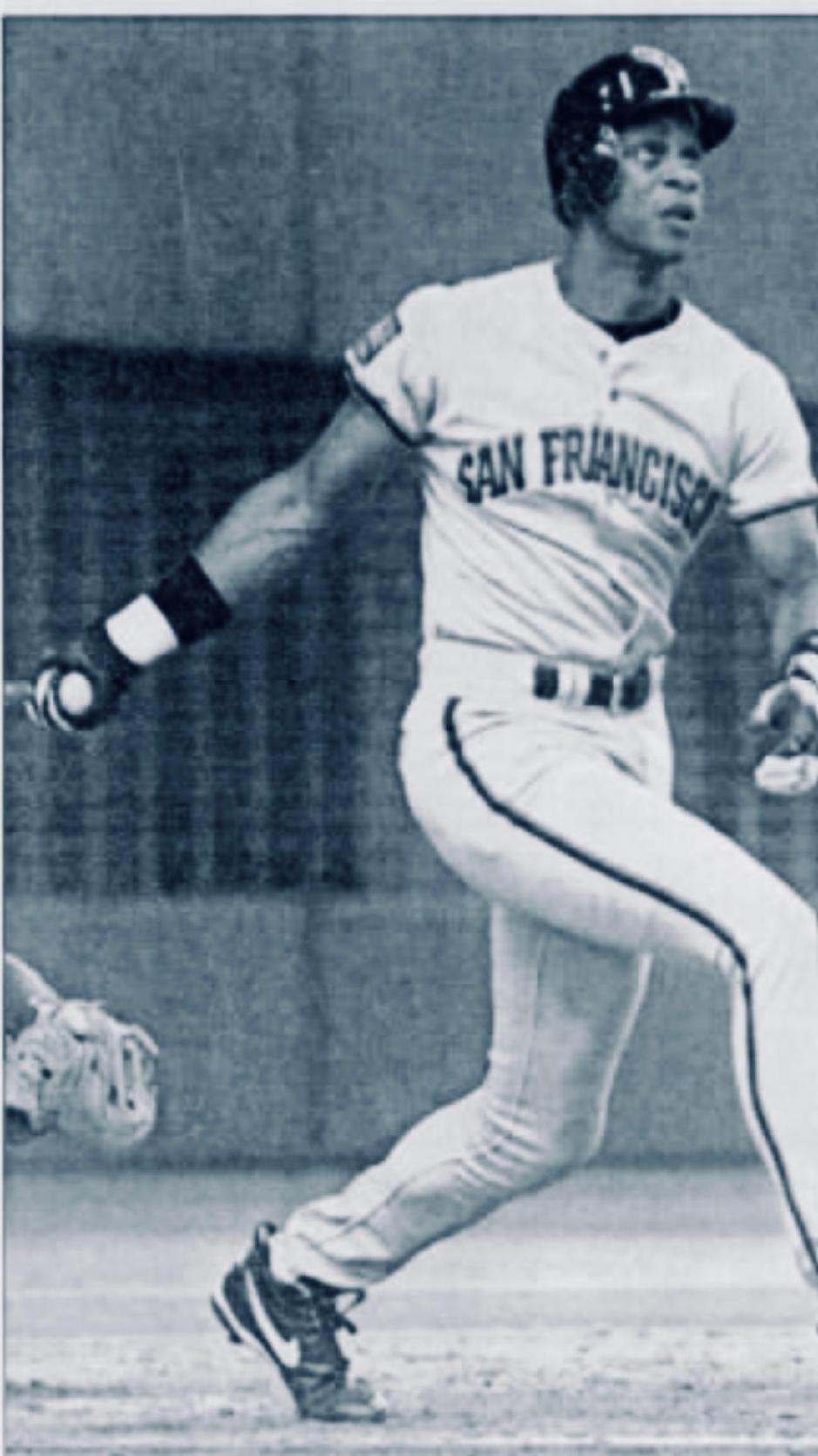
Darryl Strawberry photo circa 1994 from Tony the Tiger Hayes

Darryl Strawberry – OF -1994 – # 17

He was a Giant?

By Tony Hayes

A star-crossed media magnet of colossal athletic talent and dubious lifestyle choices – the notorious Strawberry was a celebrity Big Apple slugger, inveterate booze and cocaine abuser, three-time World Series champion, Dodgers flameout, indicted tax cheat, cancer survivor, and, yes, briefly a Giant.

In mid-1994, San Francisco picked up the infamous former New York Mets superstar off the scrap heap after a disastrous four-year run with his hometown Dodgers during which Darryl seemed to spend more time in the Betty Ford Clinic than Tommy Lasorda’s lineup.

Despite all the Broadway-worthy, neon red warning signs – for awhile it appeared the Strawberry/Giants collaboration just might work as the Giants won nine consecutive games and 18 of 21 after Strawberry was added to the lineup in the summer of ‘94.

Straw’s final Giants numbers – .239, 4, 17 in 29 games – weren’t earth shattering, but the 1983 NL Rookie of the Year showed enough menace at the plate to prove he could still instill the fear of God in opposing dugouts.

More impressive was Strawberry’s disposition in his short stay in the Bay. For for the first time in his big league career, Darryl appeared comfortable in his own skin and entirely focused on baseball. There was no brooding or 911 calls to or from his residence or instances of AWOL.

But then the players strike came along in August and all the progress Strawberry had made quickly unraveled. Soon Darryl was headed back down the same dark path from which he’d just traveled.

Why Was He a Giant?

The bittersweet 1993 Giants club was just the eighth team in MLB history – and likely the last – to win at least 100 regular season games, yet not feel the celebratory eye sting of a post-season bound champagne blast to the face.

But despite not making it out of September the previous season, the Giants had plenty of buzz entering 1994. Unfortunately a good portion of the noise was focused on the front office’s immense blunder of allowing team icon and clutch hitting wunderkind 1B Will Clark to depart via free agency. The club would regret the under-valuing of the legendary “Will the Thrill” for years to come. Then, three months into the season the Giants suffered another devastating blow when stalwart 2B Robby Thompson was shelved with a season ending shoulder injury.

On the 4th of July – Robby’s last day in the lineup – the listless Giants were sinking quickly in the standings. Yes, sluggers Barry Bonds and Matt Williams were having phenomenal personal seasons, but the third place (35-48) G-Men were not winning games. Worse yet, the casual fan was losing interest. Terrible news for an new and ambitious ownership group that was still desperately drumming up support for a new downtown ball park.

The Giants needed Superman to swoop in and save the day and they settled for the next best affordable thing – a former super hero with clay feet.

Days after the Dodgers formally ate the final $5.2 million remaining on Strawberry’s contract, the Giants signed the Mets all-time home run leader to a low-money, no-frills deal for the remainder of the ‘94 season.

Though neither the player or franchise would be out much cash in the transaction, the move cost both sides plenty of face.

Strawberry and the Giants were each served a huge portions of humble pie.

The Giants in essence were forced to admit they blew it by not re-signing the Boy Scout channeling Clark – a player who not only relentlessly produced on the field but had a sterling reputation in his personal life. Not surprisingly, the inking of the shady Strawberry was met with an audible raspberry from a good deal of Giants fans.

“I’ll admit that most of the mail we’ve gotten on this subject had been against signing (Strawberry),” Giants managing general partner Peter Magowan told the press. “But it’s a small risk. I feel truly good about what could happen in San Francisco.”

Meanwhile, the once cocksure Strawberry was also forced to swallow a large amount to pride. Two iron clad aspects of Strawberry’s Giants deal included a stipulation for regular drug testing and submitting to an around-the-clock guardian. The Giants were essentially saying they didn’t trust the former five-time All-Star.

But Strawberry had little choice if he wanted to get back on the field and revive his once vibrant career.

“I had decided on retiring after everything I’ve been through,” a literally sobered up Strawberry revealed upon joining the Giants. “But today ranks for me a new beginning, a new birth.”

Both sides put their pride on the back burner and put the focus on the ball field. At the time of the Strawberry deal the Giants were dead last in the big leagues in runs scored.

“One of the major differences with our ball club from last year is a run a game,” said Giants manager Dusty Baker, anxious for the Giants to get untracked. “Darryl’s the kind of impact player that can possibly make that up.”

Before & After

Before drugs, drink and drama cratered his baseball career and came to define his public persona, Strawberry was a force to behold. In his first nine seasons of big league ball, the charismatic Darryl was among baseball’s most formidable power hitters – swatting 280 long balls with a majestic left-handed upper cut swing. He was the No. 1 factor in catapulting the motley crew Mets past the cross-town rival Yankees in popularity and splashy back-page tabloid headlines.

Drafted No. 1 overall by the Mets out of Los Angeles’ Crenshaw High – Strawberry was lauded as New York’s biggest home grown slugger since Willie Mays and Mickey Mantle. Not surprisingly, as the unfiltered praise was heaped upon the young star, his head swelled to the circumstance of the ruby, outsized paper mache apple that rose beyond the Shea Stadium outfield fence every time Darryl crushed a home run.

Early in his Mets tenure Strawberry fell under the influence of a party of bad actors – some of them teammates- who were more than willing to ply the young star with an never ending support of cocaine and amphetamines. Strawberry’s shameful tale has been well documented in both numerous books and documentaries regarding the mid-1980s bacchanal Mets.

Strawberry’s erratic behavior was legendary. He’d show up late for games, loafed in the field and generally acted like an entitled jerk every chance he got.

Strawberry even had the audacity to gripe and grouse after the Mets’ most iconic victory ever – Game 6 of the 1986 World Series (the Bill Buckner game) – because he was simply yanked late in the contest for a defensive replacement.

By 1991, both the Mets and Strawberry had seen enough of each other. Strawberry went home to Los Angeles, signing a five-year $21 million pact with the Dodgers. The Mets were happy to let the 1988 NL home run champ slip away with little more than a wave of the hand.

At first it was all lovey-dovey between Darryl and the Lasorda led Dodgers.

“I’ve managed a lot of great players over the years. But I’ve never had one the caliber of Darryl Strawberry,” said the hyperbolic Dodgers manager. “This guy is such a threat every time he comes to the plate. I know how I always dreaded facing him when he was with the Mets. And now he’s with the Dodgers. It’s just too good to be true.”

A few years later, Lasorda flip-flopped and vociferously chirped a decidedly different tune.

In his early days as a Dodger, Strawberry yucked it up with Tinsel Town stars before games and then crushed towering long balls into the warm Southern California nights. The Dodgers were leading the race for the ‘91 NL West title before falling apart like the script of a horrible Hollywood sequel in the final days of the season.

The coup de grace was delivered by the Giants who eliminated L.A. and muted Strawberry’s bat in back-to-back wins in the final weekend of the season at Candlestick Park. The upstart Atlanta Braves took the division flag.

Despite Straw’s turtle-like performance in the waning days of the ‘91 season, the Dodgers marquee attraction refused to shoulder any of the blame for the collapse, blasting his teammates for lacking heart instead.

The following offseason Strawberry published a self-aggrandizing autobiography in which he accused the Mets of unsubstantiated racism and outed friend Dwight Gooden of being hopped up on coke during the Mets ‘86 postseason run.

Strawberry later admitted that he hadn’t actually read his own biography and implied that some of the opinions stated in the book were actually those of his co-author.

Strawberry would rarely play for Los Angeles again. A back injury and corresponding surgery were the prime culprits. But a handful of trips to drug rehab, domestic tumult – which included accusations of gun violence – and a handful of AWOL incidents kept Strawberry out of the cleanup spot in the Dodgers lineup.

Strawberry was in the midst of a month-long drug rehab stint, when the Dodgers announced in May of ‘94 they had washed their hands of the beleaguered native Angelino.

The blood was so bad between the two sides that Team Blue did not even bother to issue a “we wish Darryl well” boiler plate statement.

Lasorda was a guest on a talk show when an adamant caller labeled Strawberry a “dog.”

“You’re wrong. Darryl Strawberry is not a dog,” the garrulous Dodgers skipper corrected the caller. “A dog is loyal and runs after balls.”

But the Giants were willing to give Darryl a shot at redemption. The fact he had extra incentive to skewer the Dodgers didn’t hurt.

“We got a chance to talk to the true Darryl Strawberry, with his head right and his heart right,” said Giants batting coach Bobby Bonds, acknowledging his own past battles with the bottle. “I had a problem and it got fixed. Mickey Mantle had a problem and it got fixed. We saw the true person and he’s a hell of a human being, eager and ready to play.”

He Never Had a (Giants) Bobblehead Day. But…

Moments after walking into the field for the first time as a Giant, Strawberry showcased the power stick the club was praying for when he hammered two balls into the Candlestick Park upper deck during morning batting practice.

In his expertly tailored Giants uniform, with the sleeves cut short and pants tapered to perfection, the 6-foot-6 Strawberry appeared incredibly fit with sinewy arms and a slender waist that appeared to be no larger than 28 inches.

Then Darryl nearly knocked one over the fence in his Giants debut, jackhammering a long 6th inning drive off Phillies starter Shawn Boskie that appeared destined to be a round-tripper before being snagged in by a soaring Milt Thompson. In his next at-bat, the defending NL champs wanted no part of Straw and issued an intentional walk. Fueled by home runs by Darren Lewis and Williams, the Giants won 5-4 (7/7/94).

Though Strawberry had a quiet first series as a Giant – just one hit – his presence in the lineup was felt. The Giants took four straight from Philadelphia.

After the All-Star Game break, the Giants picked up the season in Montreal. The Felipe Alou led Expos were stacked that season and were sporting the best ledger in baseball (54-33).

But with Strawberry added to the mix, Giants looked like the far superior team, as they backed up their home sweep of Philly, with a four-game dismantling of Montreal. The Giants collected 44 hits and out scored the Expos 24-8 in the club’s first series sweep north of the border since 1975.

During this particular French-Canadian sojourn, the combination of Barry Bonds & Strawberry resembled a ‘90s remix of Mays & McCovey’s Greatest Hits.

Bonds battered Expos pitching to the tune of a .526 average (10-for-19) with four home runs and nine RBI. Straw backed Bonds attack with a .529 series (9-for-17), with two long balls and seven RBIs.

Strawberry had a Top 10 career game in the series opener (7/14/94), an 8-3 bulldozing of the Expos before a packed Olympic Stadium.

In his first at-bat, the new Giant racked an RBI single. Strawberry stepped up to the plate in the 5th with two outs and the bases full to face a laboring Pedro Martinez.

Strawberry connected with a fastball and crashed a scud to right field.

“… that’s hit well. And it’s gone! A grand slam for Darryl Strawberry!”, proclaimed Ted Robinson on the Giants TV feed. “He’s officially a Giant!”

Color man Mike Krukow added: “He just punched 40,000 people right in the stomach.”

A reaction shot of Baker sitting cap-less in the Giants dugout, showed the popular field general’s jaw literally drop when Darryl’s rocket blasted off. The always animated Dusty then rose to his feet before jutting two fists forward.

Strawberry would later knock in another run with a double off reliever Tim Scott, to finish the day 3-for-5, with 5 RBIs. The following day Strawberry smoked a solo tater off Montreal’s Butch Henry in a 7-3 San Francisco curb stomping, which featured a two home run performance by Bonds. In the final game of the series (7/17/94), it was Williams turn to go deep, when he plastered his league leading 34th homer off Jeff Fassero in a 6-4 triumph.

For the first time in his career Strawberry didn’t have all eyes focused on him when the chips were down.

“One of the reasons I signed with the Giants is I know I don’t have to be the one to carry the team every day,” said Strawberry relishing being part of an ensemble cast. “With Barry and Matt and me, we’ve got three guys who can do it.”

Giant Footprint

Strawberry and the Giants remained hot. After taking two of three from the first place Dodgers in late July, San Francisco pulled within a half game of their Southland adversaries.

Unfortunately, what was brewing as an intriguing pennant race between baseball’s oldest rivalry came to an abrupt halt on 8/12/94 when the MLB players union called an inconceivable strike over primarily salary cap issues.

When games were stopped indefinitely, the second place Giants had a 55-60 record and trailed the Dodgers by 3.5 games.

Disappointingly, play never resumed. What was shaping up as a career years for both Bonds (37 home runs) and Williams (who led the NL with 42 round trippers) was frozen in suspended animation with a potential 47 games scrubbed forever.

Strawberry managed to stay out of the news for the next several months until December when he was indicted on tax evasion charges stemming from gobs of unreported cash earned at card shows.

Then on 2/6/95 MLB announced it had suspended Strawberry for 60 games effective at the start of the 1995 season. Urine samples provided by Strawberry on two consecutive days in January returned positive results for cocaine use.

The Giants moved swiftly, immediately cutting ties with the player.

“Right now I’m trying to get over this feeling I have in my stomach. I’ve been walking around kind of in a daze,” said a noticeably upset Baker. “I still care for him as a person. He was good for our team. We did our due diligence.”

After serving his baseball imposed penance, Strawberry resurfaced back in New York, this time in the Bronx. Strawberry played off and on for the Yankees through 1999 – winning world championships 1996 and 1999.

In 1998, Darryl was diagnosed with colon cancer and immediately had a tumor and 24 inches of his colon removed. In 2000, a tumor near his left kidney was diagnosed and removed. Thankfully, he’s been cancer free since.

Unfortunately Strawberry’s drug issues continued for years after leaving San Francisco. He was suspended twice more by baseball and later spent a short time in prison for drug related malfeasances.

Since turning 50 however, Strawberry has kicked his bad habits seemingly for good and turned his life over to Jesus. He is now an ordained minister.

Bob Taylor He Was A Giant? By Tony the Tiger Hayes

Former San Francisco Giant Bob Taylor in 1970 (photo from Tony the Tiger Hayes)

Bob Taylor – OF – 1970 – # 31

He Was A Giant?

By Tony the Tiger Hayes

The anonymously named Bob Taylor is the Giants version of the tree that fell in the woods with no one around.

Though Taylor played one full season with San Francisco in 1970, it’s debatable whether anyone remembers him making a sound.

Highlights are illusive, photos are rare and memories are faded. Despite his full campaign with the G-Men, Topps didn’t even bother to issue a baseball card for Taylor.

Maybe the bubble gum card company read the tea leafs.

After hitting .190 in 63 games for the ‘70 club, Taylor would never appear in another MLB game.

Despite winning a pair of minor league hitting titles, Taylor is refreshingly not bitter about not getting a full shot at a big league career.

“How could I complain, when I got to have my locker next to Willie McCovey? When I got to play with and against a bunch of Hall of Famers. Hey, a whole lot of people never had the chance to do what I did,” Taylor told Garry Brown of Springfield (MA) Republican in a 2018 interview “Play in the big leagues, play the game I loved. Live the dreams I had when I was a 6-year-old kid in Dade City, Florida. Playing with my heroes like Willie Mays, Willie McCovey, Jim Ray Hart, Juan Marichal. You can’t beat that. Majors or minors, I was playing ball. Long bus rides? No problem.”

Why Was He a Giant?

With 40 -year -old Willie Mays looking weary after a subpar 1969 season – the Giants were scrambling for a contingency plan and plucked the 26 -year -old Taylor out the minors as an insurance policy.

Taylor had a great season in 1969, hitting .331 for Triple-A Phoenix. That performance earned him an invitation to the major league training camp in the spring of 1970.

Then he battered Cactus League pitching – earning a spot on the Orange & Black’s opening day roster.

“I’m proud of the fact that I made the opening day roster. I had a real good spring, hit .400. At the time, there were 600 jobs available on major league 25-man rosters, and I had one of them,” Taylor told the Republican.

But after his down ‘69 season, Mays kicked Father Time in the shins and played the ‘70 season with a burst of rejuvenation, producing his best hitting numbers in years.

Bobby Bonds and Ken Henderson rounded out a solid San Francisco outfield, leaving Taylor and fellow reserve Frank Johnson settling for scraps.

Before & After

The diminutive 5-foot-9, 170 pound left-handed batter signed with the Giants organization in 1962. Though he was a high percentage batter in the minors- he won the 1964 California League and 1968 Texas League batting crowns – Taylor apparently did not hit with enough pop to become a serious threat to crack the big league club’s power-laden lineup.

But the contact hitter saw his opportunity in the spring of ‘70 and pounced on it.

“I’ve had to wait eight years to get a chance with the Giants and I just hope I can make it,” Taylor told the San Francisco Examiner that spring. “You know the Giants have a lot of talent and are a tough outfit to break into.”

With outfielders such as Ollie Brown, Jesus Alou, and Dave Marshall having moved on from the Giants – there was a clear need for a backup role player/pinch hitter.

While the Mississippi native could not claim the same awe-inspiring five-tool talents that blossoming star RF Bonds possessed, Taylor publicized his one curious hidden attribute.

His hands, he claimed, were tailor made for Candlestick Park’s chilly climates.

“You know when I was playing in Northwest I always hit really well,” Taylor told the San Francisco Examiner in the spring of ‘70. “My hands sweat a lot in warm weather, but in cold climate I seem to get a better grip on the bat and hit the ball harder.”

Taylor would bat just .220 in limited action at the ‘Stick, but he did sock his only two big league home runs in the park known for stiff winds.

After his lone season in San Francisco, Taylor returned to Triple-A with the Giants before heading to Japan for three campaigns. He closed out his pro career back in the Giants organization in 1977-78.

He Never Had A Bobblehead Day. But…

Taylor made the Giants starting lineup just 14 times in 1970, so most of his impact would have to come off the bench.

In his best game, Taylor led the Giants to a 11-3 Candlestick Park stomping of the Dodgers (5/27/70). Taylor whacked his first MLB HR, a two-run shot to left-center field off Jose Pena, and added two more hits in the victory.

For his first big league long ball, Taylor borrowed a bat belonging to Mays.

Taylor’s only other long ball also came against the hated rivals from the Southland when he ripped a thrilling three-run, pinch hit blast off future Hall of Famer Don Sutton in a mid- summer home contest – giving the Giants the lead in the sixth inning. Unfortunately, the Dodgers would come back to win 8-6. (7/3/70).

Giant Footprint

Though he had no prior professional catching experience, Taylor mysteriously appeared behind the plate as a late inning defensive replacement in a early season game at Atlanta.

Apparently, regular backup Russ Gibson was not available, so Taylor was called on to catch the bottom of the 8th in place of starter Dick Dietz. Pitcher Ron Bryant retired the side in order without any noticeable miscues by Taylor in the 9-3 loss (4/13/70).

After Bryant retired the Braves Sonny Jackson on a pop out and fanned Felix Milan, Taylor peered up from his catcher’s crouch and saw the great Hank Aaron taking a few warm up swings.

The great slugger soon grounded out routinely to third.

“They told me not to call for a fastball against Hank,” said Taylor in ‘19. “But I did anyway, and it worked out.”

He was a Giant? Rob Wilfong by Tony the Tiger Hayes

A rare photo of former San Francisco Giant Rob Wilfong in a Giants uniform circa 1987 he only played two games for the Giants at the end of his career (photo provided by Tony the Tiger Hayes)

Rob Wilfong – 2B – 1987 – # 9

He Was A Giant?

By Tony the Tiger Hayes

Imagine its your debut game with a new team and phenomenally you clobber a shocking home run in your first at-bat.

But after circling the bases and accepting high fives and slaps on the butt from your gobsmacked new teammates, you bypass the dugout bench and clubhouse shower and keep on jogging to your car. You drive straight home – never to return.

Wilfong’s brief stay with San Francisco didn’t exactly play out like that – but it wasn’t far off.

A former slick-fielding 2B for the Minnesota Twins and California Angels, Wilfong appeared in just two games for the 1987 Giants and then mysteriously vanished without a trace.

Why Was He a Giant?

Wilfong, 33, failed to make California’s 1987 opening day roster despite a gritty – nearly series saving – performance vs. Boston in the previous fall’s American League Playoffs.

But Wilfong found himself in a numbers pickle the following spring when league-wide team rosters were reduced to 24 players from 25. Wilfong didn’t do himself any favors by batting a measly .095 (3-for-21) in spring exhibitions for the the Angels.

So despite being just a handful of games short of qualifying for 10 full seasons of MLB service time – and a completely vested MLB pension- the five-year Halo was bluntly cut on the final day of spring training.

Wilfong was sitting at home in his native Southern California when the Giants infield situation smoldered into a full -blown Kentucky tire fire in late April.

Within a matter of days the G-Men lost three-fourths of their starting infield.

A dangerous pitch from the Cardinals Danny Cox came in high and tight and broke 3B Chris Brown’s jaw. Shortstop Jose Uribe also pulled up lame with a pulled hamstring.

Then, one morning 2B Robby Thompson woke up and discovered he couldn’t bend over to tie his shoes.

An old back injury alternately described as a “lingering stress fracture” and “congenital back defect” flared up sending the Giants sophomore sensation to the training table for an undetermined period.

With season ending-surgery a possibility for the popular Robby, the Giants were left scrambling for a contingency plan.

Utility-men Chris Speier, Randy Kutcher, Mike Woodard and Mark Wasinger all gave it a go at 2B. But each were better suited for utility roles.

San Francisco was so anxious about securing a battle-tested 2B they took the unusual step of flying Wilfong to a road trip stop in St. Louis for a pregame audition.

Wilfong looked so shipshape that Giants President Al Rosen had a contract waiting for the steady veteran the moment he stepped off the field.

“Al Rosen asked, ‘You wanna play?’ “ said Wilfong. “I said, ‘You kidding’? “

It was a perfect fit… for about three games. Then suddenly it wasn’t.

Before & After

A Pasadena native, Wilfong broke into pro ball in 1971 as a 17 -year-old 13th round draft pick by Minnesota out of Northview High School in Covina after batting .367 as a senior.

After slogging through six seasons of minor league ball, Wilfong made his big league debut with the Twins in 1977.

A deft fielder and skilled bunter, the fundamentally sound Wilfong quickly became a favorite of Minnesota manager Gene Mauch. Wilfong would go on to play the lions share of his MLB career under the command of the Lil’ General with both the Twins and Angels

In 1979, Wilfong enjoyed a career season for the Twins, batting .313 in 140 games and leading the American League with 25 sacrifices. In 1980, Wilfong led all AL second basemen in fielding percentage.

In mid-1982, the Mauch-helmed Angels shipped young slugging prospect Tom Brunansky to Minnesota to bring Wilfong and RHP reliever Doug Corbett back to Anaheim.

The defensive-minded Wilfong would share 2B over the next several seasons with the veteran slugger Bobby Grich.

For his career Wilfong batted just a shade below .250, but in high leverage situations he ramped up production. With runners on base, Wilfong batted .269. With runners in scoring position Rob’s average rose to .279 and in bases loaded situations the wiry infielder’s success rate leapt all the way up to .295.

Wilfong was a member of two division winning Angels clubs in 1982 and 1986.

Due to Boston’s thrilling comeback in the ‘86 playoffs – Wilfong’s resolute performance in Game 5 of that series is now largely forgotten.

The Angels were just one strike away from their first ever World Series berth when RHP Donnie Moore infamously coughed up Dave Henderson’s go ahead two-run 9th inning homer to put the Red Sox up 6-5 in a sunny Southern California meltdown.

While most people today only remember Henderson – who coincidentally also had a cameo appearance on the ‘87 Giants – and his dramatic dinger, the outcome of Game 5 and the series was far from decided at that point.

To open the home half of the 9th, C Bob Boone singled off Boston’s RHP Bob Stanley. Ruppert Jones pinch-ran and was advanced to second on a sacrifice. That brought up Wilfong as Boston turned to LHP reliever Joe Sambito.

Though the left-handed swinging Wilfong was a far superior career batter vs. right-handers (.258 compared to .176) Mauch ignored the splits knowing Wilfong’s history with runners on base.

Wilfong did not disappoint, ripping the veteran southpaw’s initial pitch into right field. The swift Jones beat the throw home to tie the game 6-6.

Boston would however take the lead for good in the 11th, on a Henderson sacrifice fly, winning 7-6.

Wilfong recorded two hits in Game 6, but got little help as Boston glided to a 10-4 win. Boston also easily won Game 7 to send the glum Angels back to Disneyland.

He Never Had A Bobblehead Day. But…

Wilfong’s first game with the Giants was also the career American Leaguer’s first ever at notoriously blustery Candlestick Park.

Even for Candlestick standards the weather at the mid-spring night game vs. the Cubs (5/7/87) was especially windy and raw.

Swirling gusts blew grit in the faces of ticket buyers and before the game was over, five players would have to chase down wind blown caps.

John McSherry’s navy blue umpire hat flew so far off his head in the 5th inning that it appeared to have wings. After retrieving it from the left field corner, instead of putting it back on, the veteran arbiter emphatically stuffed it in a coat pocket.

After grounding out in his first at-bat, Wilfong came up again in the third with starting RHP Mike LaCoss on second and no outs.

Wilfong stepped up to face Cubs starter RHP Ed Lynch who moments earlier had his own cap whisked away to the center field fence.

Wilfong struck what he initially believed to be a sharp base hit off Lynch. But the drive got lift and kept soaring. The whack didn’t stop until it kissed off the right field seats for a two-run homer.

“I hit the ball good, but I got it up in the wind and that’s what did it,” said Wilfong. “I was just trying to hit the ball on the ground to the right side.

“This is the first time I’ve played here and the stories about the wind are all true,” Wilfong continued. “When I went around the bases I was just trying to stay on my feet.”

The next day, newspapers throughout the country ran an animated wire service photo of Cubs players in the visitors dugout covering their faces with blue satin jackets and white towels in a desperate attempt to keep dirt and other airborne stadium debris out of their eyes.

“Aw, the wind wasn’t all that bad,” deadpanned the Giants rookie Matt Williams, who contributed two hits and three RBI in the 11-1 blow out San Francisco win. “You just couldn’t see.”

After five years of playing home games in Anaheim’s benign Angel Stadium, it was clear Wilfong wasn’t quite ready for Candlestick’s unique San Francisco treats.

“Some guys were saying this was a nice day,” a doubtful Wilfong sighed. “If that’s true I don’t want to see a bad one.”

It was easy to imagine that after a game with highlights would have played well to Weather Channel viewers, Wilfong was having seconds thoughts about his move north.

One wouldn’t have to imagine for long.

Giant Footprint

The next night, Wilfong was again the Giants leadoff hitter vs. Pittsburgh. He failed to bat safety, but walked, stole a base and scored on Jeffery Leonard’s two-run bomb in a Giants 4-2 win.

Wilfong sat the next day as 37-year-old Speier played 2B and led the Orange & Black to a 9-4 victory with a jaw-dropping grand slam. With the victory, San Francisco moved into sole possession of first place in the NL West.

With a right-hander throwing for Pittsburgh on Sunday, Wilfong would have been the logical choice to play 2B. But not only was Wilfong conspicuously absent from the Giants lineup, he wasn’t in uniform at all.

Wilfong blew out the clubhouse door prior to first pitch after informing team management he was seriously considering retiring from baseball.

“The desire’s not there,” said Giants manager Roger Craig, stating the player wanted to discuss the matter with his wife before coming to a final decision.

“I know what my wife would say to me. ‘Get you butt back (to the team),” Craig joked. “I admire the guy for admitting it rather than being dishonest.”

Rosen added: “Wilfong just said he didn’t know if he still had the fire in his belly. We told him to go home and think about it and we’d leave the options open to him.”

Two days later and still short of qualifying for a full pension, Wilfong was granted his unconditional release.

“Rob Wilfong has advised us he no longer wishes to play baseball,” said a tempered Rosen. “He has convinced us he is serious about this desire.”

Soon Thompson and Uribe would make a triumphant returns. The snake-bit Brown would heal, but then got traded in a package of players that netted slugging 3B/OF Kevin Mitchell and two others.

In the final days of the ‘87 regular season, the Giants would auspiciously capture their first division title in 17 years.

There was no mention of Wilfong again until it came time for the players to divide postseason bonus shares.

“We were joking about how much Rob Wilfong would get,” said Giants C Bob Brenly. “He was only here for three days… But he had one game-winning hit for us.”

He Was A Giant? Steve “Lefty” Carlton by Tony the Tiger Hayes

San Francisco Giants left hander Steve Carlton pitched for the Giants in the 1986 season (photo from Tony the Tiger Hayes)

Steve Carlton – LHP – 1986 – # 32

He was a Giant?

By Tony the Tiger Hayes

While assembling his ironclad Hall of Fame credentials with the Philadelphia Phillies, the mysterious Steve Carlton was an elite ace, winning multiple Cy Young Awards, but winning few friends along the way with a stiff upper lip and aloof disposition, which made the most austere Buckingham Palace guards resemble effusive, glad-handing used-car salesmen in comparison.

But upon joining San Francisco as a free agent mid-way through the 1986 season, the antisocial all-star flipped the script. While baseball’s Greta Garbo didn’t exactly go from “Silent Steve” to “Loquacious Lefty,” Carlton did warm to the point where he spoke at a press conference for the first time in nearly a decade.

The notorious lone wolf took only questions about his future pitching plans. Carlton would not entertain inquiries regarding the past or his personal life.

“It’s been 10 years since I’ve done this,” a surprisingly sheepish Carlton said as he approached a gaggle of microphones at Candlestick Park. “Pardon me, if I make any mistakes.”

At the urging of Giants president Al Rosen, Carlton agreed to the gabfest.

“You can’t make a move like this and not talk to the media,” said the superstar who had racked up 318 career wins at that point. “I can’t say if this will continue in the future.”

It didn’t.

Two days later, Carlton would pitch in his first game for the Orange & Black, beginning a brief – but not all together uneventful – tour with the Giants.

Why Was He A Giant?

By 1986, the 41-year-old Carlton was clearly near the end of a legendary run. In fact the Phillies – Carlton’s ball club since 1972 – believed Lefty’s pitching days were over after he missed most of 1985 to injury and then began 1986 a frightfully cruddy 4-9, 6.18. Phillies management urged Carlton to retire. But when the headstrong mound master scoffed at that suggestion, Philadelphia simply released the six-time, 20-game winner in spite of the fact he sat just 18 career strikeouts shy of 4,000.

(Carlton’s pursuit of that landmark strikeout figure would be the focus of his Northern California sojourn.)

After Carlton’s Philadelphia decampment, the Yankees, Reds, Angels and Braves all expressed interest in signing the legendary hurler – but Carlton had his sights set on San Francisco. He joined the Giants just as the traditional blanket of 4th of July fog was rolling into San Francisco Bay.

The combination of a young team on the rise – the upstart Giants were leading the NL West at the time – and pitching in The ‘Stick’s unique summer setting uncommonly appealed to Carlton.

“I like the climate here and love to pitch in cold weather,” Carlton stated.

The Giants admitted they weren’t exactly sure what they were getting in a pitcher who had not seen much mound success since 1984.

“Maybe a Steve Carlton on our ball club, which has so many young players on it, will be a stabilizing force,” said Giants President Al Rosen, secretively hoping Carlton had also arrived with a personality transplant. “He loves the Bay Area. He’s a wine connoisseur who intends to get into the wine business someday. And with the Napa Valley right up the road, what better place to get started.”

By the time Carlton left San Francisco a month later, it was Rosen who most likely uncorked a wine bottle, relived to have shed Carlton’s diva act.

At first though there was love in the air.

One of Carlton’s new Giants teammates was RHP Mike Krukow who pitched alongside Carlton in Philadelphia in 1982.

Krukow, not surprisingly, was fired up about the addition of Carlton.

“The way (Carlton) works on the field, his habits, he’s a champion and I think he’s going to bring that demeanor into the clubhouse. Even if he didn’t throw a pitch he could help us through osmosis,” the ever ebullient Krukow crowed.

Carlton however wasn’t ready to give up his alpha dog status, saying bluntly, “I didn’t come here to coach.”

The perennial All-Star claimed he was physically equipped to pitch until his 50th birthday.

“I would’ve walked away from the game if I thought I’d maximized all my efforts in Philadelphia. I can still pitch and win,” Carlton proclaimed.

Carlton didn’t have to wait long to show what he still had left in his arsenal. Unfortunately it looked similar to what he had in his final days in Philly.

Carlton was tabbed to face the visiting Cardinals on a sunny Sunday afternoon (7/6/86), as 40,473 packed into Candlestick Park to honor Willie McCovey on the retired Giants slugger’s upcoming induction into baseball’s Hall of Fame.

Unfortunately, the popular Mac was the only one to bring his Cooperstown certifications. Carlton struck out only two Redbirds and lasted just 3.1 innings, giving up eight hits and three earned runs – leaving with a 3-0 deficit. The Giants however rebounded with a torrid six -run 8th inning and beat St. Louis 8-3.

“I could tell he was rusty,” said Giants skipper Craig, noting Carlton had not pitched in a game in two weeks. “There’s no question he needs two or three more starts before he’s 100 percent.”

Going forward, Craig expressed interest in teaching Carlton his pet pitch – the split-finger fastball.

After the game, Carlton again spoke, albeit briefly. “They did a helluva job,” he said of his new Giants teammates. “It was a great comeback.”

With that, Lefty scooted out a back door. Carlton would not have much to say the rest of his time in the City by the Bay.

Before & After

As far back as his teen years, Carlton presented himself as a different type of cat. While he flashed outrageous athletic talent – he could hurl a football 75 yards – in his free time, a youthful Carlton practiced meditation.

When stereotypical meathead jocks of his era were sneaking peeks at “Playboy” – Carlton was cracking open the philosophical works of Freidreich Nietzsche and Paramahansa Yogananda.

Carlton’s interests in mind-bending theory would underline his remarkable career. During his heyday with Philadelphia, Carlton studied Taoism and Buddhism and engrossed himself in the martial arts. He famously strengthened his pitching arm by rotating it in a barrel of uncooked rice.

With the Phillies, Carlton helped create a behavior modification chamber deep within the bowels of Veterans Stadium. The cubby hole was filled with tactile, audio and visual stimuli and served as the cerebral competitor’s inner sanctum away from the towel-snapping, rumpus room atmosphere of a big league clubhouse.

Before making his name in the “City of Brotherly Love,”Carlton spent the first seven seasons of his big league career with the Cardinals. He was on the verge of stardom with St. Louis, posting his first 20-game winning season in 1971, but a salary dispute led to a shocking trade to the lowly Phillies.

The circumspect Carlton found a surprising home in the disparate, hard-scrabble Philly. In 1972, the last place Phillies won just 59 games – but Carlton, startlingly, was credited with nearly half their triumphs (46%) with an extravagant 27 victories.

It was in ‘72 that Carlton perfected his trademark filthy slider – a dominating bat baffler that Lefty would use as his ace card the rest of his career.

Within a couple of seasons, the Carlton and slugger Mike Schmidt-led Phillies would dramatically see an upturn in their fortunes – winning multiple National League Eastern Division titles and the franchise’s first ever World Series championship in 1980.

The introverted Carlton began a semi-boycott of the sporting press in 1973 after a Philly based sports columnist questioned his dedication to training.

By 1978, Carlton had had it with the notepad toting crowd for good and cut off all communication with reporters. It would remain that way until he joined the Giants. The velocity virtuoso did not even speak publicly after winning his landmark 300th career game in 1983.

Carlton’s oddball personality quirks are often the thing that comes up first when discussing his baseball career, but the semi-annual All-Star’s pitching preeminence should never take a back seat to his status as one of baseball’s all-time brooders.

Carlton was the first pitcher to win four Cy Young Awards – including his first in ‘72 when he achieved baseball’s rare Triple Crown of pitching: leading the NL in wins, strikeouts and ERA.

‘sAt various times between 1982-84, Carlton was baseball’s all-time strikeout leader – routinely trading the top spot with RHP contemporary Nolan Ryan.

Currently, Carlton has the second most strikeouts by a LHP (fourth overall with 4,136) he is the last NL pitcher to win 25 games or more and the last pitcher to hurl 300 or more innings in a season. His 329 lifetime wins rank 11th. He was elected to baseball’s Hall of Fame in 1994 with nearly 96 percent of the vote.

After his brief stint with San Francisco – just six games – Carlton hooked on with the White Sox to finish out the ‘86 season. He was a member of the Twins’ World Series championship club in 1987, but did not pitch in the post season. He wrapped up his big league career with Minnesota in April of 1988 at age 43. He allowed eight earned runs in his final start.

Carlton has not had much involvement in baseball since his retirement, but he has made news occasionally… ironically for opening his mouth.

In a rare interview, Carlton expressed belief in numerous loony conspiracy theories, including that the world is controlled by Russian and U.S. governments which “fill the air with low frequency sound waves” and that the AIDS virus was created in a secret Maryland laboratory.

He Never Had a Giants Bobblehead Day. But…

Overall, Carlton went an uninspiring 1-3, 5.10 in six starts with San Francisco. In his first three Giants outings, Carlton allowed a dozen runs over 14 innings.

But on a Saturday night start at Pittsburgh (7/26/86), Carlton briefly sparkled like the pitcher who previously had been named to 10 All-Star teams.

Carlton pitched seven shutout innings, allowing just three hits, in a 9-0 Giants shellacking of the Pirates. He struck out five Buccos, leaving him just eight career K’s shy of 4,000.

Carlton pitched out of a bases loaded situation in the fifth inning, as well as when two base runners were in scoring position in the fourth.

Pirates OF R.J. Reynolds gave Carlton his full endorsement. He witnessed a rejuvenated Lefty that night. In a previous game that season, Reynolds had whacked a two-run RBI double off Carlton in a 13-5 Pirates win over the Phillies.

“When he struck me out tonight, he threw me a nasty slider. The problem he had with his slider earlier this season was it broke too early and the batter could pick it up. I tip my cap to Carlton. He still has something left,” Reynolds told the Sacramento Bee’s Bob Padecky.

By this point, Carlton had reinstated his speaking restrictions and was sequestered in the training room when reporters entered the clubhouse after the game.

But Giants catcher Bob Melvin was more than glad to pipe up for Carlton.

“He seemed to be happy,” Melvin said. “He had control of every pitch.”

Melvin indicated Carlton’s side work with pitching whisperer Craig was seeing positive results.

“Carlton had a great curveball and got a few outs with his split-finger. He needed an off-speed pitch,” the young receiver said.

It was beginning to look as if the Giants’ search for pitching gold was about to pan out, when Carlton pitched well in his next outing, striking out five and allowing just a single run over 5.1 frames, receiving a no-decision in a 3-2 home win vs. Atlanta (7/31/86).

But in his next start – in which Carlton finally recorded his 4,000 career strikeout – he was blasted for seven runs in one of sloppiest games in Giants history. The end was near.

Giant Footprint

Though it certainly was not all his fault – in the month Carlton spent with the Giants – the young club regressed significantly. On the day Carlton came aboard, the Orange & Black were eight games over .500 and led the NL West by 1.5 games over Houston. After Carlton’s final game with the Giants – an embarrassing 11-6 home loss to the Reds (8/5/86) – the Giants had just three more victories than defeats and trailed the Astros by 5 games.

Like a car with a bad clutch at the top of Hyde street, the Giants were rolling backwards.

The Giants would move on from Carlton after that loss, but not before Carlton became just the second pitcher in history to record 4,000 strikeouts. That momentous event came in the third inning and it was punctuated with a standing ovation from the 17,303 paid attendance at Candlestick Park. But getting to that juncture and what followed that chilly night was not pretty.

Carlton allowed three Reds runs in the first inning, the pitcher aided Cincinnati’s efforts, by balking in one of the runs.

If this particular three-hour and 18 minutes nightmare had a soundtrack, it would have been the “The Benny Hill Show” theme song.

Combined the clubs allowed:

  • Five wild pitches. * Two run scoring balks. * Thirteen walks. * And one team batted out of order.

The one saving grace – besides a mammoth Will Clark upper deck homer – was Carlton making history in the third inning, when he nullified the Reds Eric Davis on a swinging third strike on a 1-2 pitch for career 4,000 career K’s.

The Giants rudimentary, but oddly satisfying, score board lit up with the words: “Congratulations STEVE CARLTON 4,000 Major League Strikeouts! “

Carlton stepped from the mound and gave the standing audience a gentlemanly tip of his cap.

Then on his very next offering, Carlton heaved a wild pitch to the backstop allowing a run. A two-run RBI triple by Dave Parker knocked Carlton from the game in the fourth inning.

After the game, Carlton -his ERA ballooned to 5.89 – was nowhere to be found. A day later, the Giants made his non-occupancy permanent.

The move was initially announced as a “retirement” on Carlton’s part to help the Giants clear roster space for Krukow’s return from the disabled list.

“I called (Carlton) this morning to discuss the problems we are having with the roster,” Rosen said. “Out of that conversation we made the decision that he would retire. I did not ask him to retire.”

Carlton secretly played along.

“Upon reflection, I realize I’ve reached a career milestone never accomplished before by a pitcher spending his whole career in one league,” Carlton said, referencing his 4,000 strikeout. “With Mike Krukow ready to come off the disabled list, I’ve decided it is in the best interest of everyone involved to announce my retirement at this time.”

But it was all a ruse. At the time Carlton was making his “retirement” speech, his agent was already firming up a deal with the White Sox.

Carlton just couldn’t let go of the ball.

He was on the mound for Chicago a week later, surrendering six runs in three innings in a 7-3 loss at Detroit.