San Francisco Giants September Call-Up Top 10 part II

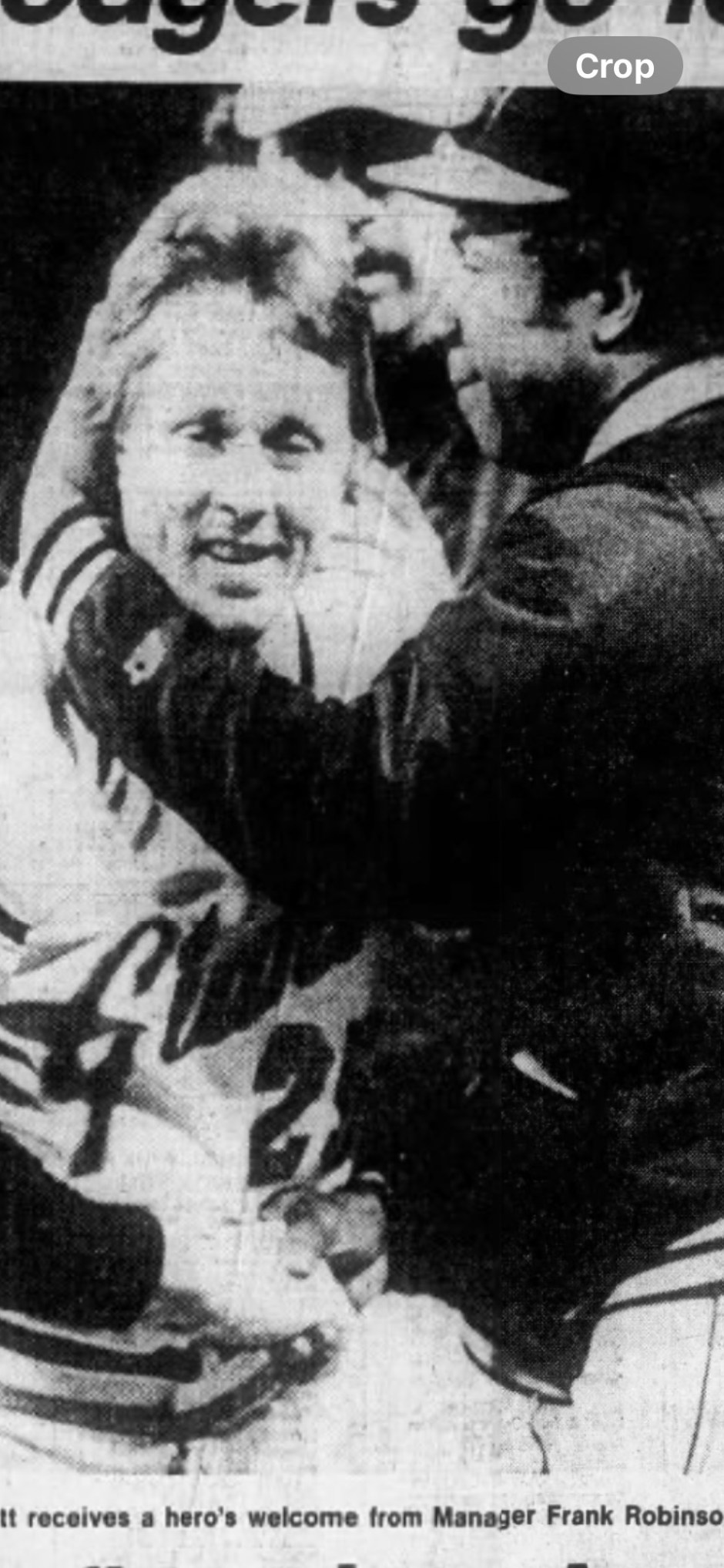
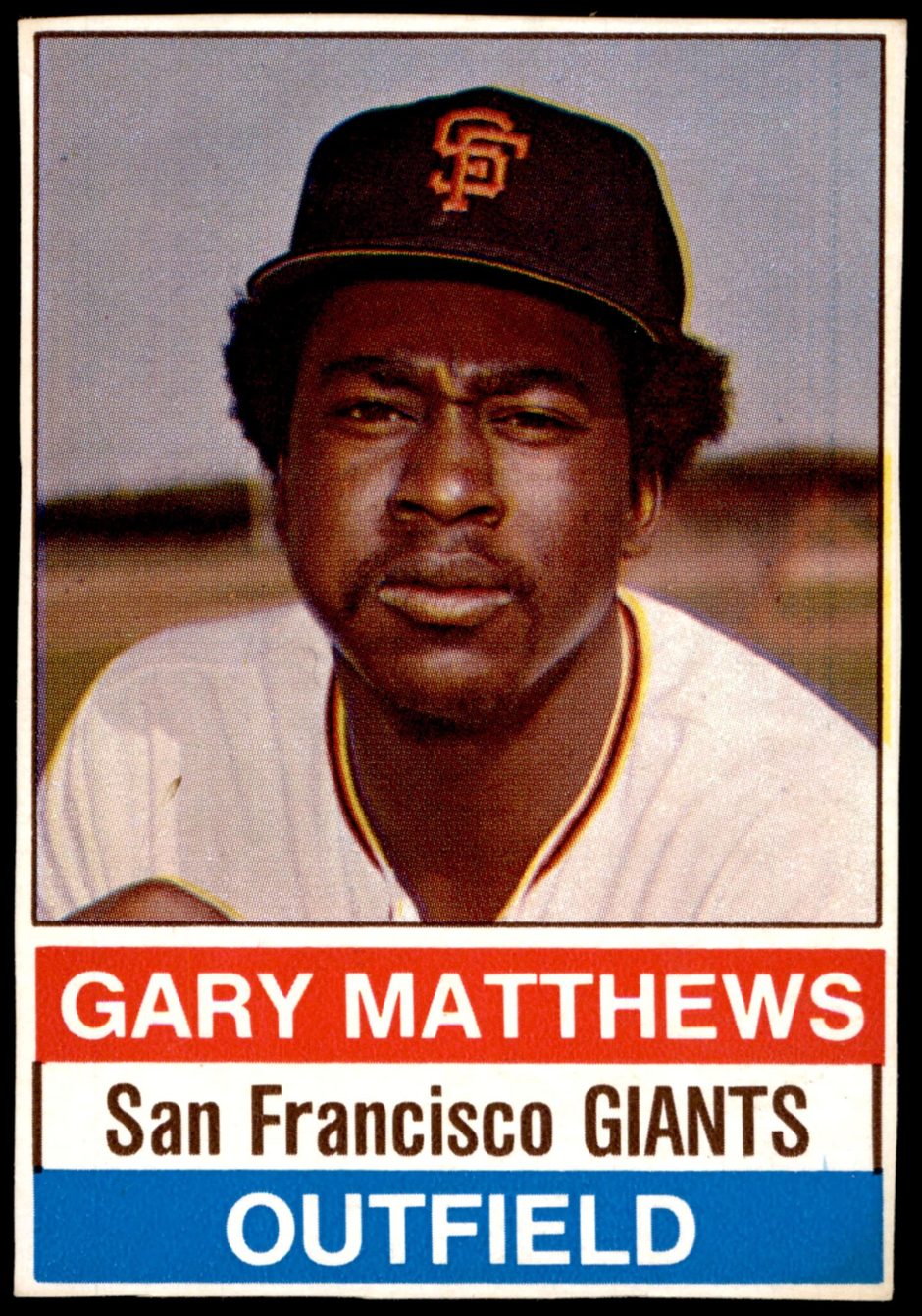
Former San Francisco Giant outfielder Gary Matthews broke in with the Giants as a September 1972 call up (1976 Hostess Baseball card photo)

San Francisco Giants September Call-Up Top 10 part 2

By Tony the Tiger Hayes

Since we ran Part One of this series the Giants promoted hot shot No. One Prospect Bryce Eldridge to the Major League roster and while he’s collected just one hit – a booming three-run double, Eldridge promises to be a fantastic Giant going forward – chances are however unless he starts bashing balls this weekend into the Bay he won’t catch up to these Legends of September.

(5 & 4)

Rich Aurilia, IF & Marvin Benard, OF – 1995

Two years removed from the Giants’ electric, but ultimately bittersweet, 103-win 1993 season and two years prior to the Orange & Black’s return to the national stage with a rousing 1997 NL Western Division championship season – 1995 was a mediocre campaign that could have easily been sponsored by lukewarm milk.

But the ‘95 club wasn’t total dreck as 1996 would prove be with it’s conga line of Four-A players.

While the ‘95 Giants didn’t exactly light up the universe – finishing last in the NL West – they did have an entertaining watchability factor most cellar dwellers lack.

Barry Bonds had a robust campaign – .294, 33, 104, 31 stolen bases. Powerful outfielder Glenallen Hill, with his 24 long balls was a nice pickup. And journeyman RHP Mark Leiter had a career season, posting 10 victories and being voted the Willie Mac Award winner for most inspirational Giant.

Additionally, the mid-summer doldrums were spiced up when shockingly, San Francisco swung a mega eight player trade with the Cincinnati Reds that brought freshly minted 49ers Super Bowl XXIX champion Deion Sanders to the Orange & Black.

Though the Giants were far out of contention by September, the final month of the ‘95 season brought a sneak peak into the Giants future with the call-up of a trio of first time big leaguers.

Twenty-two year old LHP Shawn Estes arrived and started the first three games of career in a low pressure setting.

The club also used September of ‘95 to introduce a pair of position players: 24-year-old outfielder Marvin Benard and 24-year-old shortstop Rich Aurilia.

Aurilia was from Brooklyn, New York and Benard from Nicaragua, via, Los Angeles and both tore the cover off the ball that month in what would be the start of long careers as rags to riches Giants stalwarts

A 50th round draft pick out of Lewis & Clark College in 1992, Benard had to overcome great odds – leap-frogging numerous higher draft picks just to get in position to receive a September call-up.

And once he received it, he pounced on the opportunity like a lion devouring an antelope.

After batting .305 for Triple-A Phoenix in ‘95, Benard got the call to report to Candlestick Park.

In his third at-bat, Benard ripped a third inning pinch-hit single off the Cardinals RHP Mark Petkovsek in a 13-4 loss at St. Louis (9/11/95).

Manager Dusty Baker gave Benard a shot to start the final week of the season and the rookie opened eyes in both the Giants front office and opposing dugouts.

In six consecutive starts leading off and playing center field, Benard batted 11-for-27, with a home run and three RBI.

Benard’s two-run long ball off Mike Munoz capped a five-run 9th inning, as the Giants roared to a 10-7 comeback win at Colorado (9/29/95).

Benard finished the month and season batting a very satisfying .384 in 13 games.

Benard parlayed that opportunity to become the Orange & Black’s surprise starting center fielder in 1996 and a roster mainstay for the next six seasons.

Unlike the home grown Benard, Aurilia became a Giant via a trade with Texas in exchange for former Orange & Black 20-game winner RHP John Burkett. But his career arc was similar to Benard’s.

A 24th round draft selection of the Rangers in the same draft class as Benard in 1992, Aurilia found a home quickly in the San Francisco organization, batting over .300 at Triple-A Phoenix in 1995 prior to his September call—up.

Like fellow rookie Benard, Aurilia was given the opportunity to start the final series of the campaign at Colorado and he too bashed Rockies pitching, hammering nine hits in 15 at-bats.

In his first MLB start, Richie went 4-for-5, singling off RHP Bryan Rekar for his first big league hit. He later doubled and socked his first major league home run off LHP Lance Painter in a 12-4 Giants blowout (9/28/95).

Aurillia finished his first month in the majors batting .474 (9-for-19) to start what would be an outstanding Giants career consisting of a dozen seasons repping the Bay City nine.

In 2001, Aurilia led the NL in hits with 206, batting .324, with 37 home runs and 97 RBI.

(3)

Madison Bumgarner – LHP -2009

Before he became a post-season Super Hero and all-time Orange & Black badass – Bumgarner was a top notch Giants September call-up in 2009.

Just 20-years old when MadBum was summoned to join the San Francisco pitching staff for the final weeks of the campaign, the rookie made four appearances, including one start and kept opposing batters swinging and missing, whittling a 1.80 ERA over 10 innings.

In his MLB debut, a start vs. San Diego (9/8/09), the tall southpaw pitched 5.1 innings, allowing five hits and two earned runs, getting a no decision in a 4-3 home loss. Bumgarner did not allow an earned run in three relief appearances the rest of the campaign.

The angular hurler would not make another relief appearance until… Game 7 of the 2014 World Series when MadBum solidified his reputation as baseball’s ultimate warrior, coming out of the bullpen to grind out 5 innings of whitewash relief to close out the Giants third World Championship in five seasons.

(2)

John Montefusco-

RHP – 1974

Even if Montefusco never managed to get an another big leaguer out after his remarkable MLB debut in September of 1974, the brazen Giant would probably still have a spot on this Top 10 lineup.

But not only did the “Count” have a primo game to launch his Giants career – almost single-handedly throttling the dreaded Dodgers on the road – he went on to pitch extremely well the rest of the season.

Overall, Montefusco closed out his first month in the majors with a 3-2, 4.81 record in seven games (five starts).

In his major debut (9/3/74), Montefusco took over in relief in the bottom of the first with the Dodgers leading 3-2 after Giants veteran starter Ron Bryant failed to record an out.

Montefusco would go on pitch the rest of the way, allowing just one run over 9 innings of work AND blasting a two-run home run in his first official at-bat off RHP Charlie Hough as the Orange & Black roared back to win 9-5.

With his first big league win under his belt, the New Jersey native would go on to record two more wins the rest of the month, including a 6-0 shutout win over the star-laden Cincinnati Reds at Candlestick Park (9/22/74).

The next two seasons Montefusco would become one of the best pitchers and box office draws in baseball, winning Rookie of the Year honors in 1975 (15-9, 2.88) and in 1976, winning a career best 16 games, making the All-Star team, leading the senior circuit in shutouts with six and and hurling a no-hitter.

He is a member of the Giants Wall of Fame.

(1)

Gary Matthews – OF

OF – 1972

Unlike most other players listed in this Top 10 review, Matthews is not a member of the Giants Wall of Fame. He only played with the club five seasons, and was not named to the All-Star team during the course of his San Francisco stint.

But in those campaigns Matthews was consistently one of the Giants elite players and no one made quite the first impression as this Southern California native did in September of 1972.

Over the course of 20 ball games, Matthews batted a sizzling.290, conked 4 home runs and drove in 14.

A left fielder by trade, a 17-year-old Matthews was tabbed by the Giants in the first round of the 1968 amateur draft out of San Fernando High School.

A quick study in the minors, the Giants brass let Matthews ripen into a .313 hitter at Triple-A Phoenix in ‘72 before calling him up to the show.

An excellent gap-to-gap batter with fence clearing power, dangerous speed and a dash of style – Gary proved he was more that ready to handle big league pitching that month and never again set foot on a minor league field.

Giants skipper Charlie Fox placed Matthews atop the Giants batting order in a game at San Diego (9/6/72) and turned him loose for the month.

In his second big league at-bat Matthews lined a base hit into center field off the Padres Bill Greif as the Giants routed the Friers 6-0 behind a complete game shutout by Ron Bryant.

Matthews stayed in the batting order the rest of the campaign and produced.

In the matinee of a doubleheader at Atlanta the Giants showcased their powerful bats from new and old Bay City Bashers going deep times.

Golden Oldie Willie McCovey hit a pair of mammoth taters that Saturday night and young pup Matthews also lifted off twice at the Launching Pad, swatting a two-run poke off Ron Reed and a solo blast vs. Larry Jaster in an 8-5 win. (9/16/72).

The Giants penciled Matthews in as the starting left fielder in 1973 and Matthews responded with a stellar full season entree batting .300, 12, 58 to win NL Rookie of the Year honors in flashy fashion.

Matthews continued to play excellent ball for San Francisco trough 1976, but the club was often in financial disarray during that era and nearly moved to Toronto.

When he became eligible for free agency Matthews signed with Atlanta. He was later a key contributor to the Phillies 1983 NL Championship cub and the Cubs 1984 playoff club.

They were Giants Good Fellas? SF Giants features by Tony the Tiger Hayes

One of the Giants Good Fellas FP Santangelo played the utility role for San Francisco in 1999 during his playing days and is currently a talk show host on the San Francisco Giants flagship station 68 KNBR San Francisco (photo by SF Giants)

For Us to Live Another Way Was Nuts

We have taken Martin Scorsese’s classic 1990 film “GoodFellas” and recast the film with historical figures from the San Francisco Giants

By Tony “The Tiger” Hayes

Next month will mark the 35th anniversary of one of the greatest films ever made, Martin Scorsese’s 1990 classic gangster picture “GoodFellas” a gritty mob crime drama that details the life and adventures of former New York City mafia figure Henry Hill and his cohorts in the Lucchese Family.

Generally regarded as Scorsese’s best film, the tour de force was both a box office and critically critical acclaimed masterpiece detailing all aspects of the gangster life from the everyday mundane spaghetti sauce splatters to truly horrifying blood soaked affairs as seen through the eyes of Hill, who rose from a entry level teenage gofer to high-ranking top-earner in the Lucchese crime family from 1955-80.

Adapted from Nicolas Pileggi’s 1985 true crime book “Wiseguy,” the film stars an evocative Ray Liotta as Hill, a calculating Robert De Niro and intense Joe Pesci as Hill’s gangland running mates Jimmy Conway and Tommy DeVito respectively.

Lorraine Bracco also stars as Hill’s frazzled wife Karen. The movie also features several other unforgettable performances in supporting roles, especially Paul Sorvino as Paulie Cicero and Chris Imperioli as “Spider.”

Known for it’s portrayal of classic East Coast Italian-American culture; unimaginable violence; quick-cut action sequences and a glib dialogue much of which was reported generated through free-wheeling ad-lib rehearsal sessions – “GoodFellas” was a stimulating and satisfying popcorn muncher that flew by, even at it’s extended two hours and 26 minutes running time.

Now – with all due respect to Scorsese’s excellent casting choices – we have decided to repopulate the picture with figures with San Francisco Giants ties.

Henry Hill

“GoodFellas” : Ray Liotta

“GiantsFellas”: Jack Clark

A real-life New York mafia figure, who dreamed of becoming a gangster the way some kids fantasize of becoming big leaguers, Liotta’s Hill is the main character and narrator Scorsese’s film adaptation of “Wiseguys.”

Liotta – who portrayed the ghost of disgraced former baseball star Shoeless Joe Jackson in 1989’s “Field of Dreams” – plays Hill with an alternating burning intensity and charming vulnerability that displays a comedic tinge.

Because of his half Irish/ half Italian heritage, Hill was never eligible to become a full Lucchese Family member no matter how hard he work or how much he earned.

But Hill finds comfort in his adopted Mafia family that he didn’t have in his blood family. Paulie is especially enamored with Henry as fully endorses his assent in the organization.

Similar to Hill’s character, Jack Clark is also half-Italian, half-Irish.

Hill character in the movie says: “For as long as I can remember I always wanted to be a gangster.”

And despite growing up in Los Angeles, Clark grew up a Giants fan, favoring the colors Orange & Black over Dodger Blue.

A Giants slugger from 1975-84, Clark was consistently San Francisco’s top ballplayer during his time with Bay City and remains near the top of several offensive categories in the franchise’s west coast history.

But despite his robust productivity for the City by the Bay – 163 home runs, a San Francisco best 26-game hitting steak and two All-Star game berths – Clark is never mentioned as alongside franchise legends Mays, McCovey and Cepeda because the club played poorly for most of the “Ripper’s” time within with the organization – never making the playoffs and contending in just two campaigns (1978, 1982).

Like Hill who could never be a made man in the Lucchese Family due to his Irish blood, Clark was never recognized as a full-heritage Giants great. His uniform no. 22 was even retired to honor another Giants legend coincidentally named “Clark,” the fabulous Will Clark.

After entering the Witness Protection program in “GoodFellas,” Hill is forced into a new mundane lifestyle. He and Karen change their names, move to an anonymous midwest town and become regular people who, in his words, live like “schnooks.”

On the flip side, after Clark was traded to a midwest city in 1985 (St. Louis) he immediately found the greatest success and notoriety of his career, bashing a pennant wii ing three-run home off the Dodgers Tom Niedenfuer in Game 5 of the ‘85 NL Championship Series and going on to help the Cardinals win the ‘85 World Series in a classic seven game series vs. Kansas City.

Tommy DeVito

“GoodFellas”: Joe Pesci

“GiantsFellas”: John Montefusco

Based on real-life underworld figure

Tommy De Simone, Pesci’s portrayal of Tommy DeVito as a dapper, hair-trigged psycho killer earned the Italian-American showman an Academy Award in the Best Supporting Actor category.

Pesci’s unnerving “I’m funny how, I mean funny like I’m a clown. I amuse you?” scene is the most memorable in a film chockablock with unforgettable scenes.

Tommy flys off the handle over the mundane: murdering a made man over a verbal insult, wasting a bartender for giving him a little lip and brazenly ambushing a mob cohort for failing to maintain pinkie ring etiquette.

DeVito is eventually cornered and popped himself when his penchant for unpredictable violence became a liability for the Lucchese family.

Now, Montefusco never beat anyone to death with a baseball bat during his six years with San Francisco, but he did utilize a Louisville Slugger in his Giants major league debut, bludgeoning a home run and pitching nine innings of one run ball to earn the win in a 9-5 comeback at Dodger Stadium (9/3/74).

A New Jersey native like Pesci, Montefusco burst on to the Candlestick Park scene in the mid-1970s with the swagger of a John Gotti/Juan Marichal collaboration.

Nicknamed “The Count” by Giants broadcaster Al Michaels, the brash and outspoken Montefusco quickly caught the attention of Giants fans with his fabulous pitching abilities- capturing Rookie of the Year honors in 1975 and pitching a No-Hitter in 1976 – and a cocksure attitude that spawned a string of bold predictions that occasionally thrust Montefusco into national news stories.

But the 1976 All-Star also had a dark and volition side. In 1980, the righty tried his hand at dugout fisticuffs with manager Dave Bristol, the pitcher receiving a bruised ego and a black eye.

After his playing days concluded, Montefusco was accused of abusing his former wife resulting in several serious domestic abuse felonies charges. Due to an excessively high bail, Montefusco spent a long stretch in jail as he awaited trial. Montefusco was eventually acquitted of the most serious of the charges and sentenced to three years probation.

Jimmy Conway

“GoodFellas” : Robert De Niro

“GiantsFellas” : Rich Aurillia

Based on real-life New York gangland figure Jimmy Burke, Conway is played by a suave Robert Di Niro.

Conway headed up the major caper of “GoodFellas” – the multimillion heist of cash from a Lufthansa airliner at New York’s JFK airport.

Though he presented himself as articulate and genteel, Conway was also a criminal mastermind capable of turning brutally violent when the occasional calls for it. out.

Deadly serious about the mafia’s code of “omertà” Conway tells Hill: “…never rat on your friends and always keep your mouth shut.”

At one point Conway considers the Hills as close as blood relatives, vacationing and hitting the New York hot spots with them.

But Conway eventually becomes paranoid – liberally whacking other crew members he’s afraid may turn on him.

Hill appears to be next on his list. But before Conway can act on his fears, Hill turns states evidence and sends Conway upstate to the Graybar Hotel.

We’ve chosen Aurillia, the popular former Giants shortstop to play Conway for his New York roots and close resemblance to De Niro when the film was made.

A well-spoken, thoughtful player who took his duties of speaking to the media to heart during his playing days with the Orange & Black, Richie’s locker was the first destination for reporters looking for someone to talk after a tough loss or any general topic revolving around Barry Bonds on going drama.

Paulie Cicero

“GoodFellas” : Paul Sorvino

“GiantsFellas” Joe Altobelli

Based on Lucchese family capo Paul Vario, the fatherly Cicero christened Henry Hill into mob life as a fresh faced teen, hiring the high school dropout as a gofer and numbers runner.

Sorvino’s Cicero was dedicated family man, preferring his wine and Italian delicacies over typical gangsters stuff like whacking guys.

“Vinnie, don’t put too many onions in the sauce,” Paulie says.

Cicero only got his hands messy when he was busy in the kitchen.

Later in the film Hill turns on Cicero providing testimony that will send him to prison.

Played by veteran New York actor Sorvino with calm reassurance, we have chosen Altobelli, also a native New Yorker himself to take on the Cicero role.

Unlike his Los Angeles Dodgers counterpart at the time and fellow East Coaster, Tommy Lasorda, Altobelli was a mellow Italian-American who rarely raised his temper in the dugout.

But like Sorvino’s unhurried character in “GoodFellas” Altobelli got results – to a point.

After taking over a talent depleted club in 1977, Altobelli had the Orange & Black riding high in the standings for most of 1978. The Giants’ shocking rise earned the native New Yorker “Manager of the Year” that season.

But like Cicero who eventually went to prison in the film when Hill turned on him, it all went sour for Altobelli in 1979 when the club plummeted back to earth and players spoke out disparaging about Joe’s laize faire skippering style. A hit was placed on Joe and he was replaced mid-season by Dave Bristol.

Karen Hill

“GoodFellas” : Lorraine Bracco

“GiantsFellas” : Renel

Like Karen, the devoted wife of Henry Hill who stuck with her man despite years of skirt-chasing and mob related nonsense, Renel was a popular Top 40 disc jockey who surrendered her radio career to devote more energy to being the Giants high-energy signature Oracle Park PA announcer for nearly a quarter century before being unceremoniously dumped in 2024.

Rebel is perfect to read the lines: “Our husbands weren’t brain surgeons, they were blue-collar guys. The only way they could make extra money, real extra money, was to go out and cut a few corners.”

In “GoodFellas,” Bracco’s “Karen” was “good Jewish girl” who alternately appalled and stimulated by the gangster lifestyle.

Eventually she becomes more than a typical stand on the sidelines mob wife, actively assisting Henry in drug trafficking, racketeering and money laundering.

Karen eventually loses the standard protective status given mob wives when she testifies against other Luccese family members.

Like the unconventional “Karen”, Renel was hardly your standard public address announcer. With her stylized player introductions , Renel brought an urban dee-jay style to the announcers cat-bird never heard before in a sports setting.

The PA announcer at Third & King since day one in 2000, Renel introduced a myriad of events at the ballpark ranging from the heartbreaking – the return to baseball after the 9/11 terrorist attacks – to Barry Bonds record breaking home run chase to four World Series. Renel was also a tireless booster of Giants baseball and its various charities away from the ballpark.

Similar to Karen who gave up everything to enter witness protection status with her husband, Renel who knows where all the bodies are buried in Giantsland, and surely has all the behind the scenes dirt on the Bonds PED scandal never exposed any dirt on the Orange & Black higher-ups, even after getting unceremoniously getting kicked to the curb after wisely or not after speaking out negatively about the team’s chief shareholder’s conservation political leanings.

Billy Batts

“GoodFellas” : Frank Vincent

“GiantsFellas” : Johnny Antonelli

A Gambino Family made man with an ability to get under peoples skin with his verbal jabs, Batts tweeks Pesci’s Tommy so relentlessly – calling him “shoe shine boy” – that the quick to temper rival gangster goes medieval on Batts ass – killing him in a blood soaked rampage before Hill and Conway help De Vito dispose of Batts’ body by burying it in a remote upstate cow pasture.

The part of Batts is played by veteran mob movie veteran Vincent in “GoodFellas.”

For our G -Man remake we’ve chosen fellow New Yorker and Italian-American former Giants pitcher Johnny Antonelli.

The Rochester, New York legend never told Giants fans to “go home and get your shine box”, no, he did worse… criticizing San Francisco’s legendary Fog.

An original San Francisco Giant who played with the club in New York, Antonelli also got in trouble with his mouth as a San Francisco Giant when he grumbled out loud about the wind and cold summers of the City by the Bay while trying to pitch at both Seals Stadium ( “a minor league bandbox”) and Candlestick Park, suggesting pitchers get paid extra to toil in the ‘Stick’s notorious biting chill and gusty conditions.

Compared to Batts, Antonelli got off good. Instead of getting eradicated and turned into compost, the Giants simply traded Johnny when the local booing got so intense it became a national story.

But when you consider the fact the opinionated southpaw was shipped to Cleveland, maybe, just maybe, he would have been better off taking his chances with an incensed Pesci.

Spider

“GoodFellas”: Michael Imperioli

“GiantsFellas” : F.P. Santangelo

An unassuming young bartender nicknamed “Spider” is a briefly appearing, but unforgettable “GoodFellas” character. Played by Michael Imperial of “Sopranos” fame, Spider is terrorized by Tommy who accidentally shoots the young mixologist in the foot while making him “dance” like a scene out of a Western. Eventually he offs him the next time they meet when, an exasperated Spider tells the sociopath mobster to go “f— himself.”

In the “GiantsFellas” remake the part of Spider is performed by former San Francisco utility-man F.P. Santangelo.

We realize that the Santangelo casting is against type – he’s usually the one doing the boasting and bullying – just check his track record in Washington. But Santangelo is also extremely annoying, especially in his current part-time broadcasting gig with the Orange & Black – Tommy would find Frank-Paul the perfect foil.

Tommy’s Mother

“GoodFellas” :Catherine Scorsese

“GiantsFellas”: Mike Murphy

Before heading out to the sticks to dispose of Billy Batts remains, the boys stop by Tommy’s boyhood home, to secure a few shovels and the odd bone saw. Despite their quiet entry, the guys invariably wake Tommy’s elderly mother, played by Scorsese’s own precious mom Catherine.

Despite her knowledge of the boys vocation she hilariously treats them like kids home from school and promptly throws together a midnight snack and thermoses of coffee for their nocturnal wanderings.

For more than 60 years, equipment man Mike Murphy was the Giants on the spot homemaker. Besides mending torn uniform pants, “Mother Murphy” always had plenty of tummy filling snacks at the ready for the kids in Orange & Black.

Frankie Carbone

“GoodFellas”: Frank Sivero

“GiantsFellas”: Joey Lucchesi

Lucchese Family member Carbone, took part in the Lufthansa caper and was paid off shortly afterwards. But instead of lying low as instructed by Conway, Frankie began flaunting his new found wealth, buy expensive jewelry, a flashy new cadillac and a very luxurious mink fur coast for his wife. A livid Conway rips the coat away from Carbone’s better half and demands he stop acting so suspiciously.

Shortly thereafter, Carbone is found frozen stiff as a two-by-four hanging in the back of a refrigerated delivery truck.

“… it took them three days to thaw him out for the autopsy,” Hill tells the audience.

Similarly to what it felt like after collecting a “Croix de Candlestick” pin after a frosty extra inning night game.

We have cast current Giants left-handed relief pitcher Joey Lucchesi aka “Joey Fuego” in the Frankie Carbone role primarily because he has the name of a guy Scorsese would likely cast to play a guy name “Frankie Carbone.”

Morrie Kessler

“GoodFellas”: Chuck Low

“GiantsFellas” : Casey Schmitt

Based on real-life wig shop owner and mob cohort Martin Kidman, Morrie is a comical TV pitchman for men’s hair pieces – he’s the company’s owner AND a client – Morrie is also a degenerate gambler and mob associate who helped setup the airliner heist and is played with comedic flair by Chuck Low.

Unfortunately Morrie is is also rubbed out when Conway grows tired of the annoying persistent grumbling by Morrie regarding his payout for the airline robbery.

We’ve tabbed current Giants infielder Casey Schmitt to act out lines like, “Don’t buy wigs that come off at the wrong time.”

A zany guy in his own right, Schmitt was recently the victim of a tragic buzz cut and is one of a few people that would actually benefit from one of Morrie’s beaver resembling wigs.

Tony “Stacks” Edwards

“GoodFellas” : Samuel L. Jackson

“GiantsFellas”: Joe Pittman

The only featured black character in “GoodFellas,” Stacks serves as the getaway driver for the Lufthansa take down. But when he falls asleep and police find the van before it’s properly disposed of, Conway orders “Stacks” to be whacked by Tommy fearing the vehicle will be traced back to “Stacks” and he’ll spill the beans.

This was Jackson’s last minor role before his breakout turn in Quinton Tarantino’s 1994 blockbuster crime drama “Pulp Fiction.”

We’ve named #forevergiant Joe Pittman – 17 games in 1984 – for the role of “Stacks” – not only did the late infielder resemble Jackson, facially and build wise, his nickname “Shoes” sounds close of “Stacks.”

Coincidentally, Pittman tragically passed in 2014 at age 61 while working a construction job in… Lake Jackson, Texas.

Lois Byrd

“GoodFellas” : Welker White

“GiantsFellas” : Alyssa Nakken

A blonde tomboy, Lois is another minor “Good Fellas” character who leaves a lasting impression. Not only is Lois, the Hill’s babysitter, but she also serves as their drug courier! Lois screws up a major deal by refusing to travel to the airport until after returning home to get her “lucky hat.”

Just as Lois was the first infant caregiver/drug mule presented on the Silver Screen, Nakken was the first woman to serve as a first base coach in a major league game (4/12/22) when she filled in for ejected coach Antoan RIchardson.

Tony the Tiger Hayes does He/She was a Giant? features at http://www.sportsradioservice.com

They were a Giant? The International House of Giants Baseball – Part II

Former San Francisco Giants pitcher Juan Berenguer in 1986 from Cocle Province Panama was one of the international Giants (autograph photo signed by Berenguer)

They were a Giant? By Tony the Hayes

Several weeks ago we revealed in our first installment that historically the San Francisco Giants have fielded players, coaches and managers from 23 different foreign countries and territories.

Taking ONE representative from each country or territory we have assembled an awesome internationally flavored Orange & Black roster.

In our first installment we revealed the starting lineup as follows:

P – Dominican Republic – 🇩🇴 – Juan Marichal C – Mexico – 🇲🇽 Alex Trevino 1B – Puerto Rico – 🇵🇷 – Orlando Cepeda 2B – Honduras – 🇭🇳 – Mauricio Dubon 3B – Venezuela- 🇻🇪- Pablo Sandoval SS – Colombia – 🇨🇴- Edgar Renteria LF – Nicaragua – 🇳🇮 – Marvin Benard *CF – Japan – 🇯🇵- Jung Hoo Lee (Though he’s a South Korea national and citizen, Lee was born on Japanese soil, where his father was a professional ballplayer) RF – Jamaica – 🇯🇲- Chili Davis

Next, we fill out the rest of the roster and dugout brain trust.

Starting Pitching

Cuba -🇨🇺 – Livan Hernandez – RHP

While his big game rep took a pounding with a couple of putrid starts in the 2002 World Series, Hernandez was an above average pitcher in his three-plus seasons with the Orange & Black, notching 45 regular season and two postseason victories, when starting pitcher W’s were still valued.

Notable Countrymen: Tito Fuentes, IF; Jose Cardenal, OF; Carlos Alfonso, coach.

Aruba – 🇦🇼 – Sidney Ponson – RHP

After a breakout first half performance with Baltimore, the plump Ponson was acquired at the trade deadline in 2003 and unfortunately immediately reverted to his inconsistent former self, finishing with a 3-6, 3.71 ledger in 10 starts. After the Marlins socked Sidney around in a ‘03 playoff start, the Giants choose to let the pitcher walk via free agency.

Notable countrymen: Chadwick Tromp, C.

Australia -🇦🇺 – Damian Moss – LHP

Acquired in a trade with Atlanta in exchange for RHP Russ Ortiz prior to the 2003 season, Moss initially looked spectacular, posting victories in his first five decisions. But the southpaw subsequently hit a snag, and the gruff Aussie went down under quickly. When hypnosis with a sports psychologist, failed to meet the desired results, Moss was dispatched to Baltimore in exchange for Ponson.

Notable Countrymen: Travis Blackley, RHP.

Bullpen

Panama – 🇵🇦 – Juan Berenguer – RHP

This hard-throwing swingman was a top- notch Giant in his lone season with the Orange & Black in 1986 after coming over from the Tigers in a trade.

“El Presidente’s” 2.70 ERA in 46 Giants appearances was the second best of his distinguished 15-year big league career that also saw him win World Series titles with Detroit and Minnesota.

Notable Countrymen: Rennie Stennett – 2B, Roberto Kelly – coach; Enrique Burgos – RHP

Ruben Rivera – OF

Germany – 🇩🇪 – Craig Lefferts – LHP

Born in Munich where his father was stationed with the United States Air Force, Lefferts enjoyed an 11-year big league career and helped anchor the bullpens of two Giants division winning clubs (1987, 1989) and one NL Championship club (1989). Acquired by the Giants from San Diego in the blockbuster Kevin Mitchell of 1987, Lefferts was a workhorse reliever for San Francisco amassing a whopping 174 regular season appearances and eight postseason outings for the Giants.

Canada – 🇨🇦 Georges Maranda – RHP

Though hockey is profoundly recognized as the sporting king to our neighbors in the Great White North, it’s still somewhat surprising to learn that only two native Canadians have played for the San Francisco Giants…

and both appeared in the Orange & Black more than 60 years ago.

Neither Ken MacKenzie (1964) nor Maranda (1960) lasted long with the Giants – but we’re taking Maranda here because he appeared in more games – 17 to 10 – and offered more versatility.

Unlike his countryman who had no decisions and pitched strictly in relief, Maranda made a handful of starts for San Francisco and notched the first of his two big league victories as a Giant – beating the Cubs on the road 5-3 (8/21/60) in his first MLB start with 7 frames of one-run work.

Virgin Islands – 🇻🇬 – Jharel Cotton – RHP

It’s only by a technicality that Valmy Thomas – the West Coast Giants’ first-ever catcher – is not our Virgin Islands representative. But Thomas doesn’t quite qualify for the nod because his mother traveled from her St. Croix island residence in 1935 to Puerto Rico to give birth to the future backstop before returning immediately home with her precious newborn.

So the honor goes to Cotton, a former top prospect with Oakland. Cotton made five relief appearances for San Francisco at the tail end of the 2022 season, four of which were solid performances. In his Giants debut, Cotton was one of six Giants pitchers – count ‘em six – to combine for a 3-0 shutout at Colorado (9/22/22). Cotton’s 2.2 innings of whitewashing were the most of any of the half dozen Orange & Black pitchers that day and he was credited with the win. But he wasn’t done. In Cotton’s penultimate big league appearance, the St. Thomas native picked up the W in a 4-3, 10-inning home win over Arizona. In a trademark Gabe Kapler/Farhan Special, Cotton was the last of eight pitchers that day.

Fellow Countrymen: Jose Morales, coach.

Taiwan – 🇹🇼- Kai-Wei Teng – RHP

Though Taiwan has been major player in international youth baseball for decades- most prominently excelling in Little League World Series competition- only a handful of players from this Red China territory have played major league ball. Teng, the Giants lone Taiwanese-born player, made the big league team’s opening day roster in 2024, but posted an unsightly 9.82 ERA in four relief appearances before returning to the farm system for more seasoning. He currently pitches at Triple-A Sacramento and remains a prime candidate for a 2025 call-up.

Bench

Netherlands – 🇳🇱 – Rikkert Faneyte

  • OF

Born and raised in Amsterdam, Fanayte attended junior college in Florida where he was scouted and signed by San Francisco in 1991. By 1993 he was up with the big club and contributing to a 103-win club. He also played parts of 1994-95 with the Orange & Black. Fanayte was a key member of the Dutch National Team that participated in the 2000 Olympic Games at Sydney.

Bahamas – 🇧🇸 – Andre Rodgers, IF

Real old school Giants fans will remember Rodgers as a “can’t miss” shortstop prospect who didn’t quite live up to expectations. A top notch cricket player on his native island, Rodgers baseball skills were unrefined when he signed with the club in club in 1954. A personal favorite of Giants President Horace Stoneham, the tall and rangy infielder was up with the club by 1957 and was an original member of 1958 west coast Giants. In May of 1959, it appeared the young Bahamian was on the verge of a break though when he pummeled five home runs for the month of May for San Francisco, but he was not able to sustain the offense clout power throughout the summer. Ultimately defensive frailty (22 errors in ‘59) was Rodger’s achilles heel with the Orange & Black and he was dealt to the Cubs after the 1960 campaign.

Fellow countrymen: Antoan Richardson (coach).

South Korea – 🇰🇷- Jae-Gyun Hwang, IF

It’s short-termer Hwang, not Jung Hoo Lee – who was actually born on Japanese soil – representing South Korea on our Giants International roster.

After already experiencing stardom in the KBO, Hwang was nearly 30 by the time he made his MLB debut with the last place finishing San Francisco in 2017, aka “Year of the Gorkys .”

A popular slugger in his homeland, Hwang magnificently provided one of the few highlights of the an otherwise downer year when he hammered a solo homer in his big league debut game (6/28/17), a 5-3 home win over the Rockies. Hwang received a decent opportunity to start at 3B for the Giants, but returned to Korea to resume his professional career after batting just .154 in 18 games with San Francisco.

Fellow countrymen: Jung Hoo Lee

Manager & Coaches

France – 🇫🇷 – Bruce Bochy – Manager

Bochy who is the longest tenured (11 seasons) and most successful manager in San Francisco Giants history (three world titles: 2010, 2012, 2014) was born in France in 1955 where his father was stationed with the U.S. Military.

Bochy is the first European-born skipper to manage in a World Series, winning a trio of rings with San Francisco and a fourth with Texas (2023). He also piloted San Diego to a Fall Classic berth (1998).

Coaches

Curaçao – 🇨🇼 – Hensley Meulens

A former Yankees prospect and star slugger in Japan, Meulens was a Giants batting and bench coach from 2010-19, working the entire time at the pleasure of Bochy and earning three jewel-encrusted World Series rings.

Saudi Arabia – 🇸🇦 – Mark Hallberg

A rising star in the Giants hierarchy, Hall is currently in his fourth season on the Giants coaching staff. Though American, Hallberg was born abroad in Jeddah, Saudi Arabia in 1985 where his parents were employed as teachers. He spent his first eight years living in the Kingdom before spending the next five years in Pakistan. He attended the last two years of high school in Wisconsin before starring in baseball at the University of Illinois Chicago for two years prior to transferring to Florida State University where he was teammates with future Giants MVP and current president of baseball operations Buster Posey.

Hallberg played several seasons of minor league baseball before transitioning into managing and coaching.

*Hawaii – Wendell Kim

While it’s true Hawaii has been a state for more that 65 years, at the time of Kim’s birth in 1950, the “Aloha State” was still very much a United States territory.

An irascible, pint-sized first and third base coach for the Orange & Black from 1989-96, Kim whose middle name was “Kealohepauloe” carried true Hawaiian bloodlines.

Tony the Tiger Hayes does the He was a Giant? features at http://www.sportsradioservice.com

The International Food Court of Baseball

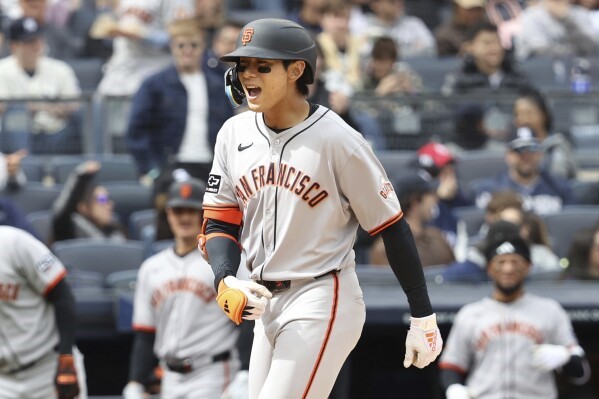
San Francisco Giants Jung Hoo Lee excited after hitting a home run off New York Yankees pitcher Carlos Rondon. Lee is one of the many great international pitchers in Major League Baseball (AP file photo)

By Tony the Tiger Hayes

San Francisco – Jung Hoo Lee may have struck out with the bases loaded to end the bottom of the 7th inning in Monday night’s 1-0 loss to the visiting Padres, but

there’s no question the addition of the dynamic South Korean center fielder has created a ripple of good vibes throughout Giants land.

After missing the majority of his U.S. rookie season to injury in 2024, The former KBO All-Star has been particularly impressive this season as San Francisco’s leading batter and catalyst for numerous early season victories in media hot spots.

In Lee’s first ever appearance at Yankee Stadium the Korean matinee idol stung a trio of home runs, igniting a mini-media frenzy.

Back home in the City by the Bay, Lee, with his winning personality and ever present smile, has become the most popular Orange & Black starting player.

The creation of the “Jung Hoo Crew”rooting section has been a popular addition to the Oracle Park experience, giving local baseball fans and a growing number of Lee fans traveling from South Korean a chance to gather in force.

The quirky thing is… though Lee is fully Korean, grew up in South Korea and lives in South Korea in the off season. He was actually born in Nagoya, Japan.

At the time of his birth on 8/20/98 Jung Hoo’s father – Lee Jeong-beom – a great ballplayer in his own right was playing for the Chunichi Dragons of the Japanese major leagues.

In 1964 LHP Masanori Murakami of Japan became the first Japanese native to play major league baseball when he debuted with the Orange & Black.

Of course international talent is nothing new to the Giants franchise. In 1956 when the club was still based in New York City, the Giants introduced the first ever native of the Dominican Republic, infielder Ossie Virgil, to play in the Major Leagues.

The Giants tradition of scouting and signing players out of Latin America countries was especially continued after the club relocated to San Francisco in 1958, with an abundance of signings coming out of in particular the D.R. and Puerto Rico.

Ranging from Aruba to Saudi Arabia – players, coaches and managers born in 21 different foreign countries have represented the San Francisco Giants.

Now, natives from the countries of the Dominican Republic, Puerto Rico and Venezuela could compile virtual All-Star teams for the Giants, but we’ve decided to take one representative – and one only – from each of the 21 countries to make up a club – complete with starting rotation, bullpen and bench players to compile a roster.

We think you’ll find the results intriguing.

Starting Pitcher – Dominican Republic

Juan Marichal 1960-73.

So many fabulous San Francisco Giants hail from the small island nation of the Dominican Republic, including the famous Alou brothers and current starting shortstop Willy Adames. But not only is Marichal the greatest player from the D.R. in Giants history, he’s unquestionably the most dominant pitcher in Giants west coast history.

The Laguna Verde native broke in with the Orange & Black in 1960 with a dazzling complete game one-hitter vs. visiting Philadelphia and never looked back. The “Dominican Dandy” tormented opposing batters in his 14 seasons with San Francisco. Marichal’s 191 victories were the most by any pitcher in the 1960s, as the stylish, high-kicking righty was a 20-game winner six times that decade. He impressively struck out more than 200 batters and posted an ERA under 2.50 in each of those half-dozen campaign. Marichal established a franchise record with 26 victories in 1968.

In 1983 Juan was voted into baseball’s Hall of Fame. His iconic no. 27 was retired by San Francisco that decade. And when Pac Bell Park was christened in 2000, an extraordinary bronze statue depicting Marichal’s trademark pitching delivery was unveiled.

Notable Fellow Countrymen: Felipe, Mateo, Jesus Alou. Moises Alou, Juan and Jose Uribe.

Catcher – Mexico

Alex Trevino – 1985

The Giants have fielded a number of top Mexican-American ballplayers, including three-time World Series champion reliever Sergio Romo and the slugging infielder Darrell Evans. But the number of native born Mexicans to suit up for the Bay-based Orange & Black has been surprisingly slim.

A personal favorite is RHP Migel Puente, who briefly appeared in the big leagues with San Francisco in 1970. Puente’s entire MLB career consisted of just six games, but one of those contests was a dominant complete game pitching performance in a 7-1 road win over the World Champion New York Mets (5/8/70).

But we selected catcher Alex Trevino of the last place 1985 Giants as our representative from Mexico.

With a pitiful 100 losses, the ‘85 Giants rank as the worst club of the San Francisco era. But Trevino, a journeyman backup to starting receiver Bob Brenly that season had a pretty decent season, batting .250 and socking a career high six home runs, in 57 games.

The following season the Monterrey, Mexico native was traded to the Dodgers for the fantastic Puerto Rican OF Candy Maldonado in one of the best Giants trades of the past 40 years.

In a side note, Trevino is widely credited as the first Latino ballplayer to request a tilde be added to his name of the back of his uniform.

Notable Giants Countrymen: Puente, RHP Miguel Del Toro

First Base -Puerto Rico

Orlando Cepeda – 1958-65

You can’t talk Puerto Rican baseball without the “Baby Bull” Orlando Cepeda in your opening sentence.

Cepeda was the first future Hall of Famer to debut as a San Francisco Giant, batting fifth and playing first base and in the first MLB game ever played in San Francisco (4/15/58).

The colorful slugger made an immediate first impression when he slugged a solo home run in the fifth inning of the 8-0 win over the visiting Dodgers.

Cepeda would go on to win Rookie of the Year honors and remain a ferocious slugger in the heart of the Giants lineup though mid -1965 when he was shockingly traded to St. Louis.

Cepeda would eventually reunite with the Giants organization some 30 years later. When he was voted into the HOF in 1999, Cha Cha” entered the hallowed shrine repping the Orange & Black.

Notable fellow Giants countrymen: IF Jose Pagan, LHP Jonathan Sanchez, OF Angel Pagan

Second Base – Honduras

Mauricio Dubon – 2019-22

Ideally, we would put the colorful longtime Giants infielder and Spanish play-by-play broadcaster Tito Fuentes as our all foreign second sacker. But Tito’s Cuban designation has a more pressing need in the starting rotation.

Like Fuentes, Dubon was a colorful and exciting Giants player, but his erratic play wore down team brass and was bounced from the club after parts of four seasons.

The Honduran hustler quickly became a fan favorite after debuting with San Francisco in mid-2019. After batting .279 with 4 homers in just 28 games. The club aggressively club tabbed Dubon – who spent his teen years in nearby Solano County as a future star. But the 2020 pandemic stalled Dubon’s progress and by mid-2022 after a series of bone-head base running blunders he was gone.

Dubon would go on to thrive in Houston- winning a World Series with the Dusty Baker helmed club in 2023.

Notable fellow Giants countrymen: none.

Shortstop – Columbia

Edgar Renteria – 2009-10

Renteria wasn’t here for a long time, but he was here for a good time.

A World Series title was the furthest thing from the Giants or this former five-time All-Star’s mind when Renteria signed with San Francisco prior to the 2009 season.

Heck, following embarrassing 2008 seasons on both ends, each party was just looking to shed their prime seats on the struggle bus.

But within the breadth of only two campaigns, the union would procreate San Francisco’s first ever World Series Championship with the Columbian shortstop leading the charge.

Rentería began 2010 hot as a firecracker, but the 37 year-old was injured and unavailable for much of the season. But when the shadows grew long across the infield, baseball’s best ever Columbian was ready to pounce. Late in the season, Edgar delivered a speech, explaining his exit from baseball was near and he wanted the Giants to make the playoffs.

Renteria would start 11 postseason games that season – saving his best for last. He started all five World Series games vs. Texas, batting .411, with two home runs and six RBI. Renteria capped the Giants victorious World Series run with a knee buckling three-run seventh inning home run off the Cliff Lee in Game 5 to win the Fall Classic for San Francisco. Renteria was named the World Series MVP.

Notable fellow Giants countrymen: INF Donovon Solano

Third Base -Venezuela

Pablo Sandoval – 2008-2014, 2017-20

The Giants proud relationship with Venezuelan ballplayers dates back to their New York time line – but the Orange & Black connection with the island with the most Ms. Universe winners really took a foothold in the club’s Third & King era.

But the player who connected the most on the field and with fans is undoubtedly Sandoval.

The happy-go- lucky “Kung Fu Panda” broke in with the Giants in 2008, batting a fat . 345 in 41 games. The personable Panda would go onto become an all time McCovey Cove favorite, bopping 135 career round trippers for the Bay City franchise.

Sandoval was a clutch contributor to all three Giants World Series championship clubs in the 2010s, especially in 2012 and ‘14.

After being benched for much of the 2010 postseason in favor of Juan Uribe, Sandoval refused to take a seat in 2012. In Game 1 of the World Series, pudgy Pablo delivered a devastating gut punch to vs. Detroit, crushing three home runs in the 9-3 victory. The zaftig slugger added another long ball later in the series and ended up with an awesome .500 batting average (8-for-16) in the four game sweep, making him the unanimous choice for MVP.

After recording the final out of 2014 World Series clinching victory, the Panda – who started all seven games, batting a lusty .429, took an ill-advised free agent contract with Boston. But after washing out with the Red Sox, the prodigal son returned to McCovey Cove in 2017.

Notable fellow countrymen: OF Gregor Blanco, 1B Andres Galarraga, IF Marco Scutaro.

Left Field – Nicaragua

Marvin Benard, 1995-03

Though hardly a perfect ball player, Benard stories is one of best rags to riches tales in west coast Giants history.

Only one of handful of Nicaragua natives to play big league ball, Benard was a 20th round draft pick of the club who not only over came great odds just to reach the big leagues, but thrived for years at the games highest level.

Benard was an outfield starter in four of his nine big league seasons – all spent with the Giants. In 1999, the Giants final campaign at Candlestick Park, Benard topped the Orange & Black in batting, compiling an excellent .322 average in 121 contests.

In 2000, Benard became the first Giants batter Pacific Bell Ballpark, (flying out to right field) as San Francisco’s first ever lead off hitting in the park’s ribbon cutter (4/11/00).

In his Giants career, Benard was a .271 batter, whacked 54 home runs and drove in 260 runs. An accomplished base stealer, Benard pilfered 105 bags in his San Francisco career, leading the club in base nicks in 1999-00.

Notable fellow Giants countrymen: 1B David Green

Center Field- Japan

Jung Hoo Lee – 2024-current

A .340 hitter in seven seasons with the Kiwoom Heros of the KBO, the Giants signed

On December 14, 2023, Lee signed a six-year, $113 million contract with San Francisco. He is the current starting center fielder for the Giants batting .277, 6, 31.

Notable fellow Giants Japan born: Murakami, OF Nori Aoki.

Right Field – Jamaica

Chili Davis – 1981-87

Despite Jamaica’s infatuation with baseball’s cousin sport of cricket, Davis is one of only a handful of big leaguers – and the only Giant – born on the tropical island.

It was in Los Angeles where Chili moved with his family at the age of 10 where he fell in love with baseball.

Davis brought that passion for the sport with him to Candlestick Park in 1981 when the Giants promoted the heralded switch-hitting rookie to the major league roster.

Though he initially struggled to find his footing at the game’s highest level, Davis bloomed into a two time All-Star with the Orange & Black, including an appearance at the last mid-summer classic held at the ‘Stick in 1984.

A powerful batter with speed, Chili batted .267, boomed 101 home runs and drove in 418 runs in his seven seasons in the City by the Bay before departing via free agency.

In 1987, Chili was a main cog in the Giants first NL West winning club since 1971, crushing 24 home runs, which at that juncture was a career high.

Davis later part of three World Series title teams with Minnesota (1991) and the New York Yankees (1998-99). Chili’s career 350 home runs with five clubs ranks as the seventh most all-time by a switch hitter.

Notable Fellow Giants Countrymen: None (Only notable Giants Killer Devon White.)

Coming in Parts Two. More pitchers, reserves and coaches and managers, including the only Giant actually born in South Korea.

He Was A Giant? Feature Article Mel Hall OF 1996 #2

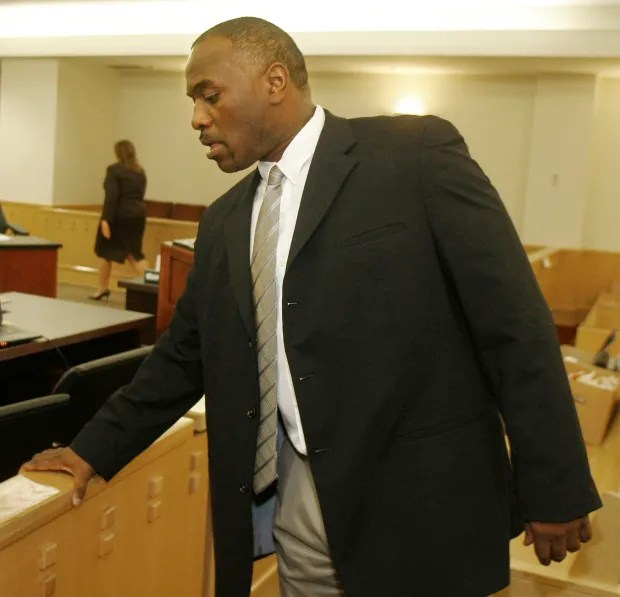
Former San Francisco Giant outfielder Mel Hall seen here at Tarrant County Court House in Fort Worth Texas on June 15, 2009 (AP News photo)

Mel Hall – OF – 1996 – # 2

He was a Giant?

By Tony the Tiger Hayes

A flamboyant, ego-centric player whose persona was part Randy “Macho Man” Savage and part Deion Sanders – the marriage between the swaggering Mel Hall and the Giants was mercifully annulled after the veteran outfielder appeared in 25 games during the dismal 1996 season.

Why was he a Giant?

After spending 1993-95 playing in Japan, the left-handed hitting journeyman signed with the Giants on a make good contract as a pinch-hitter and backup outfielder for 1996.

Hall in essence would replace “Neon Deion” himself after the short term Giant and dual Super Bowl winning 49ers cornerback decided to focus on football only.

During spring training, the 35 -year -old Hall proved he could still rake, slugging three long balls in Arizona exhibitions. But it was also clear the bombastic ball player didn’t have much else to contribute.

Hall’s knees were shot, making him a liability in the field and on the base paths.

One Giants beat writer described watching Hall try to leg out a spring training double as “painful.”

But the Giants, who were on their way to a 94-loss season, needed some type of spark.

Hall’s 134 career MLB HRs were a tantalizing gravitational pull for San Francisco. The Giants also didn’t have much in the cupboard as far as backup outfielder options, with Mark Leonard, the slowest rising prospect in baseball, being Hall’s main camp competitor.

“I knew Mel Hall could hit. He’s dangerous at the plate. Clearly he could be a magnificent DH somewhere,” said Giants manager Dusty Baker, wondering aloud if he could justify carrying Hall on a National League roster. “His bat’s as quick as ever. It’s a matter of if we can afford his lack of running.”

But Hall, hobbled as he was, was adamant he was the man for the job.

“Barry Bonds has been the only left-handed hitter on this team with power. I could add to that,” Hall proclaimed. “I add a little depth. If somebody goes down I can come in.”

The Giants would up keeping Hall as strictly a pinch-hitter. In two months with the club, Hall appeared on defense in just three games.

But Hall wasn’t exactly Johnny Clutch off the bench, hitting just 2-for-19 in a pinch-batter role.

In his waning days in Orange & Black, Hall complained that his relegation to bench duty was to blame for his anemic results in the batter’s box.

After striking out with the bases loaded as a pinch-hitter in one game, Hall said sitting on the bench had left him rusty and inefficient.

What’s more, Hall decided he was more than just a pinch-hitter.

“Pinch-hitting is a vital role,” Hall said. “ But I will never accept it.”

With that, Baker’s patience with Hall had reached its apex.

“I don’t want to hear anymore Mel Hall complaints,” an exasperated Baker said. “Every man has to find a way to stay sharp for his particular job. We all agreed Mel would be a pinch-hitter. He assured me he could do it.”

Hall was sent packing soon after. After mouthing his way out of San Francisco he was out of pro ball for good.

Before & After

Hall’s reputation as a malcontent blotted out much of his usefulness over his career. He was a clubhouse bully (as a Yankee, he reportedly terrorized a young Bernie Williams) and his opinion of himself was always three times greater than his actual value.

As a rookie with the Cubs, Hall he carried extra batting gloves in his back pocket to waive “good bye” to opposing players after he hit home runs. And he loved playing the eccentric star role. As a Yankee he lived in Trump Tower and kept a baby tiger as a pet.

Hall also carried on a long term sexual relationship with an underage teen girl during his playing career. The affair was later documented in an extensive ESPN investigation.

Overall Hall was a career .276 hitter for the Cubs, Indians, Yankees and Giants.

He Never Had a Giants Bobblehead Day. But…

In his Giants debut, Hall punched a pinch-hit RBI single off Marc Wohlers and scored a run in a 12-10 loss at Atlanta (4/1/96).

Giant Footprint

In 2009, Hall was convicted of three counts of aggravated sexual assault after being convicted of raping a 12-year-old girl he coached on an elite basketball team. He is currently serving a 45 -year federal prison term.

He was a Giant? Chad Santos 1B-2006- #14

2006 Topps San Francisco Giants Chad Santos card (By Topps Chewing Gum Company)

CHAD SANTOS – 1B – 2006 – # 14

He Was a Giant?

By Tony the Tiger Hayes

No one no one can accuse Santos of not taking advantage of an opportunity.

In three games with the Giants in 2006, the burly Hawaiian played against three different teams, faced three different pitchers and ripped three different hits.

Actually, it was two different types of hits. Santos slashed two singles… and slugged a HOME RUN for pete’s sake in a thimble full of action.

After that, Santos never played for the Giants or for any other big league team.

Why Was He A Giant?

After eight years of spectacular play from First Base Gold Glove God J.T. Snow, the Giants went in a different direction at the position in 2006.

That direction was South.

Seemingly, Snow dumped a load of quick sand around first base before he was jettisoned out of town.

Every player the Giants gave a legitimate shot to replace the multiple Gold Glover sank ignominiously.

That list included the moribund Lance Niekro, retread Mark Sweeney and the deflating Shea Hillenbrand.

Santos meanwhile did his best to pummel opposing pitchers fruit juicy red during the snippet of a chance he was given.

Before & After

Originally, a late round draft pick by the Royals out of his Honolulu high school in 1999, Santos produced decent power numbers as he advanced though the Kansas City farm system – but never got a call-up to the parent club. Signed by San Francisco as a minor league free agent in ‘06, Santos got his only shot at big league play when opening day first base starter Neikro and the others floundered.

He Never Had a Bobblehead Day. But…

Santos entered his first big league game as a defensive replacement in a home game vs. the Phillies (7/16/06). In his first MLB at-bat he ripped a single to center field to lead off the sixth inning off of veteran lefty Rheal Cormier.

After collecting another hit the next day in a start vs. the visiting Brewers, Santos sat for a couple of days.

Chad was back in the lineup vs. Chan Ho Park and the visiting Padres (7/20/06). In the second inning With a runner on and two out, Santos walloped a towering drive to straight away left field and over the outfield barrier for a two-run roundtripper. The Giant went on to a 9-3 victory before a packed house of more than 42,000 fans.

Giants Footprint

Granted, Santos’ Giants experience was a sliver of a sample size but projected over a full major league, Santos would have batted a lusty .429, with 54 HR and 108 RBI.

Giants fans and Santos will be forever left wondering “what if”… talk about leaving a Chad hanging.

He Was a Giant? Nick Testa-C-1958-#47

Former San Francisco Giants catcher Nick Testa who passed away in 2018 played for the Giants in 1958 (photo from findagrave.com)

He Was a Giant?

Nick Testa-C-1958-#47

By Tony the Tiger Hayes

A stocky catcher with tree-trunk legs, brawny arms and Greyhound Bus’ equivalent of platinum clientele status, Testa’s entire big league career consisted of one solitary Giants game at Seals Stadium in 1958, played during the first week of the club’s Golden Gate era.

But this was no mundane early season contest, Testa’s one and done MLB pilgrimage took place in a whacky 8-7 Giants victory (4/23/58), against the visiting Cardinals in a tilt that included a roaring San Francisco comeback from a 1st inning 5-0 deficit, and concluded on the Giants’ first ever California walk-off home run.

Reporting in the next day’s paper, San Francisco Examiner sports editor Curley Greive wrote the thrilling win was “the greatest game of the young season with a Dempsey wallop.”

The florid scribe concluded the improbable outcome was similar to “…losing a $10 bill and finding a $20. Like getting a rich inheritance from a miserly uncle.”

This was clearly a memorable day for the Giants and Testa – but his one day of big league action doesn’t begin to scratch the surface of the New York City native’s baseball life.

The scrappy, 5-foot-8, 180 pound Italian-American was on nine different teams in the Giants system before reaching San Francisco in 1958 and, believe it or not, his baseball odyssey was just getting started.

Like a Johnny Cash lyric, Testa went everywhere, man.

Why was he a Giant?

More than 60 years later, it might look like Testa’s out of the blue one and done big league career might have come as the result of winning a poker bet with

Giants owner Horace Stoneham (always a possibility) or could it have been Testa was in possession of compromising photos of San Francisco manager Bill Rigney wearing Dodger Blue shower shoes… and little else.

Seriously, while Testa’s minor league track record was nothing spectacular, the 29-year-old rookie was well liked by the Orange & Black brass and teammates alike who welcomed Testa’s receiving skills, natural leadership abilities and his peppy New York personality.

But he was a slow riser. After signing with the New York Giants organization out of the Bronx’s Christopher Columbus High School in 1947, the catcher had banged around the Giants farm system for about a decade without much of a sniff of the majors.

Then in 1958, Testa surpassingly broke camp with the original Fog City club as a third-string receiver behind veteran Valmy Thomas and rookie Bob Schmidt on the depth chart.

Before & After

The Bronx dweller batted .292 as a first year pro ball in 1947 with the Seaford Eagles of the Eastern Shore League. Giants minor league stops with the Erie Sailors, Idaho Falls Russets (seriously), Jacksonville Tars and Dallas Eagles followed there after before his brief big league breakthrough.

After the backstop’s one game Seals Stadium appearance, Testa was released, but stayed on with the big club as bullpen coach.

“About a month into the season the other two catchers were doing so well, there was no way I was going to play,” Testa told Steve Bitker in his phenomenal 1998 penned book, “The Original San Francisco Giants. .“So (Rigney) says, ‘Would you consider being a bullpen coach the rest of the year?’ And I says, ‘Oh, sure, I’d love to.’ I was probably the youngest bullpen coach in the majors at 29.”

Testa returned the minors in 1959, playing another six seasons, and a year in Japan before retiring from organized baseball.

But in many ways Testa departure from professional baseball was just the start of his baseball experience.

Testa would continue to play, coach and manage for years in adult hardball leagues from New Jersey to Italy and England to Panama and Columbia. Testa once estimated that he had played in 3,000 games for 24 teams.

Testa was also head coach baseball at New York’s Lehman College and served as a popular full-time batting practice pitcher for both his hometown Mets and Yankees.

He Never Had a Bobblehead Day. But…

Testa entered his solitary big league game at Seals Stadium as a pinch-runner in the 8th inning with the Giants trailing the Cardinals 7-3. Testa was stranded on second, then remained in the game to catch incoming reliever Marv Grissom.

During his career Testa was known for his rugged catching skills, quick release and forceful throwing arm.

But Testa struggled behind the dish in his lone big league game.

Testa’s one out peg to nab Cardinals base stealer Don Blasingame, a future Giant, was high and late. The “Blazer” eventually scored on a Stan Musial double.

Later in the inning Testa was changed with a error when he muffed a wind blown foul pop up by Del Ennis.

Trailing 7-4 heading into the bottom of the 9th, the Giants rallied to score four runs to pull out an improbable 8-7 victory with all runs scoring after two outs were recorded by St. Louis.

Two runs scored on a Orlando Cepeda triple down the left field line that bounded over the head of Ennis. Testa was gearing to bat when Daryl Spencer followed by clocking a hanging curve from St. Louis pitcher Phil Clark over the left-field barrier for a game winning round-tripper.

Delirious fans showered the field with rented seat cushions.

The win was bittersweet for Testa. Despite finally playing in a big league game, he never got to chance to take his turn at-bat.

Testa was in the “hole” – two batters down the line- when Spencer bashed his game winning round tripper.

Giant Footprint:

Since relocating to San Francisco in 1958, the Giants have had five “Cup of Coffee” participants, i.e. players who played in one game, and one game only, in the majors: Testa, RHP John Fitzgerald, LHP Marshall Renfroe, RHP Jeff Stember and RHP Dan Slania.

Testa was the first, and the only non-pitcher.

He Was A Giant? Rennie Stennett 2B 1980-81 #6

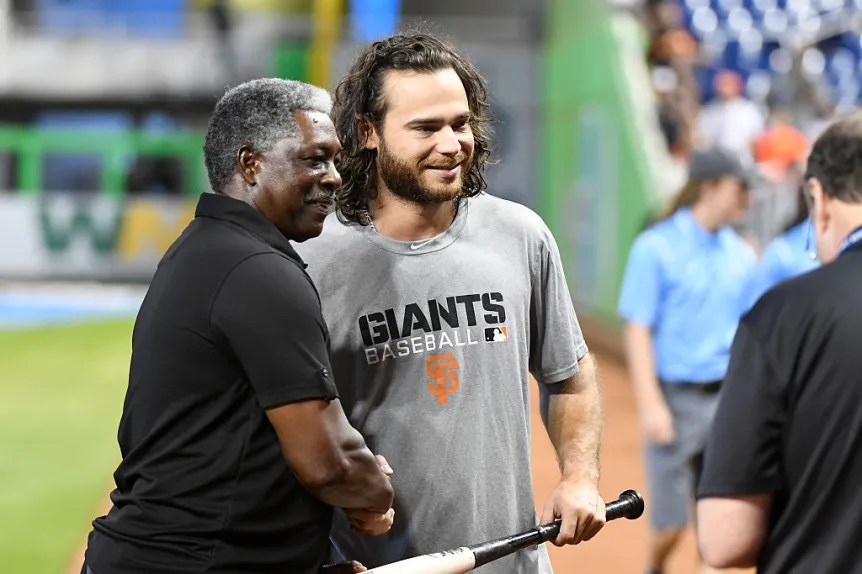
Brandon Crawford of the Giants shakes hands with former Major Leaguer and ex-Giant Rennie Stennett in Miami on Aug. 10, 2016.  They are the last two National League players to get seven hits in a game.  (Photo by Eric Espada/Getty Images) 

By Tony the Tiger Hayes

He Was a Giant?

The Giants have had their share of free agent failures over the years. Hello, Aron Rowand, Armando Benetiz and 2024 flop de jour Jorge Soler.

But as the saying goes, “you never forget your first.”

Rennie Stennett was not only the very first Giants free agent signee to fall flat on his face, he was also the Giants first big name free agent to play for the club after the courts repelled baseball’s reserve clause in 1976.

A former star second baseman for the Pittsburgh Pirates, Stennett was one of the more exciting young players of the 1970s.

Stennett was inked by the Giants to a splashy five – year, $3 million, five year contract after the 1979 season and was expected to provide some the same production he provided the Pirates franchise for much of the ‘70s.

In 1975, Stennett had tied a big league record when he batted 7-for-7 in a nine inning 22-0 molly whopping of the Cubs at Chicago’s Wrigley Field. His seven hits tied the National League record for hits in a nine-inning game, was first established by Wilbert Robinson of the Baltimore Orioles in 1892.

But when Stennett signed with San Francisco in 1980 there was a catch. He was no longer the same player he was in the mid-1970s.

A leg and ankle injury in 1978 had robbed him of some of his quickness and hitting skills.

Stennett made it through only two seasons of his San Francisco contract before being released by the Orange & Black and he never played in the major leagues again.

Why Was He a Giant?

After a miserable fifth place finish in 1979, a season where there were high expectations for San Francisco, Giants management decided it was finally time to dip their toes in the free agent market.

The dawn of the free agent era began in 1976, but the Giants- desperately trying to get back on their feet financially after nearly going bankrupt under a previous ownership, avoided signing big name free agents.

San Francisco inked former American League infielder Mario Guerrero prior to the 1978 season but he was dealt to Oakland in a mega trade that brought superstar LHP Vida Blue back across the Bay Bridge before Guerrero played in an official game for the Orange & Black.

The Giants conservative approach to free agency ended abruptly after the disappointing ‘79 season when in one fell swoop, the Giants inked three established big leaguers on the same days to multi-year pacts.

Incoming were Stennett, veteran catcher Milt May and backup outfielder Jim Wohlford.

The Giants introduced all three players at a splashy press conference from the glorious “Top of the Mark” cocktail bar high atop the Lurie owned historic Mark Hopkins Hotel on scenic Nob Hill.

Giants general manager Spec Richardson discribed Stennett, a 28-year-old Panamanian,

as “the best young player available

Available belie

in the draft.”

The fact that Stennett was not particularly young at 28 was omitted by Richardson.

Stennett had failed to bat over .250 and lost a good deal of mobility and running speed after breaking an ankle and leg in mid-1977.

But the Giants went ahead with the deal anyway and immediately anointed Stennett the starting second baseman for 1980.

Lurie was adamant the Giants had done their due diligence on Stennett’s medical condition and deemed him fully healthy.

“We’ve put him though a couple of physicals,” Lurie commented.

To which Stennett shot back:

“It felt more like 100 physicals. I think I’m the healthiest person in the world and my ankle is 100 percent.

“l’m real excited to be coming to San Francisco,” Stennett continued.” I know I can help. I’m a winner. Now I’ll get the opportunity to win play, and I know the people here are

happy to have me.”

Signing with San Francisco closed out an awkward period of Stennett’s career. After establishing himself as one of the game’s rising stars for much of the 1970s, Stennett was not able to regain his status as a viable starter after the return from his serious injuries.

In 1979, the Pirates permanently replaced Stennett with Phil Garner as their starting second baseman and went on to win the World Series in a classic seven game series vs. Baltimore.

“I know I’ve got something to prove because of thr injury I’ve got the opportunity and I know the people here are happy to have me,” he said.

Before & After

Born in Panama in 1951, Stennett was a stellar school boy athlete for Paraiso High in Colon. Besides baseball, Stennett filled out his varsity jacket with letters in track, volleyball and basketball in which he was a voracious scorer- who collected 45 points in one game.

Unlike his longtime Pirates teammate Manny Sanguillen, a fellow Panamanian who grew up speaking Spanish, Stennett was raised the Canal Zone, then a U.S. Territory and grew up with English as his primary language.

Without a language barrier, Stennett’s transition to professional baseball became all that much easier when he signed with Pittsburgh at age 18.

Originally inked as a pitcher, Stennett made the transition away from the mound early in his professional career. He initially played both the outfield and infield.

In 1970 at Salem (Virginia) of the Class A Carolina League, Stennett led the league in batting (.326), hits (176), and triples (9).

Stennett got an early surprise call-up to the big leagues in mid-1971 when Pirates starting infielders Dave Cash and Rich Hebner were called away for a two week stint in the army reserves, a common practice during the Vietnam War era.

Though just 20 and inexperienced on defense, Stennett batted so played so well be remained

As detailed in an online bio, writer Joseph Wancho detailed Stennett’s rookie 18-game hitting streak from August 22 through September 10. was the longest streak for a Pirate in two years. Fourteen of the games in the streak were of the multi-hit variety, as his batting average rose from .278 to .405.

During that streak (9/1/71) the Pirates recorded a historic note when they became the first major league club to field an “all-minority” starting lineup.

The lineup card read:

Stennett, 2B

Gene Clines, CF

Roberto Clemente, RF

Willie Stargell, LF

Sanguillen, C

Cash, 3B

Al Oliver, 1B

Jackie Hernandez, SS

Dock Ellis, P

Hardly a publicly stunt, the lineup was not so different than the one manager Danny Murtaugh normally put on the diamond for his NL East championship club that season.

Despite Stennett’s stellar rookie season he was left off the Pirates post season roster as Murtaugh went with the more sure-handed veteran former Giant Jose Pagan instead.

Incidentally, the Pirates would defeat San Francisco in the playoffs to advance to the ‘71 World Series before defeating Baltimore in the World Series with Stennett as a bystander.

After spending 1973-74 as a Pirates super-sub – generating starts in both the infield and outfield – Stennett finally got a position to call his own in 1974 when Cash was dealt to Philadelphia in exchange for starting pitcher Ken Brett.

Stennett made 153 starts at second base for Pittsburgh in ‘74 helping the Pirates to the NL East title with a .291, 7, 56 season.

Stennett produced similar seasons for the next few seasons, typically batting around the .300 level.

He also became a fan favorite in the Steel City for his hard-nosed style of play.

His achievements have gone unnoticed by many people,” said Pirates general manager Joe Brown. “There hasn’t been a player in baseball, not even Pete Rose, has hustled more than Stennett this year.”

Stennett was enjoying his best season in 1977, batting .336, when he suffered a traumatic injury to his right leg, he fractured a bone in his right fibula and dislocated his right ankle sliding into second base in a 5-4 home loss against the Giants (8/21/77).

Though he returned to the Pirates active roster to start the 1978 season, Stennett was not the same player, he’d been previously, batting .243 in 106 games.

When the Pirates won the World Series in 1979 with their fabled “We Are Family” club, Stennett was strictly a backup for the scrappy team, batting .238 in 108 contests. He failed to start a single postseason game and registered just a single at-bat in the Fall Classic, notching a pinch-hit single in the Game 1 loss to Baltimore.

The indignity was almost too much for the proud player.

“To me it was embarrassing to sit on the bench in the World Series. I lnow I’m a quality player,” he said a short time later after signing with the Orange & Black.

Stennett saw the move to Fog City as a new beginning and even praised notoriously chilly Candlestick Park.

“One reason the Pirates always played so well in Candlestick is that it was always snowing and raining in Pittsburgh and we’d come out here and the weather would be nice.”

But once Stennett began playing for San Francisco and notoriously taciturn manager Dave Bristol the infielder began to long for his days along the Allegheny River.

“It’s very tough to play for Dave Bristol,” said Stennett. “He puts too much pressure on players. He just doesn’t communicate. He’s old-school and you can’t depend on him for any motivation.”

Stennett played in 120 games as the primary second baseman for the 1980 Giants but batted just .244 for the fifth place club. Still hobbled by his ‘77 leg injuries, Stennett committed 15 errors in the field.

The sour situation got no better in 1981 when new manager Frank Robinson pushed for the Giants to sign future Hall of Fame second baseman Joe Morgan. Stennett made only 18 starts in the strike shortened ‘81 season, batting a career low .230.

Stennett’s days in San Francisco were numbered when the Giants traded for yet another experienced second baseman in Duane Kuiper after the ‘81 campaign.

Stennett would not make it to season three of his five year pact.

He Never Had a Bobblehead Day. But…

Stennett batted over .300 in his first week in a Giants uniform, but soon bottomed out.

He did have one particularly good day that season however, batting 4-for-6 at the sight of the most famous game of his career, Wrigley Field.

Stennett swatted four singles as the Giants pilled up a generous 21 hits in a 14-6 molly whopping of the Cubs (7/23/80).

Giant Footprint

When Stennett arrived in spring training in 1982 he came with a trade request and a bitter disposition.

“Nightmare, that would be the perfect word to describe it,” Stennett said of his first two seasons in Orange & Black.

Despite averaging $600,000 in each of his first two seasons in San Francisco, Stennett claimed a lesser man could not have endured the degradation he was forced to endure by Giants management.

“Out of 100 guys who would have gone through my situation,” Stennett said, “99 wouldn’t be able to take it. They would do something drastic. There could never be a worse situation for a player. If I was a weak minded person I would be out of baseball by now.”

The Giants were just as frustrated with the marriage and tried desperately to end the union via a trade. But according to Tom Haller, the Giants freshly installed General Manager, the club found no takers, even with San Francisco offering to pay some of Stennett’s remaining salary and moving expenses.

“It’s not that we haven’t tried to accommodate Rennie’s wishes to be traded.” said Giants general manager Tom Haller yesterday. “It’s just that nobody wants him.”

“Bollocks” claimed the opinionated (delusional?) Stennett. The Giants were not doing their due diligence to move him out of Bay City.

“It’s a lie,” Stennett said. “When It comes to making a deal, there’s no such thing as ‘can’t.’ I know there’s three or four clubs interested.”

Those mystery teams never materialized and ended up working out a severance package with Stennett just prior to opening day.

Despite attempts to hook back on with Pittsburgh and a brief stint in the Mexican Leagues, Stennett would not play another game in the Major Leagues going forward.

He Was A Giant? Ron Pruitt feature pinch hitter, catcher 1982-83

San Francisco Giants Ron Pruitt (left) is congratulated by manager Frank Robinson (right) in this circa 1982 photo (San Francisco Examiner file photo)

By Tony the Tiger Hayes

Ron Pruitt – Pinch-Hitter, Catcher – 1982-83 – # 25

Ron Pruitt was never fawned over by MTV “vee-jays” or soloed on a Flying V Gibson guitar while decked in out bright yellow parachute pants – but the former Giant was definitely a San Francisco “One-Hit Wonder” of 1982.

Pruitt lone moment in the spot light didn’t quite resonate on a national stage like, say, Flock of Seagulls’ lone chart topper, “I Ran (So Far Away)” or Vangelis’ one-off movie theme smash “Chariots of Fire.”

But the well-traveled utility man’s stunning Candlestick Park produced “Lil’ Looper” – which came in his first official Giants at-bat (9/30/82) – was a solid gold smash for Orange & Black fans of early 1980s vintage.

“Before tonight, I’d just been backing up,” said Pruitt after his thrilling game winner. “Backing up to get my paycheck and that’s about all.”

(Which actually could have been a lyric in a pretty good country music song.)

Pruitt dumped a walk-off pinch hit single into center field, just over the outstretched glove of Houston baseman Bill Doran, to beat the Astros, 7-6, and keep the Giants within spitting distance of the top spot in the National League West on the dawn of the final weekend of scheduled play.

Pruitt’s unexpected two-run, two-out winner – which came with a fabulous curtain call from the crowd of 14,160 – kept the Giants in a tie with the Los Angeles Dodgers for second place in the National League West and a single game back of the first place Atlanta Braves with three games remaining on the official docket.

The climactic victory was the Giants’ 44th by one run, their 44th in comeback fashion and the 27th in their final at bat.

Beginning the next night, the Giants – winners of nine of their previous dozen games – would host the Dodgers at the ‘Stick for three games. The Braves meanwhile would play three on the road at San Diego.

After posting a 20-7 record in September, the wildly streaking Giants had not been this close to winning a divisional title since 1971 – the year San Francisco had last captured the coveted flag.

With crowds anticipated to exceed 125,000 for the up coming three game set with the hated rivals from the Southland, San Francisco’s fanbase was loving the rare pennant chase.

The local newspapers were eating up the enticing sporting drama as well.

“A Classic Comeback and a New Giants Hero” – echoed the A1 front page headline in the San Francisco Examiner.

“Giants Climb Back Into the Pennant Race” chimed the Napa Valley Register.

“Pruitt’s Super Blooper Lifts San Francisco” barked the Sacramento Bee.

“Unreal” Giants Trail by One Game” tooted the Salinas Californian.

Giants – Dodgers Go for Broke” – trumpeted Oakland Tribune

While no one was quite ready to seriously compare Pruitt’s modest looking blooper to Bobby Thomson’s majestic ‘Shot Heard ‘Round the World” of 31 years previous – some just couldn’t quite resist the urge.

“Shades of ‘51, S.F. Fights Back!” crowed the Berkeley Gazette.

But heck, after winning 20 of 27 games in September- maybe the comparison to 1951 wasn’t so far fetched.

Why Was He a Giant?

Ron Pruitt was a versatile player, capable of playing infield, outfield and catcher.

But it wasn’t necessarily his defense that kept Pruitt employed in professional baseball for 11 years. More likely , it was his consistency at putting bat on ball that kept the former Michigan State star in the game.

From the Texas Rangers to the Cleveland Indians to the Chicago White Sox and finally, the Giants, Pruitt was a steady .269 hitter in parts of nine MLB seasons.

Pruitt received his first extended opportunity to play in the major leagues from manager Frank Robinson in Cleveland in 1976.

In 47 games that season, Pruitt batted .267 and played all over the diamond – receiving starts at catcher, outfield and both first and third base. In 1977 Robinson rewarded Pruitt with a spot on the Indians opening day roster.

But after the taciturn F. Robby was relieved of his Tribe duties in mid-‘77 and replaced with the more player friendly Jeff Torborg, Pruitt didn’t exactly shed a tear.

“With Frank, I never knew what I was gonna do,” Pruitt said at the time. “I feel a lot more relaxed now – even in the field. It’s different when you know you’re going to play.”

Still, after the the Indians released Pruitt after the 1981 season, Robinson, now the Giants manager, welcomed his former Cleveland charge to San Francisco’s big league 1982 training camp as a minor league free agent.

But with an entrenched backstop tandem of Milt May and Bob Brenly in place and a well-vetted crew of bench reserves including, Champ Summers, Dave Bergman, Jim Wohlford and Pruitt’s former Cleveland teammate, Duane Kuiper, assured of backup roles – Pruitt was forced to accept a minor league assignment to Triple-A Phoenix after spring training.

At age 31, Pruitt was the oldest member of the Giants top minor leagues affiliate, but that didn’t stop the Flint, Michigan native from feasting on Pacific League pitching.

In 73 games, Pruitt produced the top batting average of of his professional career – .321 -while swatting 10 homers and driving 37 runs.

Meanwhile back at the home office in San Francisco, the parent club was enjoying a renaissance season.

After playing substandard ball the first half of the campaign – the club had a 42-46 record, 11 games back of the Braves at the All-Star Game break – the San Francisco suddenly blossomed in August.

As the Fog billowed into the City by the Bay in August, the Giants began piling up victories, many of them, come-from-behind thrillers.

The Giants began the month winning 12 of 13 games. By the end of play on August 11, San Francisco had improved to 55-50 and had closed within 4 games of first place Atlanta.

But the red hot Orange & Black was just getting started.

After dropping their first game of September, the Giants ripped off an astounding 19 wins in their next 22 contests.

Pruitt, who joined San Francisco when rosters expanded for the final month, had a fantastic view of the down-the-stretch scintillating action… from the Giants bench.

Save being a defensive replacement in one game and drawing an uneventful intentional walk as a pinch hitter in another – Pruitt rode the pine until the final day of September.

Then he sprung into action when Robinson pulled Pruitt like a secret derringer from an ankle holster.

He Never Had a Bobblehead Day. But…

Despite winning 19 of their previous 25 games, the Giants were running out of games when RHP Jim Barr led the Orange & Black on to field to take on the visiting Astros on 9/30/82.

With just four games left on the schedule, the Giants and Dodgers were tied for second place at 86-73, with the Joe Torre led Braves holding on to dear life to the West’s top spot with a one game edge.

Every pitch was crucial and initially it didn’t look good for the Giants on this fog shrouded Thursday night.

For most of evening it appeared future ForeverGiant and then Houston backup first baseman Harry Spilman, would be a giant joy kill in a rainbow accented uniform.

The Astros were already up 1-0 in the 3rd when Spilman drilled a two-run home run off Barr. Houston tacked on two more runs in the 4th, making it 5-0.

But the Giants – who had racked up 43 comeback wins at that point – refused to go silently into the night.

The Orange & Black got their offense going in the seventh with RBI hits by Joe Morgan and Jack Clark, cutting the deficit to 5-3. San Francisco knotted the score in the 8th with a four hit, two-run rally.

But the left-handed swinging Spilman went yard again in the top of the ninth with a two-out, solo clout off Giants reliever Rich Gale to put Houston up again 6-5. (Spilman who would specialize in pinch hitting for the Giants in 1986-88, had four hits and four RBI on the night.)

Meanwhile in Los Angeles, the Dodgers were trouncing the Braves, 10-3. A Giants loss would dramatically decrease the chance of a division flag.

But the Giants’ – who’s ‘82 motto could easily have been “Fight, Fight, Fight!” – got off the canvas with yet another late comeback.

With a slim 6-5 lead, diminutive Astros reliever Danny Boone retired Clark on a fly ball to start the 9th. Boone lost Darrell Evans on a walk, but the southpaw managed to retire the dangerous Reggie Smith on an infield pop up.

Jeffrey Leonard kept the game alive with a single to left, advancing Evans to second, before Houston manager Bob Lillis pulled Boone in favor of RHP Dave Smith, who then promptly walked pinch-hitter Jim Wohlford.

With the Johnnie LeMaster next, Robinson curiously turned to the stone-cold Pruitt instead.

Perhaps, because he had not seen live pitching in eons, Pruitt patiently ran the count to 3-1, before he officially became a Giants folk hero.

Giants radio broadcaster Hank Greenwald, succinctly described the victorious play in his indomitable style.

“Bases Loaded, 6-5 Astros Lead, Two- Out Bottom of the Ninth…3-1 Pitch by Smith… A Little Looping Fly Ball Back of Second Base! It’s Gonna Drop for a Base Hit! Evans Scores, Leonard Scores! The Giants Have Won the Ball Game! We’re Back in the Race! Holy Cow!!

The Giants mobbed Pruitt at first base. Even the typically stone -faced Robinson, showed a rare sign of emotion flashing a broad grin, and hugging and shaking hands with the winning player while escorting him back to the dugout.

Pandemonium erupted in the stands and the frenzied throng vociferously beckoned Pruitt out of the dugout for a bow – the new hero twirled his Giants jacket which had seemingly previously melded to his body – before ducking back into the dugout.

With the focus on Pruitt, a delirious fan slipped on to the field and sprinted around the bases as the scoreboard flashed “BRING ON THE DODGERS!” in bold faced caps.

After the hubbub died down, the beat reporters found Robinson behind his clubhouse office desk with a Cheshire Grin.

After suffering through two and a half losing seasons in Cleveland and with his first year a dud in San Francisco in 1981, the Hall of Fame ballplayer was enjoying his first success as a big league manager.

“I don’t want to think about the Dodgers- I want to savor this,” Robinson said. “(Pruitt) is a pretty good hitter. He gets the bat on the ball. It really wasn’t fair of me to put him up in that situation, but I have a lot of confidence in him and he came through.”

The media mob then moved on to the man of the hour. They found Pruitt in a jammed dressing room at his makeshift locker, halved by a clubhouse support pillar.

“I was a little more comfortable than I thought I’d be. He walked the guy before me, so I was going to wait until he threw me strikes,” Pruitt said. “I wouldn’t have swung at the last pitch unless it was a fastball. He gave me one and I didn’t have a good swing, but I got good results.”

Giant Footprint

The next two games vs. the Dodgers turned out to be anticlimactic as Los Angeles completed convincing back-to-back victories over San Francisco to eliminate the Orange & Black.

But the Giants payed the Dodgers back with a nice dish of revenge when then came back late in a Sunday afternoon thriller to stamp out the Dodgers chances of advancing to the playoffs with a 5-3 victory when Joe Morgan bashed a game winning homer.

Unlike, John Cougar Mellencamp who had the no. 1 hit in the country with “Jack and Diane” the night Pruitt came up with his big Giants hit, and continued to score chart toppers, Pruitt days in the big leagues were numbered.

He would appear in only two more MLB games the rest of his career.

He Was A Giant? Don McMahon- Tony the Tiger feature article

1970 Topps baseball card of Don McMahon pitcher

He Was a Giant?

Don McMahon – RHP/Pitching Coach – 1969-74, 1980-82 – # 47

By Tony the Tiger Hayes

Analytics and specialized sports metrics have taken such a stranglehold on baseball in recent years that it’s not so ridiculous to believe that we’re not far off from having actual robots as managers – and we’re not talking Gabe Kapler here.

We’ve already seen a trend in front offices and dugouts to turn away from tried and true blueprints of baseball success in favor of statistical analysts.

In many cases old school managers and coaches have been swapped out for a new breed of personnel who have proficiency in baseball metrics, but lack major league experience in in-game strategies or even playing experience at a professional level.

To become a sports oriented data analysts, you typically have earned bachelor’s degree in math, statistics, or a related field. Actually owning a pair of baseball spikes is optional.

So it’s very possible to have a batting coach who is experienced at crunching numbers, but has never crunched a MLB homer. Or a pitching coach with more aptitude at operating a slide ruler than throwing sliders.

That however was certainly not the case with the gruff-but-lovable former Giant Don McMahon who not only pitched in a lot of big league games, but pitched in quite a few of them while doubling up as pitching coach for the Orange & Black.

McMahon, who went from the Concrete Jungle of his birth place in Brooklyn, New York to pitch 18 years in the big leagues, was a Giants pitcher from 1969-74 and a Giants pitching coach from 1972-74 and again from 1980-82.

At the height of his success as an over-40-year-old Giants relief pitcher, the tobacco chewing McMahon was asked his recipe for success.

The answer he gave would likely force some modern day baseball bosses to clutch their pearls.

“I throw hard, pitching a few times every week of every month of the year,” McMahon said bluntly, before expectorating a stream of Beech-Nut juice. “That way my arm never gets tight and out of shape.”

At the time of his final mound appearance with San Francisco in 1974, McMahon was the oldest player in the history of the Giants at 44 years and 176 days and ranked third on baseball’s all-time “games pitched” category. He’s since been passed on the Giants seniority list by RHP Randy Johnson who collected his 300th career win while pitching for San Francisco at age 46.

So much for counting pitches to determine pitcher’s durability.

Why Was He a Giant?

McMahon was 39-years-old when the Giants acquired his rights from the Detroit Tigers for a reported $25,000 and a player to be named (infielder Cesar Gutierrez) in August of 1969.

At the time of deal, the Giants were in a tight race with the Cincinnati Reds and Atlanta Braves for first place in the NL West division and needed to bolster a bullpen that already featured two other established veterans relievers Frank Linzy and Ron Herbel, but lacked depth.

But if the addition of the venerated McMahon, who was a member of two previous World Series Championship clubs with the Tigers and Milwaukee Braves, was intended to serve as a reassuring presence in the San Francisco bullpen, that concept initially backfired as McMahon initially fell flat on his face.

In his Giants debut (8/10/69), McMahon hacked up a 4-3, 9th inning lead, as the visiting St. Louis Cardinals pummeled the veteran reliever for four earned runs to beat the Giants 7-4, to complete a devastating three home sweep of the Orange & Black.

As McMahon trudged off the mound courtesy of manager Clyde King’s hook, a disgruntled Candlestick Park throng of over 16,000 rained boos down upon the proud pitcher.

But after his sour first impression, McMahon settled down, pitching shutout ball over his next five appearances, totaling 7.2 innings. During that stretch, the wily hurler, notched his first Giants victory with 2.1 frames of perfect ball in an 11-inning, 7-6 road win at New York (8/21/69).

After finally allowing a single run in a no-decision , 7-6 loss at Houston (9/7/69), the Classic Giant came back the next day and threw five shutout frames in a 5-2, 11 inning defeat at Cincinnati (9/8/69).

By season’s end, the Giants dreams of winning the west had fizzled, but the club found a reliable pitcher in McMahon.

Given McMahon’s age it would have been understandable to consider the gray-templed veteran to be a short-term rental, but McMahon impressed every one involved with the Bay City Boppers. He was implored to return to San Francisco in 1970.

At age 40, McMahon had one on his top career seasons, posting a sensational 9-5, 2.96 record with a career high 19 saves in a team topping 61 contests in ‘70.

This Forever Giant stacked up more than 60 appearances again in 1971 as the Giants captured the western division flag.

Making his story more remarkable was the grizzled vet’s approach to pitching. There was no futzing around with Big Don. Even in his early forties the bullpen ace was going right at opposing National League batters.

“I have to throw with velocity, I never have been a good ‘stuff’ pitcher,” McMahon told Jimmy McGee of the San Francisco Examiner in 1970. “It isn’t the fast ball I used to have. But I can still get strikes. I think the best pitch in baseball is the fast ball. It still gives hitters the most trouble.”

He Never Had a Giants Bobblehead Day. But…

Besides his ace bullpen work, a significant side benefit of having “Pappy” McMahon on the Orange & Black staff was his mentoring skills with the numerous young members of the pitching staff.

Some of the peach fuzz faced pitchers – Don Carrithers, Jim Willloughby, Steve Stone, Ron Bryant and Jim Barr – weren’t much older than some of Don’s own children which totaled six, three boys and three girls.

It was obvious, McMahon had the proper timbre to be a big league pitching coach.

In 1972, the Giants actually began spring training without an official pitching coach after jettisoning long time mound tutor Larry Jansen.

The position was initially offered to McMahon, but Don explained, even at age 42, he believed he could still get big league hitters out.

And based on his recent track record who could blame the prideful Irishman. In 1971, he authored a 10-6, 4.06 record, struck out 71 while giving up only 73 hits in 83 Innings of rellef. He walked just 37.

“I still want to pitch,” McMahon told the scribes. “And I can’t do that and coach too.”

But about a week later, McMahon reversed course and accepted the dual-headed role.

“It isn’t as tough as it sounds. I’ll be in the bullpen and will tell the other pitchers to warmup, but (Manager) Charlie Fox will decide who will pitch,” McMahon conceded. “All I have to do is see that the pitchers get their exercise and do their running. I’ll advise them when I see something that needs adjusting. But it will be up to them to them to respond , because I can’t pitch for them.”

McMahon made it a point to stress that any hands- on instructions would likely be reserved for the less experienced members of the pitching staff.

“I’ll concentrate on the youngsters. What am I going to tell Juan Marichal about pitching?” McMahon deadpanned .

The way Giants manager Charlie Fox saw it; McMahon was already serving as a de facto team instructor, why not make it official.

“Don’s a thorough student of the whole game – including pitching,” explained the silver-haired field general. “Being a coach won’t restrict his use in short relief at all.”

Hopes were high for San Francisco heading into the ‘72 season, but a combination of factors- including the mid-season trade of Willie Mays – made it the most miserable campaign in San Francisco Giants history at that point. The club finished in fifth place, a disheartening 26.5 games behind the Reds. Pouring salt in their wounds, the cross bay rival Oakland A’s won the first of three consecutive World Series that year.

But McMahon wasn’t the problem. Even at age 42, the fireman was steady as ever – posting a 3.71 ERA in 44 relief outings.

His coaching received good reviews as well. Despite their overall dismal 69-86 record, the Giants pitching staff held their own, posting a 3.69 ERA as young starters Barr, Bryant and Stone and relievers Randy Moffitt and Elias Sosa emerged as future stars.

In 1973, the Giants reversed the color scheme of their uniform’s block lettering, going orange over black, and McMahon flipped the script on his career, setting aside his long pitching career to focus on his Giants coaching duties.

But by the summer, Don suddenly found himself “unretired” and saving a 9-5 win with two shutout frames at Atlanta in his first appearance out of mothballs. (7/2/73).

McMahon showed his young charges how to do it the rest of the way, making 21 more appearances in ‘73, and showcasing a fantastic, 4-0 ledger and career best 1.48 ERA.

This concept worked so well, the Giants went for a redux in 1974. McMahon, now 44, made nine mid-season relief appearances in ‘74, posting a 3.09 ERA before finally retiring his toe plate for good on July 3, as San Francisco recalled rookie RHP Ed Halicki from Triple-A Phoenix to make his big league debut.

In his Bay City coaching duties, McMahon branched out beyond the pitching staff to lend advice. One afternoon in ‘74, he was throwing batting practice to a slumping Gary Matthews when Don caught a flaw in the young Giant’s swing.

“You’re pulling away from the ball,” the coach shouted to the future star from behind the BP screen. “Stride ahead and you’ll get three hits tonight.”

Sure enough, after heeding the advice of “Pappy,” the future “Sarge” banged three singles that evening in a game vs. visiting Montreal.

McMahon continued as San Francisco pitching coach through a turbulent 1975 campaign.

On the field, the Giants finished in third place, a game under .500, a cringey 27.5 games back of Cincinnati in the NL West. Bit those on field troubles paled in comparison to the financial woes the club was suffering. That year the Giants were nearly sold to the Canadian brewer LaBatts and relocated to Toronto. Thankfully, that deal was nixed by MLB hierarchy. The club eventually landed in the hands of City native son Bob Lurie who kept the club in Fog City.

Through the club in general faced tempestuous times, the pitching staff was not part of the problem.

During spring training, the talented Moffitt shocked Bay scribes when he suggested the G-Men had a pitching advantage over the cross bay champion Oakland A’s.

“I wouldn’t trade our staff for theirs,” crowed tennis superstar Billie Jean King’s outspoken younger brother.

He may have made a valid point.

During the coming ‘75 campaign, the towering Halicki hurled a dominant home no-hitter and an impressive trio of young and colorful Italian-American hurlers known as “McMahon’s Mafia” – John “The Count” Montefusco, John D’Acquisto and Pete Falcone – shined on the Candlestick mound.

That year, the charismatic Montefusco enjoyed a breakthrough campaign, earning NL Rookie of the Year honors.

The relief department featured several young standout graduates of McMahon’s Bullpen Bootcamp including RHPs Moffitt, Dave Heaverlo, and Charlie Williams and southpaw Gary Lavelle.

But late in the season, McMahon and field general Wes Westrum were blindsided by Moffitt’s public blasting of the Giants braintrust.

After achieving a 2.42 ERA and 14 saves in 1973, Moffitt had seen a plateau in his efficiency after Westrum had replaced manager Charlie Fox in mid-1974.

“My motivation is down due to management. I just feel I’ve been mishandled,” Moffitt complained to the Examiner’s Bob Hayes.

“I haven’t been satisfied with my pitching, but It’s tough to pitch given the inconsistency of management. You have to be mentally prepared, and when you’re not sure when and how you are going to be used, you lose confidence. The coaches expect you to have confidence, but they don’t have any in you.”

With new ownership taking over the club in 1976, McMahon could see the writing on the wall – or in this case, the City’s afternoon newspaper. The Giants would enter the 1976 season with a new manager (Bill Rigney) and an entirely new coaching staff.

McMahon remained in the game however, taking over as pitching coach of the Minnesota Twins for two seasons.

But in 1980, McMahon found himself employed once again as the Giants pitching coach under manager Dave Bristol. The staff needed a new voice after a disastrous 1979 Giants season.

Many of the same pitchers from McMahon’s first term as Giants mound czar were still on the roster including Montefusco, Halicki, Lavelle and, yes, even Moffitt.

“I can’t wait to see Moffitt,” McMahon said, with tongue possibly pressed firmly in cheek. “When I was here before, boy, he had good stuff.”

Besides stressing his trademark aggressive approach, McMahon planned on working on the 1980 Giants staff mental acuity.

“The problems on the Giants may have been mechanical.

When you have problems with mechanics, then you get the mental problems and you’re really in trouble.

“The mental problems can linger on and on, then suddenly disappear.

One game, one inning can change your whole mental approach to the game. All of a sudden everything falls into place,” McMahon said.

“Then comes control and concentration. Remember Stu Miller? He had nothing on his pitches. But what a motion. Hitters were swinging at his motion. He had super coordination and a great delivery. If you have a pitcher that can give you seven innings of concentration, you have a great pitcher.”

McMahon remained with the Giants ad pitching coach under Bristol and later Frank Robinson through the 1982 season.

Giant Footprint

At that point in life, McMahon had pitched 18 years in the

major leagues, won 90 games, lost 66, and

saved 153 games and compiled lifetime earned-run average of 2.96.

Plus, had been a pitching coach close to a decade.

But instead of kicking back, he carried on in professional baseball.

Never someone to sit back and take it easy, McMahon quickly moved on and accepted the pitching coach opportunity with the Cleveland Indians in 1983, holding that position through 1985.

McMahon also had a side gig, believe it or not, as a Southern California area scout for the NFL’s Los Angeles Raiders. Silver & Black owner Al Davis had been a chum of McMahon’s since their salad days in Brooklyn.

Later, McMahon took on a staff role with the Los Angeles Dodgers under Tom Lasorda. His duties included in-game defense positioning and pre-game on-field duties which included throwing batting practice.

Tragically, while throwing BP at Dodger Stadium on July 22, 1987, McMahon suffered a massive heart attack and died later at a local hospital. He was 57.

“Sitting around idly wasn’t for him,” McMahon’s oldest son, Jack, told Ira Berkow of the New York Times. “You know, when he’d sit in his easy chair at home, he usually had a baseball in his hand. He’d rub it along the seams, and flip it up in the air. He always loved to have a ball in his hand.”