

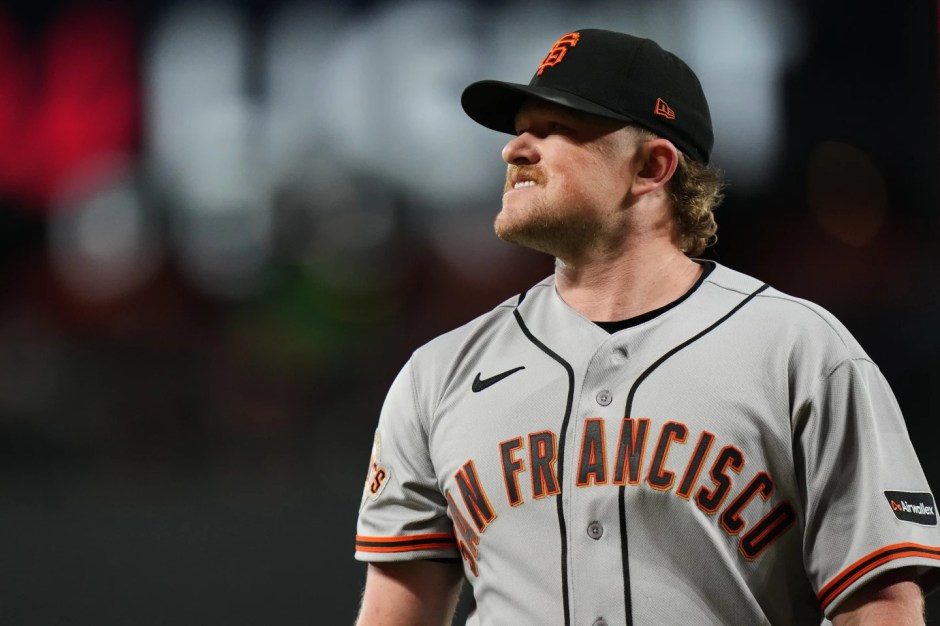
San Francisco Giants starter Logan Webb grimaces after the Baltimore Orioles went to work on him. Webb’s line six innings, five hits, four runs, three walks, and six strikeouts at Camden Yard in Baltimore on Sat Apr 11, 2026 (AP News photo)
By Mauricio Segura
The Giants did not get blown off the field, which may have made this one even more irritating. For a while, they looked steady, sharp, and very much in position to keep their good stretch rolling. Heliot Ramos drove in a run in the second inning with a two-out single, then brought home another with a groundout in the fourth. That gave San Francisco both of its runs, and it briefly felt like the club had enough control to push this game in its own direction.
Instead, the offense stalled, the rhythm slipped, and a contest that was still within reach turned into a 6-2 loss. Ramos finished with two hits and both RBI, but the Giants could not find the extra swing that might have changed the shape of the game. Their three-game winning streak ended, and what started as a manageable afternoon slowly turned into one that felt like sand slipping through their fingers.
Logan Webb was not terrible, but he was not sharp enough to survive Baltimore’s growing pressure. He worked six innings, gave up five hits, and allowed four runs. That line tells part of the story, but not all of it. Webb had moments where he looked like the pitcher the Giants trust to settle a game and keep a lead in place.
He also had stretches where Baltimore forced him to pitch from a less comfortable spot. Gunnar Henderson tied the score with a run-scoring groundout early, then pushed the Orioles ahead with a solo homer in the third. Webb kept battling after that, yet the game never quite settled back down for him. When an ace is even a little off, good teams keep poking until something opens. That is exactly what happened here. Webb was not shelled, but he spent too much of the game reacting instead of dictating, and that usually means trouble.
The fourth inning was where the whole thing got weird, and the weirdness mattered. Ramos had just tied the game at 2-2, which should have given the Giants a clean reset. Instead, Baltimore answered with a messy, maddening sequence that seemed to suck the air out of San Francisco’s dugout.
On a ground ball to second, runner Dylan Beavers tried to leap over Luis Arraez and kicked him in the hand. Beavers was ruled out for interference, but because the play was called dead immediately, the batter remained safe at first even though Arraez still completed the throw in time.
That is the sort of baseball rule that can make perfectly sane people want to yell at a wall. The inning continued, Leody Taveras later scored, and the Orioles added two runs in all. Arraez stayed in briefly, got a hit in the fifth, then exited with a right wrist contusion. X-rays were negative, but the moment itself felt like more than a fluke. It changed the tone of the game and left the Giants chasing it.
San Francisco had chances after that, which is what keeps this loss from being dismissed as one of those days when nothing was possible. Things were possible. The Giants simply did not cash in often enough. Chris Bassitt, who had struggled badly in his first two starts of the season, lasted only 4 2/3 innings, allowed seven hits, and threw 89 pitches.
That should have been an opening. Instead, Baltimore’s bullpen slammed the door. The Giants stranded men in scoring position in the fifth and eighth innings and finished 2-for-14 with runners in scoring position. That stat is the kind that tells the truth without needing any decoration.
Seven hits against a starter who was still trying to find himself should have created more damage than two runs. It did not. San Francisco got traffic, but not traffic with purpose. The lineup kept knocking, but nobody came through with the big swing or the sharp line drive that could flip the game back.
Baltimore, meanwhile, got exactly the kind of production the Giants could not match. Jeremiah Jackson was the loudest problem in the room. He finished a triple short of the cycle, doubled home a run in the fourth, and later homered to add breathing room.
Henderson’s solo shot set the tone, Colton Cowser chipped in two hits, and Coby Mayo drove in two runs, first on a forceout and then with a single in the eighth. None of it looked accidental. The Orioles kept stacking useful at-bats, even while dealing with roster trouble.
Adley Rutschman had gone on the injured list with left ankle inflammation before the game, and Ryan Mountcastle exited early with left foot pain, but Baltimore still found enough offense to control the second half of the contest. For the Giants, that part stings too. They were not beaten by a club running at full strength and firing on all cylinders. They were beaten by a team that adapted faster and finished cleaner.
The Giants were not hopeless. They were not lifeless. They just were not good enough in the moments that decide games between capable teams. Ramos did his job. Webb battled. Arraez kept playing through pain until he could not.
But the lineup let a shaky starter escape, the defense got dragged into a bizarre turning point, and the bullpen could not keep the margin frozen long enough for a comeback. Games like this are annoying because they tease you with possibility before shutting the door. The Giants can walk away saying they were in it, and that is true. They also have to admit they left too much unfinished.
Costa Rican-born Mauricio Segura has been covering sports in the Bay Area since 2001 for a variety of magazines and newspapers, as well as his own publication, Golden Bay Times.
 Sports Radio Service