

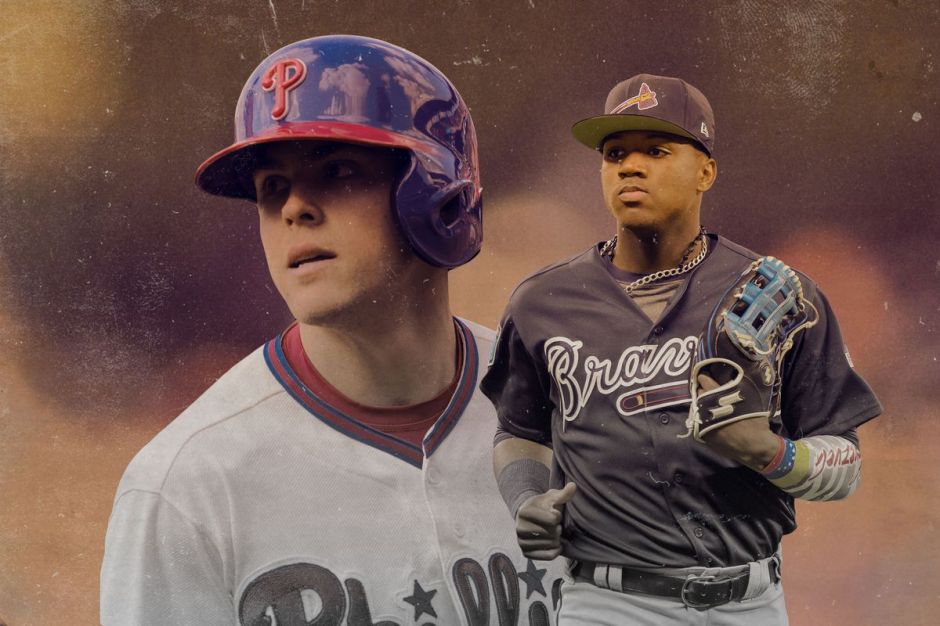
Photo credit: theringer.com
By Amaury Pi-González
According to the LA Times, a recently published article about the last MLB season in 2019 said: “For the first time since 1946, the season before Robinson debuted and altered the course of American history, an African American did not appear in a game for the Dodgers for an entire campaign.”
An irony for the franchise that headed by a courageous Branch Rickey, who signed Jackie Robinson, who broke the color barrier..
The fact today is that just like with the regular population of the United States, where Latinos are now the largest minority and not African-American, the same has happened in the most historic sport in this country, baseball. The Census will be taken in 2020, and before that Census, Hispanics/Latinos are 18 percent of the population with around 60 million people, while African-Americans are 12 percent of the population with approximately 42 million people.
Baseball is also headed in the same direction as the total populations of the country. In baseball, Hispanics/Latinos make up about 30% of all players, while African-Americans are just around 8%. The MLB has been trying with the RBI program and many others to attract young African-Americans to the game of baseball, but as of today with little success. The other two major professional leagues, the NBA and the NFL are miles ahead of the MLB when it comes to African-American players. I do not want to speculate what is the reason, but there are many. Some point to baseball as a slow game, while other sports generate more instant gratification. Baseball requires patience, and in a time like this with social media, anybody–at any given time–can access anything in five seconds.
Facebook and You Tube have carried live MLB games. The fluid world of social media looks like the #1 vehicle to deliver baseball to the masses, especially of the younger generation. There is no secret that baseball audiences are typically older that most other sports according to data released by media-polling organizations. It is said that the average age of a baseball viewer is 57 (this has been increasing year by year), and if you wonder about some kind of a youth movement, only 7% of the baseball audience is under age 18.
These baseball demographic statistics will likely not change much. In Latin America, where some baseball countries play ball 12 months of the year, and most MLB clubs scout those countries. In some of those baseball countries, baseball is still king and there is no competition by basketball, and of course, American football as neither sport is not really played by kids. Soccer still the most popular sport in Latin America. However, in Cuba, Dominican Republic, Nicaragua, Panamá, Puerto Rico, and Venezuela, soccer is not as popular as baseball. In México and Colombia, baseball is popular, but soccer is still número uno, but those two countries continue to develop a lot of baseball talent, and have a presence in the Major Leagues.
This could be getting much more interesting as MLB is proposing to eliminate many minor league teams. MLB says the reorganization is in order to make the minor leagues more efficient (i.e.conditions where they play, dated facilities, etc.). Common sense tells us less teams is not going to help the development of younger players aspiring to make it to the show. Unlike the NBA and NFL, who get most of their talent from drafts, the minor leagues are the gateway to Major League Baseball.
Major and Minor League Baseball’s current Professional Baseball Agreement is set to expire after the 2020 season. One thing for sure is that more Latino talent will continue to arrive and the trend will continue.
 Sports Radio Service